


Gout: Why Uric Acid Crystals Damage Your Joints and How to Manage It Long-Term
Reviewed by: Manipal Hospitals
Posted on
7 Min Read

Not sure what you’re looking for?
Get in touch with our representatives for help!
Contact UsGout, an inflammatory arthritis, is a painful condition affecting millions worldwide. Understanding its root cause- the uric acid crystals- is the first step towards effective, long-term management and reclaiming your quality of life. Statistics suggest that early diagnosis and treatment adherence can lead to successful management in over 90% of cases, significantly reducing the frequency and severity of attacks. This blog focuses on gout symptoms, causes and management strategies, to empower you with the right information.
What is Gout?
Gout occurs when there's an excess of uric acid in the blood (hyperuricemia). Uric acid is a natural waste product from purine breakdown. Normally, it dissolves, passes through the kidneys, and is excreted. If the body produces too much of uric acid or the kidneys do not excrete it enough, uric acid builds up in the body and manifests in gout symptoms.
The role of uric acid crystals
When uric acid levels are too high, sharp, needle-like urate crystals deposit in joints and surrounding tissues. These crystals trigger sudden, severe inflammation, leading to intense pain, swelling, redness, and tenderness. The big toe is most commonly affected, but gout can strike any joint.
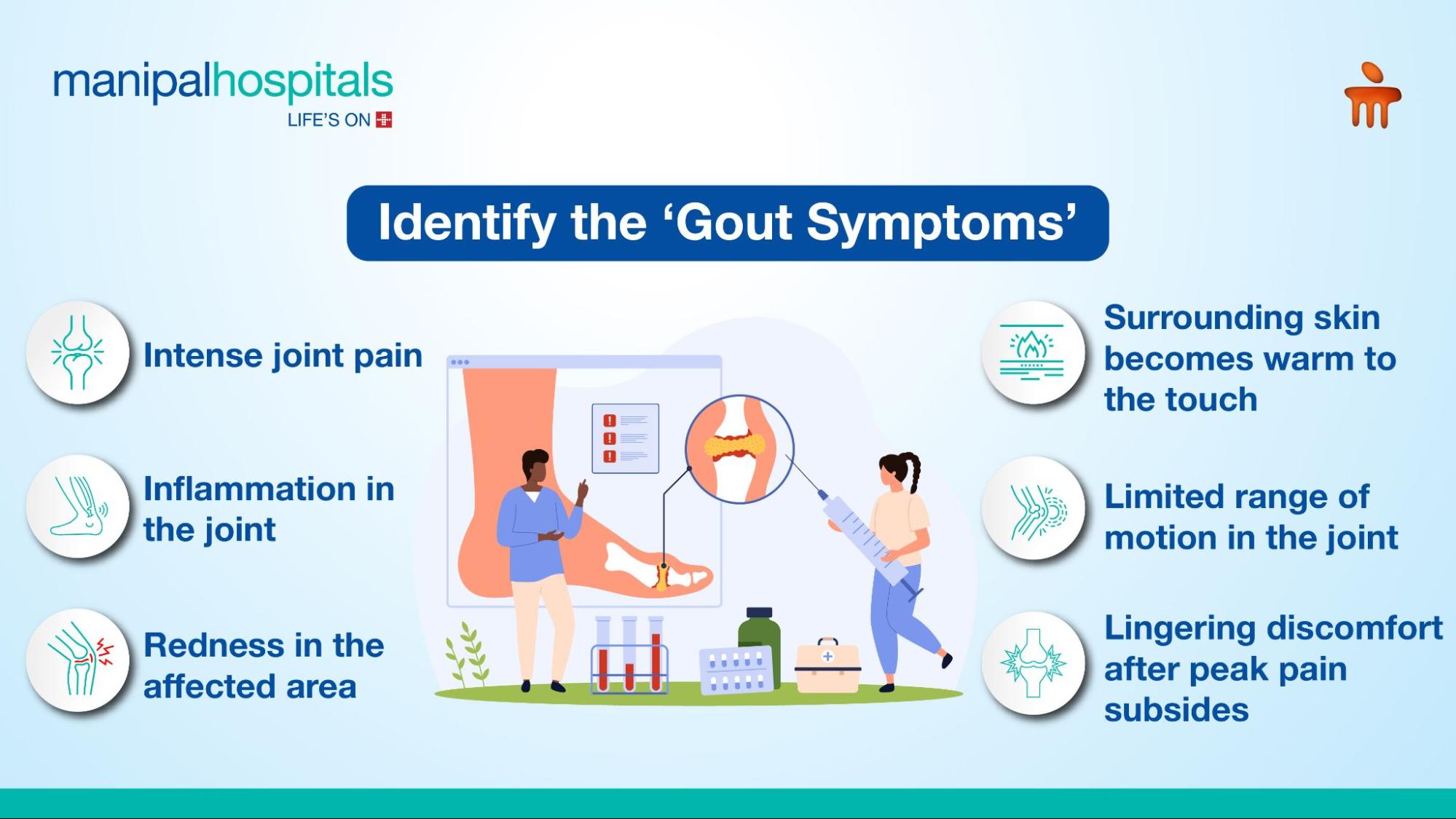
Recognising Gout causes and symptoms
A proper understanding of gout causes and symptoms identification in the early stage is crucial for timely intervention. An acute gout attack often comes on suddenly, mostly at night, without warning.
Key symptoms of gout
Gout symptoms often appear suddenly and can cause severe discomfort, particularly during flare-ups affecting the joints. These include:
-
Intense joint pain- Often excruciating pain, described as throbbing, crushing, or burning, is felt, especially in the big toe.
-
Inflammation and redness- The affected joint becomes swollen, tender, and bright red.
-
Warmth- The skin over the joint may feel warm to the touch.
-
Limited range of motion- The affected joint becomes difficult to move.
-
Lingering discomfort- After peak pain subsides, discomfort can last for days to weeks.
Common causes of gout
While ‘hyperuricemia’ (abnormally high levels of uric acid in the blood) is the direct cause, several factors can increase your risk, such as:
-
Diet- High purine foods (red meat, organ meats, certain seafood like shellfish) and high-fructose corn syrup can increase uric acid production in the body.
-
Alcohol- Alcoholic drinks, especially beer and spirits, can hinder uric acid excretion.
-
Obesity- Increases uric acid production and reduces its excretion.
-
Medical conditions- High blood pressure, kidney disease, diabetes, and metabolic syndrome affect the body’s ability to remove uric acid efficiently, leading to its build-up and crystal formation in the joints.
-
Medications- Some diuretics and low-dose aspirin reduce the kidneys’ ability to eliminate uric acid effectively.
-
Family History- Genetics also play a vital role.
Long-term gout management
Effective gout management involves addressing acute attacks and long-term uric acid control. A comprehensive gout symptoms treatment plan tailored to your needs can significantly improve your quality of life, reducing attacks by 70-80% within the first year of consistent management.
Treatment approaches
Your doctor will develop a personalised treatment plan that may include medications to relieve acute pain and inflammation, and medicines to lower uric acid levels for long periods, preventing future attacks and protecting your joints. This may involve:
-
Anti-inflammatory medications to reduce pain and swelling during flare-ups
-
Colchicine to help control acute gout attacks
-
Corticosteroids for severe inflammation or when other medicines are unsuitable
-
Uric acid-lowering medications to prevent recurrent attacks and crystal build-up
-
Regular monitoring of uric acid levels and kidney function
-
Personalised dietary and lifestyle guidance alongside medical treatment
Gout diet, foods to avoid and other lifestyle adjustments
Dietary changes are crucial in gout management. A mindful list of gout diet, foods to avoid, and restrictions can significantly impact uric acid levels:
-
Limit high-purine foods- Red meat, organ meats, certain seafood (like anchovies, sardines)
-
Avoid sugary drinks- Especially those sweetened with high-fructose corn syrup
-
Restrict alcohol- Especially beer and spirits
-
Stay hydrated- Drinking plenty of water helps your kidneys excrete uric acid
-
Maintain a healthy weight- Gradual weight loss can lower uric acid levels
Care essentials
Managing gout successfully requires mindful self-care practices, including knowing what to do and what to avoid to reduce flare-ups and maintain healthy joints over the long term:
-
Stay hydrated
-
Follow your prescribed medication diligently
-
Consult a doctor or dietitian for personalised advice on `gout diet foods to avoid`.
-
Do not stop uric acid-lowering medications without consulting your doctor
-
Stop overindulging in high-purine foods or excessive alcohol to avoid triggering flare-ups
-
Never ignore `gout symptoms treatment` or self-medicate.
Conclusions
Gout can be painful and disruptive, but with early diagnosis, consistent treatment, and healthy lifestyle modifications, it can be effectively managed to prevent recurrent flare-ups and long-term joint damage. Manipal Hospitals provides comprehensive evaluation, personalised treatment, and long-term gout management support tailored to your needs. If you are experiencing persistent joint pain, swelling, or other gout symptoms, it's crucial to seek timely medical advice. Book an appointment with our expert and experienced team of orthopaedics at Manipal Hospitals Siliguri (Pradhan Nagar)
Frequently Asked Questions
While not ‘cured’ in the sense of eradicating its potential, gout is highly manageable. With proper `gout symptoms treatment`, diet, and lifestyle changes, most people can prevent future attacks and live a symptom-free life.
Gout attacks typically come on very suddenly, often overnight. The pain can reach its peak within 12-24 hours and then gradually subside over several days to a week.
Rest and elevate the affected joint, and apply cold packs to help reduce pain and swelling. Contact your doctor at Manipal Hospitals for advice on appropriate acute gout symptoms treatment medications.
Foods very high in purines, like organ meats (liver, kidneys), game meats, certain seafood (anchovies, sardines), and sugary drinks, are often the biggest culprits. Your doctor or dietitian can provide a comprehensive list.
Yes, gout can affect multiple joints throughout the body, including the ankles, knees, wrists, fingers, and elbows. However, the big toe remains the most commonly affected joint due to its susceptibility to uric acid crystal deposition and inflammation.
Share this Article


Recent Blogs

পালমোনারি ফাংশন টেস্ট (PFT): এটি কি, কেন এটি করা হয় এবং এটি কীভাবে চিকিৎসায় সহায়তা করে
29 Jun 20265 Min Read
ফুসফুস শরীরের অন্যতম গুরুত্বপূর্ণ অঙ্গ, এবং এর সঠিক কার্যকারিতা সামগ্রিক স্বাস্থ্যের জন্য অপরিহার্য। পিএফটি (PFT) পরীক্ষা বা পালমোনারি ফাংশন পরীক্ষা হল এক ধরণের স্বাস্থ্য পরীক্ষা যার দ্বারা আপনার ফুসফুস কতটা ভালোভাবে কাজ করছে তা পরিমাপ করা হয়ে থাকে। এই নিবন্ধে আমরা পিএফটি পরীক্ষা বিষয়ে বিস্তারে আলোচনা করবো, এবং তার সাথে এটি কখন দরকার পরে, এবং কিভাবে এটি ফুসফুসের রোগের চিকিৎসায় সাহায্য করে, সেটিও দেখবো।
Read NowKidney Biopsy Explained: Why It’s Done and What to Expect
24 Jun 20267 Min Read
Medical procedures often bring questions and anxiety. A kidney biopsy is a crucial diagnostic tool that helps specialists understand underlying kidney issues, providing vital information often unobtainable through other tests. If your doctor recommended a kidney biopsy test, this blog explains why it is done and what to expect, along with effective treatment options and patient outcomes.
Read NowMechanical Ventilation Explained: What It Means When a Patient is 'Put on a Ventilator'
08 Jun 20264 Min Read
The term "being put on a ventilator" is often associated with critical illness, which is why it often evokes apprehension. Understanding what mechanical ventilation truly entails – its purpose, how it works, and the profound support it offers – can significantly alleviate anxiety. This guide explains more about mechanical ventilation, and how this vital medical intervention functions as a life support machine.
Read Nowপিত্তথলির পাথর: কারণ, লক্ষণ এবং অস্ত্রোপচারের প্রয়োজন
03 Jun 20267 Min Read
পিত্তথলি আমাদের যকৃতের নিচে অবস্থিত একটি ছোট অঙ্গ যা পিত্তরস জমা রাখে এবং খাদ্য হজমে সহায়তা করে। পিত্তথলিতে থাকা পিত্তরস যখন সেখান থেকে না বেরোনোর ফলে জমাট বাঁধতে থাকে, তখন সেটি ক্রমশ একটি শক্ত পাথর রূপে পরিণত হয়। এই অবস্থাকেই পিত্তথলির পাথর অথবা গলব্লাডার স্টোন বলা হয়ে থাকে। পিত্তরসের উপাদানগুলির ভারসাম্য নষ্ট হলে এই পাথরগুলি তৈরি হতে পারে, যা তীব্র ব্যথা এবং জটিলতা সৃষ্টি করে।
Read NowHepatitis B and C: Differences, How They Spread, Vaccination and Treatment Options
03 Jun 20267 Min Read
Hepatitis B and hepatitis C are distinct viral infections which target the liver, potentially leading to severe complications like cirrhosis and even liver cancer. Understanding their differences is crucial for prevention, diagnosis, and effective management. This blog highlights key aspects of Hepatitis B symptoms, causes and treatment options, and how it differs from Hepatitis C.
Read NowWhen patient required Dialysis and how to manage CKD patient on dialysis
27 May 20267 Min Read
Living with Chronic Kidney Disease (CKD) can be challenging. When kidneys can no longer perform their vital functions adequately due to kidney failure, a life-saving process called dialysis becomes the need of the hour. This blog provides you with all the necessary information on kidney failure dialysis procedure and its role in end-stage chronic kidney disease.
Read NowGout: Why Uric Acid Crystals Damage Your Joints and How to Manage It Long-Term
26 May 20267 Min Read
Gout, an inflammatory arthritis, is a painful condition affecting millions worldwide. Understanding its root cause- the uric acid crystals- is the first step towards effective, long-term management and reclaiming your quality of life. Statistics suggest that early diagnosis and treatment adherence can lead to successful management in over 90% of cases, significantly reducing the frequency and severity of attacks. This blog focuses on gout symptoms, causes and management strategies, to empower you with the right information.
Read NowHow Pollution effects lung and increase lung disease
26 May 20267 Min Read
In our rapidly urbanizing world, the air we breathe often carries an invisible burden: ‘pollution’. This pervasive environmental challenge is a critical concern for public well-being, particularly for respiratory health. It is paramount for communities to understand the profound impact of poor air quality on our lungs. This article delves into the air pollution effects on your lung health, the common respiratory problems from air pollution, and proactive steps to protect yourself. Air pollution effects: The invisible enemy of lung health Air pollution is a complex mixture of particles and gases like ozone, nitrogen dioxide, and particulate matter. When inhaled, these pollutants penetrate deep into the lungs, causing inflammation, oxidative stress, and structural damage.The long-term air pollution effects can develop slowly over time, often appearing years after exposure and gradually damaging important lung functions.
Read Nowঅ্যাপেন্ডিসাইটিস অস্ত্রোপচার: পদ্ধতি ও আরোগ্যলাভ
06 May 20265 Min Read
পেটের ডান দিকের নিচের অংশে তীব্র ব্যথা, বমি বমি ভাব এবং জ্বর- এই লক্ষণগুলি অনেকেই হালকাভাবে নিয়ে থাকেন, অথচ এগুলি কিন্তু অ্যাপেন্ডিসাইটিস-এর (Appendicitis) মতো একটি গুরুতর অবস্থার ইঙ্গিত হতে পারে। অ্যাপেন্ডিক্স হলো আমাদের কোলনের সঙ্গে সংযুক্ত আঙুলের মতো একটি ছোট অঙ্গ, এবং এটি যখন সংক্রমিত বা স্ফীত হয়, তখন তাকে অ্যাপেন্ডিসাইটিস বলা হয়। এটি একটি জরুরি অবস্থা যেখানে দ্রুত অ্যাপেন্ডিসাইটিস অস্ত্রোপচার প্রয়োজনীয় হয়ে পড়ে। সময়মতো চিকিৎসা না করা হলে অ্যাপেন্ডিক্স ফেটে যাওয়ার সম্ভাবনা থাকে, যা প্রাণঘাতী হতে পারে। এই ব্লগে, আমরা অ্যাপেন্ডিসাইটিস অস্ত্রোপচার, এর বিভিন্ন পদ্ধতি এবং অস্ত্রোপচারের পর সুস্থ হয়ে ওঠার প্রক্রিয়া সম্পর্কে বিস্তারিত আলোচনা করব, যাতে আপনি এই জরুরি অবস্থা সম্পর্কে সুপরিচিত থাকতে পারেন।
Read NowShoulder Arthroscopy: Causes, Procedure & Recovery Time
06 May 20265 Min Read
Shoulder pain is a common problem that can happen due to injury, improper posture, arthritis or other underlying reasons. Conventional methods like medication, pain relief and physiotherapy are often used as treatment options. However, persistent shoulder pain can disrupt your ability to do simple tasks, impacting your quality of life significantly. When conventional treatment approaches fail, doctors may recommend shoulder arthroscopy, a minimally invasive procedure to treat shoulder pain at its roots. This guide will walk you through essential information about shoulder arthroscopy, covering its purpose, the procedure itself, and what to expect during your recovery journey.
Read Now