


Understanding Benign Brain Tumour: Symptoms, Surgery, and Recovery
Reviewed by: Dr. Sunandan Basu
Posted on
6 Min Read

Not sure what you’re looking for?
Get in touch with our representatives for help!
Contact UsReceiving a diagnosis of a benign brain tumour can be an overwhelming experience. While the term ‘benign’ offers reassurance that the tumour is non-cancerous and typically slow-growing, it does not diminish the natural concerns about its impact on health and daily life. These anxieties require compassionate, state-of-the-art care that can guide you through every step of your journey from diagnosis to recovery. An expert multidisciplinary team of neurosurgeons, neurologists, oncologists, and rehabilitation specialists can ensure a holistic approach, focusing on the best possible outcomes for the patient.
What are Benign Brain Tumours?
A benign brain tumour is a non-cancerous growth of cells within the brain. Unlike malignant (cancerous) tumours, they generally do not spread to other parts of the body. However, their location and size can still exert pressure on delicate brain tissue, leading to a variety of symptoms. While they are not considered life-threatening in the same way as malignant tumours, timely diagnosis and appropriate treatment are crucial to prevent complications and preserve neurological function. Statistics show that benign tumours account for a significant portion of all brain tumour diagnoses, and with advanced medical care, the outlook for individuals with these conditions is increasingly positive.
Recognising Benign Brain Tumour Symptoms
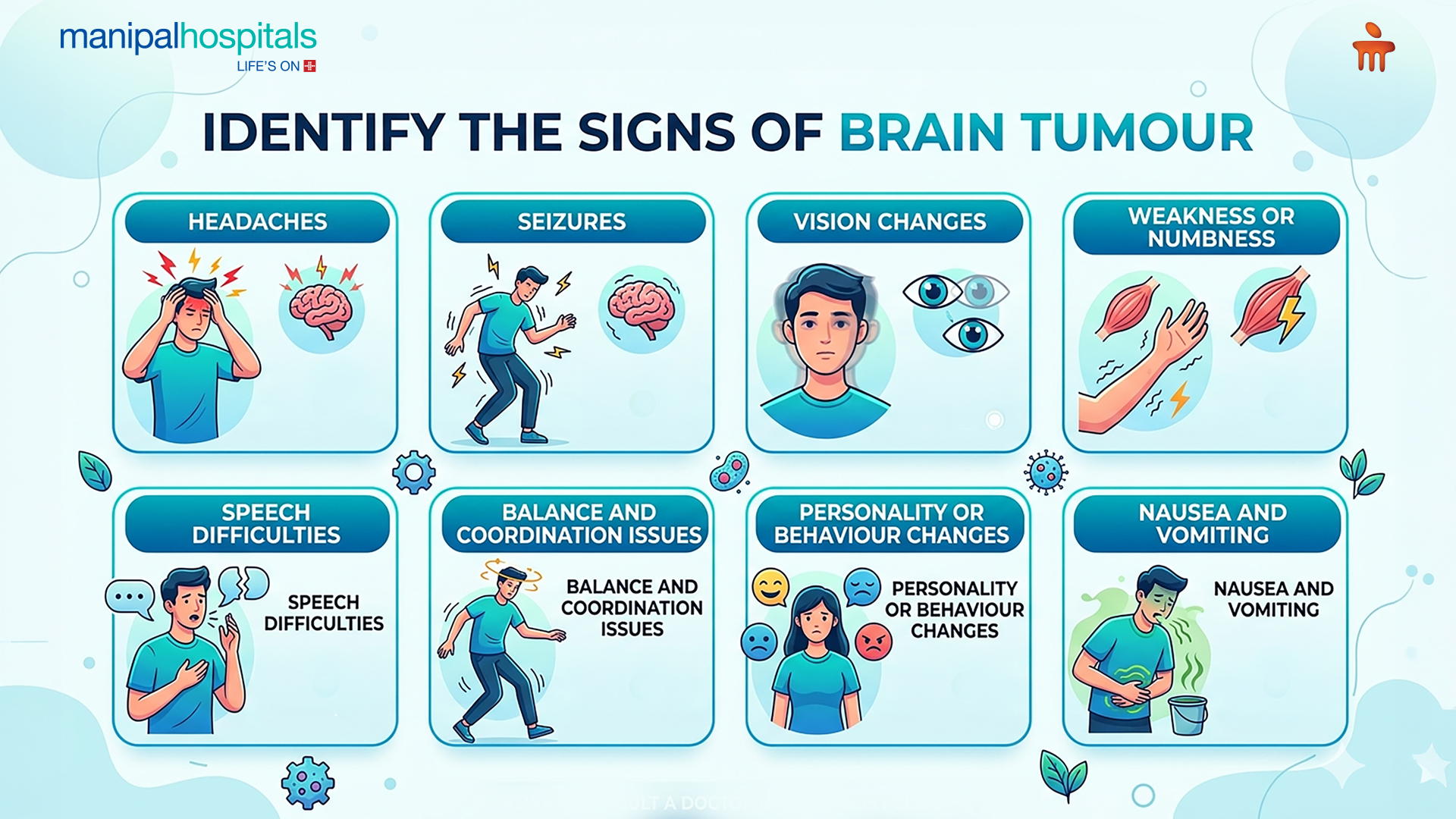
The manifestation of benign brain tumour symptoms can vary widely depending on the tumour's size, location, and rate of growth. It is vital to be aware of potential indicators and seek medical attention if they persist or worsen. If you experience any of the mentioned symptoms, especially new-onset or progressively worsening ones, it is important to consult a specialist. Early diagnosis significantly improves treatment effectiveness and outcomes. Common symptoms include:
-
Headaches – Often persistent and severe and may worsen over time, especially in the morning.
-
Seizures – These can range from subtle changes in awareness to full-body convulsions.
-
Vision changes – Blurred vision, double vision, or loss of peripheral vision.
-
Weakness or numbness – on one side of the body.
-
Speech difficulties – trouble finding words or slurred speech.
-
Balance and coordination problems – Dizziness or unsteadiness.
-
Personality or behaviour changes – mood swings, irritability, or confusion.
-
Nausea and vomiting – Especially when associated with headaches.
When is Surgery Required for Brain Tumours?
Benign brain tumour surgery is often the primary treatment for these growths, especially when the tumour is causing symptoms, growing, or is accessible without undue risk. The decision for surgery is made after a thorough evaluation, including advanced imaging (MRI, CT scans) and considering the tumour's characteristics, your overall health, and potential risks versus benefits.
Types of Benign Brain Tumour Surgery
Modern neurosurgery offers several advanced techniques for removing benign brain tumours. The choice of surgical approach depends on the tumour's location, size, and type:
-
Craniotomy – This traditional approach involves opening a section of the skull to access and remove the tumour. Advances in neuro-navigation and intraoperative monitoring have made this procedure safer and more precise.
-
Minimally Invasive Techniques – For certain tumours, less invasive methods, such as endoscopic or keyhole surgeries, may be an option, involving smaller incisions and faster recovery times.
-
Stereotactic Radiosurgery – While not traditional surgery, this highly precise form of radiation therapy can be used for some benign tumours, delivering targeted radiation doses to destroy tumour cells without affecting surrounding healthy tissue.
Recovery and Rehabilitation
With dedicated rehabilitation, a vast majority – over 90% of our patients – experience significant improvement in their quality of life and neurological function, often returning to their normal activities within a few months. Regular follow-up appointments, including imaging, are crucial to monitor your progress and ensure long-term well-being. This essentially involves:
-
Immediate post-operative care – After a benign brain tumour surgery, you will be closely monitored in our intensive care unit before moving to a regular ward. The initial recovery phase focuses on managing pain, preventing complications, and assessing neurological function. Our dedicated nursing staff and medical team provide continuous support and care.
-
Rehabilitation and long-term recovery – Recovery is a journey that supports you at every step of the way. Many patients experience a remarkably smooth recovery. For those who require it, a comprehensive rehabilitation programme is tailored to individual needs, which may include:
-
Physiotherapy – To regain strength, balance, and mobility.
-
Occupational Therapy – To help you adapt to daily activities and regain independence.
-
Speech Therapy – If the tumour or surgery affected speech or swallowing.
-
Neuropsychological Support – To address any cognitive or emotional changes.
Care essentials
|
Do's |
Don’ts |
|
Follow all post-operative instructions carefully |
Do not self-medicate or alter prescribed dosages without consulting your doctor |
|
Attend all scheduled follow-up appointments and rehabilitation sessions |
Engage in strenuous activities or heavy lifting until cleared by your surgeon |
|
Communicate any new or worsening symptoms to your medical team promptly |
Ignore any changes in your health, however minor they may seem |
|
Maintain a healthy lifestyle, including a balanced diet and adequate rest |
Drive until your doctor has given you explicit permission |
|
Seek support from family, friends, or support groups if you feel overwhelmed |
Hesitate to ask questions or express your concerns to your care team |
Conclusion
A benign brain tumour diagnosis can be challenging, but timely treatment and expert care can lead to excellent outcomes. At Manipal Hospitals, our experienced neurosurgical team combines advanced technology with personalised care to deliver safe and effective treatment for benign brain tumours. If you are experiencing concerning symptoms or have been diagnosed with a brain tumour, book a consultation with our neurosurgery specialists at Manipal Hospitals EM Bypass for a comprehensive evaluation and expert guidance on the most appropriate treatment options.
Frequently Asked Questions
While uncommon, certain benign brain tumours may undergo malignant transformation over an extended period, although this occurs very rarely. Regular follow-up appointments, imaging studies, and ongoing monitoring are essential to detect any changes early and ensure timely intervention if required.
Recovery time varies greatly depending on the tumour's size, location, surgical approach, and individual factors. It can range from a few weeks to several months for full recovery and rehabilitation.
Some patients may require medications after surgery to manage seizures, headaches, swelling, or other neurological symptoms, particularly during the early stages of recovery. The type and duration of treatment will be carefully determined and monitored by your neurologist based on your individual condition and recovery progress.
Like any surgery, risks include infection, bleeding, and adverse reactions to anaesthesia. Specific to brain surgery, there's a small risk of neurological deficits, which our team works diligently to minimise.
While complete surgical removal significantly reduces the chance of recurrence, it is possible for some benign tumours to grow back. This is why regular follow-up imaging is essential.
Share this Article


Recent Blogs

Robotic Breast Surgery: The Dawn of a New Era in Oncology
29 Jun 20267 Min Read
A breast cancer diagnosis is a life-altering event, but rapid advancements in diagnosis and treatments are offering patients more hope and improved clinical outcomes than ever before. One such ground-breaking advancement capturing the attention of the global medical community is Robotic Breast Surgery. The purpose of this post is to explore a specific procedure known as Robotic Nipple-Sparing Mastectomy (RNSM), detailing how this new and upcoming technique offers unparalleled advantages, and why it is revolutionising the surgical management of breast cancer.
Read NowUnderstanding Benign Brain Tumour: Symptoms, Surgery, and Recovery
24 Jun 20266 Min Read
Receiving a diagnosis of a benign brain tumour can be an overwhelming experience. While the term ‘benign’ offers reassurance that the tumour is non-cancerous and typically slow-growing, it does not diminish the natural concerns about its impact on health and daily life. These anxieties require compassionate, state-of-the-art care that can guide you through every step of your journey from diagnosis to recovery. An expert multidisciplinary team of neurosurgeons, neurologists, oncologists, and rehabilitation specialists can ensure a holistic approach, focusing on the best possible outcomes for the patient.
Read NowASD Device Closure Procedure: What Patients Need to Know
22 Jun 20266 Min Read
An Atrial Septal Defect (ASD), often referred to as a ‘heart hole’, is a common congenital heart defect. While some small ASDs may close on their own, many require intervention to prevent long-term complications. Traditionally, this involved open-heart surgery. However, advancements in medical technology have introduced the less invasive procedure involving an ASD closure device that offers a safer and quicker path to recovery for many patients.
Read Nowঅনিয়মিত মাসিক ও পিসিওডি: আপনার মাসিক চক্র কেন গুরুত্বপূর্ণ এবং এর প্রতিকার কী
29 May 20266 Min Read
হরমোনের ভারসাম্যহীনতার কারণে মাসিক চক্র অনিয়মিত হতে পারে; তবে সঠিক জীবনযাত্রার পরিবর্তন এবং ক্ষেত্রবিশেষে ওষুধের মাধ্যমে এই সমস্যাটি সমাধান হওয়া সম্ভব। অবশ্য, অনেক সময় অনিয়মিত মাসিক কোনো অন্তর্নিহিত শারীরিক সমস্যার লক্ষণ হতে পারে (যেমন পিসিওডি), যার জন্য আরও বিশেষায়িত চিকিৎসার প্রয়োজন হয়। এই ব্লগটিতে অনিয়মিত মাসিক এবং পিসিওডি - র বিষয় নিয়ে বিস্তারিত আলোচনা করা হয়েছে, যাতে আপনি আপনার সুস্বাস্থ্য ও সুস্থতার স্বার্থে এই দুটি শারীরিক অবস্থা সম্পর্কে একটি পূর্ণাঙ্গ ধারণা লাভ করতে পারেন।
Read NowHome Remedies vs Medical Treatment for Knee Pain: What Actually Provides Long-Term Relief
28 May 20265 Min Read
Knee pain is a common ailment affecting millions worldwide. It can range from a mild ache to severe discomfort that interferes with daily activities and mobility. Naturally, many people first turn to easy fixes and home remedies for knee pain. While these methods can provide temporary relief, understanding when to seek professional medical care is essential for achieving long-term knee pain relief and protecting joint health.
Read NowRheumatoid Arthritis v/s Osteoarthritis: Key Differences Every Joint Pain Patient Should Know
28 May 20265 Min Read
Joint pain is a prevalent issue across the world, and it becomes more common with increasing age. However, joint pain is not the same everywhere. Rheumatoid arthritis (RA) and osteoarthritis (OA) both affect joints but differ significantly in their origins, symptoms, and treatment. This blog highlights the key differences between rheumatoid arthritis and osteoarthritis, as understanding these distinctions is crucial for accurate diagnosis and management.
Read NowThe Dialysis Diet: Foods, Fluids, and Restrictions Every Kidney Patient Needs to Follow
28 May 20265 Min Read
Diet is a key component in maintaining overall health and well-being. A proper diet not only focuses on maintaining calories, but it is also meant to provide optimum nutrition fit for each person’s individual needs. For someone undergoing dialysis, a proper dialysis diet plan is essential for maintaining nutritional levels while also cutting out foods that could be harmful for their kidneys. This blog highlights the importance of a proper diet plan for those undergoing dialysis for a thorough understanding of suitable foods, proper fluid management, and what to avoid.
Read NowHigh BP Symptoms: Do not Miss These Crucial Early Signs
27 May 20265 Min Read
Often termed the ‘silent killer’, high blood pressure (hypertension) can stealthily damage your body without any obvious warning signs. Globally, an estimated 1.28 billion adults between the ages of 30 and 79 years have hypertension, and a staggering 46% of adults with hypertension are unaware that they have it. This makes recognising even the subtle high BP symptoms incredibly vital for preventing severe health complications like heart attack, stroke, and kidney disease. This blog aims to raise awareness of the early warning signs of high blood pressure and also guides you on how to reduce high blood pressure naturally.
Read NowAortic Aneurysm: Early Signs, Causes, and Available Treatments
06 May 20266 Min Read
The aorta is the largest blood vessel of your body which carries oxygen-rich blood from the heart and delivers it to the other organs. An aortic aneurysm occurs when a section of this vital artery weakens and bulges, posing a significant health risk. Without timely intervention, recovery can become extremely complicated. Understanding the warning signs, aortic aneurysm causes, and available treatment options is crucial for timely intervention and improved outcomes.
Read NowIdentifying Breast Cancer Symptoms: Early Detection Improves Survival
27 Apr 20265 Min Read
Breast cancer is the most common type of cancer among Indian women, and it is gradually rising in both urban and rural areas. Studies have reported that 14% of all cancers in women are breast cancer, with over 2,00,000 cases being reported each year. However, early detection can significantly improve survival rates; localised breast cancer detected early boasts over a 99% 5-year survival rate. Understanding the global health threat posed by breast cancer and the significance of early detection for improved outcomes is vital in building a strong awareness towards breast cancer symptoms, causes, risk factors, and available treatment options. This blog highlights all the details you should know about breast cancer.
Read Now