


The Silent Epidemic: Why Slip Disc Symptoms Are Rising Among Young People?
Reviewed by: Manipal Hospitals
Posted on
8 Min Read

Not sure what you’re looking for?
Get in touch with our representatives for help!
Contact UsOnce considered an ailment primarily affecting older adults, a ‘slip disc’ or herniated disc is now increasingly being diagnosed in young individuals. In recent times, doctors have observed a noticeable shift, with more young adults seeking consultation for persistent back and neck pain. This concerning trend prompts us to delve into the reasons behind this rise and empower you with knowledge about slip disc symptoms, causes, and effective management strategies.
Understanding this condition is crucial, especially when early intervention can make a significant difference. Let's explore why this spinal issue is becoming a silent epidemic among the younger generation.
What Exactly is a Slip Disc (Herniated Disc)?
Your spine is made up of a stack of bones (vertebrae) separated by soft, rubbery cushions called discs. Each disc has a tough outer ring and a soft, gel-like center. A ‘slip disc’ or herniated disc occurs when the outer ring weakens or tears, allowing the inner gel-like material to bulge out or rupture. This extruded material can then press on nearby nerves, leading to pain, numbness, or weakness in the area supplied by that nerve. While the term ‘slip disc’ is common, the disc doesn't actually ‘slip’ out of place; rather, it ruptures or bulges.
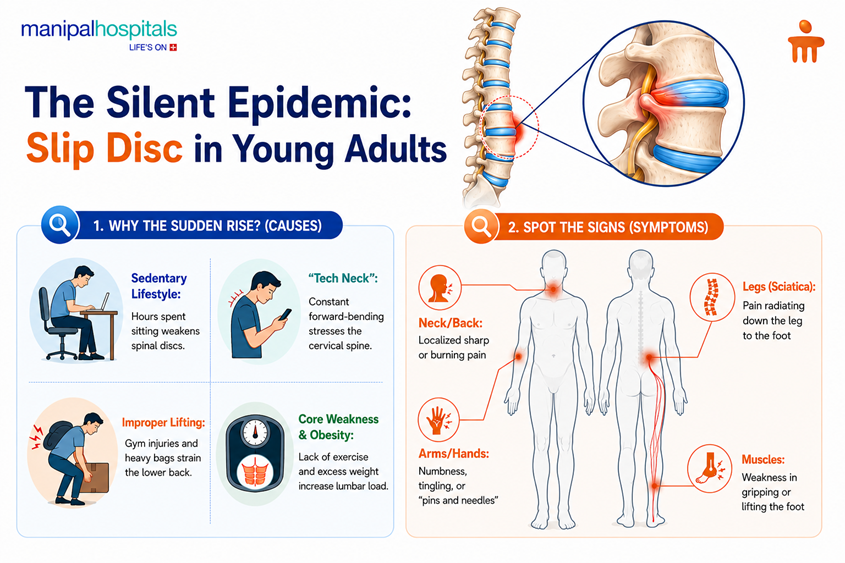
Why Are Young People Experiencing Slip Disc Symptoms More Often Now?
The rise in causes of herniated discs among young adults is multi-factorial, largely linked to modern lifestyles. Here are some of the primary slip disc causes we commonly identify:
-
Sedentary Lifestyles and Prolonged Sitting: The digital age has ushered in hours spent sitting at desks, in front of computers, or glued to screens. This prolonged static posture puts immense pressure on the spinal discs, weakening them over time. Studies indicate that individuals with sedentary jobs are at a significantly higher risk of disc degeneration.
-
Poor Posture and Digital Device Usage: The 'tech neck' phenomenon, where the head is constantly bent forward to look at smartphones or tablets, places undue stress on the cervical (neck) spine. Similarly, slouching while sitting or standing can strain the lower back discs, contributing to herniated disc development.
-
Lack of Physical Activity and Core Weakness: A strong core acts as a natural brace for the spine. With reduced physical activity, core muscles often weaken, leaving the discs vulnerable to injury. Regular exercise helps maintain spinal health by strengthening supporting muscles and improving blood flow to the discs.
-
Improper Lifting Techniques and Strenuous Exercise: While exercise is vital, incorrect form during weightlifting, particularly in gyms, can lead to acute disc injuries. Similarly, carrying heavy backpacks incorrectly, common among students, can also contribute to spinal stress.
-
Obesity: Excess body weight, particularly around the midsection, puts additional strain on the lumbar (lower back) spine. This increased load can accelerate disc degeneration and increase the likelihood of a herniated disc.
-
Genetics and Predisposition: While lifestyle factors are dominant, some individuals may have a genetic predisposition to weaker spinal discs, making them more susceptible even with moderate stressors.
At Manipal Hospitals Bangalore, our multidisciplinary approach focuses not just on treatment but also on identifying and educating patients about these lifestyle modifications. We've seen an encouraging 85% success rate with conservative treatments when patients address these underlying causes early.
Recognising the Common Slip Disc Symptoms
Timely recognition of slip disc symptoms is key to effective management. The symptoms vary depending on the location of the herniated disc (most commonly in the lower back or neck) and which nerve affects them. Common symptoms include:
-
Localised Pain: Often, the first sign is a sharp or burning pain in the neck or lower back. This pain might worsen with certain movements, coughing, sneezing, or prolonged sitting.
-
Radiating Pain (Sciatica): If the disc affects nerves in the lower back, pain may shoot down the leg, often below the knee, sometimes reaching the foot. This is commonly known as sciatica. For neck herniations, pain can radiate down the arm, forearm, or hand.
-
Numbness or Tingling: Affected nerves can cause sensations of numbness, pins and needles, or tingling in the limb corresponding to the irritated nerve pathway.
-
Muscle Weakness: Over time, nerve compression can lead to weakness in the muscles supplied by that nerve. This might manifest as difficulty lifting the foot (foot drop), gripping objects, or general arm/leg weakness.
-
Loss of Reflexes: In some cases, a neurologist might find diminished or absent reflexes in the affected limb during examination.
If you experience any of these symptoms, especially if they are persistent or severe, it's crucial to seek medical evaluation promptly. Delaying diagnosis can sometimes lead to more complex issues.
Effective Slipped Disc Treatment Options at Manipal Hospitals
The good news is that most cases of slipped disc treatment respond well to conservative management. At Manipal Hospitals Bangalore, our experts craft personalized treatment plans based on your specific condition and lifestyle. Many of our patients, nearly 9 out of 10 young adults, experience significant relief with non-surgical interventions.
Conservative Treatment:
-
Rest and Activity Modification: Initially, a period of modified activity may be advised to reduce irritation, but complete bed rest is rarely recommended. Gradual return to activities is encouraged.
-
Physical Therapy: A cornerstone of slipped disc treatment. Our physiotherapists design tailored exercises to strengthen core muscles, improve flexibility, and enhance posture, significantly reducing pain and preventing recurrence.
-
Medication: Over-the-counter pain relievers or anti-inflammatory drugs can help manage pain and inflammation. Your doctor may prescribe stronger medications if necessary.
-
Hot and Cold Therapy: Applying ice packs initially can reduce inflammation, while heat therapy can relax tense muscles.
Advanced and Interventional Treatment:
-
Epidural Steroid Injections: If conservative treatments are insufficient, targeted injections of anti-inflammatory medication directly into the epidural space around the affected nerves can provide significant pain relief.
-
Minimally Invasive Procedures: In a small percentage of cases where nerve compression is severe or symptoms persist despite extensive conservative care, surgical options may be considered. Modern surgical techniques are often minimally invasive, leading to faster recovery times and high success rates.
For those seeking slipped disc treatment in Bangalore, Manipal Hospitals offers state-of-the-art diagnostic facilities and a team of highly experienced orthopedic surgeons, neurosurgeons, and physical therapists. Our integrated approach ensures comprehensive care from diagnosis to rehabilitation.
Maintain Spinal Health: Do and Don’ts
Do's:
-
Maintain Good Posture: Be mindful of your posture while sitting, standing, and using digital devices. Use ergonomic chairs and set up your workspace correctly.
-
Stay Active: Engage in regular, low-impact exercises like walking, swimming, or cycling. Strengthen your core muscles.
-
Lift with Your Legs: When lifting heavy objects, bend at your knees and hips, keeping your back straight, rather than bending at your waist.
-
Take Breaks: If your job involves prolonged sitting, take short breaks every 30-60 minutes to stand, stretch, and move around.
-
Stay Hydrated: Discs are largely made of water, so adequate hydration supports their health and elasticity.
-
Seek Early Medical Advice: If you experience persistent back or neck pain, consult a doctor promptly.
Don'ts:
-
Avoid Prolonged Sitting or Standing: Don't stay in one position for too long without movement.
-
Don't Slouch: Avoid slouching or hunching over, as this puts undue stress on your spine.
-
Don't Ignore Pain: Persistent pain is your body's signal that something is wrong. Don't self-medicate or hope it will go away on its own.
-
Avoid Heavy Lifting Alone: If an object is too heavy, ask for help.
-
Don't Wear High Heels Frequently: High heels can alter spinal alignment and increase lower back strain.
-
Don't Carry Heavy Bags on One Shoulder: Distribute weight evenly or use backpacks correctly.
Conclusion
It’s no doubt that the increasing prevalence of slip disc symptoms among young people has become a critical health concern, driven largely by modern sedentary lifestyles and poor posture. Therefore, we must recognise the causes of herniated discs early and understand the common symptoms like radiating pain and numbness. Most cases respond effectively to conservative therapies and lifestyle modifications.
At Manipal Hospitals Bangalore, our dedicated team of spine care specialists takes a comprehensive approach, from accurate diagnosis to personalised rehabilitation. Visit us today for slipped disc treatment in Bangalore to protect your spinal health and lead active, pain-free lives.
Frequently Asked Questions
Many mild to moderate cases of slipped disc can improve with conservative management like rest, physiotherapy, and medication. The body's natural healing process, supported by these treatments, can often lead to symptom resolution.
A bulging disc occurs when the disc protrudes outwards, but the outer fibrous ring remains intact. A herniated disc (slip disc) happens when the outer ring tears, allowing the inner gel-like material to rupture or protrude more significantly, often pressing on nerves.
No, surgery is typically considered only if conservative treatments fail to relieve severe symptoms after several weeks or months, or if there are signs of progressive neurological deficits like muscle weakness or bowel/bladder dysfunction. Over 90% of cases are managed non-surgically.
Maintaining excellent posture, engaging in regular core-strengthening exercises, lifting objects correctly, managing your weight, and taking regular breaks from prolonged sitting are key preventative measures.
Initially, high-impact or strenuous exercises should be avoided. However, gentle, guided exercises prescribed by a physiotherapist are crucial for recovery and strengthening. Always consult your doctor or therapist before starting any exercise regimen.
Share this Article


Recent Blogs
test blog 18/09--
06 Oct 20269 Min Read
Teseting h tags HH Teseting h tags HH Teseting h tags HH Teseting h tags HH Teseting h tags HH Teseting h tags HH Teseting h tags HH लहान मुलांमध्ये पोटदुखी ही एक अत्यंत सामान्य समस्या आहे. बऱ्याचदा पोटदुखी ही किरकोळ कारणांनी होत असते, मात्र काही वेळा ती गंभीर आजाराचे लक्षण देखील असू शकते. पालकांनी पोटदुखीला हलकं न घेता तिच्या कारणांचा शोध घेणे महत्त्वाचे आहे. योग्य वेळी उपचार झाले तर मुलांचे आरोग्य लवकर सुधारते आणि भविष्यातील गुंतागुंत टाळता येते. चला तर मग पाहूया मुलांमध्ये पोटदुखीची 7 संभाव्य कारणे आणि त्यावर उपाय. https://fedrevdev.cosmicnet.xyz/clinics-budigere/ Teseting h tags HH Teseting h tags HH
Read NowFlu Prevention Tips:test
18 Sept 20263 Min Read
When the weather shifts, so do the challenges to your health. You may notice how a sudden dip in temperature, an unexpected shower, or even a change from humid to dry air seems to bring on sniffles, fevers, or sore throats. Among the most common concerns during such transitions is the flu. Unlike a cold, the flu can leave you weak, feverish, and struggling for days. https://fedrevdev.cosmicnet.xyz/jaipur/ The good news? You can protect yourself. Flus prevention is not about doing one big thing; rather, it is about combining small, consistent actions with an understanding of how your body’s immunity works. Just as seasons change, your approach to health should adapt, too. Recognising early signs, strengthening your body from within, and knowing when to seek medical advice can make a world of difference. The Department of Internal Medicine at the Manipal Clinics Begur, Bengaluru, is well equipped with top specialists, infrastructure and advanced treatment facilities, which help in early diagnosis and recovery from flu-related diseases. https://fedrevdev.cosmicnet.xyz/jaipur/ The Department of Internal Medicine at the Manipal Clinics Begur, Bengaluru, is well equipped with top specialists, infrastructure and advanced treatment facilities, which help in early diagnosis and recovery from flu-related diseases test.
Read NowModern Ways to Remove Kidney Stones: No Big Cuts Required
19 Jun 20267 Min Read
Kidney stones, though common, can be incredibly painful and disruptive to daily life. For a long time, their removal often involved invasive surgeries with lengthy recovery periods. However, medical science has advanced remarkably, offering a new era of minimally invasive and highly effective kidney stone treatment options. Understanding these modern approaches to managing kidney stones can significantly ease anxieties and empower patients to make informed decisions about their health. The good news is that the vast majority of kidney stones can now be treated without the need for large incisions, thanks to advanced techniques like class kidney stone laser treatment and other state-of-the-art procedures.
Read NowDecoding Acid Reflux: Expert Insights on Causes, Symptoms, and Advanced Treatment Options
19 Jun 20268 Min Read
Acid reflux, often simply called heartburn, is a common digestive condition that affects millions worldwide. While often dismissed as a minor inconvenience, persistent acid reflux can significantly impact quality of life and, if left unaddressed, lead to more serious health issues. At Manipal Hospitals, we believe in empowering our patients with knowledge. This comprehensive guide will help you understand the core aspects of acid reflux, from its underlying causes and tell-tale symptoms to effective treatment strategies and lifestyle adjustments that can bring lasting relief. Recent studies indicate that up to 20% of the global population experiences acid reflux symptoms weekly, making it one of the most prevalent gastrointestinal disorders. The good news? With proper diagnosis and treatment, over 90% of patients can find substantial relief and manage their condition effectively. Let's dive deeper about acid reflux in this blog.
Read NowPreparing for Bypass Surgery: When It's Needed and How to Plan?
05 Jun 20268 Min Read
The journey through a diagnosis of coronary artery disease (CAD) can be daunting, bringing with it a cascade of questions and anxieties. When lifestyle changes and medical therapies are no longer sufficient to manage severe blockages, bypass surgery emerges as a highly effective intervention. For many, the phrase ‘bypass surgery’ might sound intimidating. However, understanding when this procedure becomes a vital step in your journey to a healthier heart and how to effectively prepare for it can transform apprehension into empowerment. In this blog, let us guide you through every step, ensuring you receive the most compassionate and advanced coronary artery disease treatment available.
Read NowNavigating Cancer: The Role of PET Scans in Diagnosis and Treatment Planning
03 Jun 20268 Min Read
In the complex journey of cancer diagnosis and treatment, understanding the extent and nature of the disease is paramount. Positron Emission Tomography (PET) scans, often combined with Computed Tomography (CT) scans, offer a powerful window into the body's metabolic activity, providing critical insights that traditional imaging alone cannot. This comprehensive guide aims to demystify the PET CT scan, explaining what is a PET scan, how it works, and when it becomes an indispensable tool in cancer management.
Read NowInflammatory Bowel Disease (IBD): How Early Diagnosis and Advanced Care Help 80% of Patients Achieve Better Health Outcomes
28 May 20266 Min Read
Inflammatory Bowel Disease (IBD) is a group of chronic inflammatory conditions affecting the gastrointestinal (GI) tract. Unlike more common digestive issues, IBD involves persistent inflammation, leading to a range of debilitating symptoms. Understanding what is Inflammatory Bowel Disease is the first step towards effective management and a significantly improved quality of life.
Read NowDemystifying C-Section Delivery: Why Doctors Recommend This Life-Saving Procedure
28 May 20266 Min Read
For many expectant parents, the journey to childbirth is filled with anticipation and detailed planning. While a vaginal delivery is often the preferred outcome, medical circumstances sometimes necessitate a cesarean section, commonly known as a C-section. Understanding the reasons behind this recommendation can empower parents and alleviate anxieties. Globally, C-sections account for a significant number of births, with some regions reporting rates over 30%. This highlights the critical role this procedure plays in modern obstetrics. In this blog, let us know why doctors recommend this procedure to some expectant mothers.
Read NowThe Silent Epidemic: Why Slip Disc Symptoms Are Rising Among Young People?
28 May 20268 Min Read
Once considered an ailment primarily affecting older adults, a ‘slip disc’ or herniated disc is now increasingly being diagnosed in young individuals. In recent times, doctors have observed a noticeable shift, with more young adults seeking consultation for persistent back and neck pain. This concerning trend prompts us to delve into the reasons behind this rise and empower you with knowledge about slip disc symptoms, causes, and effective management strategies. Understanding this condition is crucial, especially when early intervention can make a significant difference. Let's explore why this spinal issue is becoming a silent epidemic among the younger generation.
Read NowHyperthermia Symptoms: Causes, Signs, and Prevention of Excessive Body Heat
25 May 20268 Min Read
As temperatures rise, so does the risk of heat-related illnesses, with hyperthermia being one of the most critical. Understanding hyperthermia symptoms, its causes, and effective prevention strategies is vital for everyone, especially in regions prone to extreme heat. Hyperthermia, or excessive body heat, occurs when your body generates or absorbs more heat than it can dissipate, leading to a dangerous rise in core body temperature. Early recognition and timely intervention can significantly improve outcomes, with studies showing that prompt cooling can increase survival rates for severe heatstroke by over 90%.
Read Now