


Inflammatory Bowel Disease (IBD): How Early Diagnosis and Advanced Care Help 80% of Patients Achieve Better Health Outcomes
Reviewed by: Manipal Hospitals
Posted on
6 Min Read

Not sure what you’re looking for?
Get in touch with our representatives for help!
Contact UsInflammatory Bowel Disease (IBD) is a group of chronic inflammatory conditions affecting the gastrointestinal (GI) tract. Unlike more common digestive issues, IBD involves persistent inflammation, leading to a range of debilitating symptoms. Understanding what is Inflammatory Bowel Disease is the first step towards effective management and a significantly improved quality of life.
What is Inflammatory Bowel Disease (IBD)?
Globally, millions live with IBD. While researchers are still fully understanding its exact prevalence in India, increasing awareness and improved diagnostic capabilities are bringing more cases to light. With advancements in medical science, over 70-80% of IBD patients can achieve remission or significant symptom control, leading to fulfilling lives.
Types of Inflammatory Bowel Disease
While often grouped, IBD primarily encompasses two distinct chronic inflammatory conditions:
Crohn's Disease (CD)
Crohn's disease can affect any part of the digestive tract, from the mouth to the anus, but it most commonly impacts the end of the small intestine (ileum) and the beginning of the large intestine. The inflammation in Crohn's is "transmural", affecting all layers of the bowel wall, potentially leading to complications like strictures and fistulas.
Ulcerative Colitis (UC)
Ulcerative colitis exclusively affects the large intestine (colon) and rectum. The inflammation is typically continuous and affects only the innermost lining of the bowel wall. Symptoms often include recurrent episodes of bloody diarrhoea. With proper treatment, a majority of ulcerative colitis patients, around 85%, can achieve long-term remission.
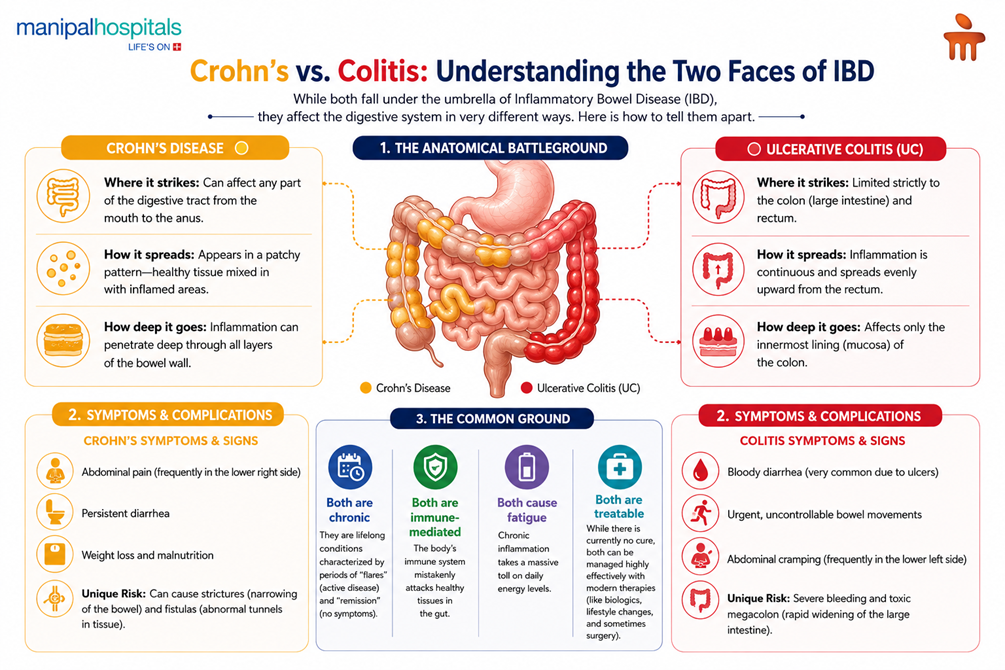
IBD Causes: Unraveling the Complexity
The precise IBD causes are still not fully understood, but research points to a complicated interaction between genetic, immune, and environmental factors. It's not caused by a single trigger but a combination of predispositions and influences:
-
Genetic Predisposition: Family history can increase risk. Up to 3.5% to 4.5% of patients with first-degree relatives in South Asian populations may develop the condition.
-
Immune System Dysfunction: The immune system mistakenly attacks healthy cells in the digestive tract, causing chronic inflammation.
-
Environmental Factors: Diet, smoking (which can double the risk of Crohn's disease), stress, and certain medications (like NSAIDs) may trigger or exacerbate IBD in susceptible individuals.
-
Gut Microbiome: Imbalances in gut bacteria are increasingly linked to IBD development.
Understanding these factors helps develop targeted treatments. Advances in genetic research, identifying over 200 genes associated with IBD, offer hope for personalised medicine.
Recognizing IBD Symptoms
The IBD symptoms can vary widely depending on the type of IBD, the location of inflammation, and its severity. However, some common signs should prompt a visit to a healthcare professional. Early recognition of these symptoms is crucial, as timely intervention can prevent complications in over 90% of cases.
Common Symptoms
-
Persistent Diarrhoea: Often bloody or with mucus, lasting for weeks.
-
Abdominal Pain and Cramping: Ranging from mild to severe, often relieved by a bowel movement.
-
Unintended Weight Loss: Due to poor nutrient absorption and inflammation.
-
Fatigue: A common and often debilitating symptom, frequently linked to anaemia.
-
Reduced Appetite: Often due to discomfort or nausea.
-
Fever: Indicating systemic inflammation.
-
Anaemia: Due to chronic blood loss or malabsorption.
Extraintestinal Manifestations
IBD can also affect other parts of the body, leading to the following:
-
Joint pain (arthritis)
-
Skin lesions
-
Eye inflammation (uveitis and episcleritis)
-
Liver and bile duct problems
Diagnosing Inflammatory Bowel Disease
Diagnosing inflammatory bowel disease involves a combination of tests to confirm inflammation, rule out other conditions, and determine the extent of the disease. Accurate diagnosis is paramount for effective treatment planning, and success rates for pinpointing the correct IBD type are over 95% with advanced diagnostic tools.
-
Blood Tests: To check for anaemia, inflammation markers (CRP, ESR), and nutrient deficiencies.
-
Stool Tests: To rule out infections and measure inflammation markers like faecal calprotectin.
-
Endoscopy and Colonoscopy: Allowing direct visualisation of the digestive tract lining and biopsy collection.
-
Imaging Studies: Such as MRI (magnetic resonance imaging) or CT (computed tomography) scans to visualise the bowel wall and surrounding tissues.
Inflammatory Bowel Disease Treatment in Bangalore
While there is no definitive cure, effective treatments can significantly reduce inflammation, alleviate symptoms, and achieve long-term remission, dramatically improving patients' quality of life. Manipal Hospitals offers comprehensive inflammatory bowel disease treatment in Bangalore, leveraging a multidisciplinary approach. Consult our specialists to get expert evaluation and personalised treatment for better disease management.
Medical Management
Treatment plans are highly individualised, often involving various medications to reduce inflammation and suppress the immune system. With modern therapies, over 60-70% of patients achieve significant clinical improvement and remission within a year.
Nutritional Support
A balanced diet and nutritional therapy help manage symptoms and correct deficiencies.
Lifestyle Adjustments
Stress management, regular exercise, and avoiding known triggers are vital.
Surgical Intervention
In some cases, surgery may be necessary to remove damaged bowel sections or address complications. Surgical advancements mean over 95% of these procedures successfully improve patient outcomes.
Our team of gastroenterologists, surgeons, dietitians, and nurses collaborates to provide holistic care, ensuring the best possible outcomes for our IBD patients.
Dietary Management: Foods to Consider and Avoid
Managing IBD often involves careful dietary choices to minimise symptoms and support gut health. While individual triggers vary, a general understanding of common culprits and safer alternatives can be beneficial. Keeping a food diary can help identify personal triggers and reduce flare-ups by up to 40%.
|
Foods that May Worsen IBD Symptoms |
Alternative Food Options (Better Tolerated) |
|
High-Fiber Foods (during flare-ups): Raw fruits/vegetables with skin/seeds, whole nuts, popcorn, legumes (beans, lentils) |
Peeled/cooked fruits (banana, melon), well-cooked vegetables (steamed carrots, spinach), creamy nut butters, refined grains (white rice, white bread) |
|
Deep-fried items, greasy fast food, high-fat cuts of meat |
Lean protein (baked chicken, fish), steamed or grilled dishes, healthy fats in moderation (avocado, olive oil) |
|
Dairy Products, if lactose intolerant, like milk, cheese, ice cream, yogurt |
Lactose-free dairy products, plant-based milks (almond, oat, soy), hard cheeses (low lactose) |
|
Spicy foods/dishes with chili, hot sauces, black pepper in large amounts |
Mildly seasoned foods, herbs (basil, oregano, thyme), low-spice alternatives |
|
Caffeinated and carbonated drinks like coffee, energy drinks, sodas |
Water, decaffeinated tea, diluted fruit juices, still water with lemon/cucumber |
|
Alcohol (beer, wine, spirits) |
Avoid or consume in very small moderation, only if tolerated and approved by a doctor |
|
Sugary foods and artificial sweeteners like candies, pastries, or diet drinks |
Natural sugars from tolerated fruits, small amounts of honey or maple syrup if well-tolerated |
Conclusion
In summary, understanding what Inflammatory Bowel Disease is crucial for effective management. While the exact IBD causes remain complex, involving genetic, immune, and environmental factors, recognising early IBD symptoms and seeking timely diagnosis are paramount. With advancements in medical science and comprehensive care, including specialised inflammatory bowel disease treatment in Bangalore offered at Manipal Hospitals Bangalore, patients can achieve significant symptom control, improved quality of life, and long-term remission. Embrace proactive management and expert guidance for a healthier future.
Frequently Asked Questions
No, they are different. IBD involves chronic inflammation and can cause permanent damage to the digestive tract, whereas IBS is a functional disorder with no inflammation or tissue damage.
While diet plays a crucial role in managing symptoms and maintaining remission, it cannot cure IBD. Medical treatment is essential to control inflammation.
IBD has a genetic component, meaning it can run in families. However, most people with IBD do not have a family history, and not everyone with a family history will develop the disease.
The frequency of check-ups depends on your disease activity and treatment plan. Your gastroenterologist will advise on regular monitoring, which could range from every few months to annually once in remission.
Yes, chronic inflammation can lead to complications like anaemia, malnutrition, arthritis, skin conditions, and an increased risk of colorectal cancer, especially in ulcerative colitis. Regular monitoring and treatment help mitigate these risks, with effective management reducing severe complications by over 75%.
Share this Article


Recent Blogs

test blog 18/09--
06 Oct 20269 Min Read
Teseting h tags HH Teseting h tags HH Teseting h tags HH Teseting h tags HH Teseting h tags HH Teseting h tags HH Teseting h tags HH लहान मुलांमध्ये पोटदुखी ही एक अत्यंत सामान्य समस्या आहे. बऱ्याचदा पोटदुखी ही किरकोळ कारणांनी होत असते, मात्र काही वेळा ती गंभीर आजाराचे लक्षण देखील असू शकते. पालकांनी पोटदुखीला हलकं न घेता तिच्या कारणांचा शोध घेणे महत्त्वाचे आहे. योग्य वेळी उपचार झाले तर मुलांचे आरोग्य लवकर सुधारते आणि भविष्यातील गुंतागुंत टाळता येते. चला तर मग पाहूया मुलांमध्ये पोटदुखीची 7 संभाव्य कारणे आणि त्यावर उपाय. https://fedrevdev.cosmicnet.xyz/clinics-budigere/ Teseting h tags HH Teseting h tags HH
Read NowFlu Prevention Tips:test
18 Sept 20263 Min Read
When the weather shifts, so do the challenges to your health. You may notice how a sudden dip in temperature, an unexpected shower, or even a change from humid to dry air seems to bring on sniffles, fevers, or sore throats. Among the most common concerns during such transitions is the flu. Unlike a cold, the flu can leave you weak, feverish, and struggling for days. https://fedrevdev.cosmicnet.xyz/jaipur/ The good news? You can protect yourself. Flus prevention is not about doing one big thing; rather, it is about combining small, consistent actions with an understanding of how your body’s immunity works. Just as seasons change, your approach to health should adapt, too. Recognising early signs, strengthening your body from within, and knowing when to seek medical advice can make a world of difference. The Department of Internal Medicine at the Manipal Clinics Begur, Bengaluru, is well equipped with top specialists, infrastructure and advanced treatment facilities, which help in early diagnosis and recovery from flu-related diseases. https://fedrevdev.cosmicnet.xyz/jaipur/ The Department of Internal Medicine at the Manipal Clinics Begur, Bengaluru, is well equipped with top specialists, infrastructure and advanced treatment facilities, which help in early diagnosis and recovery from flu-related diseases test.
Read NowModern Ways to Remove Kidney Stones: No Big Cuts Required
19 Jun 20267 Min Read
Kidney stones, though common, can be incredibly painful and disruptive to daily life. For a long time, their removal often involved invasive surgeries with lengthy recovery periods. However, medical science has advanced remarkably, offering a new era of minimally invasive and highly effective kidney stone treatment options. Understanding these modern approaches to managing kidney stones can significantly ease anxieties and empower patients to make informed decisions about their health. The good news is that the vast majority of kidney stones can now be treated without the need for large incisions, thanks to advanced techniques like class kidney stone laser treatment and other state-of-the-art procedures.
Read NowDecoding Acid Reflux: Expert Insights on Causes, Symptoms, and Advanced Treatment Options
19 Jun 20268 Min Read
Acid reflux, often simply called heartburn, is a common digestive condition that affects millions worldwide. While often dismissed as a minor inconvenience, persistent acid reflux can significantly impact quality of life and, if left unaddressed, lead to more serious health issues. At Manipal Hospitals, we believe in empowering our patients with knowledge. This comprehensive guide will help you understand the core aspects of acid reflux, from its underlying causes and tell-tale symptoms to effective treatment strategies and lifestyle adjustments that can bring lasting relief. Recent studies indicate that up to 20% of the global population experiences acid reflux symptoms weekly, making it one of the most prevalent gastrointestinal disorders. The good news? With proper diagnosis and treatment, over 90% of patients can find substantial relief and manage their condition effectively. Let's dive deeper about acid reflux in this blog.
Read NowPreparing for Bypass Surgery: When It's Needed and How to Plan?
05 Jun 20268 Min Read
The journey through a diagnosis of coronary artery disease (CAD) can be daunting, bringing with it a cascade of questions and anxieties. When lifestyle changes and medical therapies are no longer sufficient to manage severe blockages, bypass surgery emerges as a highly effective intervention. For many, the phrase ‘bypass surgery’ might sound intimidating. However, understanding when this procedure becomes a vital step in your journey to a healthier heart and how to effectively prepare for it can transform apprehension into empowerment. In this blog, let us guide you through every step, ensuring you receive the most compassionate and advanced coronary artery disease treatment available.
Read NowNavigating Cancer: The Role of PET Scans in Diagnosis and Treatment Planning
03 Jun 20268 Min Read
In the complex journey of cancer diagnosis and treatment, understanding the extent and nature of the disease is paramount. Positron Emission Tomography (PET) scans, often combined with Computed Tomography (CT) scans, offer a powerful window into the body's metabolic activity, providing critical insights that traditional imaging alone cannot. This comprehensive guide aims to demystify the PET CT scan, explaining what is a PET scan, how it works, and when it becomes an indispensable tool in cancer management.
Read NowInflammatory Bowel Disease (IBD): How Early Diagnosis and Advanced Care Help 80% of Patients Achieve Better Health Outcomes
28 May 20266 Min Read
Inflammatory Bowel Disease (IBD) is a group of chronic inflammatory conditions affecting the gastrointestinal (GI) tract. Unlike more common digestive issues, IBD involves persistent inflammation, leading to a range of debilitating symptoms. Understanding what is Inflammatory Bowel Disease is the first step towards effective management and a significantly improved quality of life.
Read NowDemystifying C-Section Delivery: Why Doctors Recommend This Life-Saving Procedure
28 May 20266 Min Read
For many expectant parents, the journey to childbirth is filled with anticipation and detailed planning. While a vaginal delivery is often the preferred outcome, medical circumstances sometimes necessitate a cesarean section, commonly known as a C-section. Understanding the reasons behind this recommendation can empower parents and alleviate anxieties. Globally, C-sections account for a significant number of births, with some regions reporting rates over 30%. This highlights the critical role this procedure plays in modern obstetrics. In this blog, let us know why doctors recommend this procedure to some expectant mothers.
Read NowThe Silent Epidemic: Why Slip Disc Symptoms Are Rising Among Young People?
28 May 20268 Min Read
Once considered an ailment primarily affecting older adults, a ‘slip disc’ or herniated disc is now increasingly being diagnosed in young individuals. In recent times, doctors have observed a noticeable shift, with more young adults seeking consultation for persistent back and neck pain. This concerning trend prompts us to delve into the reasons behind this rise and empower you with knowledge about slip disc symptoms, causes, and effective management strategies. Understanding this condition is crucial, especially when early intervention can make a significant difference. Let's explore why this spinal issue is becoming a silent epidemic among the younger generation.
Read NowHyperthermia Symptoms: Causes, Signs, and Prevention of Excessive Body Heat
25 May 20268 Min Read
As temperatures rise, so does the risk of heat-related illnesses, with hyperthermia being one of the most critical. Understanding hyperthermia symptoms, its causes, and effective prevention strategies is vital for everyone, especially in regions prone to extreme heat. Hyperthermia, or excessive body heat, occurs when your body generates or absorbs more heat than it can dissipate, leading to a dangerous rise in core body temperature. Early recognition and timely intervention can significantly improve outcomes, with studies showing that prompt cooling can increase survival rates for severe heatstroke by over 90%.
Read Now