


Navigating Cancer: The Role of PET Scans in Diagnosis and Treatment Planning
Reviewed by: Manipal Hospitals
Posted on
8 Min Read

Not sure what you’re looking for?
Get in touch with our representatives for help!
Contact UsIn the complex journey of cancer diagnosis and treatment, understanding the extent and nature of the disease is paramount. Positron Emission Tomography (PET) scans, often combined with Computed Tomography (CT) scans, offer a powerful window into the body's metabolic activity, providing critical insights that traditional imaging alone cannot. This comprehensive guide aims to demystify the PET CT scan, explaining what is a PET scan, how it works, and when it becomes an indispensable tool in cancer management.
PET CT Scan: How It Works
A PET CT scan is a sophisticated imaging technique that combines two powerful diagnostic methods into one seamless procedure: a PET scan and a CT scan. While a CT scan provides detailed anatomical images, showing the structure and location of organs and tissues, a PET scan reveals metabolic activity at a cellular level. This combination allows physicians to pinpoint areas of abnormal activity and precisely locate them within the body.
The core principle behind a PET scan involves the use of a radioactive tracer, typically a glucose analog like fluorodeoxyglucose (FDG). Cancer cells are known for their rapid growth and higher metabolic rate, meaning they consume glucose much more quickly than healthy cells. When the FDG tracer is injected into your bloodstream, it travels throughout the body and accumulates in areas with high metabolic activity – often cancerous tissues.
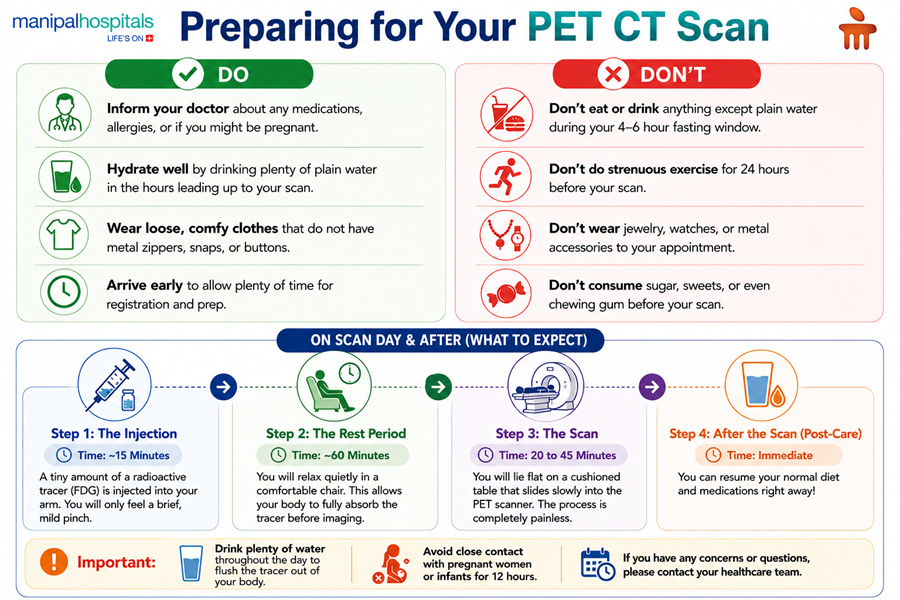
The PET scanner then detects the energy emitted by these tracer molecules. A computer processes this information to create detailed, three-dimensional images that highlight these metabolically active areas as bright spots. When fused with the structural images from the CT scan, the PET CT scan provides an incredibly precise map, distinguishing between cancerous and non-cancerous tissues with remarkable accuracy. This integrated approach has been shown to improve diagnostic accuracy by up to 20-30% compared to either scan performed alone, leading to better patient outcomes.
When is a PET scan needed in cancer care?
The utility of a PET scan extends across various stages of cancer care, from initial diagnosis to long-term monitoring. It's not a screening tool for all cancers but is invaluable in specific scenarios where its unique insights are crucial. Here's when a PET scan procedure is typically recommended:
-
Diagnosing Cancer: While biopsies remain the gold standard for definitive diagnosis, a PET scan can help identify suspicious areas that may be cancerous, guiding subsequent biopsy procedures more accurately. It's particularly useful in distinguishing malignant from benign lesions, especially when other imaging methods are inconclusive.
-
Staging Cancer: One of the most critical applications of a PET scan is to determine the extent of cancer spread (staging). It can detect cancer cells that have metastasized to distant organs or lymph nodes, which conventional imaging might miss. Accurate staging is vital for developing an effective treatment plan, with studies indicating PET scans enhance staging accuracy by up to 30% for several types of cancer.
-
Assessing Treatment Effectiveness: During or after chemotherapy, radiation therapy, or other treatments, a PET scan can assess how well the cancer is responding. A decrease in metabolic activity indicates that the treatment is working, while increased activity might suggest resistance or progression. This allows physicians to adjust treatment plans promptly, ensuring optimal care.
-
Detecting Cancer Recurrence: For patients in remission, a PET scan can be highly effective in detecting early signs of cancer recurrence, often before structural changes become apparent on CT or MRI. Early detection of recurrence, which sometimes improves detection rates by 15-20% in asymptomatic patients, can significantly impact prognosis and allow for timely intervention.
-
Radiation Therapy Planning: By precisely delineating the boundaries of tumors and involved lymph nodes, PET scans assist radiation oncologists in planning highly targeted radiation therapy, minimizing damage to surrounding healthy tissues.
-
Identifying the Primary Tumor: In cases of cancer of unknown primary origin (CUP), where metastases are found but the original tumor site is not evident, a PET scan can often locate the primary cancer, guiding further diagnostic and therapeutic efforts.
Benefits of a PET Scan for Cancer Patients
The integration of PET scans into cancer management has revolutionized patient care, offering a multitude of benefits:
|
Comprehensive Whole-Body Imaging |
Unlike many other scans that focus on specific body parts, a PET CT scan can image the entire body in one session, providing a global view of disease activity. This is crucial for detecting distant metastases. |
|
Early Detection |
PET scans can detect cancerous activity at a cellular level, often before structural changes are visible on other imaging techniques. This early detection can lead to earlier intervention and potentially better outcomes. For instance, PET scans can identify lesions as small as 4-5 mm, improving early diagnosis significantly. |
|
Improved Accuracy in Staging |
By identifying all active disease sites, PET scans provide a more accurate staging of cancer, which is fundamental for tailored and effective treatment planning. Researchers observe this increased accuracy in up to 90% of cases for certain cancers like lymphoma. |
|
Personalized Treatment Plans |
The detailed information from a PET scan allows oncologists to create highly personalized treatment strategies, optimizing therapies based on the specific metabolic characteristics and spread of an individual's cancer. |
|
Reduced Need for Invasive Procedures |
By clearly identifying suspicious areas, PET scans can sometimes reduce the need for unnecessary biopsies or other invasive diagnostic procedures, improving patient comfort and reducing risks. |
|
Monitoring Treatment Response |
PET scans are highly effective in monitoring how well cancer is responding to treatment. Within weeks of starting treatment, changes in metabolic activity can indicate efficacy, allowing for prompt adjustments to the treatment regimen. This can lead to better remission rates. |
|
High Patient Safety Profile |
The radioactive tracer used has a very short half-life and quickly exits the body, minimizing radiation exposure. Adverse reactions are extremely rare, occurring in less than 1% of patients. |
Addressing PET Scan Side Effects and Safety
Patient safety is a top priority at Manipal Hospitals. Understanding potential PET scan side effects is crucial, though they are generally minimal and rare.
-
Radiation Exposure: The primary concern for most patients is radiation exposure. It's important to know that the amount of radiation from a single PET CT scan is comparable to other common diagnostic imaging procedures like a standard CT scan. The radioactive tracer used (FDG) has a very short half-life, meaning it decays rapidly and is quickly eliminated from the body, primarily through urine. Our advanced equipment and protocols ensure the lowest possible radiation dose while maintaining diagnostic quality.
-
Allergic Reactions: Allergic reactions to the FDG tracer are extremely rare. Patients are always monitored closely during and after the injection.
-
Discomfort from Injection: Some patients may experience a brief, mild discomfort or a cold sensation at the injection site.
-
For Pregnant or Breastfeeding Individuals: PET scans are generally not recommended for pregnant women due to potential risks to the fetus. Breastfeeding mothers are advised to pump and store milk prior to the scan and avoid breastfeeding for a certain period (usually 12-24 hours) after the scan to prevent exposure to the infant.
Before your PET scan procedure, our medical team will conduct a thorough review of your medical history to ensure your safety and provide specific instructions tailored to your situation.
Conclusion
The PET CT scan stands as a cornerstone in modern oncology, offering an invaluable advantage in the fight against cancer. From its ability to detect cellular activity before structural changes are visible to its precision in staging, treatment monitoring, and recurrence detection, the PET-CT scan provides critical information that empowers both patients and their medical teams. At Manipal Hospitals, we are committed to harnessing this advanced technology, combined with the expertise of our multidisciplinary specialists, to deliver comprehensive, personalized, and compassionate cancer care. Understanding what a PET scan is and its profound impact can significantly influence treatment outcomes and enhance the quality of life for those navigating a cancer diagnosis. We believe in empowering our patients with knowledge and state-of-the-art diagnostics to achieve the best PET scans often enhance disease management, leading to improved health outcomes in over 85% of cases.
If you or a loved one are navigating a cancer diagnosis or treatment journey, understanding advanced diagnostic tools like the PET scan is vital. Our cancer care specialists at Manipal Hospitals Bangalore are dedicated to providing clarity, support, and the highest quality of care.
Book an appointment with us today for a PET scan in Bangalore.
Frequently Asked Questions
The entire PET scan procedure, from the injection of the tracer to the completion of imaging, typically takes about 2 to 3 hours. The scan itself usually lasts between 20 and 45 minutes.
The procedure is generally painless. You might feel a brief pinprick during the tracer injection. You will lie still on a comfortable table during the scan.
You will typically need to fast for 4-6 hours before your scan, consuming only plain water. Your doctor will provide specific instructions.
The radiation dose from a PET CT scan is carefully controlled and considered safe, comparable to other common medical imaging tests. The tracer rapidly decays and is eliminated from your body.
Our nuclear medicine specialists will interpret your scan, and a report will typically be available to your referring oncologists within 24-48 hours. Your doctor will then discuss the results with you.
Share this Article


Recent Blogs

test blog 18/09--
06 Oct 20269 Min Read
Teseting h tags HH Teseting h tags HH Teseting h tags HH Teseting h tags HH Teseting h tags HH Teseting h tags HH Teseting h tags HH लहान मुलांमध्ये पोटदुखी ही एक अत्यंत सामान्य समस्या आहे. बऱ्याचदा पोटदुखी ही किरकोळ कारणांनी होत असते, मात्र काही वेळा ती गंभीर आजाराचे लक्षण देखील असू शकते. पालकांनी पोटदुखीला हलकं न घेता तिच्या कारणांचा शोध घेणे महत्त्वाचे आहे. योग्य वेळी उपचार झाले तर मुलांचे आरोग्य लवकर सुधारते आणि भविष्यातील गुंतागुंत टाळता येते. चला तर मग पाहूया मुलांमध्ये पोटदुखीची 7 संभाव्य कारणे आणि त्यावर उपाय. https://fedrevdev.cosmicnet.xyz/clinics-budigere/ Teseting h tags HH Teseting h tags HH
Read NowFlu Prevention Tips:test
18 Sept 20263 Min Read
When the weather shifts, so do the challenges to your health. You may notice how a sudden dip in temperature, an unexpected shower, or even a change from humid to dry air seems to bring on sniffles, fevers, or sore throats. Among the most common concerns during such transitions is the flu. Unlike a cold, the flu can leave you weak, feverish, and struggling for days. https://fedrevdev.cosmicnet.xyz/jaipur/ The good news? You can protect yourself. Flus prevention is not about doing one big thing; rather, it is about combining small, consistent actions with an understanding of how your body’s immunity works. Just as seasons change, your approach to health should adapt, too. Recognising early signs, strengthening your body from within, and knowing when to seek medical advice can make a world of difference. The Department of Internal Medicine at the Manipal Clinics Begur, Bengaluru, is well equipped with top specialists, infrastructure and advanced treatment facilities, which help in early diagnosis and recovery from flu-related diseases. https://fedrevdev.cosmicnet.xyz/jaipur/ The Department of Internal Medicine at the Manipal Clinics Begur, Bengaluru, is well equipped with top specialists, infrastructure and advanced treatment facilities, which help in early diagnosis and recovery from flu-related diseases test.
Read NowModern Ways to Remove Kidney Stones: No Big Cuts Required
19 Jun 20267 Min Read
Kidney stones, though common, can be incredibly painful and disruptive to daily life. For a long time, their removal often involved invasive surgeries with lengthy recovery periods. However, medical science has advanced remarkably, offering a new era of minimally invasive and highly effective kidney stone treatment options. Understanding these modern approaches to managing kidney stones can significantly ease anxieties and empower patients to make informed decisions about their health. The good news is that the vast majority of kidney stones can now be treated without the need for large incisions, thanks to advanced techniques like class kidney stone laser treatment and other state-of-the-art procedures.
Read NowDecoding Acid Reflux: Expert Insights on Causes, Symptoms, and Advanced Treatment Options
19 Jun 20268 Min Read
Acid reflux, often simply called heartburn, is a common digestive condition that affects millions worldwide. While often dismissed as a minor inconvenience, persistent acid reflux can significantly impact quality of life and, if left unaddressed, lead to more serious health issues. At Manipal Hospitals, we believe in empowering our patients with knowledge. This comprehensive guide will help you understand the core aspects of acid reflux, from its underlying causes and tell-tale symptoms to effective treatment strategies and lifestyle adjustments that can bring lasting relief. Recent studies indicate that up to 20% of the global population experiences acid reflux symptoms weekly, making it one of the most prevalent gastrointestinal disorders. The good news? With proper diagnosis and treatment, over 90% of patients can find substantial relief and manage their condition effectively. Let's dive deeper about acid reflux in this blog.
Read NowPreparing for Bypass Surgery: When It's Needed and How to Plan?
05 Jun 20268 Min Read
The journey through a diagnosis of coronary artery disease (CAD) can be daunting, bringing with it a cascade of questions and anxieties. When lifestyle changes and medical therapies are no longer sufficient to manage severe blockages, bypass surgery emerges as a highly effective intervention. For many, the phrase ‘bypass surgery’ might sound intimidating. However, understanding when this procedure becomes a vital step in your journey to a healthier heart and how to effectively prepare for it can transform apprehension into empowerment. In this blog, let us guide you through every step, ensuring you receive the most compassionate and advanced coronary artery disease treatment available.
Read NowNavigating Cancer: The Role of PET Scans in Diagnosis and Treatment Planning
03 Jun 20268 Min Read
In the complex journey of cancer diagnosis and treatment, understanding the extent and nature of the disease is paramount. Positron Emission Tomography (PET) scans, often combined with Computed Tomography (CT) scans, offer a powerful window into the body's metabolic activity, providing critical insights that traditional imaging alone cannot. This comprehensive guide aims to demystify the PET CT scan, explaining what is a PET scan, how it works, and when it becomes an indispensable tool in cancer management.
Read NowInflammatory Bowel Disease (IBD): How Early Diagnosis and Advanced Care Help 80% of Patients Achieve Better Health Outcomes
28 May 20266 Min Read
Inflammatory Bowel Disease (IBD) is a group of chronic inflammatory conditions affecting the gastrointestinal (GI) tract. Unlike more common digestive issues, IBD involves persistent inflammation, leading to a range of debilitating symptoms. Understanding what is Inflammatory Bowel Disease is the first step towards effective management and a significantly improved quality of life.
Read NowDemystifying C-Section Delivery: Why Doctors Recommend This Life-Saving Procedure
28 May 20266 Min Read
For many expectant parents, the journey to childbirth is filled with anticipation and detailed planning. While a vaginal delivery is often the preferred outcome, medical circumstances sometimes necessitate a cesarean section, commonly known as a C-section. Understanding the reasons behind this recommendation can empower parents and alleviate anxieties. Globally, C-sections account for a significant number of births, with some regions reporting rates over 30%. This highlights the critical role this procedure plays in modern obstetrics. In this blog, let us know why doctors recommend this procedure to some expectant mothers.
Read NowThe Silent Epidemic: Why Slip Disc Symptoms Are Rising Among Young People?
28 May 20268 Min Read
Once considered an ailment primarily affecting older adults, a ‘slip disc’ or herniated disc is now increasingly being diagnosed in young individuals. In recent times, doctors have observed a noticeable shift, with more young adults seeking consultation for persistent back and neck pain. This concerning trend prompts us to delve into the reasons behind this rise and empower you with knowledge about slip disc symptoms, causes, and effective management strategies. Understanding this condition is crucial, especially when early intervention can make a significant difference. Let's explore why this spinal issue is becoming a silent epidemic among the younger generation.
Read NowHyperthermia Symptoms: Causes, Signs, and Prevention of Excessive Body Heat
25 May 20268 Min Read
As temperatures rise, so does the risk of heat-related illnesses, with hyperthermia being one of the most critical. Understanding hyperthermia symptoms, its causes, and effective prevention strategies is vital for everyone, especially in regions prone to extreme heat. Hyperthermia, or excessive body heat, occurs when your body generates or absorbs more heat than it can dissipate, leading to a dangerous rise in core body temperature. Early recognition and timely intervention can significantly improve outcomes, with studies showing that prompt cooling can increase survival rates for severe heatstroke by over 90%.
Read Now