


Diabetic Foot Care: Practical Ways to Avoid Serious Foot Problems
Reviewed by: Dr. Anusha Handral
Posted on
8 Min Read

Not sure what you’re looking for?
Get in touch with our representatives for help!
Contact UsPeople living with diabetes are usually screened for kidney, eye, or heart complications. But the foot is commonly neglected. Changes in the feet, such as less sensitivity, dry skin, and slow healing of wounds, may appear to be of little concern, but they could eventually grow into something more dangerous if one is not careful. Many people are surprised to learn that the majority of diabetic foot complications start out as common issues. These include an unnoticed blister, ill-fitting footwear, and cracks in the feet, which could eventually develop into more dangerous conditions if one is not careful.
The good news is that many of the problems could be avoided if you are aware of the necessary diabetic foot care required. This blog aims to help you know more about the reasons for the effect of diabetes on the feet and the steps you can take for effective diabetes foot management.
Why Does Diabetes Affect the Feet?
The relationship between diabetes and foot health is closely linked to the body’s nerves and blood vessels. Over time, elevated blood glucose levels can damage both systems, creating conditions that make the feet particularly vulnerable.
One of the most common contributors is peripheral neuropathy in diabetes, a condition where nerve damage reduces the ability to feel pain, heat, or injury. Without normal sensation, even a small cut or blister may go unnoticed until it becomes more serious. At the same time, diabetes may affect blood circulation in the lower limbs, slowing down the body’s natural healing process.
These changes mean that injuries that might normally heal within days can take longer to recover. Without proper diabetic foot care, minor issues may develop into infections or deeper tissue damage. This is why routine inspection, careful hygiene, and prompt treatment Recognizing any foot abnormality is an essential element of long-term diabetes foot management.
Early Signs of Diabetic Foot Problems You Should Never Ignore
Foot complications rarely appear suddenly. Most develop gradually, often starting with subtle changes that are easy to overlook during busy daily routines. Learning to recognise these signs early can help prevent serious consequences.
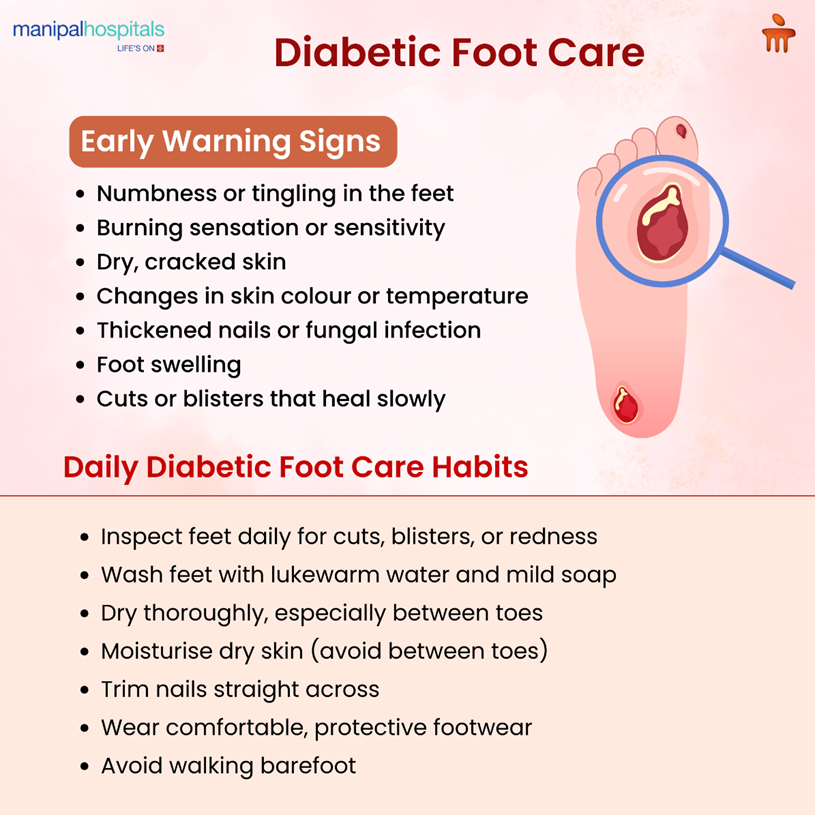
Symptoms that deserve attention include:
-
Persistent numbness or tingling in the feet
-
Burning sensations or unusual sensitivity to touch
-
Skin dryness, cracking, or peeling between the toes
-
Changes in skin colour or temperature
-
Thickened toenails or fungal infections
-
Foot swelling that does not settle with rest
-
Small wounds, blisters, or cuts that heal slowly
Some people with peripheral neuropathy in diabetes may notice reduced awareness of injuries rather than pain itself. Because of this, visual inspection becomes an essential habit. Detecting changes early is one of the most effective ways of preventing diabetic foot ulcers, which are among the most serious complications associated with diabetes.
If you experience any of these symptoms, consult an experienced diabetes and endocrinology specialists in Whitefield for an early assessment. Timely evaluation and treatment can help prevent diabetic foot complications and protect your long-term foot health. View our diabetes specialists in Whitefield to find the right expert for your care.
Daily Foot Care Habits That Protect Your Feet
Protecting the feet is less about complicated treatments and more about consistent daily routines. When practised regularly, these habits significantly lower the chances of infections and skin breakdown.
Simple foot care tips for diabetics recommended by specialists include:
-
Inspect your feet every day: Check the soles, toes, and heel areas for cuts, blisters, redness, or swelling.
-
Wash and dry carefully: Use lukewarm water and mild soap, drying thoroughly, especially between the toes.
-
Moisturise dry skin: Apply moisturiser to prevent cracking, but avoid placing cream between the toes, where moisture can encourage fungal growth.
-
Trim nails properly: Cut nails straight across and smooth the edges gently.
-
Wear supportive footwear: Choose shoes that cushion the foot and prevent pressure points.
-
Avoid walking barefoot: Even indoors, small objects or rough surfaces can cause unnoticed injuries.
When these practices become part of daily life, diabetic foot care becomes far easier to maintain and much more effective in reducing complications.
Footwear and Lifestyle Choices That Make a Difference
Footwear often plays a larger role in diabetes foot management than many people realise. Tight or poorly fitting shoes can create pressure areas that gradually lead to skin breakdown. Over time, repeated friction can cause blisters or calluses that may develop into deeper wounds.
Supportive shoes with adequate cushioning and a wide toe box help distribute weight evenly across the foot. Breathable socks made from moisture-absorbing materials also help maintain skin health. Avoiding seams inside footwear can reduce friction in sensitive areas.
Lifestyle habits matter just as much. Maintaining stable blood sugar levels supports nerve health and circulation, while regular physical activity improves blood flow to the lower limbs. Together, these factors strengthen the body’s ability to prevent diabetic foot complications and support long-term mobility.
Stages of Diabetic Foot Ulcers and Medical Response
Understanding how foot ulcers progress can help patients recognise when urgent medical care is needed. Clinicians often classify ulcers based on depth and tissue involvement, which guides treatment decisions.
|
Ulcer Stage |
What Happens in the Foot |
Typical Medical Approach |
Recovery Considerations |
|
Stage 0 |
Skin remains intact but shows pressure areas, redness, or callus formation |
Pressure redistribution and specialised footwear |
Close monitoring prevents ulcer formation |
|
Stage 1 |
Superficial wound limited to the outer skin layer |
Wound cleaning, protective dressings, and pressure relief |
Healing is usually straightforward with early care |
|
Stage 2 |
Ulcer extends deeper into skin layers and may reach ligaments or tendons |
Advanced wound care and possible antibiotics |
Requires consistent follow-up |
|
Stage 3 |
Infection spreads into deeper tissues, sometimes involving bone |
Surgical evaluation and intensive treatment |
Recovery may take longer and need specialized care |
|
Stage 4 |
Severe tissue damage or gangrene affecting part of the foot |
Urgent surgical intervention |
Focus shifts to infection control and limb preservation |
Recognising these stages highlights why preventing diabetic foot ulcers through regular inspection and protective footwear remains far easier than treating advanced wounds.
How Doctors Approach Diabetic Foot Treatment
Clinical evaluation of foot problems usually involves a careful assessment rather than immediate invasive procedures. Doctors examine the skin, circulation, and nerve function to understand the underlying cause of symptoms.
Diagnostic tools may include vascular assessments to measure blood flow, neurological tests to check sensation, and imaging studies if a deeper infection is suspected. These evaluations help determine the most appropriate diabetic foot treatment strategy.
Treatment plans often combine wound care, infection control, pressure-relieving footwear, and metabolic management of blood sugar levels. In more advanced cases, specialised procedures may be needed to restore circulation or remove infected tissue. With timely care, many patients recover without long-term complications.
If you notice persistent foot pain, numbness, slow-healing wounds, or other signs of diabetic foot complications, consult a diabetes specialist in Whitefield for a comprehensive evaluation and a personalised diabetic foot treatment plan. Early intervention can help prevent serious complications and support long-term foot health.
When Medical Attention Should Not Be Delayed
Certain symptoms signal that immediate medical evaluation is necessary. Waiting too long can allow infections to spread or ulcers to deepen, complicating treatment.
Seek prompt care if you notice:
-
A wound that has not improved within a few days
-
Increasing redness, swelling, or warmth around a cut
-
Pus or unusual discharge from a foot lesion
-
Blackened or discoloured skin
-
Persistent pain in a previously numb area
-
Fever along with a foot infection
Early medical intervention significantly improves outcomes and helps prevent severe diabetic foot complications.
Conclusion
Foot health is an essential yet often overlooked part of living with diabetes. Regular diabetic foot care, including daily inspection, protective footwear, and good skin hygiene, can dramatically reduce the chances of ulcers, infections, and long-term disability. Recognising early symptoms linked to peripheral neuropathy in diabetes and seeking timely medical advice ensure that small concerns are addressed before they become serious.
If symptoms or wounds appear, consulting specialists who are experienced in diabetic foot treatment in Whitefield, Bangalore, such as the team at Manipal Hospitals, can help ensure timely evaluation and effective care.
Frequently Asked Questions
Yes. Although maintaining stable blood glucose significantly lowers risk, nerve and circulation changes may still occur over time. Genetics, duration of diabetes, and existing vascular health can influence how the feet are affected. This is why routine foot checks remain important even for individuals with well-managed diabetes.
Risk tends to increase in people who have had diabetes for many years, those with previous foot ulcers, smokers, and individuals with kidney disease or poor circulation. Structural foot deformities, such as hammertoes or bunions, can also create pressure points that increase vulnerability to skin breakdown.
Most specialists recommend a comprehensive foot assessment at least once a year. However, individuals with nerve damage, previous ulcers, or circulation problems may require more frequent evaluations, sometimes every three to six months, to monitor changes closely.
Regular physical activity improves blood circulation, which helps nourish tissues and support healing. Activities such as walking, cycling, or swimming can be beneficial, provided that appropriate footwear is used and the feet are inspected afterward for any signs of irritation or injury.
Yes, they should be evaluated by a healthcare professional. Thickened skin may indicate excessive pressure on certain areas of the foot. If left untreated, calluses can develop into ulcers beneath the surface. Medical removal and footwear adjustments often help prevent further complications.
Share this Article


Recent Blogs

Jawline Contouring: A Trending Facial Enhancement, and Is It Right for You?
30 Jun 20268 Min Read
A sharp, well-defined jawline is one of the most popular features in modern beauty. You’ve probably noticed how much attention a sharp jawline gets today, on social media, in movies, everywhere. But many people think that jawline contouring makes their natural features look better and gives them more confidence. We’ve all been there, tilting our heads just right in the mirror or searching for the perfect angle in a photo. A sharp, well-defined jawline has become one of the most sought-after features in modern beauty, and it’s easy to see why. From the sculpted looks trending on social media to the leading roles on the big screen, a strong profile often signals health, vitality, and fitness. But for most people, it’s about more than just a trend. Jawline contouring is a way to harmonize your natural features, providing a boost in confidence that radiates from the inside out. For some, the goal is to reduce a double chin, while others want a more defined and contoured look. Advances in plastic and reconstructive surgery have made jawline contouring safer, more precise, and possible without major surgery. In this blog post, we'll explain jawline contouring, the treatment options, the pros and cons of each, and whether it's the right choice for you.
Read NowSleeping with Back Pain: Small Posture Changes That Make a Big Difference
29 Jun 20267 Min Read
Back pain often makes itself felt as soon as you try to sleep. After a long day, you lie down hoping rest will ease the ache, but as soon as you settle, the pain in the lower back can feel louder. Nights can become restless—turning from side to side, shifting pillows, or waking up stiff and sore the next morning. Understanding the right sleeping posture for lower back pain can make a real difference. With a few thoughtful tweaks, from pillow placement to mattress choice, you can reduce strain and let the spine rest in a more natural position. This blog explains the science behind sleep posture and lower back health, shows the best sleeping position for back pain, and offers practical advice on how to sleep with back pain comfortably through the night.
Read NowHeart Attack in Young Adults: Early Warning Signs You Shouldn’t Ignore
24 Jun 20268 Min Read
It is a chilling realisation, but the pattern of cardiac health is changing rapidly in 2026. For decades, the general assumption was that heart issues were a "future problem," something to worry about in one's 50s or 60s. However, the reality in modern emergency rooms tells a different story. We are seeing a significant rise in the incidence of heart attacks in young adults, with people in their 20s and 30s experiencing life-threatening cardiac events. What’s changed in everyday life? Long hours, irregular meals, rising diabetes, weight gain, and constant stress are putting early strain on the heart. The body does send signals, but heart attack symptoms in younger people can feel vague or easy to brush off. That delay matters because early recognition can change outcomes completely, and knowing what to look for could be the difference between a close call and something far more serious. In this blog, we talk about the issue, the cause, and remedies.
Read NowDiabetic Foot Care: Practical Ways to Avoid Serious Foot Problems
10 Jun 20268 Min Read
People living with diabetes are usually screened for kidney, eye, or heart complications. But the foot is commonly neglected. Changes in the feet, such as less sensitivity, dry skin, and slow healing of wounds, may appear to be of little concern, but they could eventually grow into something more dangerous if one is not careful. Many people are surprised to learn that the majority of diabetic foot complications start out as common issues. These include an unnoticed blister, ill-fitting footwear, and cracks in the feet, which could eventually develop into more dangerous conditions if one is not careful. The good news is that many of the problems could be avoided if you are aware of the necessary diabetic foot care required. This blog aims to help you know more about the reasons for the effect of diabetes on the feet and the steps you can take for effective diabetes foot management.
Read NowKyphoplasty Explained: How the Procedure Restores Stability After Vertebral Fractures?
10 Jun 20267 Min Read
Back pain that starts suddenly after a minor fall or even a simple movement can feel alarming, especially when it turns out to be a spinal fracture. Many people are surprised to learn that fragile bones, particularly in older adults or those with weakened bone density, can collapse under everyday stress. The pain can be persistent, posture may slowly change, and routine tasks that were once easy become difficult. This is where kyphoplasty comes into the conversation. Designed to stabilise fractured vertebrae and restore spinal structure, the procedure has changed how clinicians manage painful vertebral compression fractures. When conservative measures do not ease symptoms, this minimally invasive option can offer meaningful improvement in mobility and comfort.
Read NowUnderstanding Common Sports Injuries and Effective Ways to Prevent Them Safely
29 May 20267 Min Read
Participating in sports and other physical activities yields many health benefits. These include improvements in fitness, strength, flexibility and mental well-being. However, the risk of injuries in athletics still remains. Sports injuries can affect players of all ages and skill levels, ranging from a major ligament tear to a minor sprain. Therefore, it is very important to understand what sports injuries are, their causes and the correct strategies to prevent them in order to maintain long-term physical health and performance. Whether you are a professional athlete, a fitness enthusiast or a leisure player, knowing how to avoid and treat common sports injuries will help minimise downtime and improve recovery.
Read NowChronic Kidney Disease in India: CKD Causes, Symptoms & Prevention
29 May 20268 Min Read
Many people do not realise they have kidney disease until the damage becomes more serious. Symptoms like swelling in the feet, tiredness, or waking up multiple times at night to urinate are often ignored in the beginning, but they can sometimes be early signs of chronic kidney disease (CKD). In India, CKD contributes to a high percentage of kidney problems, with recent studies showing a pooled prevalence of around 13-17% among adults and rising from 11% (2011-2017) to 16% (2018-2023). These diseases are becoming more common due to lifestyle changes, stress, obesity, poor eating habits, and lack of exercise. Now doctors are seeing kidney damage at an earlier age. Over time, uncontrolled diabetes and high blood pressure can damage the tiny blood vessels inside the kidneys, reducing their ability to filter waste properly. In this blog, we will discuss how diabetes affects the kidneys, the connection between high BP and kidney disease, common warning signs of CKD, and ways to protect long-term kidney health.
Read NowStress and Heart Attack: Understanding the Hidden Connection
27 May 20268 Min Read
Most people associate a heart attack with unhealthy eating, smoking, diabetes, or high cholesterol. While these are important risk factors, emotional stress is also known to affect heart health. Long working hours, financial pressure, poor sleep, emotional trauma, and constant anxiety can gradually place extra strain on the cardiovascular system over time. Doctors recognise that severe emotional stress can contribute to heart attacks, especially in people with existing cardiovascular risks. Greater awareness can help us identify warning signs and make informed choices to reduce the risk of heart attacks. This blog explores the intricate biological relationship between emotional strain and cardiac health, detailing how stress causes heart attack. By understanding these mechanisms, you can take proactive steps toward both mental well-being and physical health.
Read NowEnlarged Prostate Vs Prostate Cancer: Key Differences
27 May 20266 Min Read
As men get older, changes in urination become fairly common. The urine flow may feel weaker, trips to the bathroom become more frequent, and waking up at night to urinate may start happening more often. Most men brush these changes off as a normal part of ageing. But after a point, one concern starts coming up quite often: is it just an enlarged prostate, or could it be prostate cancer? The confusion is understandable because both conditions affect the prostate gland and can cause similar urinary symptoms. However, an enlarged prostate and prostate cancer are not the same. One is a non-cancerous condition that commonly develops with age, while the other involves abnormal cancerous growth inside the prostate gland. Knowing the difference between the two can help men understand when symptoms should not be ignored, when screening becomes important, and when to seek medical advice early.
Read NowAxillary Breast Removal Surgery: Procedure & Recovery
27 May 20268 Min Read
A small bulge near the underarm area is something many people ignore at first. Some think it is weight gain, while others assume it is just stubborn fat that does not go away with exercise. But for some people, that fullness is actually axillary breast tissue, which can become more noticeable over time. The area may feel uncomfortable while wearing fitted clothes, exercising, or even moving the arms normally. Some people also notice swelling, irritation, or tenderness during hormonal changes, pregnancy, or breastfeeding. While it is not always a serious medical problem, it can affect comfort and confidence in daily life. The good thing is that treatment options are available, and axillary breast removal surgery is commonly done to remove the excess tissue safely. This blog explains the condition, how the procedure is done, recovery after surgery, and what patients should know before considering treatment.
Read Now