


Sleeping with Back Pain: Small Posture Changes That Make a Big Difference
Reviewed by: Dr. Bharat P Sarkar
Posted on
7 Min Read

Not sure what you’re looking for?
Get in touch with our representatives for help!
Contact UsBack pain often makes itself felt as soon as you try to sleep. After a long day, you lie down hoping rest will ease the ache, but as soon as you settle, the pain in the lower back can feel louder. Nights can become restless—turning from side to side, shifting pillows, or waking up stiff and sore the next morning.
Understanding the right sleeping posture for lower back pain can make a real difference. With a few thoughtful tweaks, from pillow placement to mattress choice, you can reduce strain and let the spine rest in a more natural position.
This blog explains the science behind sleep posture and lower back health, shows the best sleeping position for back pain, and offers practical advice on how to sleep with back pain comfortably through the night.
Why Sleep Posture Matters for Lower Back Health
During the day, your spine adapts to movement and activity. At night, the body shifts into recovery mode. Muscles relax, spinal discs rehydrate, and the nervous system slows down. If the body is poorly aligned during sleep, recovery is less effective.
The lower back, or lumbar spine, normally curves inward. When a sleeping position flattens that curve too much or bends it sharply, the surrounding muscles must work to stabilise the area. Over hours, this tension creates morning stiffness or lingering discomfort.
Keeping a neutral spine is essential. A supportive sleeping position for back pain lines up the head, shoulders, hips, and pelvis. That reduces pressure on joints, prevents muscle strain, and helps you wake up feeling less restricted.
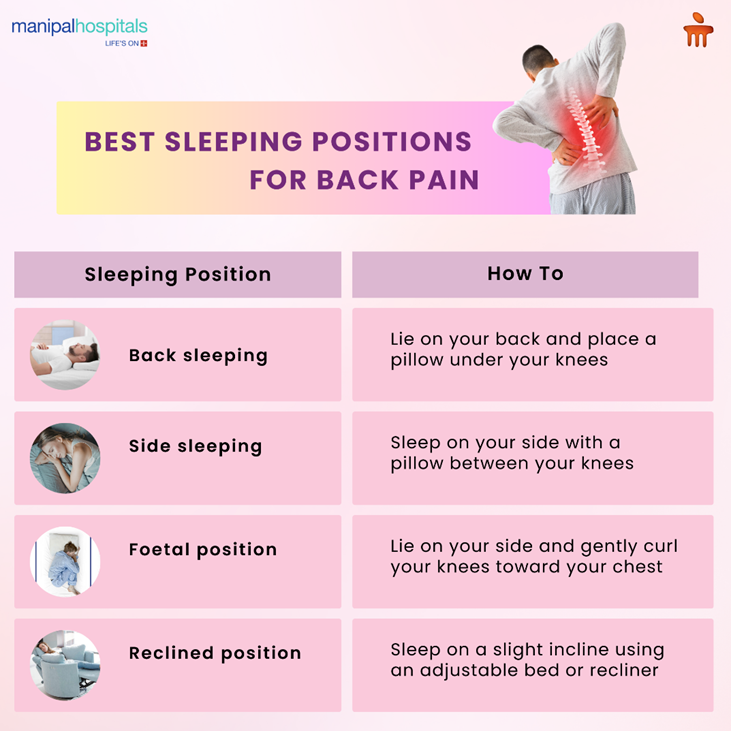
Best Sleeping Positions for Lower Back Pain
Not every posture supports the spine equally. Some keep the body aligned naturally, while others add strain. The right sleeping positions for lower back pain spread weight evenly and honour the spine’s curves.
-
Sleeping on the Back with Knee Support
Sleeping on one's back is often the most balanced posture for spinal alignment. Placing a small pillow or a rolled towel under the knees helps preserve the natural curve of the lower back. This stops the lumbar spine from flattening fully against the mattress. With proper head and neck support, this position spreads body weight evenly across the back. Many physiotherapists favour this as a reliable best sleeping position for back pain, especially for people who wake up stiff.
-
Side Sleeping with a Pillow Between the Knees
Side sleeping is another good option, especially when done with supportive props. A pillow between the knees prevents the top leg from pulling the pelvis forward. Without that support, the lower spine can twist during the night. The knee pillow keeps the hips aligned and reduces pressure on the lumbar area. For those who naturally sleep on their side, this position is often the most comfortable of the sleeping positions for lower back pain.
-
Foetal Position for Spinal Decompression
Gently curling into a foetal position can relieve pressure on spinal discs. Drawing the knees slightly toward the chest opens the spaces between the vertebrae. This may ease tension caused by disc irritation or nerve compression. The trick is to keep the posture relaxed rather than tightly curled.
-
Reclined Sleeping Position
Some people find relief by sleeping slightly reclined, using an adjustable bed or a supportive recliner. A gentle incline shifts weight away from the lower spine and lowers pressure on spinal joints. Clinicians sometimes recommend this position for conditions like spinal stenosis.
Sleeping Positions That Can Worsen Lower Back Pain
Just as some positions protect the spine, others add unnecessary strain. Many people fall into these habits without realising the impact.
Common positions that aggravate back pain include:
-
Sleeping on the stomach forces the neck to twist and flattens the natural spinal curve.
-
Twisted side positions: when one leg is extended and the other bent forward, creating pelvic rotation.
-
Sleeping without pillow support leads to uneven spinal alignment.
-
Staying tightly curled for long periods can increase lower back muscle tension.
Avoiding these postures can improve your overall sleeping posture for lower back pain.
Practical Adjustments That Improve Night-Time Back Support
Finding the right position is only part of the solution. Small changes in your sleep environment can make a noticeable difference.
Consider the following practical changes:
-
Choose the right pillow height so the neck stays aligned with the spine.
-
Use knee or leg pillows to keep the pelvis level.
-
Keep the mattress supportive but not overly firm.
-
Avoid very thick pillows that push the head forward.
-
Aim for a consistent sleep posture when possible.
These simple strategies support a stable sleeping position for back pain, allowing muscles and joints to rest properly.
Mattress and Pillow Considerations for Lower Back Support
Sleep surfaces play a larger role in spinal health than many people realise. An unsuitable mattress or pillow can undo the benefits of even the best sleeping position for back pain. Below is a comparison of sleep support features and how they influence spinal comfort.
|
Sleep Support Factor |
Recommended Characteristics |
Why It Matters for Back Health |
|
Mattress firmness |
Medium to medium-firm |
Supports spinal curves without excessive sinking |
|
Mattress material |
Memory foam or hybrid designs |
Adapts to body contours while distributing weight |
|
Pillow height |
Neutral height based on sleeping position |
Keeps neck aligned with spine |
|
Lumbar support |
Slight contouring in the mattress or pillow |
Prevents collapse of the lower back curve |
|
Edge support |
Reinforced mattress edges |
Maintains posture when shifting positions |
|
Breathable materials |
Temperature-regulating fabrics |
Prevents night-time restlessness from overheating |
|
Pillow shape |
Contoured or ergonomic |
Helps maintain cervical spine alignment |
|
Mattress lifespan |
Replacement every 7-10 years |
Prevents sagging that disrupts spinal support |
Choosing supportive sleep surfaces can significantly influence long-term sleeping positions for lower back pain and improve sleep quality overall.
When Night-Time Back Pain Signals an Underlying Issue
Occasional discomfort after physical exertion is common. But persistent pain that regularly wakes you up needs medical attention.
Lower back pain that worsens at night may point to structural problems such as disc herniation, joint inflammation, or nerve irritation. In those cases, posture adjustments alone may not solve the problem. Seek professional evaluation if you notice:
-
Pain radiating down the legs.
-
Persistent numbness or tingling.
-
Back stiffness that lasts for hours after waking.
-
Pain that limits daily movement.
-
Night pain with unexplained weight loss or fever.
A clinician in whitefield may recommend physiotherapy, posture-correcting exercises, or imaging tests to find the cause. Identifying the root problem helps decide the safest way to sleep with back pain while protecting spinal health.
Conclusion
Quality sleep supports recovery, especially when the body is already dealing with discomfort. Poor alignment can quietly worsen lower back pain night after night, while a supportive sleeping position for back pain allows the spine to rest and heal. Small changes, such as placing a pillow under the knees, using leg support while side sleeping, or adjusting mattress firmness, can significantly reduce lumbar strain. These tweaks encourage healthier sleeping positions for lower back pain and make it easier to rest without waking stiff or sore. If nighttime discomfort continues despite improving your sleeping posture for lower back pain, seek medical advice at Manipal Hospital Whitefield.
Frequently Asked Questions
Yes. Repeatedly sleeping in positions that strain the spine can contribute to muscle imbalance and joint irritation over time. Months or years of poor alignment may worsen existing conditions or trigger chronic discomfort. Keeping the spine aligned during sleep reduces unnecessary pressure on the lumbar area and helps prevent cumulative damage.
The body needs several nights to adapt to a new sleep posture. Some people notice improvement within a week, especially if they use correct pillow support. If the pain stems from structural issues such as disc degeneration, posture changes may ease symptoms but not remove the underlying cause.
Rarely. The neck needs gentle elevation to stay aligned with the rest of the spine. Without proper support, the cervical spine can tilt and affect alignment down the back. A suitable pillow is usually helpful.
Gentle stretching before sleep can relax tight muscles around the spine and hips. Movements that release tension in the hamstrings, hip flexors, and lower back often help. Keep stretches gentle and controlled rather than forceful.
Body weight influences how pressure is distributed across the spine during sleep. People with higher body weight may compress the mattress more deeply, which can affect alignment. Choosing supportive mattresses and correct pillow placement helps preserve a healthier posture overnight.
Share this Article


Recent Blogs

Jawline Contouring: A Trending Facial Enhancement, and Is It Right for You?
30 Jun 20268 Min Read
A sharp, well-defined jawline is one of the most popular features in modern beauty. You’ve probably noticed how much attention a sharp jawline gets today, on social media, in movies, everywhere. But many people think that jawline contouring makes their natural features look better and gives them more confidence. We’ve all been there, tilting our heads just right in the mirror or searching for the perfect angle in a photo. A sharp, well-defined jawline has become one of the most sought-after features in modern beauty, and it’s easy to see why. From the sculpted looks trending on social media to the leading roles on the big screen, a strong profile often signals health, vitality, and fitness. But for most people, it’s about more than just a trend. Jawline contouring is a way to harmonize your natural features, providing a boost in confidence that radiates from the inside out. For some, the goal is to reduce a double chin, while others want a more defined and contoured look. Advances in plastic and reconstructive surgery have made jawline contouring safer, more precise, and possible without major surgery. In this blog post, we'll explain jawline contouring, the treatment options, the pros and cons of each, and whether it's the right choice for you.
Read NowSleeping with Back Pain: Small Posture Changes That Make a Big Difference
29 Jun 20267 Min Read
Back pain often makes itself felt as soon as you try to sleep. After a long day, you lie down hoping rest will ease the ache, but as soon as you settle, the pain in the lower back can feel louder. Nights can become restless—turning from side to side, shifting pillows, or waking up stiff and sore the next morning. Understanding the right sleeping posture for lower back pain can make a real difference. With a few thoughtful tweaks, from pillow placement to mattress choice, you can reduce strain and let the spine rest in a more natural position. This blog explains the science behind sleep posture and lower back health, shows the best sleeping position for back pain, and offers practical advice on how to sleep with back pain comfortably through the night.
Read NowHeart Attack in Young Adults: Early Warning Signs You Shouldn’t Ignore
24 Jun 20268 Min Read
It is a chilling realisation, but the pattern of cardiac health is changing rapidly in 2026. For decades, the general assumption was that heart issues were a "future problem," something to worry about in one's 50s or 60s. However, the reality in modern emergency rooms tells a different story. We are seeing a significant rise in the incidence of heart attacks in young adults, with people in their 20s and 30s experiencing life-threatening cardiac events. What’s changed in everyday life? Long hours, irregular meals, rising diabetes, weight gain, and constant stress are putting early strain on the heart. The body does send signals, but heart attack symptoms in younger people can feel vague or easy to brush off. That delay matters because early recognition can change outcomes completely, and knowing what to look for could be the difference between a close call and something far more serious. In this blog, we talk about the issue, the cause, and remedies.
Read NowDiabetic Foot Care: Practical Ways to Avoid Serious Foot Problems
10 Jun 20268 Min Read
People living with diabetes are usually screened for kidney, eye, or heart complications. But the foot is commonly neglected. Changes in the feet, such as less sensitivity, dry skin, and slow healing of wounds, may appear to be of little concern, but they could eventually grow into something more dangerous if one is not careful. Many people are surprised to learn that the majority of diabetic foot complications start out as common issues. These include an unnoticed blister, ill-fitting footwear, and cracks in the feet, which could eventually develop into more dangerous conditions if one is not careful. The good news is that many of the problems could be avoided if you are aware of the necessary diabetic foot care required. This blog aims to help you know more about the reasons for the effect of diabetes on the feet and the steps you can take for effective diabetes foot management.
Read NowKyphoplasty Explained: How the Procedure Restores Stability After Vertebral Fractures?
10 Jun 20267 Min Read
Back pain that starts suddenly after a minor fall or even a simple movement can feel alarming, especially when it turns out to be a spinal fracture. Many people are surprised to learn that fragile bones, particularly in older adults or those with weakened bone density, can collapse under everyday stress. The pain can be persistent, posture may slowly change, and routine tasks that were once easy become difficult. This is where kyphoplasty comes into the conversation. Designed to stabilise fractured vertebrae and restore spinal structure, the procedure has changed how clinicians manage painful vertebral compression fractures. When conservative measures do not ease symptoms, this minimally invasive option can offer meaningful improvement in mobility and comfort.
Read NowUnderstanding Common Sports Injuries and Effective Ways to Prevent Them Safely
29 May 20267 Min Read
Participating in sports and other physical activities yields many health benefits. These include improvements in fitness, strength, flexibility and mental well-being. However, the risk of injuries in athletics still remains. Sports injuries can affect players of all ages and skill levels, ranging from a major ligament tear to a minor sprain. Therefore, it is very important to understand what sports injuries are, their causes and the correct strategies to prevent them in order to maintain long-term physical health and performance. Whether you are a professional athlete, a fitness enthusiast or a leisure player, knowing how to avoid and treat common sports injuries will help minimise downtime and improve recovery.
Read NowChronic Kidney Disease in India: CKD Causes, Symptoms & Prevention
29 May 20268 Min Read
Many people do not realise they have kidney disease until the damage becomes more serious. Symptoms like swelling in the feet, tiredness, or waking up multiple times at night to urinate are often ignored in the beginning, but they can sometimes be early signs of chronic kidney disease (CKD). In India, CKD contributes to a high percentage of kidney problems, with recent studies showing a pooled prevalence of around 13-17% among adults and rising from 11% (2011-2017) to 16% (2018-2023). These diseases are becoming more common due to lifestyle changes, stress, obesity, poor eating habits, and lack of exercise. Now doctors are seeing kidney damage at an earlier age. Over time, uncontrolled diabetes and high blood pressure can damage the tiny blood vessels inside the kidneys, reducing their ability to filter waste properly. In this blog, we will discuss how diabetes affects the kidneys, the connection between high BP and kidney disease, common warning signs of CKD, and ways to protect long-term kidney health.
Read NowStress and Heart Attack: Understanding the Hidden Connection
27 May 20268 Min Read
Most people associate a heart attack with unhealthy eating, smoking, diabetes, or high cholesterol. While these are important risk factors, emotional stress is also known to affect heart health. Long working hours, financial pressure, poor sleep, emotional trauma, and constant anxiety can gradually place extra strain on the cardiovascular system over time. Doctors recognise that severe emotional stress can contribute to heart attacks, especially in people with existing cardiovascular risks. Greater awareness can help us identify warning signs and make informed choices to reduce the risk of heart attacks. This blog explores the intricate biological relationship between emotional strain and cardiac health, detailing how stress causes heart attack. By understanding these mechanisms, you can take proactive steps toward both mental well-being and physical health.
Read NowEnlarged Prostate Vs Prostate Cancer: Key Differences
27 May 20266 Min Read
As men get older, changes in urination become fairly common. The urine flow may feel weaker, trips to the bathroom become more frequent, and waking up at night to urinate may start happening more often. Most men brush these changes off as a normal part of ageing. But after a point, one concern starts coming up quite often: is it just an enlarged prostate, or could it be prostate cancer? The confusion is understandable because both conditions affect the prostate gland and can cause similar urinary symptoms. However, an enlarged prostate and prostate cancer are not the same. One is a non-cancerous condition that commonly develops with age, while the other involves abnormal cancerous growth inside the prostate gland. Knowing the difference between the two can help men understand when symptoms should not be ignored, when screening becomes important, and when to seek medical advice early.
Read NowAxillary Breast Removal Surgery: Procedure & Recovery
27 May 20268 Min Read
A small bulge near the underarm area is something many people ignore at first. Some think it is weight gain, while others assume it is just stubborn fat that does not go away with exercise. But for some people, that fullness is actually axillary breast tissue, which can become more noticeable over time. The area may feel uncomfortable while wearing fitted clothes, exercising, or even moving the arms normally. Some people also notice swelling, irritation, or tenderness during hormonal changes, pregnancy, or breastfeeding. While it is not always a serious medical problem, it can affect comfort and confidence in daily life. The good thing is that treatment options are available, and axillary breast removal surgery is commonly done to remove the excess tissue safely. This blog explains the condition, how the procedure is done, recovery after surgery, and what patients should know before considering treatment.
Read Now