


ICD vs CRT: Understanding Implantable Devices for Dangerous Heart Rhythms and Heart Failure
Reviewed by: Dr. Rasheed Ahmed
Posted on
8 Min Read

Not sure what you’re looking for?
Get in touch with our representatives for help!
Contact UsAt Manipal Hospitals, we understand that a diagnosis involving a serious heart condition can be daunting. You may have heard terms like Implantable Cardioverter Defibrillator (ICD) or Cardiac Resynchronization Therapy (CRT) device, and perhaps you're wondering what they are and how they differ. These advanced implantable devices represent significant breakthroughs in modern cardiology, offering renewed hope and significantly improving the quality of life for patients with dangerous heart rhythms and heart failure.
Through this blog, our commitment is to empower you with clear information, delivered with the empathy you deserve. We'll explore these life-saving technologies, helping you understand their roles in managing complex heart conditions and showcasing how Manipal Hospitals stands at the forefront of providing exceptional arrhythmia treatment and heart failure treatment.
Understanding the Landscape: Dangerous Heart Rhythms and Heart Failure
The heart is an incredible organ, tirelessly pumping blood throughout your body. Sometimes, however, its electrical system can malfunction, leading to an irregular heartbeat, or arrhythmia. Some arrhythmias, like certain forms of ventricular tachycardia, can be life-threatening. Separately, heart failure occurs when the heart cannot pump enough blood to meet the body's needs, leading to symptoms like shortness of breath and fatigue. Both conditions can severely impact a patient's life, but advanced medical devices offer powerful solutions.
What is an Implantable Cardioverter Defibrillator (ICD)?
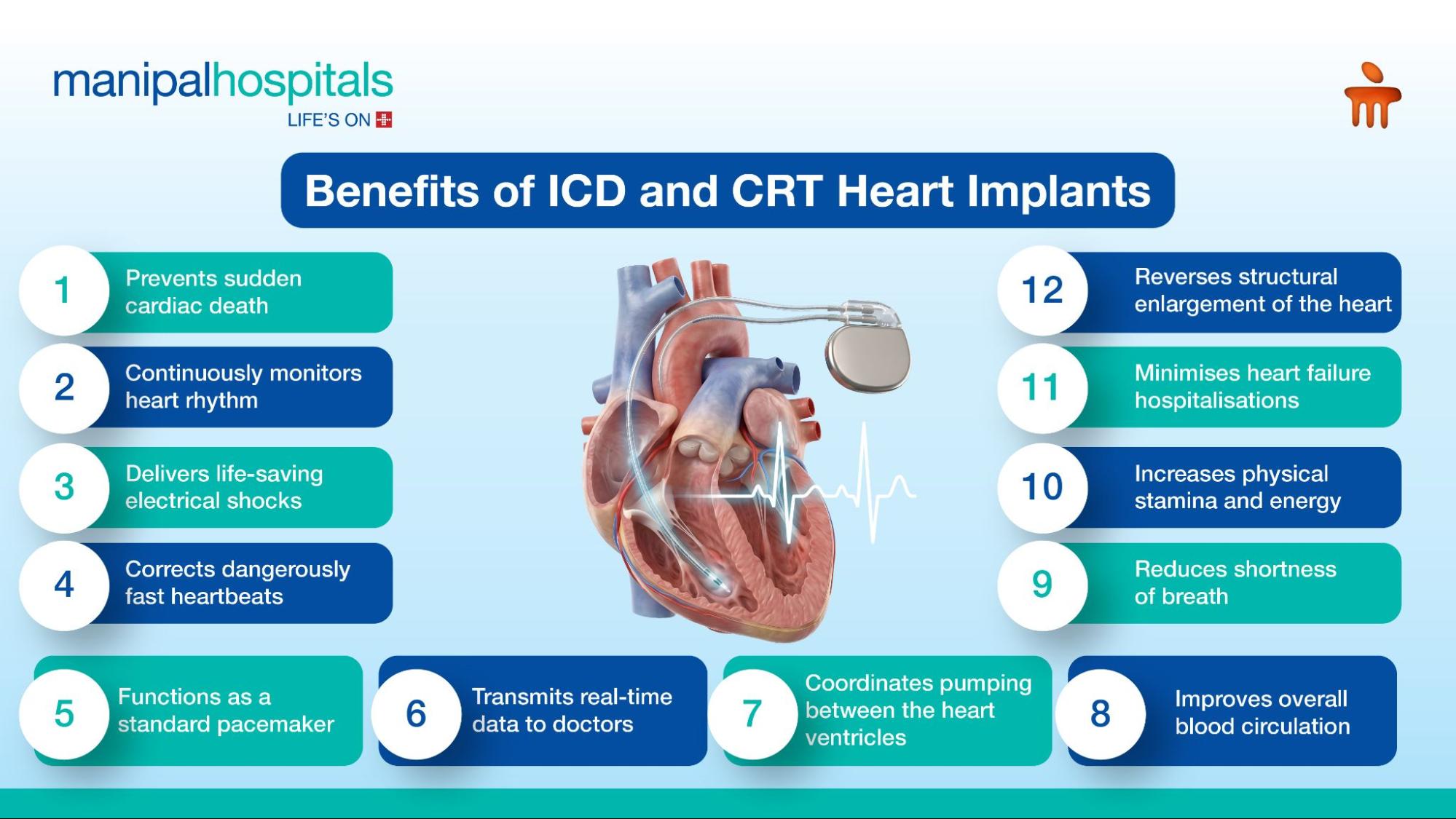
An Implantable Cardioverter Defibrillator (ICD) is a small, battery-powered device placed under the skin near the collarbone. It's designed to monitor your heart rhythm constantly. If it detects a dangerously fast or irregular heartbeat, such as ventricular tachycardia or ventricular fibrillation, it delivers an electrical shock (defibrillation) to restore a normal rhythm. Think of it as a personal paramedic inside your chest, ready to act instantly.
ICDs are primarily used for patients at high risk of sudden cardiac arrest due to life-threatening ventricular arrhythmias. Studies have shown that ICDs can reduce the risk of sudden cardiac death by an impressive 50-70% in selected patient groups, offering significant peace of mind. The ICD implantation procedure is a common and highly successful intervention.
What is Cardiac Resynchronisation Therapy (CRT)?
Cardiac Resynchronisation Therapy (CRT), often referred to as a CRT pacemaker, is a specialised type of pacemaker designed to treat heart failure in patients whose heart's lower chambers (ventricles) don't beat in sync. When the ventricles contract out of time, the heart pumps less efficiently, worsening heart failure symptoms. A CRT device, typically with three leads, sends small electrical impulses to both ventricles simultaneously, helping them contract in a coordinated fashion.
This "resynchronisation" improves the heart's pumping efficiency, reducing symptoms like fatigue and shortness of breath. Clinical trials have demonstrated that CRT can improve quality of life in up to 70-80% of suitable heart failure patients, leading to fewer hospitalisations and increased exercise capacity. Some CRT devices also include defibrillation capabilities, known as CRT-D (Cardiac Resynchronisation Therapy with Defibrillator).
ICD vs CRT: Key Differences and Overlap
While both are implantable devices designed to manage heart conditions, their primary functions and target conditions differ:
-
Primary Goal:
-
ICD: To detect and terminate life-threatening fast arrhythmias (e.g., ventricular tachycardia treatment) by delivering electrical shocks, preventing sudden cardiac death.
-
CRT: To improve the heart's pumping efficiency by synchronising the contractions of the ventricles, thereby alleviating symptoms of heart failure.
-
-
Mechanism:
-
ICD: Acts as a defibrillator, shocking the heart back into rhythm. It can also function as a pacemaker for slow rhythms.
-
CRT: Functions as a sophisticated pacemaker, pacing both ventricles to ensure synchronised contractions.
-
-
Patient Profile:
-
ICD: Patients at high risk for sudden cardiac arrest due to severe arrhythmias.
-
CRT: Patients with moderate to severe heart failure whose ventricles beat out of sync (conduction delay).
-
-
Overlap: Many patients with heart failure are also at risk for dangerous arrhythmias. In such cases, a CRT-D device (which combines CRT with ICD capabilities) might be recommended. This is a crucial distinction when considering pacemaker vs ICD functionalities, as some devices offer combined benefits.
Who Needs Which Device?
The decision to implant an ICD or a CRT device (or a CRT-D) is highly individualised, based on a comprehensive evaluation by a cardiologist at Manipal Hospitals.
This typically involves:
-
Medical History: Previous heart attacks, family history of sudden cardiac death.
-
Symptoms: Fainting spells, severe fatigue, and shortness of breath.
-
Diagnostic Tests: ECG, echocardiogram, Holter monitoring, and electrophysiology studies.
-
Ejection Fraction: A measure of how well your heart pumps blood. A low ejection fraction (<35%) is often a key indicator for these devices.
For instance, if you've survived a sudden cardiac arrest, an ICD is almost certainly recommended. If you have significant heart failure with a wide QRS complex on your ECG (indicating unsynchronised ventricular contractions), a CRT device could dramatically improve your symptoms and prognosis. Our expert cardiologists ensure that each patient receives a tailored irregular heartbeat treatment plan.
The Implantation Process at Manipal Hospitals
The ICD implantation or CRT device implantation is a common procedure performed under local anaesthesia and sometimes light sedation. It typically takes 1-3 hours. The device is placed just below the collarbone, and leads (thin, insulated wires) are guided through a vein into the heart chambers. These leads allow the device to monitor heart rhythm and deliver electrical impulses. Patients usually stay in the hospital for 1-2 days post-procedure for monitoring and device checks. Our dedicated team boasts an outstanding success rate of over 98% for device implantations, ensuring patient safety and optimal outcomes.
Living with Your Device
Once implanted, these devices are designed to last for several years (typically 5-10 years, depending on battery life and usage). Regular follow-up appointments with your cardiologist at Manipal Hospitals are crucial to ensure the device is functioning correctly and to adjust settings as needed. While adjustments to lifestyle are often minimal, awareness of certain electromagnetic fields is important. Most patients return to their normal activities within a few weeks, experiencing a significant improvement in their quality of life and reduction in symptoms, with 90% of patients reporting improved well-being.
Care Essentials: Do's and Don'ts
Do's:
-
Keep Follow-up Appointments: Regular check-ups are vital for device monitoring and battery life assessment.
-
Carry Your ID Card: Always have your device identification card with you.
-
Inform Healthcare Providers: Let all medical personnel know you have an implanted device before any procedure (e.g., MRI, surgery).
-
Stay Active (as Advised): Follow your doctor's recommendations for physical activity to maintain heart health.
-
Report Symptoms: Immediately report any dizziness, palpitations, or sensations of a shock to your doctor.
Don'ts:
-
Ignore Alarms: If your device makes an audible tone, contact your doctor immediately.
-
Place Magnets Over Device: Avoid placing magnets over the device, as they can temporarily disable it.
-
Participate in Contact Sports: Protect the device site from direct impact.
-
Undergo Unapproved Medical Tests: Always clear any diagnostic tests with your cardiologist first.
-
Hesitate to Ask Questions: Your Manipal Hospitals care team is always here to address your concerns.
Conclusion
At Manipal Hospitals, our commitment to advanced cardiac care means providing you with the best possible options, from diagnosis to comprehensive arrhythmia treatment and heart failure treatment. With state-of-the-art technology and a team of highly skilled cardiologists and electrophysiologists, we are dedicated to helping you live a fuller, healthier life. We've seen that over 95% of our device implantation patients experience significant improvement in their daily activities, returning to a quality of life they once thought unattainable.
If you are experiencing symptoms related to an irregular heartbeat or heart failure, or have been advised to consider an implantable device, it's crucial to seek timely medical advice. Book an appointment with our expert cardiologists at Manipal Hospitals in Jaipur today for a personalised consultation and the highest standard of care.
Frequently Asked Questions
You might feel a slight bulge under the skin where the device is implanted, but generally, it's not uncomfortable after the initial healing period. Most patients don't notice it during daily activities.
Yes, most patients can travel normally. Always carry your device ID card, and inform airport security, as the device may trigger metal detectors. Hand-wanding around the device area should be brief.
The battery life typically ranges from 5 to 10 years, depending on the device type and how often it delivers therapy. Your doctor will monitor battery life during follow-up visits.
Yes, most household electronics are safe. Keep mobile phones at least 6 inches away from the device site and use them on the ear opposite to where the device is implanted. Avoid placing them in a chest pocket over the device.
An ICD shock can feel like a sudden kick in the chest. If you receive a shock, contact your doctor immediately. If you experience multiple shocks, seek emergency medical attention.
Share this Article


Recent Blogs

Hernia Surgery: Open vs Laparoscopic — Which Approach Suits You Best?
29 Jun 20267 Min Read
A hernia occurs when an organ or fatty tissue squeezes through a weak spot in a surrounding muscle or connective tissue. While some hernias might not cause immediate discomfort, they can lead to serious hernia surgery complications if left untreated, such as strangulation of the incarcerated tissue. Common types include inguinal hernia surgery (groin), umbilical hernia surgery (belly button), hiatal, and incisional hernia. The good news is that hernia surgery is a highly effective and safe hernia treatment for millions of patients worldwide, with success rates often exceeding 95% for long-term relief.
Read NowPancreatitis: Acute vs Chronic — Causes, Symptoms and Treatment
29 Jun 20268 Min Read
The pancreas, a vital organ nestled behind your stomach, plays a crucial dual role: producing digestive enzymes that help break down food and hormones like insulin that regulate blood sugar. When this delicate organ becomes inflamed, a condition known as pancreatitis occurs. This inflammation can manifest in two primary forms – acute pancreatitis and chronic pancreatitis – each with distinct characteristics, causes, and treatment approaches. Understanding the differences is key to effective management and maintaining your long-term health. At Manipal Hospitals, our gastroenterology experts are dedicated to providing comprehensive care for all types of pancreatic disease, employing cutting-edge diagnostics and personalised treatment plans to ensure the best possible outcomes for our patients.
Read NowICD vs CRT: Understanding Implantable Devices for Dangerous Heart Rhythms and Heart Failure
22 Jun 20268 Min Read
At Manipal Hospitals, we understand that a diagnosis involving a serious heart condition can be daunting. You may have heard terms like Implantable Cardioverter Defibrillator (ICD) or Cardiac Resynchronization Therapy (CRT) device, and perhaps you're wondering what they are and how they differ. These advanced implantable devices represent significant breakthroughs in modern cardiology, offering renewed hope and significantly improving the quality of life for patients with dangerous heart rhythms and heart failure. Through this blog, our commitment is to empower you with clear information, delivered with the empathy you deserve. We'll explore these life-saving technologies, helping you understand their roles in managing complex heart conditions and showcasing how Manipal Hospitals stands at the forefront of providing exceptional arrhythmia treatment and heart failure treatment.
Read NowUnderstanding Multiple Sclerosis: Symptoms, Diagnosis, and Advanced Care at Manipal
22 Jun 20268 Min Read
Multiple Sclerosis (MS) is a complex and often misunderstood condition that affects millions worldwide. At Manipal Hospitals, we believe in empowering our patients with knowledge and providing compassionate, state-of-the-art care. Understanding multiple sclerosis symptoms, its progression, and the latest treatment options is the first step towards managing this chronic neurological disease effectively. Our expert team is dedicated to guiding you through every stage, ensuring you receive personalised care designed to improve your quality of life.
Read NowLiving With Epilepsy: Medication, Triggers and When to Consider Surgery
19 Jun 20266 Min Read
Living with epilepsy can present unique challenges, but with the right knowledge, medical care, and supportive community, a fulfilling life is not just possible—it's the reality for a significant majority. This comprehensive guide will delve into understanding epilepsy symptoms, exploring effective epilepsy treatment options, including medication and surgical considerations, and empowering you to manage triggers for better epilepsy management.
Read Nowहिप रिप्लेसमेंट सर्जरी: संकेत कि आपको इसकी ज़रूरत है, प्रक्रिया और रिकवरी टाइमलाइन
19 Jun 20266 Min Read
कूल्हे का दर्द आपकी दैनिक गतिविधियों और जीवन की गुणवत्ता को गंभीर रूप से प्रभावित कर सकता है। जब नॉन-सर्जिकल उपचार विफल हो जाते हैं, तो हिप रिप्लेसमेंट सर्जरी (Total Hip Arthroplasty) एक प्रभावी समाधान हो सकती है। मणिपाल अस्पताल में, हम समझते हैं कि यह निर्णय आसान नहीं होता, और इसलिए हम आपको इस प्रक्रिया के बारे में विस्तृत जानकारी प्रदान करने के लिए यहाँ हैं। आइए समझते हैं कि आपको हिप रिप्लेसमेंट सर्जरी की आवश्यकता कब हो सकती है, इसमें क्या प्रक्रिया शामिल है और रिकवरी की टाइमलाइन क्या है।
Read NowHPV Vaccine for Cervical Cancer Prevention: Who Should Get It and When
12 Jun 202610 Min Read
Cervical cancer, a significant health concern for women globally, is largely preventable. At the forefront of this prevention strategy is the HPV vaccine, a medical marvel that has transformed our approach to this disease. Here at Manipal Hospitals, we are committed to empowering our community with knowledge and access to life-saving interventions. This comprehensive guide will shed light on the Human Papillomavirus (HPV), its link to cervical cancer, and why the HPV vaccine is a cornerstone of women's health.
Read NowWhat is TAVI/TAVR? A Patient's Guide to Transcatheter Aortic Valve Replacement
12 Jun 20266 Min Read
At Manipal Hospitals, we understand that facing a heart condition can be daunting. When it comes to aortic valve disease, the thought of traditional open-heart surgery can be particularly intimidating. Fortunately, advancements in medical science offer less invasive, highly effective alternatives. One such groundbreaking innovation is the TAVI procedure, also known as TAVR. This guide aims to demystify Transcatheter Aortic Valve Replacement (TAVR/TAVI), providing you with comprehensive, patient-centric information to help you understand this life-changing treatment option.
Read NowMeniscus Tear: Understanding Symptoms, Diagnosis, and the Repair vs. Removal Decision
08 Jun 202611 Min Read
A sudden twist, a missed step, or even the wear and tear of time can lead to a common knee injury that impacts millions worldwide: a meniscus tear. At Manipal Hospitals, we understand the debilitating pain and disruption a meniscus tear can bring to your daily life. Our dedicated orthopaedic specialists in Jaipur are here to guide you through understanding this condition, from the initial symptoms of a meniscus tear to advanced meniscus tear treatment options, ensuring you regain your mobility and quality of life.
Read NowOver 90% Preventable: How HPV Vaccine & Early Screening Can Eradicate Cervical Cancer
08 Jun 202610 Min Read
Cervical cancer, a disease that affects the cervix (the lower part of the uterus that connects to the vagina), stands as a significant health concern for women worldwide. However, the good news is that it is largely preventable and, when detected early, highly treatable. At Manipal Hospitals, we are committed to empowering women with the knowledge and resources to protect themselves against this disease. This comprehensive guide will walk you through the essential aspects of cervical cancer prevention, from understanding its causes of cervical cancer to embracing the power of the HPV vaccine and regular cervical cancer screening. The global fight against cervical cancer has seen remarkable progress, with preventative strategies demonstrating incredible success. For instance, countries with robust cervical cancer screening programs have seen a reduction in incidence and mortality rates by up to 80%. This highlights the immense power of proactive health measures in safeguarding women's well-being.
Read Now