


Hernia Surgery: Open vs Laparoscopic — Which Approach Suits You Best?
Reviewed by: Manipal Hospitals
Posted on
7 Min Read

Not sure what you’re looking for?
Get in touch with our representatives for help!
Contact UsA hernia occurs when an organ or fatty tissue squeezes through a weak spot in a surrounding muscle or connective tissue. While some hernias might not cause immediate discomfort, they can lead to serious hernia surgery complications if left untreated, such as strangulation of the incarcerated tissue. Common types include inguinal hernia surgery (groin), umbilical hernia surgery (belly button), hiatal, and incisional hernia. The good news is that hernia surgery is a highly effective and safe hernia treatment for millions of patients worldwide, with success rates often exceeding 95% for long-term relief.
Understanding Your Hernia and the Need for Repair
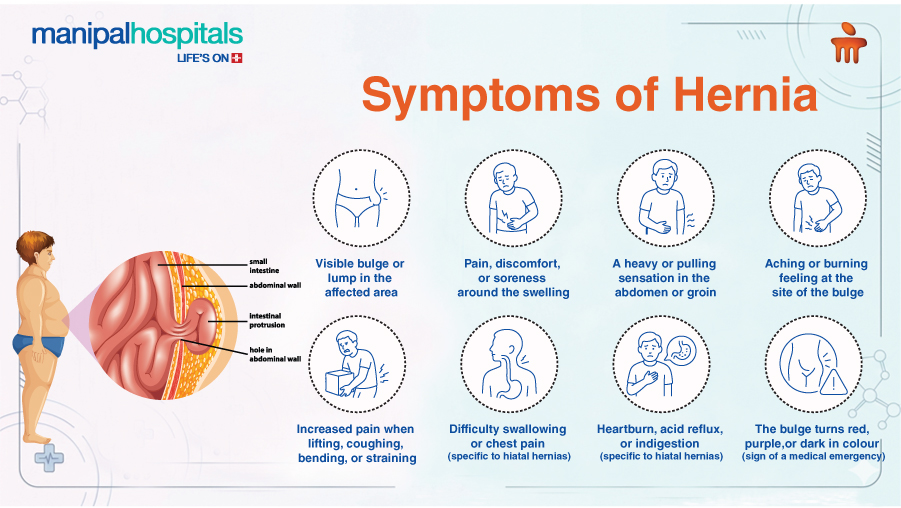
While some small hernias might be managed with watchful waiting, most symptomatic or enlarging hernias require hernia repair surgery to prevent further complications. Symptoms can include a noticeable bulge, pain or discomfort, especially when coughing, bending over, or lifting, and a heavy sensation in the abdomen or groin. Delaying hernia treatment can result in the hernia becoming larger and more painful, potentially leading to emergency situations like strangulation, where the trapped tissue loses blood supply. Early intervention with hernia surgery can prevent these serious issues and facilitate a quicker, smoother recovery.
Open Hernia Surgery: The Traditional Approach
Open hernia surgery is a time-tested method for hernia repair surgery. In this procedure, your surgeon makes a single incision near the hernia site. The protruding tissue is gently pushed back into place, and the weakened muscle wall is reinforced, typically with a synthetic mesh. This mesh acts as a scaffold, promoting new tissue growth and strengthening the area permanently. Open surgery can be performed under local, regional, or general anaesthesia.
-
When it’s preferred: Open hernia surgery is often recommended for very large hernias, incarcerated or strangulated hernias, recurrent hernias (after previous laparoscopic repair), or in patients who cannot tolerate the general anaesthesia required for laparoscopy. It's a robust method for complex cases.
-
Benefits: Direct visualisation of the surgical site allows the surgeon to assess the extent of the hernia and directly repair the defect. It's often suitable for patients with previous abdominal surgeries or certain medical conditions that might make laparoscopic access challenging.
-
Recovery: Patients typically experience more post-operative pain compared to laparoscopic methods, and recovery time can range from 4-6 weeks before returning to strenuous activities.
Laparoscopic Hernia Surgery: The Minimally Invasive Option
Laparoscopic hernia surgery is a modern, minimally invasive approach to hernia treatment. Instead of a large incision, the surgeon makes several small incisions. A laparoscope (a thin tube with a camera) is inserted through one incision, providing a magnified view of the internal organs on a monitor. Specialised instruments are then used through other small incisions to push the hernia back and reinforce the weak spot with a mesh from the inside. This technique is often used for inguinal hernia surgery and umbilical hernia surgery.
-
When it’s preferred: Laparoscopic hernia surgery is highly effective for inguinal hernia surgery, umbilical hernia surgery, and is particularly advantageous for bilateral hernias (hernias on both sides) or recurrent hernias that were initially repaired with open surgery.
-
Benefits: Smaller incisions lead to less post-operative pain, reduced scarring, and a significantly faster recovery period. Many patients return to light activities within 1-2 weeks, and full recovery is often quicker than with open surgery. Studies show that patients undergoing laparoscopic hernia surgery experience an average of 50% faster return to work compared to open procedures.
-
Recovery: Less discomfort, quicker mobilisation, and a faster return to daily activities are hallmark advantages of this approach.
Choosing Your Hernia Treatment: Factors to Consider
The decision between open hernia surgery and laparoscopic hernia surgery is highly individualised. Your surgeon at Manipal Hospitals will consider several factors:
-
Type and Size of Hernia: While laparoscopic hernia surgery is excellent for many inguinal hernia surgery and umbilical hernia surgery cases, larger or more complex hernias might benefit from the open approach.
-
Patient's Overall Health: Pre-existing medical conditions, previous abdominal surgeries, and age can influence the choice.
-
Surgeon's Expertise: Our surgeons are highly skilled in both techniques, ensuring you receive care from an experienced professional.
-
Patient Preference: After a thorough discussion of risks and benefits, your preference will be taken into account.
At Manipal Hospitals, we pride ourselves on exceptional patient outcomes. With modern surgical techniques and dedicated post-operative care, our hernia repair surgery success rates are consistently over 98%, ensuring long-term relief and improved quality of life for our patients. We perform thousands of successful hernia surgeries annually across our network, cementing our position as a leading provider of advanced surgical care.
Debunking Common Hernia Myths
Here are a few common misconceptions about hernias and their hernia treatment:
-
Myth: Only men get hernias.
-
Fact: While inguinal hernia surgery is more common in men, women can also develop hernias, including inguinal, femoral, and umbilical hernia surgery.
-
-
Myth: Hernias heal on their own.
-
Fact: Hernias do not heal without hernia surgery. They often get larger and can lead to serious complications if not treated.
-
-
Myth: Lifting heavy objects is the only cause of hernias.
-
Fact: While heavy lifting can contribute, hernias are primarily caused by weak spots in the abdominal wall. Other factors like chronic coughing, straining during bowel movements, pregnancy, and obesity can also increase risk.
-
Preventing Hernia Surgery Complications: Our Commitment
While hernia surgery is generally very safe, like any surgical procedure, there are potential, albeit rare, hernia surgery complications. These can include infection, bleeding, nerve damage, chronic pain, or hernia recurrence. At Manipal Hospitals, our surgical teams adhere to the highest standards of safety and care, employing advanced techniques and meticulous protocols to minimise the risk of hernia surgery complications and ensure a smooth recovery for every patient. Our comprehensive pre-operative assessment and detailed post-operative guidance are designed to prevent issues and promote optimal healing.
Care Essentials: Do's and Don'ts Post-Hernia Surgery
To ensure a smooth recovery and prevent `hernia surgery complications`, here are some general guidelines:
-
Do's:
-
Follow your surgeon's pain management plan.
-
Keep the incision site clean and dry as instructed.
-
Gradually increase your activity level as tolerated.
-
Walk regularly to promote circulation and prevent blood clots.
-
Eat a high-fibre diet and drink plenty of water to prevent constipation.
-
Attend all follow-up appointments.
-
-
Don'ts:
-
Don't lift heavy objects or strain for several weeks (your surgeon will advise on limits).
-
Don't engage in strenuous exercise until cleared by your doctor.
-
Don't ignore signs of infection (redness, swelling, fever, discharge) – contact your doctor immediately.
-
Don't take baths or go swimming until your incision is fully healed and your doctor approves.
-
Choosing the right hernia treatment is a crucial step towards regaining your health and quality of life. Whether open hernia surgery or laparoscopic hernia surgery is recommended for you, rest assured that Manipal Hospitals offers state-of-the-art facilities, experienced surgeons, and compassionate care dedicated to your well-being. We understand that every patient is unique, and our approach is always tailored to your specific needs, ensuring the most effective hernia repair surgery for you.
If you are experiencing symptoms of a hernia or have been advised to undergo hernia surgery, it's crucial to seek timely medical advice. Book an appointment with our expert general and laparoscopic surgeons at Manipal Hospitals today to discuss the best hernia treatment option for your condition.
Frequently Asked Questions
The duration of hernia surgery varies depending on the type and complexity of the hernia, as well as the surgical approach (open vs. laparoscopic). Generally, most hernia repair surgery procedures take between 30 minutes to 1.5 hours.
You will be under anaesthesia during the hernia surgery, so you won't feel pain. Post-surgery, some discomfort and pain are normal, but these can be effectively managed with pain medication prescribed by your doctor. Laparoscopic hernia surgery generally results in less post-operative pain than open hernia surgery.
Recovery times vary. For laparoscopic hernia surgery, many patients can return to light desk work within 1-2 weeks. For open hernia surgery, it might be 2-4 weeks. Strenuous activities and heavy lifting are typically restricted for 4-6 weeks, regardless of the method. Your surgeon will provide specific guidelines based on your individual recovery and the type of hernia treatment.
With modern mesh repair techniques, the recurrence rate after hernia surgery is very low, typically less than 2-3%. Factors like the original hernia size, patient's health, and adherence to post-operative instructions can influence this risk. Our goal at Manipal Hospitals is to ensure a durable and long-lasting hernia treatment.
While some very small, asymptomatic hernias might be observed, it's generally not advisable to delay hernia surgery for symptomatic or enlarging hernias. Delay can lead to complications such as incarceration or strangulation, which would require emergency hernia surgery and carry higher risks. Always consult your doctor for personalised advice on hernia treatment.
Share this Article


Recent Blogs

Hernia Surgery: Open vs Laparoscopic — Which Approach Suits You Best?
29 Jun 20267 Min Read
A hernia occurs when an organ or fatty tissue squeezes through a weak spot in a surrounding muscle or connective tissue. While some hernias might not cause immediate discomfort, they can lead to serious hernia surgery complications if left untreated, such as strangulation of the incarcerated tissue. Common types include inguinal hernia surgery (groin), umbilical hernia surgery (belly button), hiatal, and incisional hernia. The good news is that hernia surgery is a highly effective and safe hernia treatment for millions of patients worldwide, with success rates often exceeding 95% for long-term relief.
Read NowPancreatitis: Acute vs Chronic — Causes, Symptoms and Treatment
29 Jun 20268 Min Read
The pancreas, a vital organ nestled behind your stomach, plays a crucial dual role: producing digestive enzymes that help break down food and hormones like insulin that regulate blood sugar. When this delicate organ becomes inflamed, a condition known as pancreatitis occurs. This inflammation can manifest in two primary forms – acute pancreatitis and chronic pancreatitis – each with distinct characteristics, causes, and treatment approaches. Understanding the differences is key to effective management and maintaining your long-term health. At Manipal Hospitals, our gastroenterology experts are dedicated to providing comprehensive care for all types of pancreatic disease, employing cutting-edge diagnostics and personalised treatment plans to ensure the best possible outcomes for our patients.
Read NowICD vs CRT: Understanding Implantable Devices for Dangerous Heart Rhythms and Heart Failure
22 Jun 20268 Min Read
At Manipal Hospitals, we understand that a diagnosis involving a serious heart condition can be daunting. You may have heard terms like Implantable Cardioverter Defibrillator (ICD) or Cardiac Resynchronization Therapy (CRT) device, and perhaps you're wondering what they are and how they differ. These advanced implantable devices represent significant breakthroughs in modern cardiology, offering renewed hope and significantly improving the quality of life for patients with dangerous heart rhythms and heart failure. Through this blog, our commitment is to empower you with clear information, delivered with the empathy you deserve. We'll explore these life-saving technologies, helping you understand their roles in managing complex heart conditions and showcasing how Manipal Hospitals stands at the forefront of providing exceptional arrhythmia treatment and heart failure treatment.
Read NowUnderstanding Multiple Sclerosis: Symptoms, Diagnosis, and Advanced Care at Manipal
22 Jun 20268 Min Read
Multiple Sclerosis (MS) is a complex and often misunderstood condition that affects millions worldwide. At Manipal Hospitals, we believe in empowering our patients with knowledge and providing compassionate, state-of-the-art care. Understanding multiple sclerosis symptoms, its progression, and the latest treatment options is the first step towards managing this chronic neurological disease effectively. Our expert team is dedicated to guiding you through every stage, ensuring you receive personalised care designed to improve your quality of life.
Read NowLiving With Epilepsy: Medication, Triggers and When to Consider Surgery
19 Jun 20266 Min Read
Living with epilepsy can present unique challenges, but with the right knowledge, medical care, and supportive community, a fulfilling life is not just possible—it's the reality for a significant majority. This comprehensive guide will delve into understanding epilepsy symptoms, exploring effective epilepsy treatment options, including medication and surgical considerations, and empowering you to manage triggers for better epilepsy management.
Read Nowहिप रिप्लेसमेंट सर्जरी: संकेत कि आपको इसकी ज़रूरत है, प्रक्रिया और रिकवरी टाइमलाइन
19 Jun 20266 Min Read
कूल्हे का दर्द आपकी दैनिक गतिविधियों और जीवन की गुणवत्ता को गंभीर रूप से प्रभावित कर सकता है। जब नॉन-सर्जिकल उपचार विफल हो जाते हैं, तो हिप रिप्लेसमेंट सर्जरी (Total Hip Arthroplasty) एक प्रभावी समाधान हो सकती है। मणिपाल अस्पताल में, हम समझते हैं कि यह निर्णय आसान नहीं होता, और इसलिए हम आपको इस प्रक्रिया के बारे में विस्तृत जानकारी प्रदान करने के लिए यहाँ हैं। आइए समझते हैं कि आपको हिप रिप्लेसमेंट सर्जरी की आवश्यकता कब हो सकती है, इसमें क्या प्रक्रिया शामिल है और रिकवरी की टाइमलाइन क्या है।
Read NowHPV Vaccine for Cervical Cancer Prevention: Who Should Get It and When
12 Jun 202610 Min Read
Cervical cancer, a significant health concern for women globally, is largely preventable. At the forefront of this prevention strategy is the HPV vaccine, a medical marvel that has transformed our approach to this disease. Here at Manipal Hospitals, we are committed to empowering our community with knowledge and access to life-saving interventions. This comprehensive guide will shed light on the Human Papillomavirus (HPV), its link to cervical cancer, and why the HPV vaccine is a cornerstone of women's health.
Read NowWhat is TAVI/TAVR? A Patient's Guide to Transcatheter Aortic Valve Replacement
12 Jun 20266 Min Read
At Manipal Hospitals, we understand that facing a heart condition can be daunting. When it comes to aortic valve disease, the thought of traditional open-heart surgery can be particularly intimidating. Fortunately, advancements in medical science offer less invasive, highly effective alternatives. One such groundbreaking innovation is the TAVI procedure, also known as TAVR. This guide aims to demystify Transcatheter Aortic Valve Replacement (TAVR/TAVI), providing you with comprehensive, patient-centric information to help you understand this life-changing treatment option.
Read NowMeniscus Tear: Understanding Symptoms, Diagnosis, and the Repair vs. Removal Decision
08 Jun 202611 Min Read
A sudden twist, a missed step, or even the wear and tear of time can lead to a common knee injury that impacts millions worldwide: a meniscus tear. At Manipal Hospitals, we understand the debilitating pain and disruption a meniscus tear can bring to your daily life. Our dedicated orthopaedic specialists in Jaipur are here to guide you through understanding this condition, from the initial symptoms of a meniscus tear to advanced meniscus tear treatment options, ensuring you regain your mobility and quality of life.
Read NowOver 90% Preventable: How HPV Vaccine & Early Screening Can Eradicate Cervical Cancer
08 Jun 202610 Min Read
Cervical cancer, a disease that affects the cervix (the lower part of the uterus that connects to the vagina), stands as a significant health concern for women worldwide. However, the good news is that it is largely preventable and, when detected early, highly treatable. At Manipal Hospitals, we are committed to empowering women with the knowledge and resources to protect themselves against this disease. This comprehensive guide will walk you through the essential aspects of cervical cancer prevention, from understanding its causes of cervical cancer to embracing the power of the HPV vaccine and regular cervical cancer screening. The global fight against cervical cancer has seen remarkable progress, with preventative strategies demonstrating incredible success. For instance, countries with robust cervical cancer screening programs have seen a reduction in incidence and mortality rates by up to 80%. This highlights the immense power of proactive health measures in safeguarding women's well-being.
Read Now