


Why Routine Blood Tests Are Important: Types, What They Show & When to Test
Reviewed by: Manipal Hospitals
Posted on
4 Min Read

Not sure what you’re looking for?
Get in touch with our representatives for help!
Contact UsIn today’s fast-paced lifestyle, many health issues develop silently. You may feel perfectly fine on the outside while your body shows early warning signs internally. This is where blood tests play a crucial role. Often referred to as the backbone of diagnostic tests, routine blood investigations help detect diseases early, monitor ongoing conditions, and guide timely treatment decisions.
At Manipal Hospitals Jaipur, Laboratory Medicine services focus on accuracy, early detection, and preventive healthcare through comprehensive routine blood tests.
What Are Blood Tests?
Blood tests are medical investigations that analyse a sample of your blood to evaluate overall health and detect disorders related to organs such as the heart, liver, kidneys, and pancreas. A detailed blood test report provides valuable insights into infections, nutritional deficiencies, metabolic disorders, and chronic diseases like diabetes and heart disease.
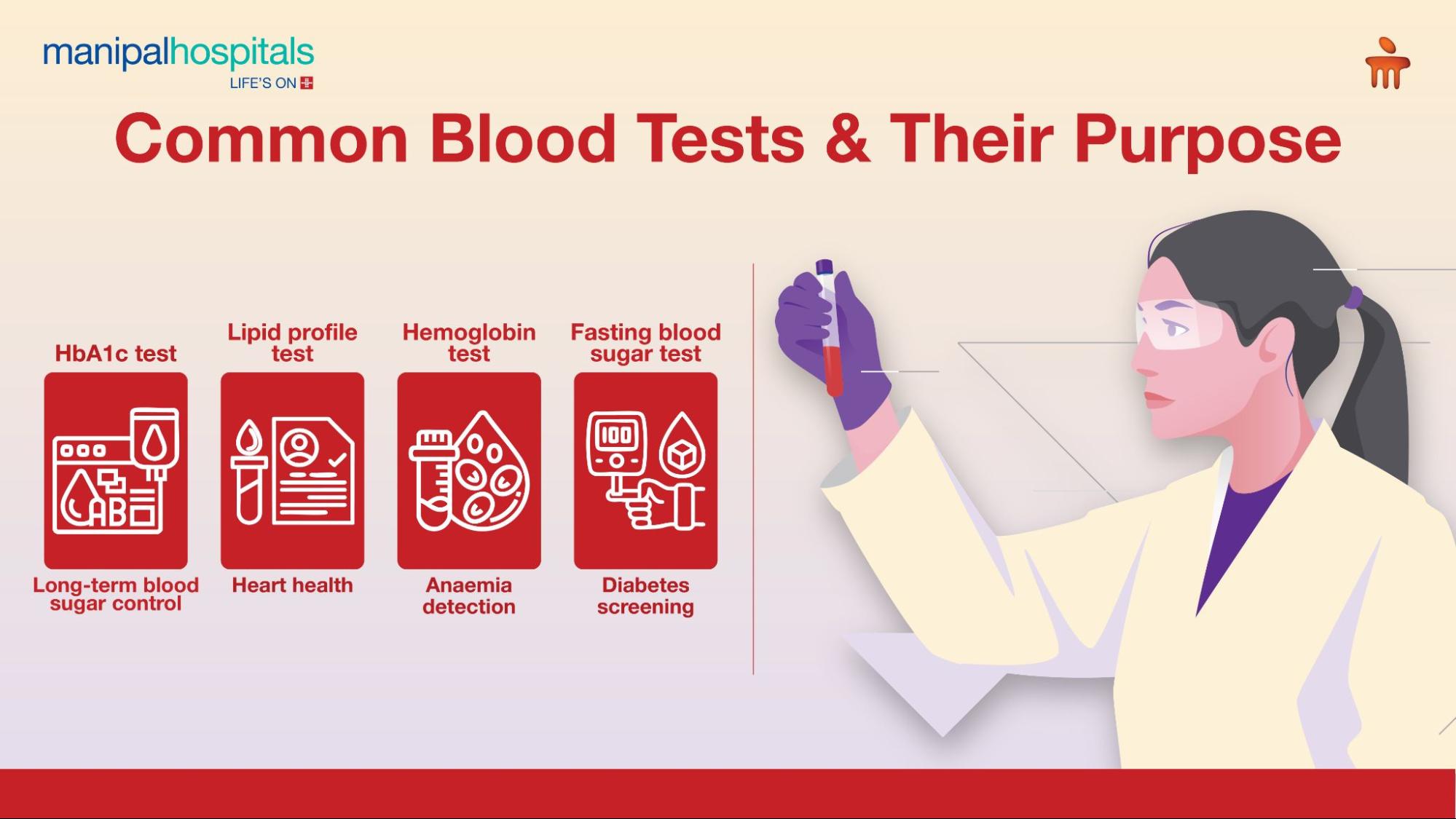
Routine testing is a vital part of a preventive health checkup, even for people who do not show obvious symptoms.
Why Are Routine Blood Tests Important?
1. Early Disease Detection
Many conditions, like diabetes, high cholesterol, anaemia, and thyroid disorders, do not show symptoms initially. Routine blood tests help identify these problems before complications arise.
2. Monitoring Chronic Conditions
For individuals with diabetes, heart disease, or hypertension, regular tests such as the HbA1c test or lipid profile test help track disease control and treatment effectiveness.
3. Understanding Overall Health
Checking normal blood test values gives a snapshot of how well your organs are functioning and whether lifestyle changes are needed.
4. Preventive Healthcare
A structured preventive health checkup reduces long-term healthcare costs and improves quality of life through early intervention.
Common Types of Routine Blood Tests and What They Show
1. Fasting Blood Sugar & Blood Sugar Test
A fasting blood sugar test measures glucose levels after 8–10 hours of fasting. A general blood sugar test can be done randomly to assess current glucose levels. These tests help detect diabetes and prediabetes.
2. HbA1c Test
The HbA1c test shows average blood sugar levels over the past 2–3 months. It is one of the most reliable diagnostic tests for diabetes management.
3. Lipid Profile Test
A lipid profile test measures cholesterol levels, including LDL, HDL, and triglycerides. Abnormal values increase the risk of heart disease and stroke.
4. Hemoglobin Test
A hemoglobin test evaluates the oxygen-carrying capacity of blood and helps diagnose anaemia, fatigue, and nutritional deficiencies.
5. Complete Blood Count (CBC)
This routine blood test analyses red blood cells, white blood cells, and platelets to detect infections, inflammation, blood disorders, and immune system health.
Understanding Normal Blood Test Values
Knowing normal blood test values helps patients better understand their health status. However, values can vary based on age, gender, and medical history. Doctors at Manipal Hospital Jaipur always interpret results in a clinical context rather than in isolation.
Never self-diagnose based solely on a blood test report; professional interpretation is essential.
When Should You Get Routine Blood Tests Done?
-
Annually, as part of a preventive health checkup
-
If you have a family history of diabetes, heart disease, or thyroid disorders
-
Experiencing symptoms like fatigue, unexplained weight changes, dizziness, or frequent infections
-
Monitoring existing medical conditions
-
Before surgeries or major treatments
Role of Laboratory Medicine in Accurate Diagnosis
The accuracy of blood tests depends greatly on advanced laboratory infrastructure and expert pathologists. The Laboratory Medicine department at Manipal Hospitals Jaipur uses modern diagnostic technology and strict quality controls to ensure reliable and timely results.
Accurate diagnostic tests lead to better treatment planning and improved patient outcomes.
How to Prepare for Blood Tests
-
Follow fasting instructions carefully for tests like fasting blood sugar or lipid profile test
-
Inform your doctor about medications or supplements
-
Stay hydrated unless advised otherwise
-
Avoid heavy exercise before testing
Proper preparation ensures accurate results and avoids repeat testing.
Benefits of Regular Preventive Blood Testing
-
Detects health risks early
-
Supports healthy ageing
-
Reduces complications of chronic diseases
-
Helps maintain optimal normal blood test values
-
Encourages proactive health management
Routine blood tests are not just for illness; they are a tool for lifelong wellness.
Conclusion
Routine blood tests are one of the simplest yet most powerful tools for protecting your health. They help uncover hidden problems, track ongoing conditions, and support timely medical decisions before symptoms become serious. From monitoring blood sugar and cholesterol to identifying nutritional deficiencies, regular testing plays a vital role in preventive healthcare. By choosing periodic routine blood tests at Manipal Hospitals Jaipur, you take a proactive step towards early diagnosis, better disease management, and long-term well-being.
Frequently Asked Questions
Most adults should undergo routine blood tests once a year. However, people with medical conditions may need more frequent testing.
No. Tests like fasting blood sugar and lipid profile require fasting, while many other blood tests do not.
Abnormal values do not always indicate disease. Doctors evaluate results alongside symptoms and medical history.
Yes. Blood tests can detect diabetes, infections, heart disease risk, liver and kidney disorders at early stages.
You can undergo accurate and comprehensive blood testing at Manipal Hospital Jaipur, supported by advanced Laboratory Medicine services.
Share this Article


Similar Blogs

Hernia Surgery: Open vs Laparoscopic — Which Approach Suits You Best?
29 Jun 20267 Min Read
A hernia occurs when an organ or fatty tissue squeezes through a weak spot in a surrounding muscle or connective tissue. While some hernias might not cause immediate discomfort, they can lead to serious hernia surgery complications if left untreated, such as strangulation of the incarcerated tissue. Common types include inguinal hernia surgery (groin), umbilical hernia surgery (belly button), hiatal, and incisional hernia. The good news is that hernia surgery is a highly effective and safe hernia treatment for millions of patients worldwide, with success rates often exceeding 95% for long-term relief.
Read NowPancreatitis: Acute vs Chronic — Causes, Symptoms and Treatment
29 Jun 20268 Min Read
The pancreas, a vital organ nestled behind your stomach, plays a crucial dual role: producing digestive enzymes that help break down food and hormones like insulin that regulate blood sugar. When this delicate organ becomes inflamed, a condition known as pancreatitis occurs. This inflammation can manifest in two primary forms – acute pancreatitis and chronic pancreatitis – each with distinct characteristics, causes, and treatment approaches. Understanding the differences is key to effective management and maintaining your long-term health. At Manipal Hospitals, our gastroenterology experts are dedicated to providing comprehensive care for all types of pancreatic disease, employing cutting-edge diagnostics and personalised treatment plans to ensure the best possible outcomes for our patients.
Read NowHPV Vaccine for Cervical Cancer Prevention: Who Should Get It and When
12 Jun 202610 Min Read
Cervical cancer, a significant health concern for women globally, is largely preventable. At the forefront of this prevention strategy is the HPV vaccine, a medical marvel that has transformed our approach to this disease. Here at Manipal Hospitals, we are committed to empowering our community with knowledge and access to life-saving interventions. This comprehensive guide will shed light on the Human Papillomavirus (HPV), its link to cervical cancer, and why the HPV vaccine is a cornerstone of women's health.
Read NowOver 90% Preventable: How HPV Vaccine & Early Screening Can Eradicate Cervical Cancer
08 Jun 202610 Min Read
Cervical cancer, a disease that affects the cervix (the lower part of the uterus that connects to the vagina), stands as a significant health concern for women worldwide. However, the good news is that it is largely preventable and, when detected early, highly treatable. At Manipal Hospitals, we are committed to empowering women with the knowledge and resources to protect themselves against this disease. This comprehensive guide will walk you through the essential aspects of cervical cancer prevention, from understanding its causes of cervical cancer to embracing the power of the HPV vaccine and regular cervical cancer screening. The global fight against cervical cancer has seen remarkable progress, with preventative strategies demonstrating incredible success. For instance, countries with robust cervical cancer screening programs have seen a reduction in incidence and mortality rates by up to 80%. This highlights the immense power of proactive health measures in safeguarding women's well-being.
Read NowOvarian Cancer Treatment: Early Signs, Stages and Why It’s Called a Silent Killer
22 May 20267 Min Read
Something is unsettling about illnesses that don’t announce themselves loudly. Ovarian cancer symptoms are often quiet, subtle, and easy to misunderstand. Many women ignore ovarian cancer symptoms such as persistent bloating, pelvic discomfort, stomach pain, or changes in appetite, assuming they are minor digestive or hormonal issues. Because ovarian cancer symptoms can resemble common everyday problems, they are frequently overlooked until the disease reaches an advanced stage. Over the years, many patients have shared the same thought: “I felt something was off, but I ignored it.” That is exactly why awareness of ovarian cancer symptoms matters so much. At Manipal Hospitals Jaipur, the focus is not only on advanced care but also on helping women recognise early ovarian cancer symptoms, understand ovarian cancer stages, and feel informed about the latest ovarian cancer treatment options. Identifying ovarian cancer symptoms early and seeking timely medical attention can significantly improve recovery chances and treatment outcomes.
Read NowStomach Heat in Summer: Causes, Symptoms, Prevention & Ways to Keep Your Gut Cool
22 May 20265 Min Read
Summer is a season filled with holidays, outdoor activities, refreshing fruits, and longer days. However, along with the fun and excitement, summer also brings an increase in digestive discomfort for many people. Bloating, acidity, stomach irritation, indigestion, and dehydration become common complaints during hot weather. At Manipal Hospitals Jaipur, experts often notice a rise in seasonal digestive concerns as temperatures climb. The good news is that most of these issues can be prevented with simple lifestyle changes and the right food choices. If you have been wondering how to reduce stomach heat, how to keep your stomach cool, or how to make your digestive system strong during summer, this guide will help you understand practical and effective solutions.
Read NowDecreased Appetite: Benefits, Symptoms, Causes, Treatment and Natural Remedies Guide
06 May 20266 Min Read
There are days when food just doesn’t feel appealing. You may sit in front of your plate and realise you’re not hungry at all, or worse, you’ve been skipping meals without noticing. If you’ve ever said, “I lost my appetite,” you’re not alone. Decreased appetite, also known as poor appetite or no appetite, is a common concern that can affect people of all ages. While it might seem harmless at first, a persistent lack of appetite can impact your energy levels, immunity, and overall health. Let’s understand this condition in a simple, practical way so you know when to ignore it and when to take action.
Read NowBone Marrow Test: Purpose, Procedure, and Recovery Time
20 Apr 20267 Min Read
When a doctor suspects a problem related to blood, immunity, or certain cancers, a bone marrow test often becomes an essential step. Though the idea may sound intimidating, understanding the purpose, process, and recovery can make it much less overwhelming. At Manipal Hospital Jaipur, specialists frequently guide patients through this test with clarity and care, ensuring both safety and comfort.
Read NowFatty Liver Diet: The Best Diet for Fatty Liver to Support Liver Health Naturally
18 Mar 20268 Min Read
A well-planned fatty liver diet plays a crucial role in reversing early liver damage and improving overall metabolic health. Non-alcoholic fatty liver disease is becoming increasingly common due to sedentary lifestyles, obesity, and poor eating habits. Following a scientifically balanced fatty liver diet can help reduce liver fat, support liver repair, and prevent complications. Many patients who consult our gastroenterologists in Jaipur are often advised that diet is the first and most powerful step in managing fatty liver disease. A structured fatty liver treatment diet focuses on nutrient-dense meals, controlled calories, and foods that reduce inflammation. By prioritising the right foods for fatty liver, individuals can gradually restore liver function. Experts widely recommend adopting the best diet for fatty liver as part of a long-term lifestyle change rather than a temporary restriction plan.
Read NowFatty Liver Disease: Causes, Symptoms, and Prevention
18 Mar 20264 Min Read
The liver plays a crucial role in maintaining overall liver health, performing hundreds of vital functions such as detoxification, digestion, and metabolism. However, modern lifestyle habits have led to a growing concern about Fatty Liver Disease. This condition, affecting nearly 1 in 3 adults globally, often develops silently and can progress if ignored. At Manipal Hospitals Jaipur, specialists emphasise early detection and lifestyle management as the most effective approach to fatty liver treatment and long-term liver protection.
Read NowRecent Blogs
Hernia Surgery: Open vs Laparoscopic — Which Approach Suits You Best?
29 Jun 20267 Min Read
A hernia occurs when an organ or fatty tissue squeezes through a weak spot in a surrounding muscle or connective tissue. While some hernias might not cause immediate discomfort, they can lead to serious hernia surgery complications if left untreated, such as strangulation of the incarcerated tissue. Common types include inguinal hernia surgery (groin), umbilical hernia surgery (belly button), hiatal, and incisional hernia. The good news is that hernia surgery is a highly effective and safe hernia treatment for millions of patients worldwide, with success rates often exceeding 95% for long-term relief.
Read NowPancreatitis: Acute vs Chronic — Causes, Symptoms and Treatment
29 Jun 20268 Min Read
The pancreas, a vital organ nestled behind your stomach, plays a crucial dual role: producing digestive enzymes that help break down food and hormones like insulin that regulate blood sugar. When this delicate organ becomes inflamed, a condition known as pancreatitis occurs. This inflammation can manifest in two primary forms – acute pancreatitis and chronic pancreatitis – each with distinct characteristics, causes, and treatment approaches. Understanding the differences is key to effective management and maintaining your long-term health. At Manipal Hospitals, our gastroenterology experts are dedicated to providing comprehensive care for all types of pancreatic disease, employing cutting-edge diagnostics and personalised treatment plans to ensure the best possible outcomes for our patients.
Read NowICD vs CRT: Understanding Implantable Devices for Dangerous Heart Rhythms and Heart Failure
22 Jun 20268 Min Read
At Manipal Hospitals, we understand that a diagnosis involving a serious heart condition can be daunting. You may have heard terms like Implantable Cardioverter Defibrillator (ICD) or Cardiac Resynchronization Therapy (CRT) device, and perhaps you're wondering what they are and how they differ. These advanced implantable devices represent significant breakthroughs in modern cardiology, offering renewed hope and significantly improving the quality of life for patients with dangerous heart rhythms and heart failure. Through this blog, our commitment is to empower you with clear information, delivered with the empathy you deserve. We'll explore these life-saving technologies, helping you understand their roles in managing complex heart conditions and showcasing how Manipal Hospitals stands at the forefront of providing exceptional arrhythmia treatment and heart failure treatment.
Read NowUnderstanding Multiple Sclerosis: Symptoms, Diagnosis, and Advanced Care at Manipal
22 Jun 20268 Min Read
Multiple Sclerosis (MS) is a complex and often misunderstood condition that affects millions worldwide. At Manipal Hospitals, we believe in empowering our patients with knowledge and providing compassionate, state-of-the-art care. Understanding multiple sclerosis symptoms, its progression, and the latest treatment options is the first step towards managing this chronic neurological disease effectively. Our expert team is dedicated to guiding you through every stage, ensuring you receive personalised care designed to improve your quality of life.
Read NowLiving With Epilepsy: Medication, Triggers and When to Consider Surgery
19 Jun 20266 Min Read
Living with epilepsy can present unique challenges, but with the right knowledge, medical care, and supportive community, a fulfilling life is not just possible—it's the reality for a significant majority. This comprehensive guide will delve into understanding epilepsy symptoms, exploring effective epilepsy treatment options, including medication and surgical considerations, and empowering you to manage triggers for better epilepsy management.
Read Nowहिप रिप्लेसमेंट सर्जरी: संकेत कि आपको इसकी ज़रूरत है, प्रक्रिया और रिकवरी टाइमलाइन
19 Jun 20266 Min Read
कूल्हे का दर्द आपकी दैनिक गतिविधियों और जीवन की गुणवत्ता को गंभीर रूप से प्रभावित कर सकता है। जब नॉन-सर्जिकल उपचार विफल हो जाते हैं, तो हिप रिप्लेसमेंट सर्जरी (Total Hip Arthroplasty) एक प्रभावी समाधान हो सकती है। मणिपाल अस्पताल में, हम समझते हैं कि यह निर्णय आसान नहीं होता, और इसलिए हम आपको इस प्रक्रिया के बारे में विस्तृत जानकारी प्रदान करने के लिए यहाँ हैं। आइए समझते हैं कि आपको हिप रिप्लेसमेंट सर्जरी की आवश्यकता कब हो सकती है, इसमें क्या प्रक्रिया शामिल है और रिकवरी की टाइमलाइन क्या है।
Read NowHPV Vaccine for Cervical Cancer Prevention: Who Should Get It and When
12 Jun 202610 Min Read
Cervical cancer, a significant health concern for women globally, is largely preventable. At the forefront of this prevention strategy is the HPV vaccine, a medical marvel that has transformed our approach to this disease. Here at Manipal Hospitals, we are committed to empowering our community with knowledge and access to life-saving interventions. This comprehensive guide will shed light on the Human Papillomavirus (HPV), its link to cervical cancer, and why the HPV vaccine is a cornerstone of women's health.
Read NowWhat is TAVI/TAVR? A Patient's Guide to Transcatheter Aortic Valve Replacement
12 Jun 20266 Min Read
At Manipal Hospitals, we understand that facing a heart condition can be daunting. When it comes to aortic valve disease, the thought of traditional open-heart surgery can be particularly intimidating. Fortunately, advancements in medical science offer less invasive, highly effective alternatives. One such groundbreaking innovation is the TAVI procedure, also known as TAVR. This guide aims to demystify Transcatheter Aortic Valve Replacement (TAVR/TAVI), providing you with comprehensive, patient-centric information to help you understand this life-changing treatment option.
Read NowMeniscus Tear: Understanding Symptoms, Diagnosis, and the Repair vs. Removal Decision
08 Jun 202611 Min Read
A sudden twist, a missed step, or even the wear and tear of time can lead to a common knee injury that impacts millions worldwide: a meniscus tear. At Manipal Hospitals, we understand the debilitating pain and disruption a meniscus tear can bring to your daily life. Our dedicated orthopaedic specialists in Jaipur are here to guide you through understanding this condition, from the initial symptoms of a meniscus tear to advanced meniscus tear treatment options, ensuring you regain your mobility and quality of life.
Read NowOver 90% Preventable: How HPV Vaccine & Early Screening Can Eradicate Cervical Cancer
08 Jun 202610 Min Read
Cervical cancer, a disease that affects the cervix (the lower part of the uterus that connects to the vagina), stands as a significant health concern for women worldwide. However, the good news is that it is largely preventable and, when detected early, highly treatable. At Manipal Hospitals, we are committed to empowering women with the knowledge and resources to protect themselves against this disease. This comprehensive guide will walk you through the essential aspects of cervical cancer prevention, from understanding its causes of cervical cancer to embracing the power of the HPV vaccine and regular cervical cancer screening. The global fight against cervical cancer has seen remarkable progress, with preventative strategies demonstrating incredible success. For instance, countries with robust cervical cancer screening programs have seen a reduction in incidence and mortality rates by up to 80%. This highlights the immense power of proactive health measures in safeguarding women's well-being.
Read Now