


Unclogging the Arteries: A Dietary Guide for a Healthy Heart
Reviewed by: Manipal Hospitals
Posted on
4 Min Read

Not sure what you’re looking for?
Get in touch with our representatives for help!
Contact UsCardiovascular diseases (CVD) are a leading cause of concern worldwide, and India is no exception. According to the National Centre for Biotechnology Information (NCBI), India carries a significant burden of CVD, with projected annual deaths ranging from 2.26 million to 4.77 million in 2020. Heart health is largely determined by our diet. While there's no single "miracle meal" to clear arteries completely, incorporating specific foods for coronary artery disease into your diet can significantly reduce the risk of heart disease and promote overall cardiovascular health.
Understanding Clogged Arteries
Before diving into the dietary heroes, let's understand how arteries become clogged in the first place. This condition, known as atherosclerosis or coronary artery disease, occurs when fatty deposits (plaque) build up along the inner walls of the arteries. These deposits can narrow the arteries, reducing blood flow to the heart and increasing the risk of heart attack, stroke, and other complications. Several factors that contribute to this process are listed below:
-
High cholesterol
-
Diabetes
-
Smoking
-
Unhealthy diet
American Heart Association recommended a healthy dietary pattern that should include:
-
Fruits, vegetables, whole grains, and beans and legumes.
-
Dietary products that are low in fat or fat-free, fish, poultry, nuts and non-tropical oils.
-
Limits added sugar, sugar-containing beverages, highly processed foods, refined carbohydrates, saturated fats, and fatty or processed meats.
Dietary Arsenal: Foods to Clear Your Arteries
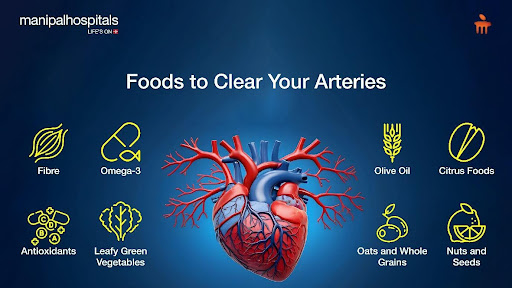
Dietary modifications can significantly impact your heart health. Here are some foods for coronary artery disease to include in your meals:
1. Omega-3 Rich Foods: Omega-3 fatty acids are essential for heart health. It helps to reduce inflammation, lower blood pressure, decrease triglyceride levels and prevent the formation of artery plaque. Fatty fish like salmon, mackerel, sardines, and herring are packed with omega-3 fatty acids. One should include at least two servings of omega-3-rich food per week.
2. Fibre Powerhouses: Dietary fibre helps to reduce cholesterol levels in the blood, which can prevent plaque build-up in the arteries. Some of the fibre-packed foods are fruits, vegetables, whole grains and nuts. Consuming a variety of these foods can significantly benefit your cardiovascular health and it’s the best diet for arteriosclerosis.
3. Antioxidant for the Rescue: Oxidative stress causes inflammation and artery damage, which antioxidants combat. Berries, dark chocolate, green tea and vegetables like carrots and sweet potatoes are excellent sources of antioxidants.
4. Leafy Green Vegetables: Leafy greens like spinach, kale, and collard greens are rich in nitrates, which help relax blood vessels and improve blood flow. Additionally, they are low in calories and packed with essential vitamins and minerals.
5. Citrus Saviours: Citrus fruits such as oranges, grapefruits, and lemons are excellent sources of vitamins, minerals and antioxidants. They are particularly high in vitamin C, which can help lower blood pressure and improve blood vessel function.
6. Olive Oil: Olive oil, especially extra virgin olive oil, is a staple of the Mediterranean diet and is well-known for its heart-healthy properties. A diet rich in monounsaturated fats and antioxidants can reduce inflammation, cholesterol, and arterial plaque build-up. Using olive oil as your primary cooking oil is a great step towards better heart health. Other oils which can be used are soybean oil, corn oil, sunflower oil, rice bran and sesame seed oil.
7. Nuts and Seeds for a Heart-Healthy Crunch: Almonds, walnuts, flaxseeds, and chia seeds are all excellent sources of healthy fats, fibre, and plant sterols, which can help lower LDL cholesterol. Regular consumption of nuts and seeds helps to reduce the risk of heart disease.
8. Oats and Whole Grains: Whole grains, including oats, barley, quinoa, and brown rice, are excellent sources of dietary fibre, particularly soluble fibre, which can help lower cholesterol levels. Starting your day with a bowl of oatmeal or incorporating whole grains into your meals can contribute significantly to arterial health.
Book an appointment with our expert Cardiology Doctors in Goa to map out your diet further.
Conclusion
It is more important to focus on the complete quality of the diet than any particular nutrient or food. Avoid eating foods with high calories but low nutritional value. A balanced and varied diet is key. Incorporate these heart-healthy foods into your meals throughout the week. This doesn't mean eliminating all your favourite treats but focusing on a healthy overall dietary pattern. Consult our Cardiology Hospital in Goa for personalised nutritional advice specific to your health needs. Making smart food choices and adopting a heart-healthy lifestyle can significantly reduce your risk of coronary artery disease and keep your cardiovascular system functioning optimally. Check out our blog page to know the latest updates in the medical world.
Frequently Asked Questions
Clogged arteries, also medically known as atherosclerosis, occur when a build-up of fatty material called plaque hardens inside the arteries. This narrows the arteries and restricts blood flow to your organs and tissues.
Several factors can contribute to clogged arteries, including:
-
High cholesterol levels, particularly high LDL (bad) cholesterol
-
High blood pressure
-
Smoking
-
Diabetes
-
Obesity
-
Family history of heart disease
Clogged arteries often don't cause any symptoms until a significant blockage occurs. In some cases, you might experience chest pain (angina), shortness of breath, pain in the legs, or erectile dysfunction.
Healthy lifestyle changes can significantly reduce your risk of clogged arteries, such as eating fruit, vegetables, and whole grains rich in vitamins and minerals.
Share this Article


Similar Blogs

Can an ECG Detect a Heart Attack? What the Test Really Shows
15 Jun 20268 Min Read
In moments of chest pain or suspected cardiac distress, an Electrocardiogram (ECG or EKG) is often the first diagnostic test performed. It's a quick, non-invasive procedure that provides a snapshot of your heart's electrical activity. But can an ECG detect a heart attack definitively? While an ECG is an indispensable tool in emergency cardiac care, its ability to pinpoint a heart attack is nuanced.
Read NowIntermittent Fasting and Heart Health: Benefits or Risks?
20 May 20267 Min Read
Intermittent fasting (IF) has recently surged in popularity as a potential aid for weight loss and improving metabolic health. But is there any effect of this eating pattern on your heart? This article examines the relationship between intermittent fasting and heart health, including its promising benefits and potential risks, particularly in individuals with cardiovascular disease.
Read NowTreadmill Test for Heart Health: Purpose, Procedure, and Benefits
10 Apr 20268 Min Read
The Treadmill Test (TMT) or stress test is a diagnostic procedure designed to evaluate how your heart responds to increasing physical exertion. The basic principle is simple: as you walk or run on a treadmill, the body requires more oxygen, so the heart pumps more blood by increasing heart rate and blood pressure. Suppose there are blockages in the coronary arteries (the major blood vessels supplying the heart), the increased demand for oxygenated blood cannot be met, leading to signs of stress that can be detected during the test.
Read NowHigh Cholesterol: A Silent Risk Factor for Heart Attacks
30 Mar 20267 Min Read
Although produced within the body and even necessary, high levels of cholesterol become detrimental to health. If left unchecked, it becomes one of the primary drivers of cardiovascular disease and heart attacks.
Read NowUnderstanding High Heart Rate: Common Causes, Symptoms & Prevention Tips
21 Nov 20256 Min Read
For most adults, a normal resting heart rate falls between 60 and 100 beats per minute (BPM). However, there are times when our heart rate can exceed this range, leading to a high heart rate, or tachycardia. While an elevated heart rate can sometimes be a normal response to physical activity or stress, persistently experiencing a high heart rate can be a cause for concern and may indicate an underlying health issue. Understanding the common causes of a high heart rate, recognising its symptoms, and knowing how to prevent it are crucial steps towards maintaining good cardiovascular health.
Read NowUnlocking The Potential Of Angioplasty In Cardiac Science
30 Jun 20256 Min Read
Angioplasty is a revolutionary treatment in the field of cardiology that offers effective and less invasive solutions for heart ailments. The procedure saves lives and reduces heart muscle damage in an emergency setting. In this blog, we will uncover what angioplasty is, why angioplasty is done, its procedure, and much more.
Read NowDifference Between Angioplasty and CABG
14 Apr 20255 Min Read
Coronary artery bypass graft (CABG) vs angioplasty is considered to be the second choice for patients who are suffering from cardiac blockages. In order to resolve the issues related to the choice of undergoing coronary artery bypass graft (CABG) and angioplasty, choosing the right line of treatment and understanding the advantages and disadvantages of each of these treatments. The cardiologists aim to make the patients aware of their appropriate understanding of the difference between these treatments. The final outcome of the coronary artery bypass graft (CABG) vs angioplasty depends entirely on the current medical condition of the patient, the number of blocked arteries, the overall health of the patient involving other diseases, and the patient’s preference. What is coronary artery disease? The hardening of the coronary arteries on the surface of the heart is known to be the major cause of coronary artery disease (CAD). The inner walls of coronary arteries are usually smooth and flexible, allowing proper flow of blood toward the heart. CAD occurs due to blockage in the coronary arteries, which in turn occurs in the case of damage to the inner wall of the artery. Treatment of coronary artery disease Patients with CAD are advised to take medications and make lifestyle changes to slow disease progression. In severe cases, when medical management and lifestyle changes are not capable of controlling the CAD, the doctors recommend either angioplasty or coronary artery bypass graft (CABG). To know more about the treatment option, book an appointment at our cardiology hospital in Goa. What is Angioplasty? Angioplasty is a minimally invasive procedure to widen the coronary artery. This process expands the coronary arteries rather than removing plaque from them, improving blood flow to the heart. More than 92% of the patients in India have been estimated to have immediate relief from the symptoms of CAD, while some of them have been reported to get relief immediately after the procedure. The process of angioplasty involves the use of a catheter that is inserted into the narrowed region of the artery. A wire is connected to the catheter with a deflated balloon, which is inflated at the point where the artery is constricted, resulting in the widening of arteries. Coronary artery bypass grafts (CABG) CABG is the type of surgery performed to improve the blood flow to the heart. In this procedure, a healthy artery or vein is transplanted into the blocked coronary artery. This blocked section is bypassed by the grafted artery or vein. It results in the opening of a new passage which allows oxygen-rich blood to bypass the obstruction and reach the heart muscles. Angioplasty vs. CABG Angioplasty should be taken into consideration in the case of one, two, or even three arteries that are narrowed. When the left major coronary artery or any of the three major coronary arteries is narrowing, CABG is considered. If two or three coronary arteries are constricted and if the patient is suffering from diabetes or heart failure, CABG is preferred in this case. If medical therapy fails to relieve angina (chest pain), either angioplasty or CABG is recommended. During angioplasty, the doctors do not need to perform any major surgery and only a small incision in the leg, arm, or wrist, is performed. The recovery rate of the patients is quick as it is less intrusive and takes only an hour to complete. Angioplasty does not require any anesthesia for which the patient may return to their daily activities within a few days. In contrast, CABG is an important method of treatment that takes approximately 3-6 hours to complete. Surgeons make a small slit in the chest region that is 8–10 inches wide. The procedure is considered to be pain-free as they are given general anesthesia. This process requires the patient to stay in the hospital for 1-2 days, which is the recovery time for the patient, and it may last up to 12 weeks. Consulting with our interventional cardiologist in Goa is going to be fruitful for you as you will be able to make the right choice between CABG and Angioplasty. Angioplasties are less permanent when compared with CABG as it does not analyze the source of the blockage, although none of these treatments offer remedies that may last forever. One of the studies revealed that almost 15-20% of the patients undergoing angioplasty have experienced artery narrowing over the next several years and require CABG. In all such conditions, patients must change their diet and engage themselves in some regular exercises for reducing extra fat and cholesterol. Dr. Jyoti Kusnur Consultant - Interventional Cardiology Manipal Hospitals, Goa
Read NowA Comprehensive Guide on Cardiorespiratory Endurance
31 Jul 20244 Min Read
Have you ever wondered how athletes, marathon runners, and swimmers perform their craft with such ease? Their ability to sustain high-level physical activities stems from a single, attainable quality: cardiorespiratory endurance. So, what is cardiorespiratory endurance? Cardiorespiratory endurance is the coordinated efficiency of the heart, lungs, and muscles, allowing the body to perform moderate to high-intensity full-body exercise for extended periods. This physical attribute explains how elite performers can maintain impressive feats without quickly succumbing to fatigue.
Read NowHeart Attack Prevention And Precaution Tips
06 Oct 20234 Min Read
A medical emergency never rings the doorbell. A serious illness or medical trauma might manifest in the most unexpected way. Experienced clinical intervention may be temporarily unavailable during that period. Therefore, it is important that regular people understand how to handle emergencies like heart attacks. According to the Centres for Disease Control and Prevention (CDC), around 697,000 fatalities per year are caused by heart-related causes, including heart attacks and stroke. This accounts for around 1 in every 5 deaths. Therefore, being able to administer first aid during a heart attack can save lives. A heart attack occurs when the blood supply to a portion of the heart is cut off. Early identification of cardiac disease helps in heart attack prevention. This blog provides information regarding heart attack first aid mainly involving prevention and precautionary tips for heart pain. Visit a top heart hospital in Goa if you want a consultation on heart attack prevention. How to Prevent a Heart Attack? It is possible to prevent heart attacks by adopting a healthy lifestyle, taking medications as prescribed, and scheduling routine heart exams. A heart-healthy diet can help prevent heart attacks. The following diet modifications are recommended for a healthy heart: Consumption of fish: Omega-3 fatty acids, protein, and other nutrients found in fish lower the risk of heart disease. Consumption of more beans, whole grains, fruits, and vegetables since plant-based foods can help fight heart disease. Avoiding artificial trans fats completely. Fast food, frozen pizza, bakery goods, and other items increase "bad" (LDL) cholesterol levels. One should limit calorie consumption to 7%–10% saturated fat. Eating packaged food should be completely avoided. It is recommended to increase the intake of protein-rich foods including fish, chicken (without the skin), lean cuts of meat, low-fat or fat-free dairy, nuts, beans, tofu, and lentils. Reducing salt intake to help manage blood pressure. A heart attack preventive diet can go a long way towards keeping a healthy heart. It is also recommended to follow the healthy heart attack prevention guidelines of exercising, eating the appropriate foods, and getting frequent check-ups. Precaution Tips Against Heart Attack Heart attacks and heart-related diseases can be avoided by leading a healthy lifestyle. Here are a few heart attack precaution tips to help avoid a heart attack. A healthy lifestyle modification lowers the risk of developing heart attacks and heart-related diseases. Let us look at some simple lifestyle adjustments that can help prevent heart attacks: Quit smoking Regular monitoring and control of the cholesterol level. Controlling the blood pressure level. Exercising regularly to be physically fit. Losing extra weight Choosing a heart-healthy diet with healthy lifestyle modifications. Getting an appropriate amount of sleep. Managing stress levels Controlling blood sugar levels. Consult a cardiologist if you want to learn more about how to avoid heart disease. Frequently Asked Questions (FAQs) 1. What are the ways to prevent heart attack? It is possible to prevent heart attacks by adopting a healthy lifestyle, taking medications as prescribed, and scheduling routine heart exams. A heart-healthy diet can help prevent heart attacks. Consumption of fish Consumption of more beans, whole grains, fruits, and vegetables since plant-based foods can help fight heart disease. Avoid artificial trans fats completely. Limit the calorie consumption from saturated fat. Increase the intake of protein-rich foods including fish, chicken (without the skin), lean cuts of meat, low-fat or fat-free dairy, nuts, beans, tofu, and lentils. Reduce salt intake to help manage blood pressure. 2. What are the signs of a heart attack? Heart attack symptoms can vary, with some cases being sudden and intense, while others start gradually with mild discomfort. The symptoms may include: A sensation of heaviness or pain in the chest, arm, or below the breastbone. Discomfort that radiates to the back, jaw, throat, or arm. Cold sweat, nausea, vomiting, or dizziness. Shortness of breath. 3. What are the ways to keep the heart healthy? Some important steps taken to keep the heart healthy include: Intake of green vegetables, fruits, whole grains, fat-free or low-fat dairy, protein-rich foods, etc. Monitoring body weight Remain active Quit smoking Avoid stress 4. What precautions need to be taken to prevent a heart attack? Some precautions that need to be taken for heart attack prevention include: Quit smoking Regular monitoring and control of the cholesterol level. Control the blood pressure level Regular exercise Loose extra weights Choose a heart-healthy diet. Get appropriate sleep Manage stress level Control blood sugar level
Read NowSimple Steps For A Healthier Heart And Life
03 Oct 20234 Min Read
Did you know that your heart pumps 2,000 litres of blood throughout your body each day at an average rate of 100,000 beats per day? The workhorse of our body is undoubtedly our heart. How well do we care for our hearts, one might ask? One probably doesn't consider this question every day, but it needs to be taken into account. Every choice made by the individual will likely be on their mind when anything happens, like a heart attack, stroke, or even just chest discomfort, and they find themselves undergoing chest x-rays, ultrasounds, and other diagnostic imaging procedures to figure out what's going on. Living with or attempting to prevent heart disease requires change. People usually receive advice on changing to a healthier lifestyle after a spike in their blood pressure or cholesterol. It is common advice for heart attack and stroke survivors to change lifelong habits. Some people easily change their exercise routine, nutrition, and bad habits. The rest of us make adjustments, but we don't always succeed. One might be able to strengthen the health of their heart with several small improvements rather than going through with a major overhaul. Change may not seem so difficult once we get started with it. This strategy might take longer, but it might inspire us to make some significant adjustments. But perhaps we could all have a better quality of life if we took proactive measures before something went wrong. In light of this, we've outlined a few quick steps we may follow to improve our heart health. Visit a top heart hospital if you want to learn more about the steps to a healthy heart. Steps to a Healthy Heart Here are a few tips you can follow for a healthy heart: 1. Going for a 10-minute walk every day A little walk is an excellent place to start if someone doesn't exercise at all. If they do, it's a great method to increase their daily workout. 2. Exercise regularly Swimming, biking, and walking are all excellent options for maintaining heart health. Five days a week, try to get 30 minutes of exercise. The arm muscles can be toned by sometimes lifting a two-pound weight or a hardback book. One should move on to bigger objects or join a gym after that. Spending a few minutes every day practising deep breathing is recommended. One may find it relaxing. Additionally, deep, slow breathing could lower blood pressure. 3. Adapting to a heart-healthy diet Fruits and vegetables are cheap, delicious, and healthy for the brain, bowels, and everything else in between. Whole grains and lean proteins like chicken and fish are also recommended as part of a heart-healthy diet. Oatmeal, bran flakes, or whole-wheat toast are good choices for a serving of whole grains to start the day with. One can easily save 100 or more calories per day by avoiding just one calorically dense cappuccino or sugar-sweetened beverage. That can result in an annual weight loss of up to 10 pounds. Almonds, walnuts, peanuts, and other nuts are heart-healthy. Snacking on some instead of chips or cookies, adding some to salads for a nutritious crunch, or substituting them for meat in pasta and other meals are recommended. Every week, substituting fish or other seafood for red meat is recommended. It benefits the heart, the brain, and the waistline. One should reduce their intake of fried, quick, and sweet treats. 4. Maintaining healthy cholesterol, blood pressure, and blood sugar Any individual should maintain a blood pressure of 80–130 mg/dl before the meal and less than 180 mg/dl two hours after the meal. The estimated cholesterol level should be less than 170 mg/dl, which is a healthy cholesterol level. 5. Practising good hygiene To safeguard our hearts and general health, one should wash their hands frequently throughout the day with soap and water. Heart problems can result from the flu, pneumonia, and other diseases. 6. Avoid smoking Smoking increases the risk of developing heart disease, chest pains, heart attacks, arrhythmias, high blood pressure, damaged heart tissue, and heart failure. Therefore, one should quit smoking. Quitting is often difficult and necessitates support, which can be obtained from the doctors. 7. Getting a healthy weight One may start improving their nutrition and moving their body more. As they keep doing this, their body will eventually reach a healthy weight, which can lower their risk of developing heart disease. 8. Stress reduction Stress may increase the likelihood of developing heart disease. Hence, reducing stress levels is important. One of the most effective strategies to reduce stress is exercise. To reduce stress, though, you can also try journaling, meditation, and getting adequate sleep. 9. Taking medications as directed One should follow the doctor's advice carefully if they use medication to treat diabetes, high blood pressure, or high cholesterol. If anything doesn't make sense, one should always ask a question. One should never discontinue taking a medication without first consulting their doctor, nurse, or pharmacist.
Read NowRecent Blogs
Postpartum Haemorrhage: Causes, Symptoms & Emergency Signs
29 Jun 20267 Min Read
Delivering a baby is a major physical event that puts a lot of demand on a woman's body. While the focus is often on the arrival of the baby, the management of the third stage of labour—delivering the placenta and controlling blood loss—is just as crucial to a safe delivery. Understanding the risks during this window, including excessive bleeding or postpartum haemorrhage, is a vital part of maternal care.
Read NowDislocated Elbow: Signs, First Aid & Recovery Time
26 Jun 20267 Min Read
An elbow dislocation can be a frightening and painful experience, often occurring unexpectedly due to falls or sports injuries. While it's a serious injury, understanding the signs, knowing the correct first aid, and following a structured recovery plan can significantly improve outcomes.
Read NowUnderstanding Chronic Diarrhoea: More Than Just a Temporary Stomach Upset
26 Jun 20266 Min Read
Chronic diarrhoea, characterised by loose, watery stools occurring three or more times a day for a period exceeding four weeks, is a common and often debilitating condition affecting millions worldwide. While acute diarrhoea is usually short-lived and often caused by infections, chronic diarrhoea points towards a more persistent underlying issue that requires careful investigation.
Read NowSoothing the Itch: Expert Solutions for Itchy Inner Thighs
22 Jun 20267 Min Read
Experiencing persistent itching in your inner thighs can be incredibly uncomfortable, disruptive, and even embarrassing. While often a common annoyance, it can sometimes signal an underlying skin condition that requires attention. Understanding the common causes of itchy inner thighs will help explore effective remedies and adapt practical prevention tips to keep your skin healthy and comfortable.
Read NowCan an ECG Detect a Heart Attack? What the Test Really Shows
15 Jun 20268 Min Read
In moments of chest pain or suspected cardiac distress, an Electrocardiogram (ECG or EKG) is often the first diagnostic test performed. It's a quick, non-invasive procedure that provides a snapshot of your heart's electrical activity. But can an ECG detect a heart attack definitively? While an ECG is an indispensable tool in emergency cardiac care, its ability to pinpoint a heart attack is nuanced.
Read NowDemystifying AVM: Symptoms, Diagnosis, and What to Expect
12 Jun 20267 Min Read
An arteriovenous malformation (AVM) is an abnormal tangle of blood vessels where arteries connect directly to veins, bypassing the capillaries. Capillaries normally slow down blood flow, allowing oxygen and nutrients to be delivered to tissues. In an AVM, this crucial network is missing, leading to high-pressure blood flowing from arteries directly into weaker veins. This can cause the veins to enlarge and potentially rupture, leading to bleeding (haemorrhage) in the brain or other parts of the body.
Read NowKnee Pain When Bending: Causes, Symptoms, and Treatment Options
12 Jun 20266 Min Read
Knee pain is a common ailment, but when it specifically flares up while bending, it can be particularly debilitating, affecting daily activities from walking to climbing stairs. The knee is a complex joint, crucial for movement and supporting body weight. When you experience knee pain when bending, it signals an issue within its bones, ligaments, tendons, and cartilage. This discomfort can range from a dull ache to sharp, intense pain, often accompanied by other symptoms.
Read NowWhat are Bilateral Polycystic Ovaries?
05 Jun 202610 Min Read
The term bilateral polycystic ovaries often raises concerns and questions for many women. It refers to the presence of multiple small cysts on both ovaries, a characteristic feature often associated with Polyendocrine Metabolic Ovarian Syndrome (PMOS). While the name can sound alarming, understanding what bilateral polycystic ovaries are and its implications is the first step towards effective management. While it is a condition that requires attention and management, it is generally not life-threatening and many women lead full, healthy lives with proper care.
Read NowWhy Do I Feel Weak All the Time? Causes Explained
27 May 20267 Min Read
There are times when the “I am just tired” becomes “why do I feel weak all the time?” This persistent feeling of low energy, muscle fatigue, or an overall lack of strength can significantly affect daily life, making even routine tasks feel Herculean. While often used interchangeably, "weakness" and "fatigue" are distinct. Fatigue is a feeling of tiredness or lack of energy, whereas weakness (or asthenia) is a specific reduction in physical strength. When you experience true weakness, it means you can't exert the same force as before, or your muscles tire out much faster. This isn't just about feeling sleepy; it's about a noticeable decrease in your physical capacity. Studies find that a major portion of the adult population experiences unexplained persistent weakness at some point, highlighting the common nature of this weakness and the importance of seeking professional guidance. Persistent weakness should be evaluated by specialists in the Department of Internal Medicine to identify underlying health conditions and provide appropriate treatment.
Read NowInflammatory Breast Cancer: Early Signs You Shouldn’t Ignore
27 May 20266 Min Read
While many associate breast cancer with a palpable lump, some forms present differently. One such form is inflammatory breast cancer, a rare yet aggressive type that often doesn't start with a lump. Because its signs can be subtle and mimic common skin conditions, it's frequently misunderstood, leading to delayed diagnosis. Despite its rarity, the rapid progression of inflammatory breast cancer makes early detection vital. Understanding its unique presentation is your first line of defence. With timely intervention, significant strides have been made in improving outcomes. Specialists in the Department of Oncology play a crucial role in the early diagnosis, evaluation, and personalised treatment of inflammatory breast cancer.
Read Now