


Intermittent Fasting and Heart Health: Benefits or Risks?
Reviewed by: Manipal Hospitals
Posted on
7 Min Read

Not sure what you’re looking for?
Get in touch with our representatives for help!
Contact UsIntermittent fasting (IF) has recently surged in popularity as a potential aid for weight loss and improving metabolic health. But is there any effect of this eating pattern on your heart? This article examines the relationship between intermittent fasting and heart health, including its promising benefits and potential risks, particularly in individuals with cardiovascular disease.
Understanding Intermittent Fasting
Intermittent fasting is an eating pattern that cycles between periods of eating and voluntary fasting. It is not about what you eat, but when you eat. Common approaches include:
-
Time-Restricted Eating (e.g., 16/8 method): Fasting for 14-16 hours per day and eating all meals within an 8-10 hour window.
-
The 5:2 Diet: Eating normally for five days a week and restricting calorie intake to 500-600 calories on the other two non-consecutive days.
-
Alternate-Day Fasting: Alternating between days of normal eating and days of significant calorie restriction (e.g., 25% of usual intake).
The core idea behind intermittent fasting is to give your body a break from constant digestion and allow it to tap into fat stores for energy, which can aid weight loss.
Benefits of Intermittent Fasting for Heart Health
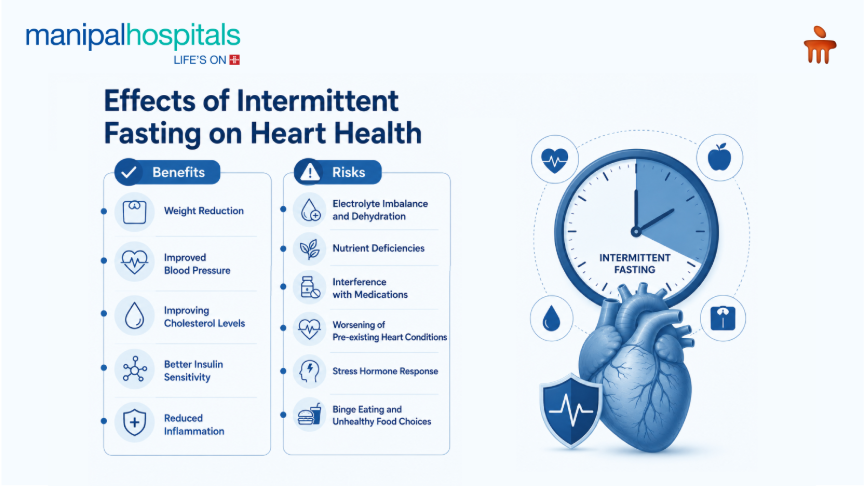
Research suggests that intermittent fasting may offer several advantages that positively impact heart health:
-
Weight Management: Studies find that individuals following intermittent fasting achieve a 3-8% reduction in body weight over 3-24 weeks. Losing even 5-10% of body weight can dramatically reduce the risk of heart disease by improving blood pressure, cholesterol, and blood sugar levels.
-
Improved Blood Pressure: Several studies show that intermittent fasting can contribute to lower blood pressure, a key risk factor for heart disease.
-
Improving Cholesterol Levels: Some evidence suggests that intermittent fasting can reduce LDL cholesterol and triglycerides, thereby reducing the risk of atherosclerosis.
-
Better Insulin Sensitivity: By improving how your body responds to insulin, intermittent fasting can help regulate blood sugar levels. This is particularly beneficial in preventing or managing type 2 diabetes, a major risk factor for heart disease.
-
Reduced Inflammation: Chronic inflammation is a known contributor to heart disease. Intermittent fasting has been shown to reduce markers of systemic inflammation, which can, in turn, protect the cardiovascular system.
Intermittent Fasting and Heart Disease Concerns
While the potential benefits are appealing, there are possible downsides and risks of intermittent fasting on heart disease, especially for vulnerable populations.
-
Electrolyte Imbalance and Dehydration: During fasting periods, it's easy to overlook adequate fluid and electrolyte intake. Imbalances can lead to dizziness, fatigue, and in severe cases, dangerous cardiac arrhythmias.
-
Nutrient Deficiencies: Restricting eating windows or calorie intake too severely without careful planning can cause vitamin and mineral deficiencies, which could affect heart function and overall health.
-
Interference with Medications: For individuals on medications for blood pressure, diabetes, or other cardiac conditions, intermittent fasting can alter medication absorption, leading to dangerously low blood sugar (hypoglycemia) or blood pressure (hypotension).
-
Worsening of Pre-existing Conditions: People with pre-existing heart conditions, arrhythmias, or other chronic diseases might experience worsened symptoms or complications if they practice intermittent fasting without medical supervision.
-
Stress Hormone Response: For some, especially those new to fasting or prone to stress, intermittent fasting can trigger an increase in stress hormones like cortisol.
-
Binge Eating and Unhealthy Food Choices: The "eating window" can sometimes lead to overeating or making poor food choices, negating the metabolic benefits and potentially stressing the cardiovascular system.
Who Should Exercise Caution?
Intermittent fasting is not suitable for everyone. Certain groups should avoid intermittent fasting:
-
Individuals with pre-existing heart conditions, including a history of heart attack, stroke, or heart failure.
-
Patients with diabetes, especially those on insulin or blood sugar-lowering medications, are at risk of hypoglycemia.
-
Pregnant or breastfeeding women.
-
Children and adolescents.
-
Individuals with a history of eating disorders.
-
Those taking medications that require food for absorption or have strict dose schedules.
-
People with kidney or liver disease.
Do's and Don'ts for Intermittent Fasting
If you're considering intermittent fasting, especially with concerns about your heart health, here are some things to keep in mind:
Intermittent Fasting: Dos and Don’ts
|
Dos |
Don’ts |
|
Consult Your Doctor First: Always seek advice from your doctor before starting any new dietary regimen, especially if you have existing health conditions or are on medication. |
Don't Fast for Too Long: Avoid prolonged fasting periods (beyond 24 hours) without expert medical guidance, as this can increase risks. |
|
Stay Hydrated: Drink plenty of water, herbal teas, and black coffee during fasting periods to prevent dehydration. |
Don't Ignore Symptoms: If you experience chest pain, severe dizziness, palpitations, or extreme weakness, seek immediate medical attention. |
|
Focus on Nutrient-Dense Foods: During your eating windows, prioritise whole, unprocessed foods like fruits, vegetables, lean proteins, and healthy fats. |
Don't Overcompensate: Avoid binge eating unhealthy foods during your eating windows, as this can negate any benefits and put strain on your heart. |
|
Listen to Your Body: Pay attention to hunger cues, fatigue, dizziness, or any unusual symptoms. If you feel unwell, break your fast and consult a professional. |
Don't Push Through Severe Discomfort: IF should not feel like an extreme deprivation. If it's causing undue stress, it might not be the right approach for you. |
When to Consult an Expert?
Intermittent fasting holds promise for various health benefits, including those that can indirectly support heart health. However, it is not without its risks, especially for individuals with pre-existing conditions or those who do not approach it mindfully. Hence, starting to follow intermittent fasting should be made with a lot of consideration. If you have any underlying health conditions, are on medication, or have concerns about intermittent fasting, it is imperative to seek professional medical advice.
Our experts at the Department of Cardiology are for understanding nutritional strategies and their cardiovascular implications. They can provide personalised guidance, assess your individual risk factors, and help determine if intermittent fasting is a safe and beneficial approach for your specific health profile. For those in the region, consulting a cardiologist for diet and heart health in Goa can provide local expertise tailored to your needs.
Frequently Asked Questions
While intermittent fasting itself is not a direct cause of a heart attack, improper practice or undertaking intermittent fasting with undiagnosed or unmanaged heart conditions can put stress on the cardiovascular system and potentially increase the risk for a heart attack in vulnerable individuals.
Some studies suggest intermittent fasting can help lower blood pressure. However, if you are on medication for high blood pressure, intermittent fasting can interfere with its effectiveness, potentially causing your blood pressure to drop too low or fluctuate dangerously. Medical supervision is essential.
Research indicates that intermittent fasting may lead to improvements in cholesterol profiles, including reductions in LDL ("bad") cholesterol and triglycerides. However, individual responses vary, and it is important to monitor your levels under medical guidance.
Yes, for many overweight individuals, intermittent fasting can contribute to weight loss, which in turn significantly reduces the risk factors for heart disease, such as high blood pressure, high cholesterol, and insulin resistance.
During your eating window, focus on a heart-healthy diet rich in whole foods: plenty of fruits, vegetables, whole grains, lean proteins (fish, chicken, legumes), and healthy fats (avocado, nuts, olive oil). Limit processed foods, sugary drinks, and excessive saturated or trans fats.
Share this Article


Recent Blogs

Postpartum Haemorrhage: Causes, Symptoms & Emergency Signs
29 Jun 20267 Min Read
Delivering a baby is a major physical event that puts a lot of demand on a woman's body. While the focus is often on the arrival of the baby, the management of the third stage of labour—delivering the placenta and controlling blood loss—is just as crucial to a safe delivery. Understanding the risks during this window, including excessive bleeding or postpartum haemorrhage, is a vital part of maternal care.
Read NowDislocated Elbow: Signs, First Aid & Recovery Time
26 Jun 20267 Min Read
An elbow dislocation can be a frightening and painful experience, often occurring unexpectedly due to falls or sports injuries. While it's a serious injury, understanding the signs, knowing the correct first aid, and following a structured recovery plan can significantly improve outcomes.
Read NowUnderstanding Chronic Diarrhoea: More Than Just a Temporary Stomach Upset
26 Jun 20266 Min Read
Chronic diarrhoea, characterised by loose, watery stools occurring three or more times a day for a period exceeding four weeks, is a common and often debilitating condition affecting millions worldwide. While acute diarrhoea is usually short-lived and often caused by infections, chronic diarrhoea points towards a more persistent underlying issue that requires careful investigation.
Read NowSoothing the Itch: Expert Solutions for Itchy Inner Thighs
22 Jun 20267 Min Read
Experiencing persistent itching in your inner thighs can be incredibly uncomfortable, disruptive, and even embarrassing. While often a common annoyance, it can sometimes signal an underlying skin condition that requires attention. Understanding the common causes of itchy inner thighs will help explore effective remedies and adapt practical prevention tips to keep your skin healthy and comfortable.
Read NowCan an ECG Detect a Heart Attack? What the Test Really Shows
15 Jun 20268 Min Read
In moments of chest pain or suspected cardiac distress, an Electrocardiogram (ECG or EKG) is often the first diagnostic test performed. It's a quick, non-invasive procedure that provides a snapshot of your heart's electrical activity. But can an ECG detect a heart attack definitively? While an ECG is an indispensable tool in emergency cardiac care, its ability to pinpoint a heart attack is nuanced.
Read NowDemystifying AVM: Symptoms, Diagnosis, and What to Expect
12 Jun 20267 Min Read
An arteriovenous malformation (AVM) is an abnormal tangle of blood vessels where arteries connect directly to veins, bypassing the capillaries. Capillaries normally slow down blood flow, allowing oxygen and nutrients to be delivered to tissues. In an AVM, this crucial network is missing, leading to high-pressure blood flowing from arteries directly into weaker veins. This can cause the veins to enlarge and potentially rupture, leading to bleeding (haemorrhage) in the brain or other parts of the body.
Read NowKnee Pain When Bending: Causes, Symptoms, and Treatment Options
12 Jun 20266 Min Read
Knee pain is a common ailment, but when it specifically flares up while bending, it can be particularly debilitating, affecting daily activities from walking to climbing stairs. The knee is a complex joint, crucial for movement and supporting body weight. When you experience knee pain when bending, it signals an issue within its bones, ligaments, tendons, and cartilage. This discomfort can range from a dull ache to sharp, intense pain, often accompanied by other symptoms.
Read NowWhat are Bilateral Polycystic Ovaries?
05 Jun 202610 Min Read
The term bilateral polycystic ovaries often raises concerns and questions for many women. It refers to the presence of multiple small cysts on both ovaries, a characteristic feature often associated with Polyendocrine Metabolic Ovarian Syndrome (PMOS). While the name can sound alarming, understanding what bilateral polycystic ovaries are and its implications is the first step towards effective management. While it is a condition that requires attention and management, it is generally not life-threatening and many women lead full, healthy lives with proper care.
Read NowWhy Do I Feel Weak All the Time? Causes Explained
27 May 20267 Min Read
There are times when the “I am just tired” becomes “why do I feel weak all the time?” This persistent feeling of low energy, muscle fatigue, or an overall lack of strength can significantly affect daily life, making even routine tasks feel Herculean. While often used interchangeably, "weakness" and "fatigue" are distinct. Fatigue is a feeling of tiredness or lack of energy, whereas weakness (or asthenia) is a specific reduction in physical strength. When you experience true weakness, it means you can't exert the same force as before, or your muscles tire out much faster. This isn't just about feeling sleepy; it's about a noticeable decrease in your physical capacity. Studies find that a major portion of the adult population experiences unexplained persistent weakness at some point, highlighting the common nature of this weakness and the importance of seeking professional guidance. Persistent weakness should be evaluated by specialists in the Department of Internal Medicine to identify underlying health conditions and provide appropriate treatment.
Read NowInflammatory Breast Cancer: Early Signs You Shouldn’t Ignore
27 May 20266 Min Read
While many associate breast cancer with a palpable lump, some forms present differently. One such form is inflammatory breast cancer, a rare yet aggressive type that often doesn't start with a lump. Because its signs can be subtle and mimic common skin conditions, it's frequently misunderstood, leading to delayed diagnosis. Despite its rarity, the rapid progression of inflammatory breast cancer makes early detection vital. Understanding its unique presentation is your first line of defence. With timely intervention, significant strides have been made in improving outcomes. Specialists in the Department of Oncology play a crucial role in the early diagnosis, evaluation, and personalised treatment of inflammatory breast cancer.
Read Now