


Postpartum Haemorrhage: Causes, Symptoms & Emergency Signs
Reviewed by: Manipal Hospitals
Posted on
7 Min Read

Not sure what you’re looking for?
Get in touch with our representatives for help!
Contact UsDelivering a baby is a major physical event that puts a lot of demand on a woman's body. While the focus is often on the arrival of the baby, the management of the third stage of labour—delivering the placenta and controlling blood loss—is just as crucial to a safe delivery. Understanding the risks during this window, including excessive bleeding or postpartum haemorrhage, is a vital part of maternal care.
What is Postpartum Haemorrhage?
Postpartum haemorrhage refers to excessive bleeding after childbirth. It can occur within the first 24 hours (primary or early PPH) or up to 12 weeks after delivery (secondary or late PPH). While a certain amount of blood loss is normal after birth, PPH involves significantly more, posing a serious risk to the mother's health if not promptly addressed.
Understanding the Causes of Postpartum Haemorrhage
Effective management of PPH begins with understanding its root causes. The major causes of postpartum haemorrhage can be categorised using the "Four T's" mnemonic, which helps healthcare providers quickly identify and address the issue:
Tone (Uterine Atony)
-
This is the most common cause, accounting for a majority of the PPH cases. After the baby is born, the uterus normally contracts strongly to compress the blood vessels that were connected to the placenta. If the uterus does not contract effectively (uterine atony), these vessels continue to bleed, leading to significant blood loss.
-
Risk Factors: Over-distended uterus (due to large baby, twins, or excess amniotic fluid), prolonged labour, rapid labour, high parity (many previous births), or infections
Trauma (Lacerations or Hematomas)
-
Trauma to the birth canal can cause bleeding. This includes tears (lacerations) in the cervix, vagina, or perineum or go unnoticed.
-
Risk Factors: Rapid delivery, instrumental delivery (forceps or vacuum), episiotomy, or having a large baby.
Tissue (Retained Placental Tissue)
-
If parts of the placenta remain inside the uterus after delivery, they can prevent the uterus from contracting properly, leading to bleeding.
-
Risk Factors: Placenta accreta (placenta grows too deeply into the uterine wall), previous C-sections, or a delayed third stage of labour.
Thrombin (Coagulopathy)
-
Problems with the mother's blood clotting ability (coagulopathy) can also lead to excessive bleeding. This can be pre-existing or develop due to complications of pregnancy such as severe pre-eclampsia or placental abruption.
-
Risk Factors: Pre-existing clotting disorders, severe infections, or conditions that consume clotting factors.
Recognising Postpartum Haemorrhage Symptoms & Emergency Signs
Early detection is paramount in managing PPH effectively. While medical professionals closely monitor mothers after delivery, new mothers need to be aware of postpartum haemorrhage symptoms so they can communicate any concerns promptly.
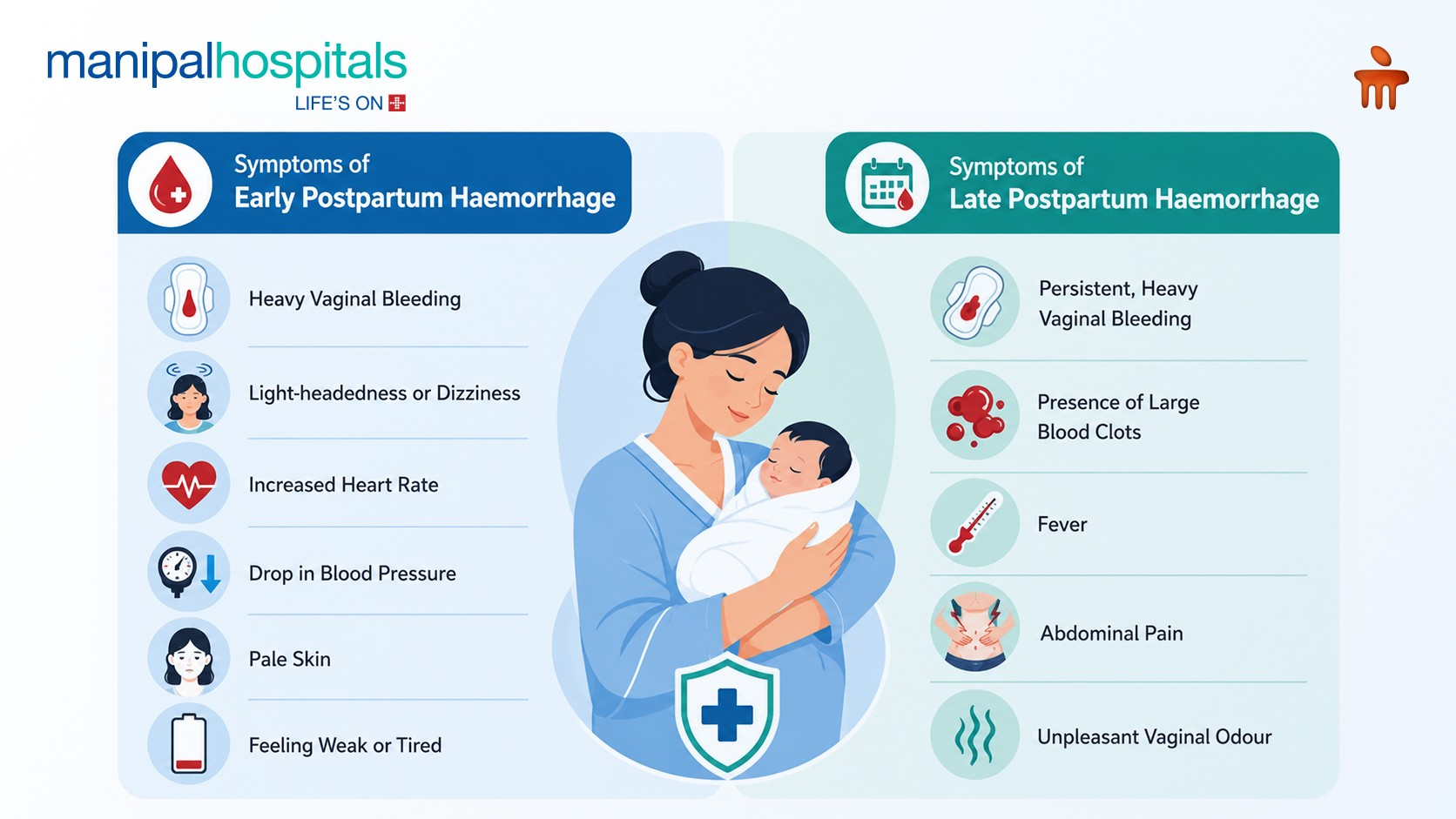
Common Symptoms of Early PPH
-
Heavy Vaginal Bleeding: Soaking through more than one sanitary pad per hour, or passing large blood clots (larger than a golf ball).
-
Light-headedness or Dizziness: A feeling of faintness, especially when standing up.
-
Increased Heart Rate: Your heart may beat faster as it tries to compensate for blood loss.
-
Drop in Blood Pressure: Though this might be checked by medical staff.
-
Pale Skin: A noticeable paleness due to reduced blood volume.
-
Feeling Weak or Tired: Unusual fatigue beyond the normal postpartum exhaustion.
Late Postpartum Haemorrhage Signs and Symptoms (Secondary PPH)
Bleeding can also occur days or even weeks after delivery. These are typically less common but still require immediate attention.
-
Persistent, Heavy Vaginal Bleeding: Bleeding that suddenly increases in volume or lasts longer than expected (usually beyond the first week, and heavier than typical lochia).
-
Passing Large Blood Clots: Clots larger than a lemon.
-
Fever: This could indicate an infection, which can be a cause or complication of late PPH.
-
Abdominal Pain: Persistent cramping or pain in the lower abdomen.
-
Unpleasant Vaginal Odour: A foul-smelling discharge, often associated with infection.
Any of these symptoms, particularly heavy bleeding, should be reported to your healthcare provider immediately. Do not hesitate to seek emergency care if you suspect PPH.
Effective Postpartum Haemorrhage Treatment
When PPH occurs, rapid and effective intervention is critical. Healthcare facilities are equipped with state-of-the-art resources and highly skilled teams of obstetricians, anaesthesiologists, and critical care specialists ready to provide immediate and comprehensive treatment. A multidisciplinary approach ensures the best possible outcomes for mothers. The Department of Obstetrics and Gynaecology at Manipal Hospitals Goa provides expert maternal care with timely evaluation, emergency management, and personalised support for postpartum complications
Immediate Interventions
-
Uterine Massage: Manual massage of the uterus helps it contract and stop bleeding.
-
Medications: Specific medications are administered to stimulate uterine contractions.
-
Fluid Resuscitation: Intravenous fluids are given to replace lost blood volume and maintain blood pressure.
-
Blood Transfusion: If significant blood loss has occurred, a blood transfusion may be necessary.
Advanced Procedures
-
Removal of Retained Placental Tissue: If tissue is identified, it will be carefully removed to allow the uterus to contract.
-
Repair of Lacerations: Any tears in the birth canal are sutured to stop bleeding.
-
Uterine Balloon Tamponade: A special balloon is inserted into the uterus and inflated to apply pressure and stop bleeding.
-
Uterine Artery Embolisation: In more complex cases, radiologists can block the blood vessels supplying the uterus to stop bleeding.
-
Surgical Intervention: In rare and severe cases, surgical options like uterine compression sutures or, as a last resort, hysterectomy (removal of the uterus) may be necessary to save the mother's life.
How Mothers Can Take Care of Themselves During the Postpartum Period:
Being prepared and knowing what to do can make a significant difference. Here are some essential guidelines for new mothers and their support systems:
-
Attend all prenatal appointments: This allows your healthcare provider to identify any potential risk factors for PPH early on.
-
Communicate any concerns: If you feel unwell, dizzy, or notice unusually heavy bleeding after birth, inform your nurse or doctor immediately.
-
Rest adequately: Your body needs time to heal and recover from childbirth. Overexertion can hinder recovery.
-
Stay hydrated and eat nutritious meals: Proper nutrition supports healing and blood regeneration.
-
Accept help: Don't hesitate to ask family and friends for support with household chores or baby care during your recovery.
-
Don't ignore symptoms: Never assume heavy bleeding or feeling faint is "normal" after delivery. Seek medical attention promptly.
-
Medication advice: Always consult your doctor before taking any medication postpartum.
-
Seek emergency care: If you experience sudden, heavy bleeding or severe dizziness, go to the nearest emergency room without delay.
-
Don't overexert yourself: Avoid heavy lifting or strenuous activities in the initial weeks postpartum.
-
Schedule follow-up appointments: These are crucial for monitoring your recovery and overall well-being.
Our Obstetrics Services provide specialised maternal care, including timely diagnosis, emergency management, and support for postpartum complications
Conclusion
Understanding postpartum haemorrhage is vital for all new and expectant mothers. While PPH is a serious condition, timely recognition of symptoms and prompt medical intervention can significantly improve outcomes. By staying informed and proactive about your health, you can ensure a safer and healthier postpartum recovery. Always communicate any concerns with your healthcare provider and prioritise your well-being during this important phase of life.
If you are experiencing any concerning symptoms after childbirth, it's crucial to seek timely medical advice. For any postpartum concerns or warning signs, consult the experienced Obstetrics and Gynaecology team at Manipal Hospital, Goa, for timely and specialised care.
Frequently Asked Questions
This is faq answer
Test faq answer
PPH can occur within the first 24 hours after birth (primary PPH) or up to 12 weeks postpartum (secondary or late PPH), though the majority of cases happen soon after delivery.
While not all cases are preventable, many risk factors can be identified and managed during prenatal care.
Risk factors include a large baby, multiple pregnancies, prolonged labour, certain medical conditions like pre-eclampsia, and a history of PPH in previous pregnancies.
Share this Article


Recent Blogs

Postpartum Haemorrhage: Causes, Symptoms & Emergency Signs
29 Jun 20267 Min Read
Delivering a baby is a major physical event that puts a lot of demand on a woman's body. While the focus is often on the arrival of the baby, the management of the third stage of labour—delivering the placenta and controlling blood loss—is just as crucial to a safe delivery. Understanding the risks during this window, including excessive bleeding or postpartum haemorrhage, is a vital part of maternal care.
Read NowDislocated Elbow: Signs, First Aid & Recovery Time
26 Jun 20267 Min Read
An elbow dislocation can be a frightening and painful experience, often occurring unexpectedly due to falls or sports injuries. While it's a serious injury, understanding the signs, knowing the correct first aid, and following a structured recovery plan can significantly improve outcomes.
Read NowUnderstanding Chronic Diarrhoea: More Than Just a Temporary Stomach Upset
26 Jun 20266 Min Read
Chronic diarrhoea, characterised by loose, watery stools occurring three or more times a day for a period exceeding four weeks, is a common and often debilitating condition affecting millions worldwide. While acute diarrhoea is usually short-lived and often caused by infections, chronic diarrhoea points towards a more persistent underlying issue that requires careful investigation.
Read NowSoothing the Itch: Expert Solutions for Itchy Inner Thighs
22 Jun 20267 Min Read
Experiencing persistent itching in your inner thighs can be incredibly uncomfortable, disruptive, and even embarrassing. While often a common annoyance, it can sometimes signal an underlying skin condition that requires attention. Understanding the common causes of itchy inner thighs will help explore effective remedies and adapt practical prevention tips to keep your skin healthy and comfortable.
Read NowCan an ECG Detect a Heart Attack? What the Test Really Shows
15 Jun 20268 Min Read
In moments of chest pain or suspected cardiac distress, an Electrocardiogram (ECG or EKG) is often the first diagnostic test performed. It's a quick, non-invasive procedure that provides a snapshot of your heart's electrical activity. But can an ECG detect a heart attack definitively? While an ECG is an indispensable tool in emergency cardiac care, its ability to pinpoint a heart attack is nuanced.
Read NowDemystifying AVM: Symptoms, Diagnosis, and What to Expect
12 Jun 20267 Min Read
An arteriovenous malformation (AVM) is an abnormal tangle of blood vessels where arteries connect directly to veins, bypassing the capillaries. Capillaries normally slow down blood flow, allowing oxygen and nutrients to be delivered to tissues. In an AVM, this crucial network is missing, leading to high-pressure blood flowing from arteries directly into weaker veins. This can cause the veins to enlarge and potentially rupture, leading to bleeding (haemorrhage) in the brain or other parts of the body.
Read NowKnee Pain When Bending: Causes, Symptoms, and Treatment Options
12 Jun 20266 Min Read
Knee pain is a common ailment, but when it specifically flares up while bending, it can be particularly debilitating, affecting daily activities from walking to climbing stairs. The knee is a complex joint, crucial for movement and supporting body weight. When you experience knee pain when bending, it signals an issue within its bones, ligaments, tendons, and cartilage. This discomfort can range from a dull ache to sharp, intense pain, often accompanied by other symptoms.
Read NowWhat are Bilateral Polycystic Ovaries?
05 Jun 202610 Min Read
The term bilateral polycystic ovaries often raises concerns and questions for many women. It refers to the presence of multiple small cysts on both ovaries, a characteristic feature often associated with Polyendocrine Metabolic Ovarian Syndrome (PMOS). While the name can sound alarming, understanding what bilateral polycystic ovaries are and its implications is the first step towards effective management. While it is a condition that requires attention and management, it is generally not life-threatening and many women lead full, healthy lives with proper care.
Read NowWhy Do I Feel Weak All the Time? Causes Explained
27 May 20267 Min Read
There are times when the “I am just tired” becomes “why do I feel weak all the time?” This persistent feeling of low energy, muscle fatigue, or an overall lack of strength can significantly affect daily life, making even routine tasks feel Herculean. While often used interchangeably, "weakness" and "fatigue" are distinct. Fatigue is a feeling of tiredness or lack of energy, whereas weakness (or asthenia) is a specific reduction in physical strength. When you experience true weakness, it means you can't exert the same force as before, or your muscles tire out much faster. This isn't just about feeling sleepy; it's about a noticeable decrease in your physical capacity. Studies find that a major portion of the adult population experiences unexplained persistent weakness at some point, highlighting the common nature of this weakness and the importance of seeking professional guidance. Persistent weakness should be evaluated by specialists in the Department of Internal Medicine to identify underlying health conditions and provide appropriate treatment.
Read NowInflammatory Breast Cancer: Early Signs You Shouldn’t Ignore
27 May 20266 Min Read
While many associate breast cancer with a palpable lump, some forms present differently. One such form is inflammatory breast cancer, a rare yet aggressive type that often doesn't start with a lump. Because its signs can be subtle and mimic common skin conditions, it's frequently misunderstood, leading to delayed diagnosis. Despite its rarity, the rapid progression of inflammatory breast cancer makes early detection vital. Understanding its unique presentation is your first line of defence. With timely intervention, significant strides have been made in improving outcomes. Specialists in the Department of Oncology play a crucial role in the early diagnosis, evaluation, and personalised treatment of inflammatory breast cancer.
Read Now