


Carpal Tunnel Syndrome: Symptoms and When Surgery Is Needed
Reviewed by: Manipal Hospitals
Posted on
6 Min Read

Not sure what you’re looking for?
Get in touch with our representatives for help!
Contact UsHave you ever woken up with a tingling sensation in your hands, or experienced numbness in fingers that feels like pins and needles? These could be early indicators of carpal tunnel syndrome, a common condition affecting millions worldwide. The impact of this condition on your daily life can be debilitating. Over time, symptoms such as pain, weakness, and difficulty performing everyday tasks can significantly affect your quality of life. Managing carpal tunnel syndrome requires a comprehensive approach, starting from accurate diagnosis to effective treatment for hand numbness. This blog aims to guide you through the causes, symptoms, diagnosis, and treatment options for carpal tunnel syndrome, helping you take informed steps towards better hand health.
Understanding carpal tunnel syndrome
Carpal tunnel syndrome occurs when the median nerve, which runs from your forearm into the palm of your hand, becomes compressed or squeezed at the wrist. The carpal tunnel itself is a narrow passageway of ligaments and bones at the base of the hand. When tissues within this tunnel swell, they can put pressure on the median nerve, leading to a range of uncomfortable symptoms. It is a surprisingly common condition that affects about 3-6% of the adult population, with women being three times more likely to develop it than men, often due to smaller carpal tunnels.
Causes of carpal tunnel syndrome
While often associated with repetitive strain injury, the causes of carpal tunnel syndrome are multifaceted. Any condition that reduces the space in the carpal tunnel or increases pressure on the median nerve can contribute to its development. Understanding these causes is crucial for prevention and effective management. These may include:
-
Repetitive hand and wrist movements- Activities involving prolonged or repetitive flexing and extending of the wrist.
-
Genetic predisposition- Some individuals are born with smaller carpal tunnels.
-
Underlying medical conditions- Rheumatoid arthritis, diabetes, thyroid imbalance, obesity, and pregnancy.
-
Wrist injuries- Fractures or sprains to the wrist can alter the anatomy of the carpal tunnel.
Recognising the symptoms
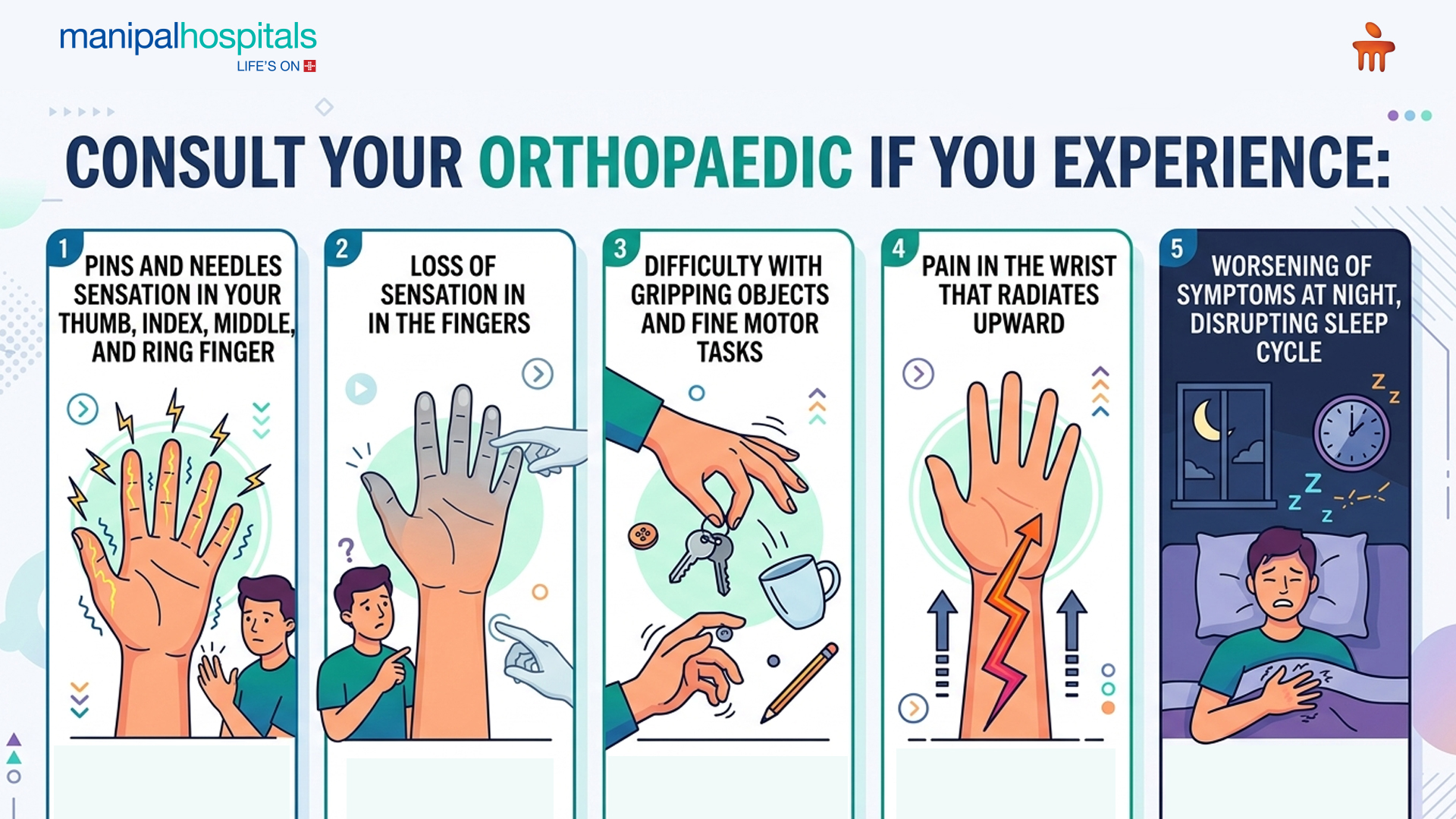
The symptoms of carpal tunnel syndrome typically develop gradually and worsen over time. Early recognition is key to preventing progression and achieving better treatment outcomes. Common symptoms are:
-
Tingling in hands- Often described as pins and needles, primarily affecting the thumb, index, middle, and half of the ring finger.
-
Numbness in fingers- A loss of sensation in the fingers supplied by the affected nerve.
-
Weakness in the hand- Difficulty gripping objects or performing fine motor tasks.
-
Pain- Aching pain in the wrist, hand that can sometimes radiate up the arm.
-
Nocturnal symptoms- Symptoms often worsen at night, waking individuals from sleep, a classic sign due to bent wrists during sleep.
Diagnosis and early intervention
Early intervention can significantly improve outcomes, with over 80% of cases responding well to non-surgical treatments when caught early. Carpal tunnel syndrome requires accurate assessment of nerve function through a combination of:
-
Physical examination (along with clinical tests like Phalen's sign and Tinel's sign)
-
Nerve conduction studies
-
Electromyography (EMG)
Treatment options available
The good news is that many cases of carpal tunnel syndrome can be managed effectively without surgery. The choice of hand numbness treatment depends on the severity of your symptoms and how long you have been experiencing them. The mode of treatment involves:
Non-surgical approaches
For mild to moderate symptoms, conservative treatments are often the first line of defence:
-
Wrist splinting- Wearing a splint, especially at night, to reduce pressure on the median nerve.
-
Activity modification- Adjusting work habits, taking breaks, and using ergonomic tools to reduce repetitive strain injury.
-
Anti-inflammatory agents- To reduce pain and inflammation.
-
Physical therapy- Specific exercises to improve nerve gliding and strengthen wrist muscles.
-
Corticosteroid injections- Administered directly into the carpal tunnel for temporary relief.
Carpal tunnel surgery
If conservative treatments fail to provide sufficient relief or if nerve damage is significant, carpal tunnel surgery may be recommended. This procedure, known as ‘carpal tunnel release’, involves cutting the ligament that forms the roof of the carpal tunnel, thereby enlarging the tunnel and relieving pressure on the median nerve. This surgery is highly effective, boasting a success rate of over 90% in significantly reducing or eliminating symptoms. Patients typically experience relief within weeks, with full recovery often achieved within a few months.
Care essentials
Following certain do’s and don’ts can help manage carpal tunnel syndrome symptoms, reduce strain on the wrist, and support better hand function in daily activities.
|
Do's |
Don'ts |
|
Maintain a neutral wrist position and use ergonomic tools |
Do not ignore persistent tingling in the hands or numbness in the fingers |
|
Take frequent breaks to stretch your hands and wrists |
Avoid sleeping on your hands or with your wrists bent in awkward positions |
|
Consider wearing a wrist splint, especially at night |
Abstain from self-diagnosing or delaying professional medical evaluation |
Conclusion
Untreated carpal tunnel syndrome can significantly affect hand comfort, strength, and daily activities. Recognising the early signs and seeking timely medical guidance can help prevent complications and improve hand function. Manipal Hospitals is committed to providing you with comprehensive care for carpal tunnel syndrome and other nerve-related conditions. For advanced diagnostic facilities and personalised treatment approaches to support your hand health, consult our experienced specialists in the orthopaedics department of Manipal Hospitals Siliguri today.
Frequently Asked Questions
In very mild or temporary cases, symptoms may improve or resolve on their own after the underlying cause is addressed. However, in many cases, the condition may gradually worsen over time without proper evaluation, management, and timely intervention.
The surgery is performed under local or regional anaesthesia, so you won't feel pain during the procedure. Post-operative pain is typically managed with medication and subsides within a few days.
Most patients can use their hand for light activities within a few days to a week. Full recovery and return to normal activities, including strengthening, can take several weeks to a few months.
While carpal tunnel syndrome cannot always be prevented, you can lower your risk by maintaining proper wrist posture, taking regular breaks during repetitive activities, using ergonomic equipment, avoiding excessive strain, and managing underlying health conditions effectively.
Untreated carpal tunnel syndrome may cause progressive nerve damage, leading to long-term numbness, tingling, reduced grip strength, and weakness. In severe cases, it can result in wasting of the thumb muscles and significantly affect hand movement and daily activities.
Share this Article


Recent Blogs

মলের সাথে রক্ত? কখন চিন্তিত হবেন এবং কী করবেন
29 Jun 20265 Min Read
মলের সাথে রক্ত পড়া এক ভয়াবহ অভিজ্ঞতা হতে পারে। এটি হালকা রঙের টাটকা রক্ত বা কালো, আলকাতরার মতো মল আকারে প্রকাশ পেতে পারে। বেশিরভাগ ক্ষেত্রে কারণটি তেমন গুরুতর না হলেও, কোনও কোনও ক্ষেত্রে মলের সাথে রক্ত অন্তর্নিহিত কোনও স্বাস্থ্য সমস্যার লক্ষণ হতে পারে। এর জন্য দ্রুত চিকিৎসা প্রয়োজন। এই ব্লগ-এর মাধ্যমে আমরা মলের সাথে রক্ত যাওয়ার কারণ, এর লক্ষণ এবং কখন ডাক্তারের পরামর্শ নেওয়া অত্যাবশ্যক, সে বিষয়ে বিস্তারিত আলোচনা করব।
Read NowCarpal Tunnel Syndrome: Symptoms and When Surgery Is Needed
24 Jun 20266 Min Read
Have you ever woken up with a tingling sensation in your hands, or experienced numbness in fingers that feels like pins and needles? These could be early indicators of carpal tunnel syndrome, a common condition affecting millions worldwide. The impact of this condition on your daily life can be debilitating. Over time, symptoms such as pain, weakness, and difficulty performing everyday tasks can significantly affect your quality of life. Managing carpal tunnel syndrome requires a comprehensive approach, starting from accurate diagnosis to effective treatment for hand numbness. This blog aims to guide you through the causes, symptoms, diagnosis, and treatment options for carpal tunnel syndrome, helping you take informed steps towards better hand health.
Read NowAppendix Pain Relief: Early Symptoms, Diet Tips and When to Seek Emergency Care
24 Jun 20266 Min Read
The appendix is a small, finger-shaped pouch connected to your large intestine. When this tiny organ becomes inflamed, it can lead to significant abdominal pain and can quickly become a medical emergency. This condition is known as appendicitis. Appendicitis affects approximately 1 in 15 people, highlighting the importance of awareness. Understanding the early appendicitis symptoms and recognising when to seek emergency care for appendix pain are crucial for timely treatment and recovery.
Read Nowফ্যাটি লিভার রোগ: লক্ষ লক্ষ মানুষকে আক্রান্তকারী এক নীরব মহামারী— সতর্কসংকেত ও প্রতিরোধ
03 Jun 20266 Min Read
ফ্যাটি লিভার ডিজিজ বিশ্বের অন্যতম প্রচলিত একটি ব্যাধি। প্রাথমিক পর্যায়ে ফ্যাটি লিভারের লক্ষণসমূহ প্রকাশ্যে না এলেও, দীর্ঘ সময় ধরে চিকিৎসা না করালে আরও গুরুতর জটিলতার সম্মুখীন হওয়া সম্ভব। এই নিবন্ধে ফ্যাটি লিভার রোগের কারণ এবং লক্ষণ সম্পর্কে একটি বিস্তারিত আলোচনা করা হয়েছে, যার ফলে আপনি জানতে পারবেন যে এই রোগটির জন্য কখন সময়োপযোগী ব্যবস্থাপনা অথবা চিকিৎসকের পরামর্শ নেওয়া প্রয়োজন।
Read NowThe Future of Cancer Care in Siliguri: Latest Cancer Treatments
03 Jun 20265 Min Read
A cancer diagnosis poses a difficult challenge, but with constant advancements in medical science, the ability to combat this complex disease has reached new heights. In Siliguri, Manipal Hospitals is leading this transformation by bringing world-class cancer care services closer to home, offering a brighter future for patients and their families seeking latest cancer treatments.
Read NowLaparoscopic Surgery: Benefits, Recovery & Why It’s Preferred
29 May 20267 Min Read
Laparoscopic surgery is a modern minimally invasive surgical technique performed through small incisions using specialised instruments and a tiny camera called a laparoscope. It enables surgeons to view and treat internal organs with enhanced precision and minimal disruption to surrounding tissues. Compared to conventional open surgery, laparoscopic procedures generally involve less pain, smaller scars, quicker recovery, and shorter hospital stays, allowing patients to resume their normal activities sooner. This blog gives you essential information on this procedure.
Read NowHip Replacement Surgery: Who Is a Candidate, What to Expect, and Your Recovery Roadmap
26 May 20265 Min Read
Chronic hip pain can severely impact your quality of life, making everyday activities like walking, climbing stairs, or even sleeping a challenge. If conservative treatments are no longer providing relief, hip replacement surgery might be the transformative solution you need. This blog aims to empower you with comprehensive information to make informed decisions for pain-free mobility.
Read Nowবর্ষায় জলবাহিত রোগ: প্রতিরোধ ও চিকিৎসার উপায়
06 May 20265 Min Read
বর্ষাকালে জলবাহিত রোগ-এর প্রবণতা বাড়ার ফলে স্বাস্থ্যের ঝুঁকিও বাড়ে। বৃষ্টির জল জমে পানীয় জলের উৎস দূষিত হয়, যা এই ধরণের অসুস্থতার প্রকোপ ৩০%-৫০% পর্যন্ত বাড়িয়ে দেয়। সচেতনতা ও সঠিক ব্যবস্থার মাধ্যমে অধিকাংশ ক্ষেত্রে এই রোগগুলি প্রতিরোধ করা সম্ভব। এই বিষয়ে বিস্তারিত তথ্য নিয়ে প্রস্তুত এই ব্লগ।
Read NowDiet Plan for Liver Cirrhosis Patients
04 May 20264 Min Read
Liver cirrhosis is a serious condition characterised by permanent scarring of the liver which can seriously disrupt its function and even lead to liver damage. Due to the complex nature of this condition, a suitable liver cirrhosis diet is essential for managing its most critical aspects. This guide will delve into the essential principles of a liver cirrhosis diet, helping you make informed food choices to support your liver and overall well-being.
Read NowThe Power of Prevention: Why Regular Check-up is Essential
04 May 20265 Min Read
In our fast-paced lives, we often tend to overlook something as fundamental as our health until symptoms demand attention. However, adopting a proactive approach through regular check-up is not just beneficial; it is a critical investment in your long-term well-being. Your body requires periodic assessments to ensure optimal function and detect potential issues before they escalate. These comprehensive health assessments can offer invaluable insights into the current health status and empower us to take preventative measures.
Read Now