


Short-Term Memory Loss in Young Adults: What’s Really Going On?
Reviewed by: Dr. Shobha N
Posted on
8 Min Read

Not sure what you’re looking for?
Get in touch with our representatives for help!
Contact UsNoticing that you’re forgetting small things, like names, tasks, or where you kept your phone, can feel unsettling, especially when it starts happening more often than usual. It’s easy to brush it off as stress or a busy lifestyle, but when these moments begin to repeat, they can quietly chip away at your confidence and peace of mind.
Short-term memory loss in young adults is more common than many realise, and in most cases, it is linked to manageable and reversible factors rather than something serious. Still, understanding what’s behind these lapses is essential, not just to ease your worry, but to take the right steps early on.
This blog walks you through the real reasons for memory loss, how to recognise memory loss symptoms, when it may indicate a deeper memory loss disease, and the practical, science-backed ways you can improve your memory and regain control.
Why Does Short-Term Memory Loss Happen in Young Adults?
The concept of memory is not just about the brain's ability to retain information; it is also about the state of the individual's attention, emotions, sleep, and health. When any of these are disrupted, your ability to retain and recall information takes a hit.
In younger adults, short-term memory loss is rarely due to ageing or degenerative conditions. Instead, it is often linked with other aspects of your life, such as your lifestyle or your mental state, which subtly influence your way of processing information.
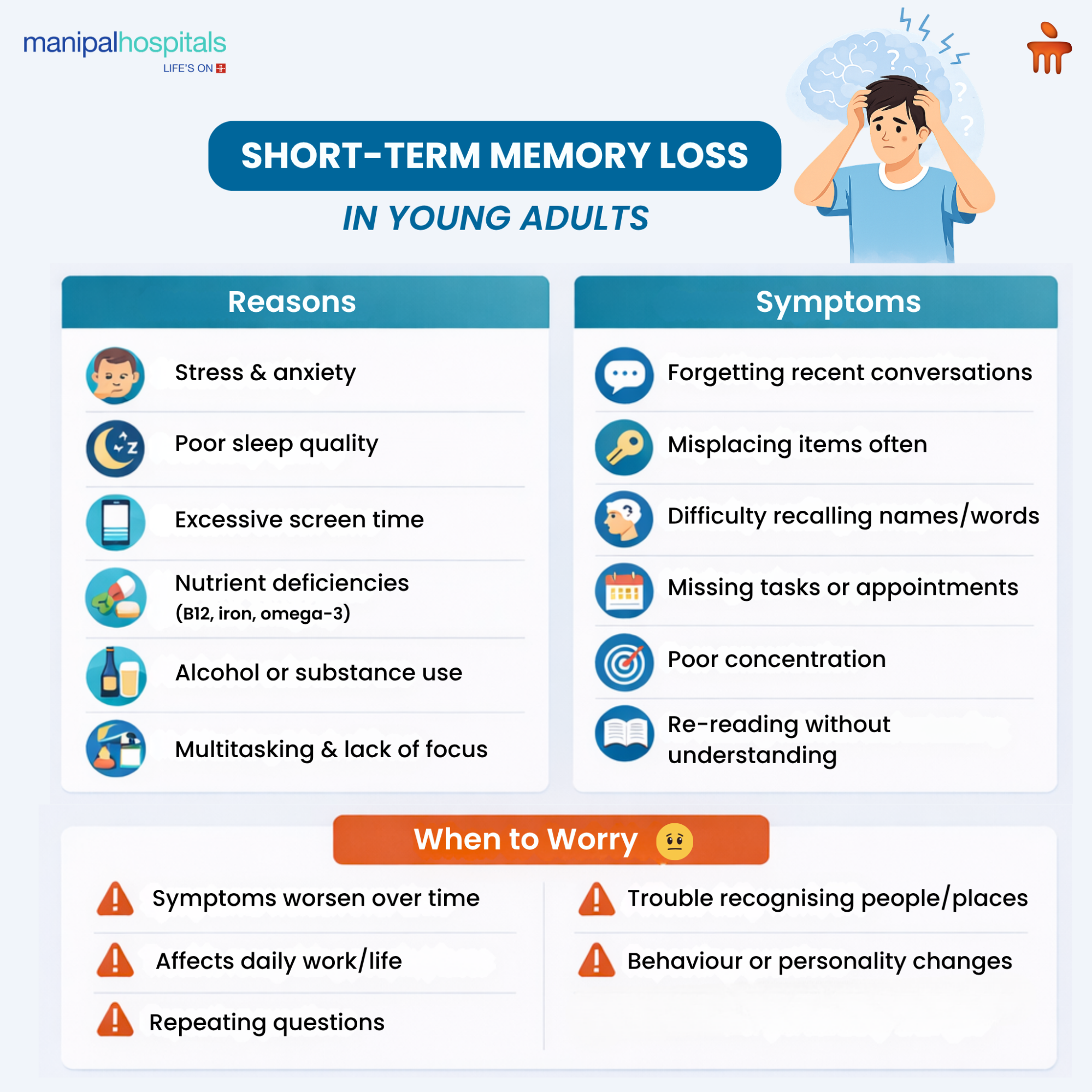
The most common causes of memory loss include:
-
Chronic stress or anxiety: When your mind is preoccupied with other things, it cannot process new information in an effective manner
-
Poor quality of sleep: Sleep plays a key role in storing and organising memories. Therefore, poor sleep affects how well your brain stores and recalls information.
-
Excessive screen time: When you are constantly exposed to digital media, it affects your ability to concentrate.
-
Deficiency of essential nutrients: Lack of vitamin B12, iron, or omega-3 fatty acids in your body affects your brain.
-
Consumption of alcohol or drugs: both can affect brain function and memory.
-
Multitasking: When you get used to doing multiple things at once, you cannot concentrate on something in detail, making you forgetful about what you did.
Sometimes, it is not just one of these that is causing your memory loss but all of them acting in conjunction.
Early Memory Loss Symptoms You Shouldn’t Ignore
It’s natural to forget things occasionally. However, when certain patterns begin to emerge, it’s worth paying closer attention. Short-term memory loss tends to show up in subtle but consistent ways. Recognising these early signs helps you act before the issue worsens.
You may notice:
-
Forgetting recent conversations or instructions
-
Misplacing everyday items frequently
-
Struggling to recall names or words mid-sentence
-
Losing track of tasks or appointments
-
Difficulty concentrating on simple activities
-
Re-reading the same information without absorbing it
These memory loss symptoms can feel frustrating, but they often reflect factors like stress or fatigue, but persistent symptoms should still be evaluated.
When Could It Be a Memory Loss Disease?
While most cases are linked to lifestyle factors, there are situations where short-term memory loss may indicate an underlying memory loss disease. This is less common in young adults but still important to recognise.
What sets these cases apart is the progression and impact on daily functioning. The memory issues tend to worsen over time rather than improve with rest or lifestyle changes.
You should consider a medical evaluation if you experience:
-
Memory gaps that interfere with work or daily life
-
Difficulty recognising familiar people or places
-
Repeatedly asking the same questions without awareness
-
Trouble following simple instructions
-
Noticeable personality or behavioural changes
Conditions such as early-onset cognitive disorders, neurological conditions, or untreated mental health issues can contribute to these symptoms. Early assessment helps identify the cause and begin appropriate memory loss disease treatment before it progresses further.
Diagnosis: How Doctors Evaluate Memory Concerns
Talking to doctors about your memory concerns can feel intimidating in the beginning, but it is actually quite simple and can help calm your concerns.
Generally, doctors check your overall health, your lifestyle, and your mental state before moving to more complex methods of diagnosis.
The process of diagnosis usually goes as follows:
-
Detailed History: Your sleep patterns, stress levels, dietary habits, and your daily routine
-
Cognitive Assessment Tests: Simple tests to evaluate your mental state and process
-
Blood Tests: To check for any deficiency or hormonal imbalances
-
Mental Health Screening: To check if there are any symptoms of anxiety, depression, and burnout
-
Imaging: Only in cases where there are some suspicions of problems related to the nervous system
It is not just the diagnosis of the problem; it is also about understanding what is happening in your brain and how to treat the issue.
Practical Ways to Improve Your Short-Term Memory
Improving memory does not involve quick fixes. It involves small, yet significant, steps that help your brain perform optimally. If done correctly, most instances of short-term memory loss can be improved significantly.
Here are a few ways to start:
-
Get proper sleep: Try to get 7-8 hours of proper sleep every night.
-
Try to develop mindful focus: Try not to multitask. Give your brain your full attention for a particular task.
-
Exercise: Regular exercise helps improve blood flow to your brain.
-
Eat brain-friendly foods: Include nuts, seeds, and leafy vegetables in your diet. Nuts and seeds are a great source of healthy fats.
-
Reduce your screen time: Try to take breaks from your devices.
-
Use memory tools: Write reminders, create a routine, and so on.
These may not be difficult to implement, but they form the basis for your brain to perform optimally.
Brain Health Boosters: What Actually Helps Your Memory
There are certain habits and nutrients that can directly affect how your brain processes and stores information. The information provided below is not a list of general brain-boosting advice, but rather brain-boosting advice that specifically targets memory. Below is a reference list of brain-supporting factors and how they can help improve your memory:
|
Brain Support Factor |
How It Helps Memory |
Natural Sources / Practices |
|
Omega-3 fatty acids |
Strengthens neural connections |
Fatty fish, walnuts, flaxseeds |
|
Vitamin B12 |
Supports nerve function and cognition |
Dairy, eggs, fortified cereals |
|
Magnesium |
Helps regulate brain signalling |
Dark chocolate, nuts, spinach |
|
Hydration |
Maintains concentration and alertness |
2–3 litres of water daily |
|
Meditation |
Improves focus and reduces mental clutter |
10–15 minutes daily mindfulness |
|
Learning new skills |
Builds new neural pathways |
Reading, puzzles, language learning |
These elements actively support your brain’s ability to retain and recall information more effectively.
When Should You Seek Medical Help?
There’s a difference between occasional forgetfulness and something that disrupts your daily life. Knowing when to reach out for help can make all the difference.
You should consider consulting a doctor if:
-
Memory issues persist for several weeks despite lifestyle changes
-
Forgetfulness begins to affect your work or relationships
-
You feel mentally “foggy” most of the time
-
Symptoms are accompanied by mood changes or fatigue
Getting clarity early can be incredibly reassuring, and, in many cases, the solution is simpler than you expect.
Conclusion
Short-term memory loss can feel worrying, especially when it starts affecting your daily rhythm. The good news is that, for most young adults, it is not a sign of something severe but rather a reflection of how their mind and body are under strain. Understanding the reasons for memory loss, recognising early memory loss symptoms, and making small, consistent changes can bring noticeable improvement.
If your symptoms persist or feel concerning, seeking timely care ensures you receive the right guidance and support. For those looking for expert evaluation and memory loss disease treatment in Malleshwaram, consulting specialists at Manipal Hospital Malleshwaram can provide clarity, reassurance, and a personalised path forward.
Frequently Asked Questions
Yes, anxiety can significantly affect memory. When your brain is in a constant state of alertness, it prioritises survival over information processing. This makes it harder to focus, absorb, and recall details. Over time, this can feel like persistent forgetfulness, even though the brain itself is structurally healthy. Managing anxiety often leads to noticeable improvement in memory.
Caffeine can have mixed effects. In small amounts, it may improve alertness and concentration. However, excessive intake can increase restlessness, disrupt sleep, and heighten anxiety - all of which negatively impact memory. Finding a balanced intake is key to supporting cognitive function.
In many cases, yes. When memory issues are linked to lifestyle factors like stress, poor sleep, or nutritional gaps, they can often improve with the right changes. The brain has a remarkable ability to adapt and recover when given the right conditions.
Hormonal imbalances, including thyroid issues or fluctuations related to menstrual cycles, can influence concentration and memory. These changes can sometimes make you feel mentally sluggish or forgetful, but they are usually manageable once identified.
They can help to some extent, especially with attention and mental agility. However, their benefits are most effective when combined with real-life habits like proper sleep, nutrition, and physical activity. Relying solely on apps without addressing lifestyle factors may not give lasting results.
Share this Article


Recent Blogs

From First Signs to Recovery: A Complete Guide to Mouth Cancer
19 Jul 20268 Min Read
Changes inside your mouth can be easy to overlook at first. A minor ulcer that is not healing, some discoloration, or slight discomfort while eating that does not seem significant right away. However, these subtle changes may be a sign that something may need attention. Mouth cancer is not always immediately apparent. It often starts gently, with signs that seem harmless or temporary. This is why understanding the early changes matters so much. Recognising mouth cancer symptoms at the right time can make a significant difference in how smoothly treatment progresses and how well you recover. This blog walks you through what mouth cancer is, how it develops, the signs of mouth cancer you should watch for, what happens in the starting stage, and the treatment options available today. This way, you can feel informed, prepared, and supported every step of the way.
Read NowUnderstanding Pancreatic Cancer: Early Signs and Risk Factors
19 Jul 20268 Min Read
Most people are quick to address a sharp headache or a visible injury, but internal digestive changes often get pushed to the back of our minds. We tend to blame a heavy meal, a stressful week, or “just getting older” for vague stomach discomfort. Unlike some other conditions, pancreatic problems can be subtle and easy to ignore. Pancreatic cancer, in particular, tends to develop quietly. By the time the pancreatic cancer symptoms become noticeable, they may be confused with common digestive issues or even conditions like acute pancreatitis. Understanding pancreatic cancer and how it differs from acute pancreatitis symptoms is essential for timely intervention. This blog examines the risk factors, the nature of pancreatic discomfort, and the steps to take if you notice persistent changes.
Read NowBack Pain in Elderly People: Don’t Ignore the Warning Signs
30 Jun 20267 Min Read
As we grow older, occasional body pain may seem normal. But persistent back pain in senior citizens should never be ignored. Back pain in elderly people can significantly affect walking, sleep, independence, and overall quality of life. In many cases, it may indicate underlying spine problems that may need expert medical attention. Today, spine-related disorders are becoming increasingly common among the geriatric population due to aging, weak bones, arthritis, poor posture, and sedentary lifestyles. Fortunately, with modern spine care, advanced diagnosis, physiotherapy, minimally invasive procedures, and expert treatment, most elderly patients can return to a comfortable and active life. In fact, studies show that over 85% of elderly individuals experiencing back pain can achieve pain reduction and improved mobility with a personalized treatment plan.
Read NowHypertrophic Cardiomyopathy Explained: A Complete Patient Guide
22 Jun 20267 Min Read
We have all had those moments where we feel a bit "out of breath" after a few flights of stairs or notice a sudden, brief flutter in the chest while rushing through a busy morning. Usually, we dismiss these sensations as a sign of a poor night's sleep, too much caffeine, or perhaps just being “out of shape." We assume our bodies will simply reset once we catch our breath. However, for some, these small physical protests are not about fitness; they are the subtle signals of hypertrophic cardiomyopathy. Understanding what is hypertrophic cardiomyopathy is the first step toward moving from uncertainty to a clear, managed path for heart health. In this blog, we explain what this condition is, its causes, warning signs, diagnosis, and treatment options.
Read NowCervical Cancer Prevention: The Power of HPV Vaccination & Early Screening
12 Jun 202610 Min Read
Cervical cancer remains the second most common cancer among women in India, with over 1.2 lakh new cases and nearly 80,000 deaths annually. But, do you know that it is highly preventable? Thanks to increasing awareness and significant medical advancements, women today have many options for cervical cancer prevention. A key focus in this battle for women’s health is understanding the crucial connection between Human Papillomavirus (HPV) infection and cervical cancer. In this blog, let us explore the life-saving potential of both the HPV vaccine and early screening of cervical cancer.
Read NowSummer Food Guide: Top 10 Foods to Eat in Summer Season
01 Jun 20266 Min Read
Changes in appetite, thirst and energy levels are quite common during the summer months. Picking healthy foods in summer is therefore not only an effort to pick healthy snacks to enjoy, but it also entails selecting summer foods which will help us maintain proper fluid balance in our bodies. As summer comes with an increased risk of dehydration, heat stroke and food-borne infections, it becomes essential for us to pay attention to what we consume. In this blog, we tell you about the top 10 summer foods that will certainly help you stay hydrated and improve digestion, even amid the intense heat.
Read NowHypertension Explained: Understanding High Blood Pressure, Its Risks, and How to Manage It Effectively
20 May 202610 Min Read
Hypertension, commonly known as high blood pressure, is a pervasive health challenge affecting millions worldwide. Often called the ‘silent killer,' it can go unnoticed for years while quietly damaging your arteries and vital organs. This blog by an experienced Internal medicine doctor in Malleshwaram discusses more about hypertension, its early signs, risks, and effective management, which can help us safeguard heart health and lead a much healthier life in general.
Read NowComplications of Delaying Gallbladder Surgery: Why Timely Treatment Matters
15 May 20267 Min Read
It is a common scenario: you experience a sudden, sharp pain in your upper abdomen after a heavy meal. It’s uncomfortable, perhaps even distressing, but after an hour or two, the sensation fades. You might tell yourself it was just a bout of indigestion or something that didn't agree with you. However, when these episodes, often called “gallbladder attacks," become a recurring part of your life, they are usually a signal that your gallbladder is struggling to function. Ignoring these symptoms of gallbladder problems doesn't make the stones go away; it simply gives them more time to cause irreversible damage to your internal plumbing. This blog explores the biological risks of waiting, the warning signs your body is sending, and why choosing gallbladder removal surgery may be the best way to protect your long-term digestive health.
Read NowLaparoscopic Management of Right Inguinal Hernia with Caecum and Adhesions
13 May 20267 Min Read
An inguinal hernia is something doctors see regularly, but not every case is as straightforward as it sounds. In many people, the hernia sac contains fat or a simple loop of intestine, and the repair is relatively routine. However, there are situations where things are not that simple. When the contents include structures like the caecum (the first portion of the colon located in the lower right abdomen), along with dilated bowel loops and adhesions, the surgery becomes more complex and needs a more thoughtful approach. In these cases, the focus is not just on repairing the defect but on safely handling what is inside the hernia and protecting the surrounding structures. Choosing the right surgical method becomes important here. While open surgery is still a reliable option, laparoscopic repair can offer better visual clarity and more controlled dissection, especially when dealing with adhesions or unusual findings. In this blog, a top general surgeon in Malleshwaram, Bengaluru, helps you understand how inguinal hernias develop and the usual ways they are treated and walks you through a real case of a right inguinal hernia where the caecum was part of the hernia contents. This case shows how careful planning and the right surgical technique can make a significant difference in achieving a safe and successful outcome.
Read NowShort-Term Memory Loss in Young Adults: What’s Really Going On?
08 May 20268 Min Read
Noticing that you’re forgetting small things, like names, tasks, or where you kept your phone, can feel unsettling, especially when it starts happening more often than usual. It’s easy to brush it off as stress or a busy lifestyle, but when these moments begin to repeat, they can quietly chip away at your confidence and peace of mind. Short-term memory loss in young adults is more common than many realise, and in most cases, it is linked to manageable and reversible factors rather than something serious. Still, understanding what’s behind these lapses is essential, not just to ease your worry, but to take the right steps early on. This blog walks you through the real reasons for memory loss, how to recognise memory loss symptoms, when it may indicate a deeper memory loss disease, and the practical, science-backed ways you can improve your memory and regain control.
Read Now