


Surgical Pathways for Ovarian and Uterine Cancer: Understanding Your Treatment Options
Reviewed by: Manipal Hospitals
Posted on
7 Min Read

Not sure what you’re looking for?
Get in touch with our representatives for help!
Contact UsReceiving a diagnosis of ovarian or uterine cancer can feel overwhelming. Along with the emotional impact, many women and their families are left with important questions about treatment, recovery, and long-term health. One of the most effective treatment approaches for both conditions is surgery. Understanding the available surgical pathways can help patients make informed decisions and approach treatment with greater confidence.
At Manipal Hospitals, patients receive personalised cancer care backed by advanced technology, experienced specialists, and a multidisciplinary approach to treatment. At Manipal Hospital Kharadi, our expert gynaecologic oncology team focuses on delivering comprehensive and compassionate care tailored to every patient's needs.
Understanding Ovarian Cancer
Ovarian cancer develops in the ovaries, the organs responsible for producing eggs and female hormones. Often referred to as a "silent disease," ovarian cancer may not cause noticeable symptoms in its early stages. As a result, many cases are diagnosed at an advanced stage.
Common Ovarian Cancer Symptoms
Women should consult a doctor if they experience the following:
-
Persistent bloating or abdominal swelling
-
Pelvic discomfort or pain
-
Feeling full quickly while eating
-
Changes in bowel habits
-
Unexplained weight changes
-
Fatigue that does not improve with rest
Recognising these symptoms early and seeking medical attention can significantly improve treatment outcomes.
Surgical Treatment for Ovarian Cancer
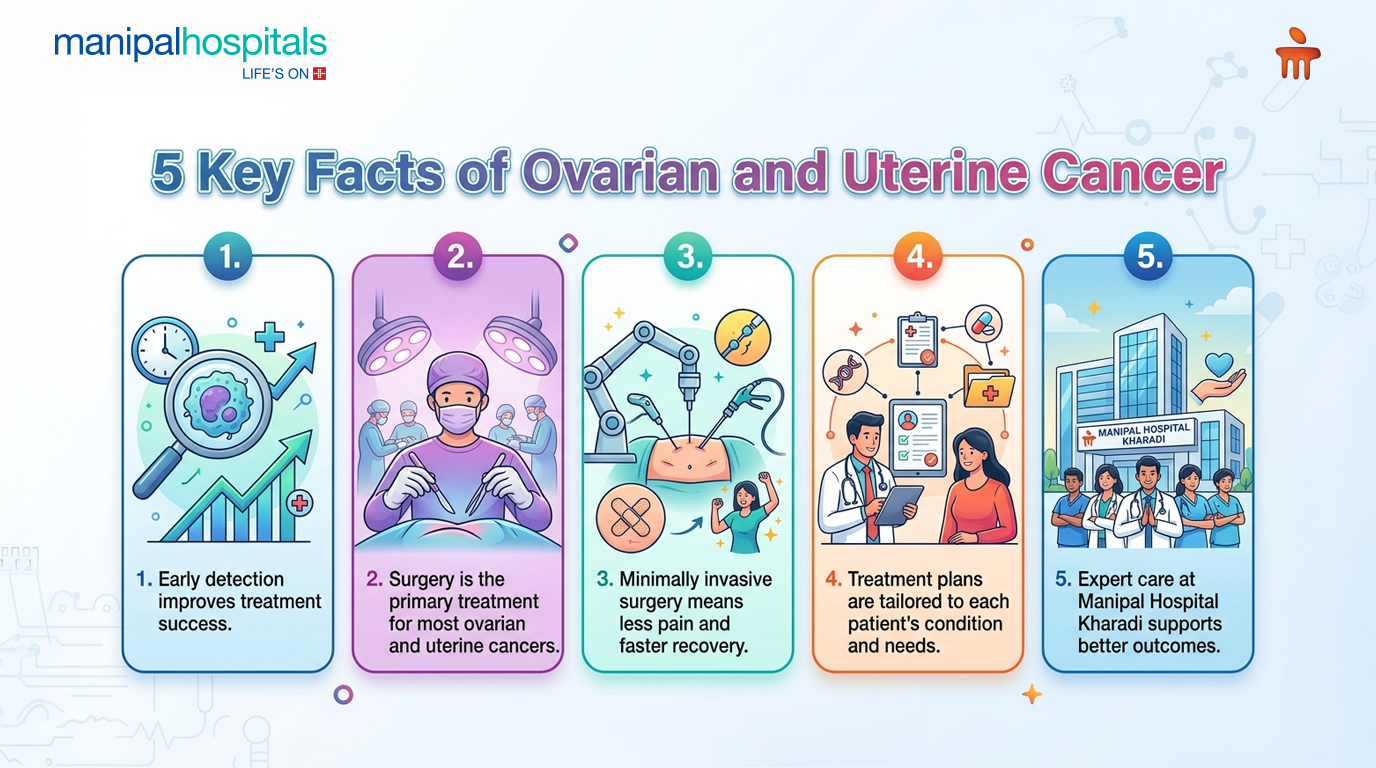
Surgery remains the cornerstone of ovarian cancer treatment. The primary goal is to remove cancerous tissue and determine the extent of disease spread.
Total Abdominal Hysterectomy with Bilateral Salpingo-Oophorectomy
This is the most common surgical procedure for ovarian cancer. It involves the removal of:
-
Uterus
-
Cervix
-
Both ovaries
-
Both fallopian tubes
This procedure helps eliminate the primary source of cancer and reduces the risk of recurrence.
Debulking Surgery
When ovarian cancer has spread beyond the ovaries, surgeons perform debulking surgery to remove as much visible tumour tissue as possible.
Studies have consistently shown that patients with minimal residual disease after surgery often experience better treatment outcomes and longer survival rates.
Omentectomy
The omentum is a fatty layer that covers abdominal organs. Since ovarian cancer commonly spreads to this area, surgeons often remove it during treatment.
Lymph Node Assessment
Nearby lymph nodes may be removed and examined to determine whether cancer has spread beyond the ovaries.
Fertility-Preserving Surgery
For younger women diagnosed with early-stage ovarian cancer, fertility preservation may be possible. In carefully selected cases, only one ovary and fallopian tube may be removed while preserving the uterus and the unaffected ovary.
At Manipal Hospital Kharadi, advanced laparoscopic and robotic-assisted techniques are available for eligible patients, helping reduce pain, minimise scarring, and promote faster recovery.
Understanding Uterine Cancer
Uterine cancer, also known as endometrial cancer, develops in the lining of the uterus. Unlike ovarian cancer, uterine cancer often presents with clear warning signs, leading to earlier diagnosis and treatment.
Common Uterine Cancer Symptoms
The most important symptom is abnormal vaginal bleeding, including:
-
Bleeding after menopause
-
Unusually heavy periods
-
Bleeding between menstrual cycles
Any abnormal bleeding should be evaluated by a healthcare professional, as early diagnosis greatly improves treatment success.
Surgical Treatment for Uterine Cancer
For most women, surgery is the primary treatment option.
Total Hysterectomy
This procedure involves removing:
-
The uterus
-
The cervix
-
A hysterectomy can be performed through the following methods:
-
Open surgery
-
Laparoscopic surgery
-
Robotic-assisted surgery
-
Vaginal surgery
The choice depends on the stage of cancer and the patient's overall health.
Bilateral Salpingo-Oophorectomy (BSO)
Many patients also undergo removal of both ovaries and fallopian tubes to reduce the risk of cancer spread and recurrence.
Lymph Node Mapping and Biopsy
Surgeons may assess lymph nodes to determine whether cancer has spread beyond the uterus.
Modern sentinel lymph node mapping techniques allow surgeons to identify and evaluate only key lymph nodes, reducing complications while maintaining diagnostic accuracy.
Minimally Invasive Surgery
Minimally invasive procedures have transformed uterine cancer treatment. Benefits include:
-
Smaller incisions
-
Less post-operative pain
-
Reduced blood loss
-
Shorter hospital stays
-
Faster return to daily activities
At Manipal Hospital Kharadi, robotic and laparoscopic surgery options help patients recover comfortably while maintaining excellent treatment outcomes.
Factors That Influence Surgical Decisions
Every cancer diagnosis is unique. Treatment recommendations are based on several important factors.
Cancer Stage
The stage determines how far the cancer has spread and helps guide the extent of surgery required.
Cancer Grade
Higher-grade cancers tend to grow more aggressively and may require more comprehensive treatment.
Patient's Age and Health
Existing medical conditions, fitness levels, and overall health play a significant role in treatment planning.
Fertility Goals
Younger women who wish to have children in the future may be eligible for fertility-preserving options.
Personal Preferences
Patients are actively involved in decision-making, ensuring treatment plans align with their values and priorities.
The multidisciplinary cancer team at Manipal Hospital Kharadi includes gynaecologic oncologists, medical oncologists, radiation specialists, radiologists, pathologists, and dedicated nursing professionals who work together to create customised treatment plans.
Preparing for Surgery: Important Do's and Don'ts
Do's
Follow Your Doctor's Instructions
Carefully follow all preoperative instructions regarding medications, diet, and investigations.
Stay Informed
Ask questions about your diagnosis, treatment plan, and expected recovery timeline.
Build a Support System
Arrange help from family members or carers during the recovery period.
Focus on Nutrition
A healthy diet before and after surgery can support healing and improve recovery.
Attend Follow-Up Visits
Regular follow-ups help monitor recovery and identify any concerns early.
Don'ts
Don't Ignore Symptoms
Persistent symptoms should never be dismissed or delayed.
Don't Self-Medicate
Always discuss supplements or medications with your doctor before surgery.
Don't Overexert Yourself
Recovery takes time. Avoid heavy lifting and strenuous activities until your doctor approves.
Don't Skip Follow-Up Appointments
Regular monitoring is essential for long-term health and early detection of recurrence.
Why Choose Manipal Hospital Kharadi for Gynaecologic Cancer Care?
Women facing ovarian or uterine cancer require specialised care from experienced experts. Manipal Hospital Kharadi combines advanced technology with personalised treatment strategies to deliver comprehensive cancer care.
Key advantages include the following:
-
Experienced gynaecologic oncology specialists
-
Advanced robotic and laparoscopic surgery facilities
-
Comprehensive cancer diagnosis and staging
-
Multidisciplinary treatment planning
-
Personalised rehabilitation and recovery support
-
Patient-centred care focused on comfort and emotional well-being
At Manipal Hospital Kharadi, every patient receives a treatment plan designed around their unique medical needs, ensuring the highest standards of safety, precision, and compassion throughout the cancer journey.
Ovarian and uterine cancers can be challenging diagnoses, but advances in surgical treatment have significantly improved outcomes for many women. Early diagnosis, expert surgical care, and personalised treatment planning remain the foundation of successful cancer management.
If you experience persistent ovarian cancer symptoms or abnormal uterine bleeding, seeking timely medical advice can make a significant difference. The experienced gynaecologists at Manipal Hospital Kharadi are committed to guiding patients through every stage of diagnosis, treatment, recovery, and long-term care.
Frequently Asked Questions
Recovery varies depending on the procedure performed. Open surgery may require 4–6 weeks, while minimally invasive surgery often allows recovery within 2–4 weeks.
In selected cases, hormone therapy may be considered. However, surgery remains the most effective treatment for most uterine cancer patients.
Yes. Robotic-assisted surgery is considered safe for eligible patients and offers benefits such as smaller incisions, less pain, and faster recovery.
In carefully selected early-stage cases, fertility-preserving surgery may be an option. A gynaecologic oncologist can determine suitability.
Most patients require follow-up visits every 3–6 months initially, with frequency decreasing over time based on recovery and overall health.
Share this Article


Recent Blogs

Joint Stiffness Causes, Treatment, and Prevention: Expert Guide to Better Mobility
24 Jun 20267 Min Read
Have you ever woken up in the morning and felt like your joints simply did not want to cooperate? Maybe your knees feel tight when you get out of bed, your fingers seem stiff after a long night's sleep, or your shoulders ache after sitting at your desk for hours. Joint stiffness is a common problem that affects people of all ages, but it is often ignored until it starts interfering with daily life. At Manipal Hospital Pune, our orthopaedic specialists frequently meet patients who believe joint stiffness is a normal part of ageing. While ageing can contribute to reduced flexibility, persistent stiffness may indicate an underlying condition that needs attention. Understanding the causes, treatment options, and preventive measures can help you maintain healthy joints and enjoy an active lifestyle.
Read NowSecondary Hypertension: When High Blood Pressure Has an Underlying Cause
22 Jun 20266 Min Read
High blood pressure is often called the “silent killer” because it can develop without obvious symptoms while quietly damaging the heart, kidneys, brain, and blood vessels. Most people diagnosed with hypertension are found to have primary hypertension, where no specific cause can be identified. However, for a smaller group of patients, high blood pressure may be a warning sign of an underlying medical condition. This condition is known as secondary hypertension. At Manipal Hospitals Pune, specialists frequently evaluate patients whose blood pressure remains unusually high despite medication or appears suddenly without a clear explanation. In many of these cases, identifying and treating the root cause can significantly improve health outcomes and blood pressure control.
Read NowMultiple Myeloma: Bone Pain That Turns Out to Be Blood Cancer -What You Must Know
22 Jun 20266 Min Read
Bone pain is something many people experience at some point in life. It is often blamed on ageing, overexertion, poor posture, or arthritis. While these causes are common, persistent or unexplained bone pain should never be ignored. In some cases, it can be an early warning sign of a serious condition known as multiple myeloma, a type of blood cancer that affects the bone marrow. Multiple Myeloma may not receive as much attention as other cancers, but it affects thousands of individuals every year. Because its symptoms often resemble those of more common health conditions, diagnosis can sometimes be delayed. Understanding the signs and seeking medical attention early can make a significant difference in treatment outcomes and quality of life. At Manipal Hospitals Pune, our team of haematologists and cancer specialists focuses on early diagnosis, advanced treatment, and comprehensive support for patients living with blood cancers, including multiple myeloma.
Read NowSurgical Pathways for Ovarian and Uterine Cancer: Understanding Your Treatment Options
22 Jun 20267 Min Read
Receiving a diagnosis of ovarian or uterine cancer can feel overwhelming. Along with the emotional impact, many women and their families are left with important questions about treatment, recovery, and long-term health. One of the most effective treatment approaches for both conditions is surgery. Understanding the available surgical pathways can help patients make informed decisions and approach treatment with greater confidence. At Manipal Hospitals, patients receive personalised cancer care backed by advanced technology, experienced specialists, and a multidisciplinary approach to treatment. At Manipal Hospital Kharadi, our expert gynaecologic oncology team focuses on delivering comprehensive and compassionate care tailored to every patient's needs.
Read NowWorld Alzheimer’s Day 2026: Early Signs of Memory Loss You Shouldn’t Ignore
22 Jun 20267 Min Read
As we observe World Alzheimer’s Day 2026, it is important to raise awareness of Alzheimer’s disease and its impact on individuals, families, and communities. Alzheimer’s disease is the most common cause of dementia, a condition that affects memory, thinking, behaviour, and the ability to carry out daily activities. While occasional forgetfulness can be a normal part of ageing, persistent memory problems and cognitive changes should never be ignored. One of the greatest challenges with Alzheimer’s disease is that its early symptoms are often mistaken for normal aging. However, recognising the warning signs early can make a significant difference. Studies have shown that timely diagnosis and appropriate care can improve quality of life for more than 70% of patients and caregivers. Early intervention also enables individuals to maintain independence for longer and access the support they need. At Manipal Hospitals Kharadi, our specialists believe that awareness and early detection are key to managing Alzheimer’s disease effectively. Understanding the early signs can help individuals and families seek medical advice at the right time and plan for a healthier future.
Read NowMigraine and Headache Awareness Month: Signs, Triggers & Relief Tips
22 Jun 20267 Min Read
Headaches are among the most common health complaints across all age groups. Most people experience a headache occasionally due to stress, lack of sleep, dehydration, or illness. However, for millions of people worldwide, migraines are far more than just a headache. They are a complex neurological condition that can interfere with work, family life, social activities, and overall well-being. As we observe Migraine and Headache Awareness Month, it is important to raise awareness about the symptoms, triggers, and treatment options available for those struggling with recurrent headaches and migraines. Many individuals continue to suffer silently, assuming that frequent headaches are a normal part of life. In reality, proper diagnosis and timely treatment can significantly improve quality of life. At Manipal Hospital Kharadi, our experienced neurologists help patients identify the root cause of their headaches and provide personalised treatment plans to help them regain control of their daily lives.
Read Nowमुलांमधील घसा खवखवणे आणि ईएनटी संसर्गांवर प्रभावी उपचार: पालकांसाठी संपूर्ण मार्गदर्शक
19 Jun 20264 Min Read
लहान मुलांना वारंवार सर्दी, खोकला, घसा खवखवणे किंवा कान-नाक-घसा (ENT) संबंधित संसर्ग होणे ही अत्यंत सामान्य बाब आहे. मुलांची रोगप्रतिकारक शक्ती अद्याप विकसित होत असल्यामुळे ते अशा संसर्गांना अधिक बळी पडतात. मुलाला गिळताना त्रास होणे, कान दुखणे किंवा सतत नाक बंद राहणे यामुळे त्याच्या खाण्या-पिण्यावर, झोपेवर आणि दैनंदिन क्रियाकलापांवर परिणाम होऊ शकतो. अनेक वेळा पालक या लक्षणांकडे सामान्य सर्दी म्हणून पाहतात, परंतु काही प्रकरणांमध्ये योग्य वेळी उपचार न केल्यास संसर्ग गंभीर स्वरूप धारण करू शकतो. त्यामुळे लक्षणे ओळखणे आणि वेळेवर तज्ज्ञांचा सल्ला घेणे अत्यंत महत्त्वाचे आहे. मणिपाल हॉस्पिटल खराडी येथे अनुभवी ईएनटी तज्ज्ञ आणि बालरोग तज्ज्ञ मुलांमधील विविध ईएनटी समस्यांचे अचूक निदान व आधुनिक उपचार उपलब्ध करून देतात.
Read NowUnderstanding the Heart-Lung Bypass Machine: Your Lifeline During Open-Heart Surgery
19 Jun 20267 Min Read
Open-heart surgery, a procedure that has saved countless lives, often requires the heart to be temporarily stopped to allow surgeons to repair it with precision. But what happens to the body when the heart isn't pumping blood, and the lungs aren't breathing? This is where the remarkable heart lung machine, also known as the cardiopulmonary bypass machine, plays its critical role. At Manipal Hospitals, we utilize state-of-the-art technology and expertise to ensure the safest and most effective outcomes for our patients.
Read NowFrequent Headaches Causes: When Should You See a Neurologist?
19 Jun 20267 Min Read
Headaches are among the most common health complaints worldwide. Almost everyone experiences a headache at some point, whether due to stress, lack of sleep, dehydration, or illness. However, when headaches become frequent, persistent, or severe, they can interfere with your daily activities and significantly affect your quality of life. Understanding frequent headache causes is essential because recurring headaches may sometimes indicate an underlying neurological condition that requires medical attention. At Manipal Hospital Kharadi, our experienced neurology specialists help patients identify the root cause of their headaches and provide personalised treatment plans to improve their overall well-being. If you find yourself reaching for painkillers regularly or experiencing headaches several times a month, it may be time to seek professional guidance.
Read NowWorld Brain Tumor Day 2026: Early Detection and Modern Brain Tumor Treatment
19 Jun 20267 Min Read
Every year, World Brain Tumor Day serves as an important reminder that awareness, timely diagnosis, and access to advanced treatment can make a significant difference in the lives of people affected by brain tumours. While a brain tumour diagnosis can feel overwhelming, medical advancements over the last decade have transformed the way these conditions are detected and treated. At Manipal Hospital Kharadi, Pune, our specialists believe that knowledge is one of the most powerful tools in the fight against brain tumours. Understanding the warning signs, knowing when to seek medical help, and accessing expert care early can improve outcomes and quality of life.
Read Now