


Clinical Insights on Monsoon Diseases: Practical Prevention and Seasonal Care
Reviewed by: Manipal Hospitals
Posted on
10 Min Read

Not sure what you’re looking for?
Get in touch with our representatives for help!
Contact UsWhen the heavy rains arrive, they bring welcome relief from the scorching summer heat. Unfortunately, it also brings a noticeable rise in infections. From mosquito-borne illnesses and stomach infections to seasonal flu and skin problems, many health issues become more common once the rains begin.
A few simple precautions can help protect your family during this time. Understanding rainy season diseases and prevention while recognising early warning signs as they appear can make the season much easier to navigate. This blog explains the most common health risks during the rainy months and health tips for monsoon season you can take to stay well.
Monsoon Diseases: How Do Seasonal Illnesses Spread?
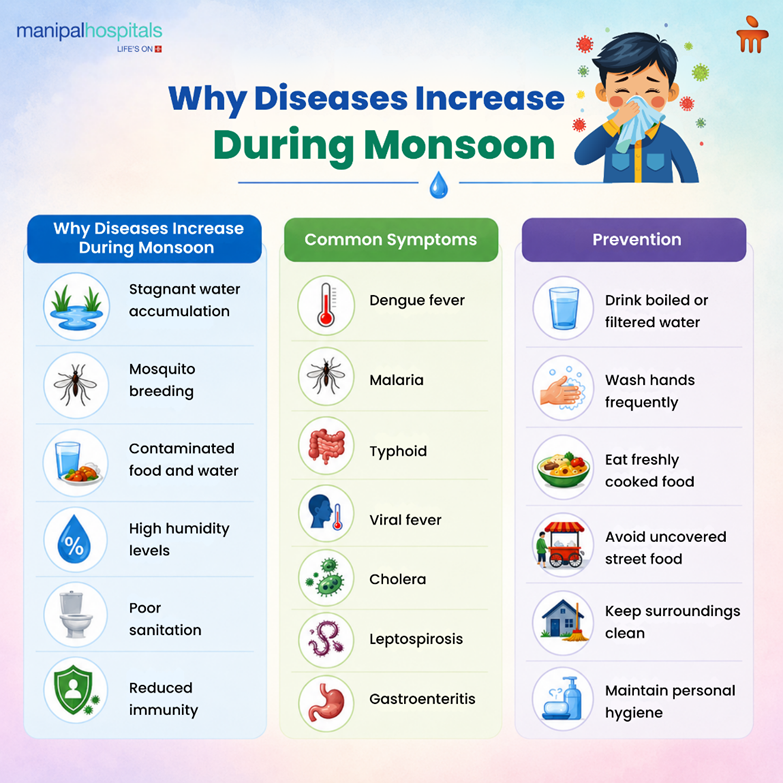
Rainy season illnesses increase because wet weather creates conditions that favour the growth and spread of infectious organisms. Doctors generally look at these risks across four primary routes:
-
Mosquito Breeding: Standing water in clogged drains, flowerpots, or old tyres allows mosquitoes to multiply rapidly. This drives a predictable surge in regional tropical diseases like dengue, malaria, and chikungunya.
-
Contaminated Drinking Water: Heavy downpours can cause local drainage networks to overflow into clean water pipes. Drinking this water or using it to wash food can cause severe stomach infections, including typhoid, cholera, and hepatitis A.
-
Airborne Droplets: Increased indoor crowding, reduced ventilation during heavy rains, and close contact with infected individuals can make respiratory infections spread more easily during the monsoon season. Such an environment leads to a high incidence of influenza and viral fever in monsoon months.
-
Skin Exposure to Floods: Wading bare-legged through waterlogged streets can expose the skin to leptospirosis. This bacterial infection is spread through animal urine and easily enters the bloodstream through tiny cuts or scrapes on the feet. If left untreated, leptospirosis can affect the kidneys, liver, lungs, and other organs, making early diagnosis important.
People living with diabetes may be more vulnerable to infections and may take longer to recover. Fever, vomiting, diarrhoea, and poor food intake can also affect blood sugar control, making prompt medical advice especially important.
Common Habits That Make People Sick
A sudden spike in rainy season infections usually happens because of a combination of changing weather and simple, easily avoided oversights in daily habits.
-
Ignoring stagnant water: Allowing fresh rainwater to collect in empty buckets, roof gutters, or air cooler bases creates prime mosquito breeding grounds around the home.
-
Skipping Hand Washing: Forgetting to wash hands thoroughly with soap after using public transport or returning home from crowded public places increases the risk of transferring infectious organisms from contaminated surfaces to the eyes, nose, or mouth.
-
Staying in Wet Clothes: Remaining in wet clothing for prolonged periods may cause skin irritation, discomfort, and an increased risk of certain fungal skin infections.
Main Warning Signs to Watch For
Because many seasonal bugs start with a general feeling of tiredness, knowing what specific symptom patterns look like helps catch an illness early before it causes severe strain.
-
Sudden High Temperature: A sharp, unexpected spike in body heat is the classic first indicator of a viral fever in monsoon periods or the start of a mosquito-borne illness.
-
Deep Body and Joint Aches: Severe muscle aches, joint pain, and a dull pain behind the eyes are common symptoms that may occur with dengue fever.
-
Severe Stomach Distress: Sharp abdominal cramps, frequent watery diarrhoea, nausea, and persistent vomiting point toward localised food poisoning or a water-borne infection like typhoid.
-
Respiratory Irritation: A raw, painful sore throat, a dry cough, nasal congestion, and mild frontal headaches signal that seasonal flu variants are spreading through damp indoor air.
Tests Doctors May Recommend
Doctors often recommend blood tests to identify the cause of a fever because many monsoon illnesses can look similar in the early stages.
|
Clinical Test |
Focus of the Laboratory Analysis |
What the Results Reveal |
|
Complete Blood Count (CBC) |
Evaluates the balance of red cells, white cells, and blood platelets. |
Helps doctors monitor platelet levels and other blood changes that may occur during a dengue infection. |
|
Typhidot Panels |
Checks the blood sample for specific immune responses against Salmonella. |
Helps support the diagnosis of Typhoid fever when interpreted alongside symptoms, examination findings, and other laboratory investigations. |
|
Peripheral Blood Smear |
Examines a thin layer of the blood under a high-powered laboratory microscope. |
Allows technicians to visually detect the physical presence of malaria parasites inside the red blood cells. |
How to Treat Monsoon Infections Safely?
Treating a monsoon infection requires a careful combination of symptom control, proper hydration, and targeted medical therapies under professional guidance.
Simple Home Care Strategies:
You can safely manage the vast majority of uncomplicated seasonal viral bugs at home using simple, supportive care techniques.
-
Aggressive Fluid Replacement: Preventing dehydration is the single most important task when dealing with a high fever or stomach issues. Patients should regularly sip oral rehydration solutions (ORS), filtered boiled water, and clear broth.
-
Responsible Medication Use: Paracetamol should be used strictly as directed by a doctor to manage high temperatures and muscle aches. Patients must avoid self-medicating with ibuprofen or aspirin because if the fever is actually caused by dengue, these specific medications can thin the blood and trigger dangerous internal bleeding.
-
Adequate rest: Rushing back to work, school, or exercise before the body is ready should be avoided. Adequate rest gives the body time to recover and supports the immune system as it fights the infection.
When is Prescription Medicine Necessary?
If diagnostic laboratory tests confirm a specific bacterial or parasitic infection, a physician will prescribe targeted drug courses.
-
Antimalarial Regimens: When a blood smear confirms the presence of malaria parasites, doctors prescribe appropriate antimalarial medications based on the identified malaria species and clinical condition.
-
Targeted Antibiotic Courses: For confirmed bacterial illnesses like typhoid or leptospirosis, doctors use specific antibiotics. The entire prescription must be finished fully, even if the patient feels better after a few days, to prevent a relapse or the development of drug-resistant bacteria.
Critical Symptoms Requiring Urgent Hospital Evaluation
While many mild seasonal issues pass with a few days of rest, certain critical symptoms mean an infection is turning dangerous. An immediate trip to the nearest hospital emergency room is required if a patient experiences the following:
-
Severe, constant abdominal pain accompanied by persistent vomiting and an inability to retain fluids.
-
A sudden rash of small red spots, unexplained bruising, or bleeding from the gums or nose.
-
Shortness of breath, unusually rapid breathing, or a constant heavy feeling across the chest.
-
Profound dizziness, confusion, extreme physical lethargy, or a yellow tint appearing in the eyes.
Practical Action Plan for Rainy Season Diseases and Prevention
Good hygiene and clearing away pest breeding sites around the house are vital. These simple steps are the best way to prevent seasonal infections.
-
Enforce a Weekly Drainage Routine: Balconies, yards, or roofs should be cleared every weekend. Emptying standing water from flowerpots, buckets, plastic sheets, and cooler bases destroys mosquito breeding spots.
-
Modify Dietary Choices: Stick to hot, thoroughly cooked meals. Avoiding raw salads, unpeeled fruits, and unpasteurised ice from open markets significantly lowers your risk of foodborne contamination.
-
Use Reliable Physical Defences: Fitting insect screens on windows, sleeping under mosquito nets, and applying repellents containing DEET or Picaridin to exposed skin protects individuals when outdoors during early morning and evening hours.
-
Control Indoor Dampness: Good airflow through rooms or the use of small dehumidifiers stops mold growth on walls and carpets, which frequently provokes severe asthma attacks and respiratory allergies during wet weather.
Vaccination Advice to Prevent Monsoon Diseases
Influenza (Flu)
Influenza vaccine is recommended annually (one dose) for everyone aged 6 months and older. It is especially important for pregnant women, older adults, and individuals with chronic health conditions. It protects against severe respiratory complications, reducing the risk of flu-related pneumonia or hospitalizations.
Typhoid
Typhoid Conjugate Vaccines (TCVs) are highly recommended for travelers visiting areas where typhoid fever is common, such as South Asia (including India), Southeast Asia, and parts of Africa and Latin America.
Injectable (ViCPS): A single shot that provides protection for 2 years. It is given to those aged 2 years and older.
Oral (Ty21a): A series of 4 capsules taken over several days, providing protection for 5 years. It is meant for individuals 6 years and older.
Hepatitis A
Hepatitis A vaccine is recommended for all children starting at age 1, individuals traveling to or living in regions with poor sanitary conditions, and adults at higher occupational or lifestyle risk. The vaccine is administered in 2 doses, separated by 6 to 18 months. Both doses must be completed for long-term immunity. It provides long-lasting (often lifelong) protection against Hepatitis A, a highly contagious liver disease transmitted through contaminated food, water, or close personal contact.
Conclusion
Enjoying the rainy months safely depends entirely on maintaining solid daily hygiene and keeping living spaces dry. Spotting warning symptoms early, emptying pooling water around the property, and sticking to proven medical guidance will keep a household fully protected from seasonal illnesses.
If an unyielding viral fever in monsoon, intense muscle pain, or ongoing stomach distress develops, waiting for the symptoms to clear up without medical input is unwise. Seeking professional medical advice ensures you get an accurate diagnosis for any rainy-season diseases and prevention. Combining expert guidance with practical monsoon precautions is the best way to stay healthy and protected all season in Kanakapurra Road
Visit our experts for rainy-season infection treatment at Manipal Hospitals, Kanakapurra Road, Bangalore.
Frequently Asked Questions
Children, older adults, and individuals with weakened immune systems may have a higher risk of developing complications from infections. Accordingly, early medical attention is important if symptoms worsen or persist.
Street food is not always unsafe, but food that is uncovered, improperly stored, or prepared with contaminated water can increase the risk of stomach infections. Choosing freshly cooked food from hygienic sources can help reduce the risk.
Yes. Mosquitoes that transmit dengue and chikungunya are most active during the daytime, particularly in the early morning and late afternoon. Protective clothing and repellents are useful throughout the day when it comes to rainy season diseases and prevention.
No. Not every viral fever in monsoon is caused by a bacterial infection. Antibiotics should only be taken when prescribed by a healthcare professional after appropriate evaluation.
Recovery usually takes five to seven days with rest and hydration. However, residual weakness can persist, requiring light activity and adherence to nutritious health tips for monsoon season for an extra week.
Share this Article


Recent Blogs

The Pinched Core: Understanding Spine Disc Injuries and Modern Care
17 Jun 20268 Min Read
Most people do not think much about their spine until everyday movements start hurting. One day you may be bending down to pick something up or getting out of bed as usual, and the next, you are dealing with back pain that shoots into your leg or makes walking uncomfortable. This is often how the journey with a spine disc injury begins. It does not always start with a major trauma but through gradual wear and tear within the spinal discs that makes simple daily tasks feel completely exhausting. The reassuring fact is that a slipped disc is not permanently debilitating. Instead, it occurs when one of the discs in your spine becomes damaged and begins pressing on nearby nerves. Although the symptoms can feel alarming, many people recover successfully with the right diagnosis, activity modifications, and treatment plan. Modern treatments have come a long way from the limited options used in the past. In this blog, we explain the risk factors, symptoms, diagnosis, treatment options, and what you can expect during the healing process.
Read NowClinical Insights on Monsoon Diseases: Practical Prevention and Seasonal Care
17 Jun 202610 Min Read
When the heavy rains arrive, they bring welcome relief from the scorching summer heat. Unfortunately, it also brings a noticeable rise in infections. From mosquito-borne illnesses and stomach infections to seasonal flu and skin problems, many health issues become more common once the rains begin. A few simple precautions can help protect your family during this time. Understanding rainy season diseases and prevention while recognising early warning signs as they appear can make the season much easier to navigate. This blog explains the most common health risks during the rainy months and health tips for monsoon season you can take to stay well.
Read NowWhat Causes Blocked Heart Arteries? Signs, Treatment & Prevention
17 Jun 20267 Min Read
Most people do not think about their heart arteries until a problem develops. These blood vessels play an important role in carrying oxygen-rich blood to the heart muscle, helping it pump blood throughout the body. Over time, however, fatty deposits, cholesterol, and other substances can gradually build up inside the arteries. This slow buildup can lead to blocked heart arteries, reducing the amount of blood that reaches the heart and increasing the risk of serious heart-related complications. Because this process progresses slowly, the body may show warning signs long before a serious event such as a heart attack occurs. However, while a heart artery blockage can be a serious diagnosis, advances in prevention, diagnosis, and treatment have significantly improved outcomes for many patients. This blog explores the causes, symptoms, diagnosis, and management of blocked coronary arteries to make you better equipped to deal with it in the case of emergencies.
Read NowBloating Symptoms and Remedies: How to Avoid and Reduce Bloating Naturally
05 Jun 20265 Min Read
Almost everyone deals with bloating at some point. It usually shows up as a tight, full, or swollen feeling in your belly, often right after you finish a meal. It might seem like just a small annoyance, but it can really affect your comfort, appetite, and daily routine. Bloating varies from person to person. You might notice it only once in a while, while others deal with it as a regular, frustrating part of their day. Because the intensity varies so much, it can be hard to identify what triggers it or how to find lasting relief. This blog helps you recognise bloating symptoms and understand practical ways to deal with them. It brings together simple lifestyle adjustments that can help you learn how to avoid bloating and reduce it naturally over time, without relying on quick fixes.
Read NowWhat Is Electrolyte Imbalance? Symptoms, Causes, and Treatment Explained
25 May 20267 Min Read
Most of us have experienced those moments when we feel inexplicably 'off,' perhaps a persistent muscle twitch in our eyelid that won't stop, a sudden, sharp cramp in our calf during a walk, or a sense of mental fogginess that a cup of coffee can’t seem to fix. We often tell ourselves we are just tired or need more water, but beneath the surface, your body may be struggling with a specific chemical disruption. A delicate internal grid of minerals effectively powers our hearts, brains, and muscles. When the levels of these minerals shift even slightly, they can have an immediate and widespread physical impact. This disruption is known as an electrolyte imbalance. Because these minerals govern the electrical signals in our cells, an imbalance doesn't just affect one area; it can change how your heart beats and how your nerves communicate. In this blog, you will learn what an electrolyte imbalance is, the early warning signs, and why you need to deal with it immediately.
Read NowWhat Is Myasthenia Gravis? Definition, Signs, and Medical Overview
25 May 20267 Min Read
It is a common experience to feel physical exhaustion after a long day of activity. Usually, rest allows the body to recover its strength. However, for some individuals, muscle weakness does not follow this predictable pattern. They may find that their muscles function correctly in the morning, but as the day progresses, simple tasks, such as keeping their eyes open, speaking clearly, or lifting a light object, become increasingly difficult. This specific type of fluctuating muscle weakness is a hallmark of a chronic condition known as myasthenia gravis. Because the symptoms can be subtle or intermittent at first, they are often misidentified as general fatigue or stress. Learning about myasthenia gravis, recognising early myasthenia gravis symptoms, and seeking help on time can make a real difference. With proper treatment, many people continue to live active, independent lives. This blog examines the underlying causes of myasthenia gravis, the specific symptoms that warrant medical attention, and the modern myasthenia gravis treatment protocols available to manage the condition effectively.
Read Nowಯೋನಿಯ ಈಸ್ಟ್ ಸೋಂಕು: ಸೋಂಕಿನ ಲಕ್ಷಣಗಳು, ಕಾರಣಗಳು ಮತ್ತು ಚಿಕಿತ್ಸೆ
25 May 20265 Min Read
ಮಹಿಳೆಯರ ಆರೋಗ್ಯವು ಸಮಾಜದ ಒಟ್ಟಾರೆ ಯೋಗಕ್ಷೇಮಕ್ಕೆ ಅತ್ಯಗತ್ಯ. ಆದರೆ, ಹಲವು ಬಾರಿ ಮಹಿಳೆಯರು ಕೆಲವು ನಿರ್ದಿಷ್ಟ ಆರೋಗ್ಯ ಸಮಸ್ಯೆಗಳಿಂದ ಬಳಲುತ್ತಾರೆ, ಅದರಲ್ಲಿ ಯೋನಿಯ ಸೋಂಕು (Vaginal Infection) ಪ್ರಮುಖವಾದುದು. ಈ ಸೋಂಕುಗಳಲ್ಲಿ ಅತ್ಯಂತ ಸಾಮಾನ್ಯವಾದದ್ದು ಯೋನಿಯ ಈಸ್ಟ್ ಸೋಂಕು ಅಥವಾ ಯೋನಿಯ ಶಿಲೀಂಧ್ರ ಸೋಂಕು. ಇದು ಅನೇಕ ಮಹಿಳೆಯರಿಗೆ ಅಹಿತಕರ ಅನುಭವವನ್ನು ನೀಡುವ ಸಾಮಾನ್ಯ ಸಮಸ್ಯೆಯಾಗಿದ್ದು, ಇದರ ಬಗ್ಗೆ ಸರಿಯಾದ ಮಾಹಿತಿ ಹೊಂದುವುದು ಬಹಳ ಮುಖ್ಯ. ಈ ಬ್ಲಾಗ್ ಪೋಸ್ಟ್‌ನಲ್ಲಿ, ನಾವು ಯೋನಿಯ ಈಸ್ಟ್ ಸೋಂಕಿನ ಲಕ್ಷಣಗಳು, ಕಾರಣಗಳು, ಅದನ್ನು ಹೇಗೆ ರೋಗನಿರ್ಣಯ ಮಾಡಲಾಗುತ್ತದೆ ಮತ್ತು ಪರಿಣಾಮಕಾರಿ ಯೋನಿಯ ಈಸ್ಟ್ ಸೋಂಕಿನ ಚಿಕಿತ್ಸೆ ಕುರಿತು ವಿವರವಾಗಿ ಚರ್ಚಿಸುತ್ತೇವೆ. ಮಣಿಪಾಲ್ ಹಾಸ್ಪಿಟಲ್ಸ್, ಕನಕಪುರ ರಸ್ತೆಯಲ್ಲಿ ಲಭ್ಯವಿರುವ ಕನಕಪುರ ರಸ್ತೆಯಲ್ಲಿ ಯೋನಿಯ ಈಸ್ಟ್ ಸೋಂಕಿನ ಚಿಕಿತ್ಸೆ ಕುರಿತು ಸಹ ನಾವು ಮಾಹಿತಿ ನೀಡುತ್ತೇವೆ. ಈ ಮಾಹಿತಿಯು ನಿಮ್ಮ ಆರೋಗ್ಯದ ಬಗ್ಗೆ ಉತ್ತಮ ನಿರ್ಧಾರಗಳನ್ನು ತೆಗೆದುಕೊಳ್ಳಲು ಸಹಾಯ ಮಾಡುತ್ತದೆ.
Read NowBone Marrow Transplant: A Lifesaving Treatment for Blood Disorders
22 May 20268 Min Read
Most people don’t think about how important their bone marrow is until something goes wrong. It quietly works in the background every day, producing the blood cells your body depends on for energy, immunity, and overall health. When this system is affected, even simple activities can start to feel difficult, and that is often when doctors begin discussing advanced treatment options. One such option is a bone marrow transplant, a treatment that can sound intimidating at first. Many patients imagine a complicated surgical procedure, but in reality, it is a carefully planned medical process designed to restore the body’s ability to produce healthy blood cells. In many cases, it is also referred to as a stem cell transplant, depending on the source of the cells being used. Understanding the meaning of a bone marrow transplant is the first step in reducing uncertainty. This treatment is not just about managing a condition temporarily. It focuses on resolving the underlying problem so the body can function more effectively over time. In this article, we will walk through when this treatment is recommended, what the bone marrow transplant procedure involves, the different approaches available, and what patients can realistically expect during bone marrow transplant recovery.
Read NowThe Role of a Radiation Oncologist: Fighting Cancer with Precision
22 May 20266 Min Read
Cancer treatment in most cases needs more than one approach, and radiation is one of the frequently used methods. A radiation oncologist is the doctor trained to treat cancer using carefully planned radiation. The primary aim is to target cancer cells while preserving surrounding healthy tissue. Treatment is not delivered in a routine manner. Each plan is designed after studying the tumour type, its location, and the patient’s overall health. The role of a radiation oncologist in cancer treatment includes controlling tumour growth, reducing symptoms like pain or pressure, and, in many cases, working towards a cure or long-term control of the disease.
Read NowBlood Cancer: Symptoms, Types, and Advanced Treatment Options Explained
22 May 20269 Min Read
Hearing a doctor mention the possibility of blood cancer is a moment that feels as though time has stopped. It is an experience filled with immediate questions, deep-seated fears, and a sudden need to understand complex medical terms that most people have never heard before. Blood cancer is not a single disease; it is a broad category that includes several different conditions, each with its own unique behaviour and response to therapy. The first step in navigating this journey is moving from fear to information. By understanding the different blood cancer types and learning how to recognise the early signs, you can work more effectively with your medical team. This blog explores the biological roots of these conditions, the variety of blood cancer symptoms you might notice, and the innovative blood cancer treatment options that are helping patients reclaim their health every day.
Read Now