


Understanding Epilepsy: Causes, Diagnostic Approaches, And Effective Management
Reviewed by: Dr. Parul Dubey
Posted on
5 Min Read

Not sure what you’re looking for?
Get in touch with our representatives for help!
Contact UsA chronic non-communicable brain disorder called epilepsy affects about 50 million people globally. It is distinguished by frequent seizures, which are brief bursts of spontaneous movement that can affect either a small region of the body (partial) or the full body (generalised). These seizures can occasionally be accompanied by a loss of awareness and control over bowel or bladder function. Epilepsy is the fourth most common neurological disorder in the world.
Recurrent seizures can occur if someone has epilepsy because of electrical activity spikes in their brain. Epilepsy does not cause all seizures. Although seizures may be caused by brain injury or a genetic predisposition, the actual cause is typically unknown.
What is Epilepsy?
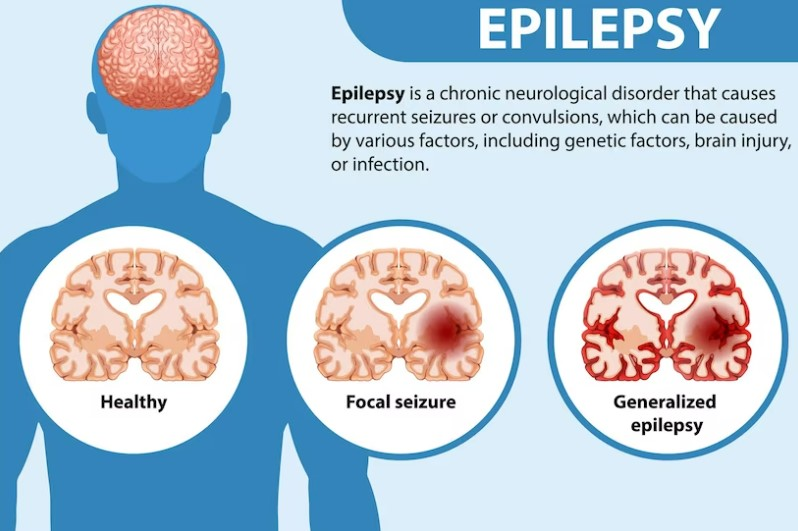
Epilepsy can affect anyone, but it most commonly affects children and the elderly. Men are more likely than women to acquire epilepsy, probably as a result of higher exposure to risk factors such as alcohol consumption and head trauma.
What Causes Epilepsy?
Epilepsy cannot be spread. Though various underlying diseases can cause epilepsy, in roughly 50% of cases around the world, the disease's origin is still unknown. The following subcategories of causes of epilepsy exist: structural, genetic, infectious, metabolic, immunological, and unknown. Examples include:
-
Brain damage is caused by perinatal or foetal factors (such as low birth weight, delivery trauma, or oxygen deprivation during birth).
-
Brain deformities are caused by congenital anomalies or hereditary diseases.
-
Severe brain damage.
-
A stroke in which the flow of oxygen to the brain is restricted.
-
A brain infection, such as neurocysticercosis, encephalitis, or meningitis.
-
Certain genetic disorders.
-
A brain tumour.
Types of Seizures
The two main types of seizures include:
-
Generalized seizures
In this case, the entire brain is affected by generalised seizures.
-
Focal Seizures
Only one area of the brain is impacted by focal or partial seizures.
Symptoms of Epilepsy
The primary epilepsy symptom is seizures. The symptoms of a seizure vary from person to person and depend on the type.
Focal (partial) Seizures
They do not include any loss of consciousness involving symptoms such as:
-
Sense of taste, smell, sight, hearing, or touch changes.
-
Dizziness.
-
Tingling and twitching of limbs.
-
Complex partial seizures that are focally unaware include a loss of consciousness or awareness.
Additional signs include:
-
Staring blankly
-
No response
-
Performing repetitive movements
Generalized Seizures
The entire brain is involved in generalised seizures. Its subtypes include:
-
Absence Seizures
They frequently result in a brief loss of awareness, a blank stare, and occasionally repeated actions like blinking or lip-smacking.
-
Tonic Seizures
It includes symptoms such as sudden stiffness in your legs, arms, or trunk.
-
Atonic Seizures
It results in a loss of muscle control. Because a sudden loss of muscle power can cause one to fall quickly, they are also known as "drop seizures."
-
Clonic Seizures
Repeated, jerky muscular movements of the face, neck, and arms are signs of clonic seizures.
-
Myoclonic Seizures
Arms and legs twitch quickly and spontaneously as a result of myoclonic seizures. These seizures can occasionally group together.
- Tonic-Clonic Seizures
The symptoms include body stiffening, shaking, no bowel control or loss of bladder, tongue biting, and loss of consciousness.
Visit a neurology hospital if you are experiencing any of the above types of seizures.
Who is Affected by Epilepsy?
Anyone can acquire epilepsy, regardless of their age, ethnicity, or gender.
How is the Brain Affected by Epilepsy?
All parts of your body can communicate with and receive information from the cells in your brain. A constant electrical impulse that moves from cell to cell is used to transmit these messages. This periodic electrical impulse pattern is disturbed by epilepsy. Instead, there are electrical activity spikes between cells in one or more regions of the brain, much like an erratic lightning storm. This electrical disruption affects awareness (including loss of consciousness), sensations, emotions, and muscle actions.
Diagnosis of Epilepsy
The diagnosis tests include:
-
Electroencephalography (EEG)
This examination measures the electrical activity in your brain. Seizures are associated with specific aberrant electrical patterns.
-
Brain Scans
Magnetic Resonance Imaging (MRI) uses magnetic resonance imaging to detect anomalies in blood vessels, infections, and malignancies.
Management and Treatment of Epilepsy
Epilepsy can be controlled by:
-
Anti-seizure drugs.
-
Specific diets (sometimes in conjunction with anti-seizure drugs) such as the ketogenic diet and the modified Atkins diet are the most commonly recommended diets for people suffering from epilepsy.
-
Surgery and devices include stereotactic radiosurgery (targeted destruction of defective brain tissue), disconnection (cutting fibre bundles connecting sections of the brain), surgical resection (removal of abnormal tissue), or implantation of neuromodulator devices.
Prevention of Epilepsy
Despite the fact that many causes of epilepsy are uncontrollable and unavoidable, one can lessen their risk of getting some illnesses, such as:
-
Wearing a helmet when bicycling, keeping the floors free of debris and electrical cords to minimise falls, staying off ladders, and always wearing a seatbelt when driving reduces the risk of traumatic brain injury (from impacts to the head).
-
To reduce the risk of stroke, it is recommended to eat a balanced diet (such as the Mediterranean diet), maintain a healthy weight, and exercise frequently.
-
One should consult a therapist if they overuse drugs. The brain can suffer harm from alcohol and other illicit substances, which can result in epilepsy.
Epilepsy can affect anyone, but it most commonly affects children and the elderly. Men are more likely than women to acquire epilepsy, probably as a result of higher exposure to risk factors such as alcohol consumption and head trauma.
Epilepsy cannot be spread. Though various underlying diseases can cause epilepsy, in roughly 50% of cases around the world, the disease's origin is still unknown. The following subcategories of causes of epilepsy exist: structural, genetic, infectious, metabolic, immunological, and unknown. Examples include:
-
Brain damage is caused by perinatal or foetal factors (such as low birth weight, delivery trauma, or oxygen deprivation during birth).
-
Brain deformities are caused by congenital anomalies or hereditary diseases.
-
Severe brain damage.
-
A stroke in which the flow of oxygen to the brain is restricted.
-
A brain infection, such as neurocysticercosis, encephalitis, or meningitis.
-
Certain genetic disorders.
-
A brain tumour.
The two main types of seizures include:
In this case, the entire brain is affected by generalised seizures.
Only one area of the brain is impacted by focal or partial seizures.
The primary epilepsy symptom is seizures. The symptoms of a seizure vary from person to person and depend on the type.
They do not include any loss of consciousness involving symptoms such as:
-
Sense of taste, smell, sight, hearing, or touch changes.
-
Dizziness.
-
Tingling and twitching of limbs.
-
Complex partial seizures that are focally unaware include a loss of consciousness or awareness.
Additional signs include:
-
Staring blankly
-
No response
-
Performing repetitive movements
The entire brain is involved in generalised seizures. Its subtypes include:
-
Absence Seizures
They frequently result in a brief loss of awareness, a blank stare, and occasionally repeated actions like blinking or lip-smacking.
-
Tonic Seizures
It includes symptoms such as sudden stiffness in your legs, arms, or trunk.
-
Atonic Seizures
It results in a loss of muscle control. Because a sudden loss of muscle power can cause one to fall quickly, they are also known as "drop seizures."
-
Clonic Seizures
Repeated, jerky muscular movements of the face, neck, and arms are signs of clonic seizures.
-
Myoclonic Seizures
Arms and legs twitch quickly and spontaneously as a result of myoclonic seizures. These seizures can occasionally group together.
- Tonic-Clonic Seizures
The symptoms include body stiffening, shaking, no bowel control or loss of bladder, tongue biting, and loss of consciousness.
Visit a neurology hospital if you are experiencing any of the above types of seizures.
Anyone can acquire epilepsy, regardless of their age, ethnicity, or gender.
All parts of your body can communicate with and receive information from the cells in your brain. A constant electrical impulse that moves from cell to cell is used to transmit these messages. This periodic electrical impulse pattern is disturbed by epilepsy. Instead, there are electrical activity spikes between cells in one or more regions of the brain, much like an erratic lightning storm. This electrical disruption affects awareness (including loss of consciousness), sensations, emotions, and muscle actions.
The diagnosis tests include:
This examination measures the electrical activity in your brain. Seizures are associated with specific aberrant electrical patterns.
Magnetic Resonance Imaging (MRI) uses magnetic resonance imaging to detect anomalies in blood vessels, infections, and malignancies.
Epilepsy can be controlled by:
-
Anti-seizure drugs.
-
Specific diets (sometimes in conjunction with anti-seizure drugs) such as the ketogenic diet and the modified Atkins diet are the most commonly recommended diets for people suffering from epilepsy.
-
Surgery and devices include stereotactic radiosurgery (targeted destruction of defective brain tissue), disconnection (cutting fibre bundles connecting sections of the brain), surgical resection (removal of abnormal tissue), or implantation of neuromodulator devices.
Despite the fact that many causes of epilepsy are uncontrollable and unavoidable, one can lessen their risk of getting some illnesses, such as:
-
Wearing a helmet when bicycling, keeping the floors free of debris and electrical cords to minimise falls, staying off ladders, and always wearing a seatbelt when driving reduces the risk of traumatic brain injury (from impacts to the head).
-
To reduce the risk of stroke, it is recommended to eat a balanced diet (such as the Mediterranean diet), maintain a healthy weight, and exercise frequently.
-
One should consult a therapist if they overuse drugs. The brain can suffer harm from alcohol and other illicit substances, which can result in epilepsy.
Share this Article


Recent Blogs

Postpartum Haemorrhage: Causes, Symptoms & Emergency Signs
29 Jun 20267 Min Read
Delivering a baby is a major physical event that puts a lot of demand on a woman's body. While the focus is often on the arrival of the baby, the management of the third stage of labour—delivering the placenta and controlling blood loss—is just as crucial to a safe delivery. Understanding the risks during this window, including excessive bleeding or postpartum haemorrhage, is a vital part of maternal care.
Read NowDislocated Elbow: Signs, First Aid & Recovery Time
26 Jun 20267 Min Read
An elbow dislocation can be a frightening and painful experience, often occurring unexpectedly due to falls or sports injuries. While it's a serious injury, understanding the signs, knowing the correct first aid, and following a structured recovery plan can significantly improve outcomes.
Read NowUnderstanding Chronic Diarrhoea: More Than Just a Temporary Stomach Upset
26 Jun 20266 Min Read
Chronic diarrhoea, characterised by loose, watery stools occurring three or more times a day for a period exceeding four weeks, is a common and often debilitating condition affecting millions worldwide. While acute diarrhoea is usually short-lived and often caused by infections, chronic diarrhoea points towards a more persistent underlying issue that requires careful investigation.
Read NowSoothing the Itch: Expert Solutions for Itchy Inner Thighs
22 Jun 20267 Min Read
Experiencing persistent itching in your inner thighs can be incredibly uncomfortable, disruptive, and even embarrassing. While often a common annoyance, it can sometimes signal an underlying skin condition that requires attention. Understanding the common causes of itchy inner thighs will help explore effective remedies and adapt practical prevention tips to keep your skin healthy and comfortable.
Read NowCan an ECG Detect a Heart Attack? What the Test Really Shows
15 Jun 20268 Min Read
In moments of chest pain or suspected cardiac distress, an Electrocardiogram (ECG or EKG) is often the first diagnostic test performed. It's a quick, non-invasive procedure that provides a snapshot of your heart's electrical activity. But can an ECG detect a heart attack definitively? While an ECG is an indispensable tool in emergency cardiac care, its ability to pinpoint a heart attack is nuanced.
Read NowDemystifying AVM: Symptoms, Diagnosis, and What to Expect
12 Jun 20267 Min Read
An arteriovenous malformation (AVM) is an abnormal tangle of blood vessels where arteries connect directly to veins, bypassing the capillaries. Capillaries normally slow down blood flow, allowing oxygen and nutrients to be delivered to tissues. In an AVM, this crucial network is missing, leading to high-pressure blood flowing from arteries directly into weaker veins. This can cause the veins to enlarge and potentially rupture, leading to bleeding (haemorrhage) in the brain or other parts of the body.
Read NowKnee Pain When Bending: Causes, Symptoms, and Treatment Options
12 Jun 20266 Min Read
Knee pain is a common ailment, but when it specifically flares up while bending, it can be particularly debilitating, affecting daily activities from walking to climbing stairs. The knee is a complex joint, crucial for movement and supporting body weight. When you experience knee pain when bending, it signals an issue within its bones, ligaments, tendons, and cartilage. This discomfort can range from a dull ache to sharp, intense pain, often accompanied by other symptoms.
Read NowWhat are Bilateral Polycystic Ovaries?
05 Jun 202610 Min Read
The term bilateral polycystic ovaries often raises concerns and questions for many women. It refers to the presence of multiple small cysts on both ovaries, a characteristic feature often associated with Polyendocrine Metabolic Ovarian Syndrome (PMOS). While the name can sound alarming, understanding what bilateral polycystic ovaries are and its implications is the first step towards effective management. While it is a condition that requires attention and management, it is generally not life-threatening and many women lead full, healthy lives with proper care.
Read NowWhy Do I Feel Weak All the Time? Causes Explained
27 May 20267 Min Read
There are times when the “I am just tired” becomes “why do I feel weak all the time?” This persistent feeling of low energy, muscle fatigue, or an overall lack of strength can significantly affect daily life, making even routine tasks feel Herculean. While often used interchangeably, "weakness" and "fatigue" are distinct. Fatigue is a feeling of tiredness or lack of energy, whereas weakness (or asthenia) is a specific reduction in physical strength. When you experience true weakness, it means you can't exert the same force as before, or your muscles tire out much faster. This isn't just about feeling sleepy; it's about a noticeable decrease in your physical capacity. Studies find that a major portion of the adult population experiences unexplained persistent weakness at some point, highlighting the common nature of this weakness and the importance of seeking professional guidance. Persistent weakness should be evaluated by specialists in the Department of Internal Medicine to identify underlying health conditions and provide appropriate treatment.
Read NowInflammatory Breast Cancer: Early Signs You Shouldn’t Ignore
27 May 20266 Min Read
While many associate breast cancer with a palpable lump, some forms present differently. One such form is inflammatory breast cancer, a rare yet aggressive type that often doesn't start with a lump. Because its signs can be subtle and mimic common skin conditions, it's frequently misunderstood, leading to delayed diagnosis. Despite its rarity, the rapid progression of inflammatory breast cancer makes early detection vital. Understanding its unique presentation is your first line of defence. With timely intervention, significant strides have been made in improving outcomes. Specialists in the Department of Oncology play a crucial role in the early diagnosis, evaluation, and personalised treatment of inflammatory breast cancer.
Read Now