


5 Simple Tips to Reduce Facial Redness Fast
Reviewed by: Dr. Simantini R. Sakhardande
Posted on
5 Min Read

Not sure what you’re looking for?
Get in touch with our representatives for help!
Contact UsFacial redness is a common skin concern that affects many people. Whether it’s due to rosacea, sensitive skin, sun exposure, or allergic reactions, redness on the face can be uncomfortable and frustrating. While some redness is temporary, chronic redness often requires special care and treatment.
Though it's very irritating, the good thing is that you don’t always need expensive skin care products or medical treatments to manage red skin. With the right approach, you can reduce redness quickly and improve your skin’s overall health. Let's explore five simple ways or skincare for redness to calm redness on your face fast and how to manage sensitive skin types.
What Causes Facial Redness?
Facial redness is one of the major skin problems, not only for women but also for men nowadays. It often trickles down the skin and creates a distinctive reddish hue, especially on the face, mainly due to inflammation or skin irritation. Before discussing the solutions, it's important to understand the possible reasons or causes for red, patchy skin on the face.
Some of the most common causes include:
-
Rosacea: Rosacea is a chronic skin condition that causes persistent facial redness, flushing, visible blood vessels, and sometimes bumps or pimples. It often worsens with triggers like spicy food, alcohol, hot weather, or stress.
-
Sensitive Skin: If your skin is naturally sensitive, it may react to skincare products, weather changes, or certain fabrics, leading to redness on the face and irritation.
-
Sun Exposure: Excessive exposure to UV rays can damage the skin, causing redness on the face, peeling, and sunburn. Over time, repeated sun exposure can also lead to rosacea or permanent redness.
-
Allergic Reactions: Skin allergies caused by fragrances, chemicals, or certain foods can lead to red, itchy skin, swelling, and rashes.
-
Dry or Dehydrated Skin: When your skin lacks moisture, it becomes more vulnerable to irritation, flaking, and redness on the face. A weakened skin barrier allows environmental aggressors to cause inflammation.
Tips to Reduce Facial Redness Quickly:
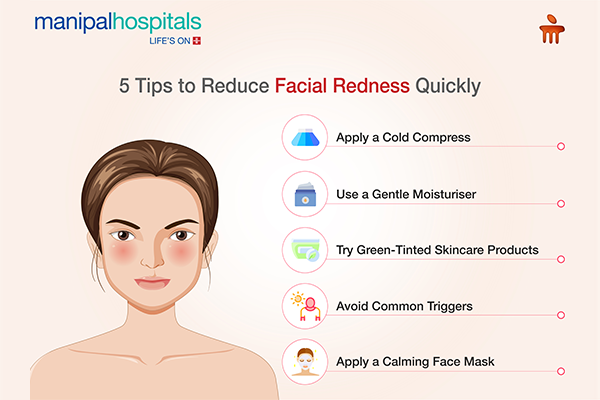
Facial redness can be caused by various factors, including rosacea, sensitive skin, and environmental triggers. While it may seem difficult to manage, the right skincare and lifestyle habits can make a noticeable difference. The below-mentioned five simple and effective ways to reduce redness quickly, whether you’re dealing with red patchy skin on face, irritation, or flare-ups.
1. Apply a Cold Compress
A cold compress is one of the fastest ways to calm inflamed or irritated skin. The cool temperature helps to reduce swelling, soothe irritation, and constrict blood vessels, making redness less noticeable.
How to Use a Cold Compress?
-
Take a soft cloth and soak it in cold water.
-
Gently place it over the affected area for 5–10 minutes.
-
Repeat as needed throughout the day.
Quick Tip: You can also use an ice pack wrapped in a towel or a chilled green tea bag for extra anti-inflammatory benefits.
What to Avoid: Never apply ice directly to your skin, as it can cause burns and further irritation.
2. Use a Gentle, Redness-Reducing Moisturiser
Keeping your skin hydrated and protected is essential for reducing red skin. A moisturiser designed for sensitive skin can help strengthen the skin barrier and lock in moisture, preventing further irritation.
Key Ingredients to Look for:
-
Aloe Vera – Soothes inflammation and hydrates the skin.
-
Niacinamide (Vitamin B3) – Reduces redness, improves skin texture, and strengthens the skin barrier.
-
Centella Asiatica (Cica) – A healing plant extract known for its calming effects.
-
Ceramides – Restore the skin’s protective barrier and prevent moisture loss.
What to Avoid in Skincare Products?
-
Alcohol – Can dry out and irritate the skin.
-
Fragrances – May cause allergic reactions and increase redness.
-
Harsh Exfoliants – These can strip the skin and worsen irritation.
Apply moisturiser twice a day after cleansing to keep your skin calm and hydrated.
3. Try Green-Tinted Skincare Products
Green-tinted skincare products help to neutralise redness and even out your complexion instantly. Since green counteracts red on the colour wheel, these products are effective in masking rosacea redness or other forms of skin redness.
Best Green-Tinted Products for Redness:
-
Green-tinted primers – Provide a colour-correcting base before applying makeup.
-
Green-tinted moisturisers – Hydrate the skin while reducing redness.
-
Green-tinted sunscreens – They offer UV protection while calming red skin.
Quick Tip: Use these products as part of your daily skincare routine for an instant redness-reducing effect.
4. Avoid Common Triggers
For those with rosacea redness, certain lifestyle and environmental factors can trigger flare-ups. Identifying and avoiding these triggers is crucial for keeping red, patchy skin on the face under control.
Common Rosacea and Skin Redness Triggers:
-
Spicy Foods – Can cause blood vessels to expand, leading to flushing.
-
Hot Beverages – Heat can increase redness and irritation.
-
Alcohol – Especially red wine, which is known to trigger rosacea symptoms.
-
Stress – This can cause breakouts and rosacea flare-ups.
Quick Tip: Keep a skin diary to track which foods or activities worsen your redness. This will help you make better choices for managing sensitive skin.
5. Apply a Calming Face Mask
Using a cooling, soothing face mask can help reduce skin redness, inflammation, and irritation.
Best Face Mask Ingredients for Red Skin:
-
Oatmeal – Hydrates and relieves irritation.
-
Chamomile – Calms skin redness and swelling.
-
Cucumber – It naturally cools and refreshes the skin.
DIY Calming Face Mask Recipe:
-
1 tablespoon of plain yoghurt
-
1 teaspoon of honey
-
½ teaspoon of turmeric powder
How to Use:
-
Mix the ingredients into a smooth paste.
-
Apply to the face and leave for 10–15 minutes.
-
Rinse with lukewarm water and pat dry.
Use once or twice a week for the best results.
Best Skincare Ingredients for Reducing Facial Redness or Skin Redness
| Ingredient | Benefits | Commonly Found In |
|
Aloe Vera |
Soothes inflammation, hydrates skin | Moisturisers, gels, serums |
| Niacinamide (Vitamin B3) | Reduces redness, strengthens skin barrier | Serums, creams |
| Centella Asiatica (Cica) | Calms irritation, speeds up healing | Moisturisers, face mask |
| Ceramides | Restores skin barrier and locks in moisture | Moisturisers, cleansers |
| Oatmeal | Reduces itching and redness | Face masks, creams |
Conclusion
Dealing with facial redness, rosacea, and sensitive skin can be challenging, but with the right approach, you can calm irritation quickly. Follow these five simple tips to keep your skin soothed, hydrated, and free from skin redness. With small changes in skincare for redness, diet, and daily habits, you can achieve a clearer, calmer complexion in no time. If you need further assistance from a professional, you can connect with Manipal Hospitals' best Skin Specialist in Goa for personalised guidance and effective rosacea redness treatment.
Frequently Asked Questions
Applying a cold compress and a soothing moisturiser and sleeping with a humidifier can help reduce skin redness on the face overnight. Also, avoid hot showers and stick to gentle skincare products.
A simple rosacea redness treatment routine includes:
-
Gentle cleanser (fragrance-free)
-
Hydrating serum (with niacinamide or hyaluronic acid)
-
Moisturiser for sensitive skin
-
Sunscreen (SPF 30 or higher)
Yes. Stress releases hormones that increase inflammation, leading to red, itchy skin or rosacea flare-ups. Try relaxation techniques like deep breathing or yoga to keep stress levels in check.
Absolutely! Spicy foods, alcohol, and caffeine can trigger redness on the face. Eating a balanced diet rich in antioxidants (like berries and green vegetables) can help improve skin health.
There’s no permanent cure for rosacea, but it can be managed with proper skincare for redness, lifestyle changes, and professional treatments. Consult a dermatologist if redness persists.
Share this Article


Similar Blogs

Soothing the Itch: Expert Solutions for Itchy Inner Thighs
22 Jun 20267 Min Read
Experiencing persistent itching in your inner thighs can be incredibly uncomfortable, disruptive, and even embarrassing. While often a common annoyance, it can sometimes signal an underlying skin condition that requires attention. Understanding the common causes of itchy inner thighs will help explore effective remedies and adapt practical prevention tips to keep your skin healthy and comfortable.
Read NowMale Pattern Baldness Symptoms: Early Signs to Watch For
27 May 20267 Min Read
Hair loss is a common concern that affects millions, and for men, male pattern baldness symptoms are often the earliest indicators of a condition known medically as androgenetic alopecia. While many associate balding with old age, its onset can begin much earlier, sometimes even in the late teens or early twenties. Recognising these subtle signs early is crucial, as timely intervention can significantly affect the progression and management of hair loss. At Manipal Hospitals, we believe in empowering our patients with knowledge, helping them understand their bodies and seek expert care when needed. Specialists in the Department of Dermatology provide comprehensive evaluation and advanced treatment options to help diagnose and manage male pattern baldness effectively.
Read Nowबुरशीजन्य संसर्ग उपचार: बुरशीजन्य संसर्गाची सामान्य लक्षणे आणि लवकर चेतावणी देणारी चिन्हे
27 Mar 20265 Min Read
न बरा होणारा पुरळ, नखे ठिसूळ होणे किंवा सतत खाज येणे ही बुरशीजन्य संसर्गाची सुरुवातीची चिन्हे असू शकतात. अशा समस्या अनेकदा किरकोळ त्वचारोग समजून दुर्लक्षित केल्या जातात, ज्यामुळे बुरशीजन्य संसर्गावरील उपचार उशिरा घेतले जातात. या ब्लॉगमध्ये बुरशीजन्य संसर्गाचे प्रकार, त्यांची सुरुवातीची लक्षणे, डॉक्टरांकडे कधी जावे आणि उपलब्ध उपचार पर्याय याबद्दल माहिती दिली आहे.
Read NowAcne Causes and Advanced Treatment Options
06 Feb 20265 Min Read
Finding a pimple on the face especially when looking at the mirror immediately dampens one’s mood. Whether it is in a teenager navigating puberty or in an adult who thought they had "outgrown" this phase, acne is a persistent and frustrating problem many of us have faced in our lives. Scientifically known as acne vulgaris, this condition is the most common skin disorder in the world. It affects people of all ages and genders. Acne is a complex biological problem, which requires looking at the clinical undertones of acne causes to choose the correct acne treatment options.
Read Now5 Common Causes of Skin Rashes and Itching
12 Dec 20258 Min Read
Our skin is the largest organ in the body, and it is a strong protective barrier against the outside world. But sometimes, this barrier reacts to external triggers, which can often result in skin rashes, red spots, persistent rash, or itchy skin on the body. These symptoms can be very frustrating and even cause pain and itchiness. Understanding what causes red, itchy spots on the skin can help with finding relief and recovery. Oftentimes, certain triggers can cause inflammation in the skin. This inflammation occurs due to neuroimmune interactions with allergens or pathogens. These interactions increase blood flow to the affected area, which causes redness and itchiness on the skin. Some of the common causes of itching and skin rashes on the body include:
Read NowHow To Use Sunscreen Effectively?
21 Nov 20245 Min Read
Imagine stepping outside on a sunny day without any skin protection. The sun’s rays, though warm and inviting, can cause serious damage to your skin. Excessive exposure to the sun can lead to sunburn, premature ageing, and an increased risk of skin cancer. Sunscreen is a simple yet powerful tool to shield our skin from harmful ultraviolet (UV) rays. Applying sunscreen to your face is a crucial step in any skincare routine, providing daily protection against UV damage, premature ageing, and sun-related skin issues. Let’s dive into how to use sunscreen effectively to keep your skin safe and healthy.
Read NowHow to Get Rid of a Winter Rash: Your Guide to Healthy Skin in Winter
12 Jun 20244 Min Read
Winter is a time of joy, festivity and celebration for people around the world. It’s a season filled with holidays, picnics and social outings that bring people together. However, amidst the winter wonderland, for some people, it also brings few unwelcome guests, the winter rashes. These skin conditions can put a pause on the winter holiday spirit and damper the festivities. Let’s explore its causes, symptoms, risk factors, and treatments to ensure a rash-free winter.
Read Now10 Essential Skin Care Tips For Summer Beach Day
10 Jun 20244 Min Read
Summer brings along the promise of sunny days and trips to the beach. But while we soak up the sun, it's crucial to remember the impact it has on our skin. The sun's rays contain harmful UV radiation, which can lead to various skin conditions like sunburn, premature ageing, and even skin cancer. This is why taking care of our skin during summer is essential.
Read Now10 Ways To Remove Tan Naturally
28 Sept 20238 Min Read
For many of us, the beginning of summer causes a dilemma. Sweating skin, terrible perspiration odour, oily hair, and, of course, skin tanning are some of the common concerns that persist in the back of our minds. A broad variety of products are available on the market to address these summer issues. But what about the tanned skin? Applying sunscreen with a high sun protection factor (SPF) to the skin may feel good for the time being, but in the long run, it can harm our skin. It is safe to assume that no one enjoys a tan caused by excessive sun exposure. Most of the time, sun tans are uneven and patchy, leading to skin damage that results in blemishes and dark patches. Prolonged sun damage is typically difficult to treat, which is why it is critical to try to avoid sun damage in the first place. Sun damage not only causes dark patches and blotches but also causes premature wrinkles. There is no 'safe' level of sun tanning. If our skin has tanned, it has already been deeply penetrated by damaging UVA radiation. Due to the severe skin conditions that might develop as a result of this type of damage in the future. Therefore, we must emphasise the importance of preventing sun damage before it happens. One should take extra steps to protect their skin if they are exposed to direct sunlight for long periods during the day. Visit a dermatology hospital if you need more guidance on sun tan removal. How do I Remove a Sun Tan Naturally? Long-term skin damage that has occurred over several years is typically irreversible. However, if someone has moderate tanning from limited sun exposure, there are strategies to reduce that tan and restore the skin's texture. Home remedies are the best alternative to remove tan naturally, with the advantage of zero spending on market items. These ingredients will be readily available in the kitchen and will not have any negative effects on the skin. Here are some natural ways to get rid of a suntan quickly! 10 Ways of Sun Tan Removal 1. Lemon juice and honey Lemon juice has a whitening effect, which helps in rapid body tan removal. Fresh lemon juice should be applied to the skin with honey. It should be allowed to sit for 30 minutes before being washed away. One can also combine some sugar with the lemon juice and gently scrape the skin to remove dead skin cells. 2. Yoghurt and tomatoes Tomatoes are high in antioxidants, which help brighten the complexion. On the other hand, yoghurt includes lactic acid, which softens the skin. Any raw tomato should be taken, and its skin should be removed. It should be combined with 1–2 tablespoons of fresh yoghurt. This paste should be applied to the tanned part of the skin and rinsed after 20 minutes. 3. Cucumber extract Cucumber is extremely good for tanned and sunburned skin. It has a cooling effect and can help remove tan from the face and other areas. A cucumber should be shredded and squeezed to extract the juice. The juice should be applied to the skin using a cotton ball. It should be allowed to dry before washing. One can also add a little lemon juice for extra benefits. 4. Bengal gramme flour and turmeric Turmeric is a good skin-lightening agent, and Bengal gramme flour (besan) efficiently lightens skin. A thin paste of turmeric and Bengal gramme flour (besan) should be prepared by mixing one tablespoon of each ingredient with water or milk. The mixture should be applied to the tanned region of the body and allowed to dry before gently washing it away with lukewarm water. Its regular application will help in the removal of tan from the skin. 5. Potato juice It is frequently used to remove dark circles under the eyes. Apart from being naturally relaxing, it is also a powerful whitening agent. To get rid of a tan, the juice of a raw potato should be extracted and applied immediately to the skin. Alternatively, thin potato slices can be used on the eyes and face. It should be left to dry for 10–12 minutes before washing them off. 6. Honey and papaya Natural enzymes found in papaya offer skin bleaching and exfoliating capabilities. Honey, on the other hand, is a natural moisturiser and skin conditioner. It also contains antioxidants, which help eliminate free radicals from the skin, which promote ageing. 4-5 cubes of ripe papaya (the riper the better) should be taken and mashed up with the back of a spoon or a fork after adding 1 teaspoon of honey. It should be mixed thoroughly until a smooth paste forms. It should be allowed to dry after applying this paste to the tanned skin. It should be left for 20–30 minutes and later rinsed with water. 7. Masoor dal (red lentil), tomato, and aloe vera: Masoor dal is a good treatment for sunburn. Tomato juice illuminates the skin, while aloe vera calms and hydrates it. 2 tablespoons of masoor dal should be soaked in water for a few hours, or until soft. The water should be poured into a blender. 1 teaspoon of aloe vera gel and 2 teaspoons of fresh tomato juice are added to the dal. The mixture should be applied to the tanned skin and left on for 20 minutes. Later, it should be rinsed out with water. 8. Oatmeal and buttermilk: Oatmeal is well-known for its exfoliating and skin-cleansing capabilities. Buttermilk contains lactic acid, which can soften and enhance skin tone. 2 tablespoons of oats are soaked in water for 5 minutes and mixed with 2-3 teaspoons of fresh, unsweetened buttermilk. Honey can also be added to the pack to make it more hydrating. These ingredients should be combined to make a paste and applied to the face, neck, and arms. It should be allowed to dry for 20 minutes and later washed off to reveal fresher, clearer skin. 9. Milk cream and strawberries: Strawberries have natural skin-lightening qualities since they are high in AHA (alpha-hydroxy acids) and vitamin C. Milk cream's creamy deliciousness locks in moisture deep into the skin, making it seem soft and healthy. A few ripe strawberries are taken and mashed thoroughly. It should be whisked with 2 teaspoons of fresh cream until a lump-free paste forms. It is then applied to the face and tanned skin and left for 15–20 minutes. Later, it should be washed with cold water. 10. Pineapple pulp and honey Bromelain, an enzyme found in pineapple, fights free radicals in the skin and lowers inflammation. It also contains vitamins A, and C, and antioxidants, which help repair UV damage and keep the skin even-toned and bright. 5–6 cubes of freshly diced, ripe pineapple are mixed with 1 teaspoon honey. It should be blended on high until smooth. This mixture is applied to tanned regions of the skin. Later, it should be washed after 20 minutes. Consult a dermatologist in Goa if you are unable to get rid of remove tan naturally and require tan removal treatment. Disclaimer: As dermatologists, we exercise caution in determining the suitability of these products for individual use. Therefore, please consider this as a disclaimer and consult your doctor for personalized guidance.
Read NowRecent Blogs
Postpartum Haemorrhage: Causes, Symptoms & Emergency Signs
29 Jun 20267 Min Read
Delivering a baby is a major physical event that puts a lot of demand on a woman's body. While the focus is often on the arrival of the baby, the management of the third stage of labour—delivering the placenta and controlling blood loss—is just as crucial to a safe delivery. Understanding the risks during this window, including excessive bleeding or postpartum haemorrhage, is a vital part of maternal care.
Read NowDislocated Elbow: Signs, First Aid & Recovery Time
26 Jun 20267 Min Read
An elbow dislocation can be a frightening and painful experience, often occurring unexpectedly due to falls or sports injuries. While it's a serious injury, understanding the signs, knowing the correct first aid, and following a structured recovery plan can significantly improve outcomes.
Read NowUnderstanding Chronic Diarrhoea: More Than Just a Temporary Stomach Upset
26 Jun 20266 Min Read
Chronic diarrhoea, characterised by loose, watery stools occurring three or more times a day for a period exceeding four weeks, is a common and often debilitating condition affecting millions worldwide. While acute diarrhoea is usually short-lived and often caused by infections, chronic diarrhoea points towards a more persistent underlying issue that requires careful investigation.
Read NowSoothing the Itch: Expert Solutions for Itchy Inner Thighs
22 Jun 20267 Min Read
Experiencing persistent itching in your inner thighs can be incredibly uncomfortable, disruptive, and even embarrassing. While often a common annoyance, it can sometimes signal an underlying skin condition that requires attention. Understanding the common causes of itchy inner thighs will help explore effective remedies and adapt practical prevention tips to keep your skin healthy and comfortable.
Read NowCan an ECG Detect a Heart Attack? What the Test Really Shows
15 Jun 20268 Min Read
In moments of chest pain or suspected cardiac distress, an Electrocardiogram (ECG or EKG) is often the first diagnostic test performed. It's a quick, non-invasive procedure that provides a snapshot of your heart's electrical activity. But can an ECG detect a heart attack definitively? While an ECG is an indispensable tool in emergency cardiac care, its ability to pinpoint a heart attack is nuanced.
Read NowDemystifying AVM: Symptoms, Diagnosis, and What to Expect
12 Jun 20267 Min Read
An arteriovenous malformation (AVM) is an abnormal tangle of blood vessels where arteries connect directly to veins, bypassing the capillaries. Capillaries normally slow down blood flow, allowing oxygen and nutrients to be delivered to tissues. In an AVM, this crucial network is missing, leading to high-pressure blood flowing from arteries directly into weaker veins. This can cause the veins to enlarge and potentially rupture, leading to bleeding (haemorrhage) in the brain or other parts of the body.
Read NowKnee Pain When Bending: Causes, Symptoms, and Treatment Options
12 Jun 20266 Min Read
Knee pain is a common ailment, but when it specifically flares up while bending, it can be particularly debilitating, affecting daily activities from walking to climbing stairs. The knee is a complex joint, crucial for movement and supporting body weight. When you experience knee pain when bending, it signals an issue within its bones, ligaments, tendons, and cartilage. This discomfort can range from a dull ache to sharp, intense pain, often accompanied by other symptoms.
Read NowWhat are Bilateral Polycystic Ovaries?
05 Jun 202610 Min Read
The term bilateral polycystic ovaries often raises concerns and questions for many women. It refers to the presence of multiple small cysts on both ovaries, a characteristic feature often associated with Polyendocrine Metabolic Ovarian Syndrome (PMOS). While the name can sound alarming, understanding what bilateral polycystic ovaries are and its implications is the first step towards effective management. While it is a condition that requires attention and management, it is generally not life-threatening and many women lead full, healthy lives with proper care.
Read NowWhy Do I Feel Weak All the Time? Causes Explained
27 May 20267 Min Read
There are times when the “I am just tired” becomes “why do I feel weak all the time?” This persistent feeling of low energy, muscle fatigue, or an overall lack of strength can significantly affect daily life, making even routine tasks feel Herculean. While often used interchangeably, "weakness" and "fatigue" are distinct. Fatigue is a feeling of tiredness or lack of energy, whereas weakness (or asthenia) is a specific reduction in physical strength. When you experience true weakness, it means you can't exert the same force as before, or your muscles tire out much faster. This isn't just about feeling sleepy; it's about a noticeable decrease in your physical capacity. Studies find that a major portion of the adult population experiences unexplained persistent weakness at some point, highlighting the common nature of this weakness and the importance of seeking professional guidance. Persistent weakness should be evaluated by specialists in the Department of Internal Medicine to identify underlying health conditions and provide appropriate treatment.
Read NowInflammatory Breast Cancer: Early Signs You Shouldn’t Ignore
27 May 20266 Min Read
While many associate breast cancer with a palpable lump, some forms present differently. One such form is inflammatory breast cancer, a rare yet aggressive type that often doesn't start with a lump. Because its signs can be subtle and mimic common skin conditions, it's frequently misunderstood, leading to delayed diagnosis. Despite its rarity, the rapid progression of inflammatory breast cancer makes early detection vital. Understanding its unique presentation is your first line of defence. With timely intervention, significant strides have been made in improving outcomes. Specialists in the Department of Oncology play a crucial role in the early diagnosis, evaluation, and personalised treatment of inflammatory breast cancer.
Read Now