


Thigh Bone Fracture Surgery: Procedure & Recovery Time
Reviewed by: Dr. Kiran Kumar Mannava
Posted on
6 Min Read

Not sure what you’re looking for?
Get in touch with our representatives for help!
Contact UsA thigh bone fracture can turn everyday life upside down very suddenly. One accident, a bad fall, or a strong impact can make even simple movements like standing or walking extremely painful. For many people, the shock of the injury is just as difficult as the pain itself.
The thigh bone, also called the femur, is the strongest bone in the body, so it usually breaks after major injuries such as road accidents or sports trauma. However, in older adults with weaker bones, even a simple fall can sometimes lead to a fracture.
In this blog a top orthopaedic surgeon in Vijayawada explains the symptoms of a thigh bone fracture, how surgery is performed, and what recovery and healing usually look like after treatment.
What Happens When the Thigh Bone Fractures
The femur supports most of your body weight and helps you walk, balance, and move. Because the femur is extremely strong, fractures usually happen after major trauma such as road accidents or sports injuries. In older adults with weaker bones, however, even a minor fall may sometimes cause a fracture.
Thigh bone fractures can occur at various points:
-
Upper thigh bone
-
Midshaft of the thigh bone
-
Lower thigh bone
Different injuries will necessitate different surgical procedures for treating the fracture in this bone.
Thigh Bone Fracture Symptoms
Major fractures are undoubtedly difficult to ignore. However, if you suffer a small, hairline fracture, it can be easy to self-diagnose that as insignificant muscle pain and wait for it to heal on its own. Recognising the signs early can help people seek medical care quickly and avoid further complications.
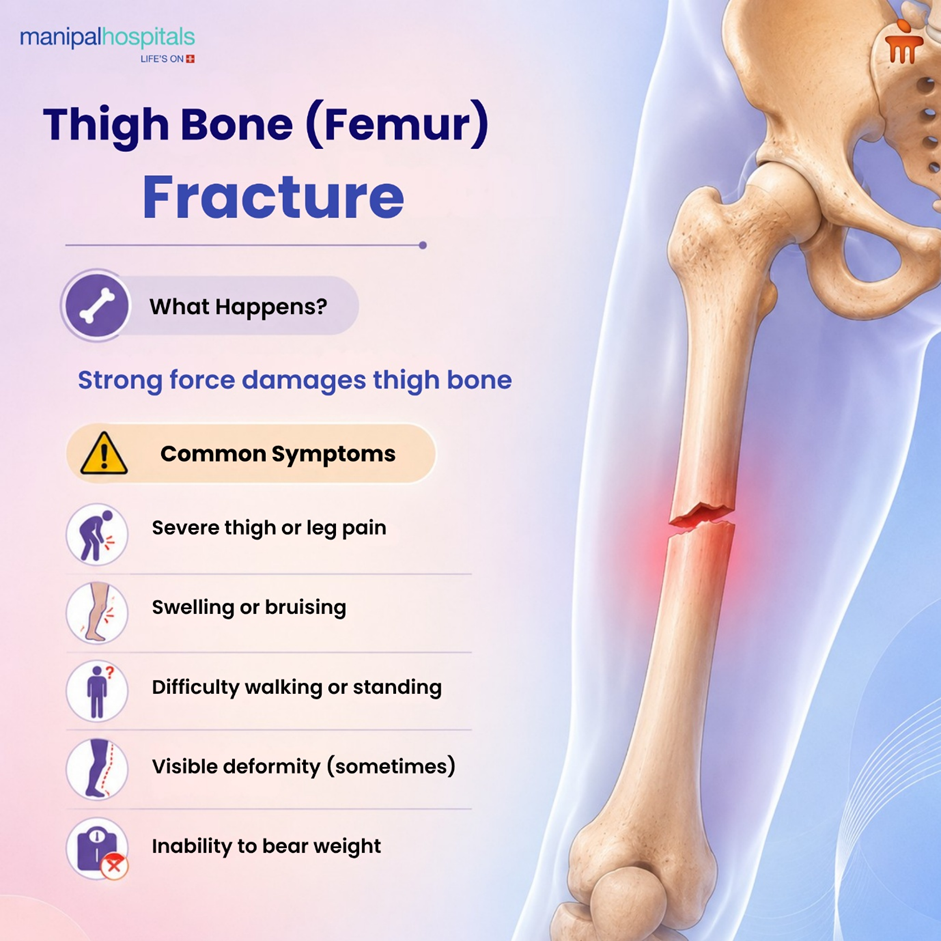
Common symptoms include:
-
Sudden severe pain in the thigh or leg
-
Swelling or bruising
-
Difficulty standing or walking
-
Visible deformity or abnormal leg position
-
Inability to bear weight on the leg
For many people, these symptoms appear immediately after a fall, accident, or other major injury.
Why Surgery Is Often Needed
Doctors usually confirm the fracture with X-rays, while CT scans may help assess complex injuries. Small fractures in other bones often recover without surgery, but most femur fractures do not. Good alignment is important as the femur supports the weight of the body. That’s why doctors often recommend surgery for a thigh bone fracture to stabilise the bone and restore movement safely.
Do you know, the femur is so strong that it usually takes the same amount of force to break it as you would get in high-speed road accidents.
Types of Thigh Bone Fracture Surgery
Surgery for a broken thigh bone (femur) depends on the pattern of fracture and the patient’s health. The three main thigh bone fracture surgery methods are intramedullary nailing, plates and screws, and external fixation. Intramedullary nailing is the most common approach today.
|
Surgical Method |
How It Works |
When It’s Used |
How It Helps |
|
Intramedullary Nailing |
A strong metal rod is placed inside the bone’s canal. |
Most femoral shaft fractures used for |
Provides stable fixation, allows early walking, and is the most common technique. |
|
Plates and Screws |
Metal plates and screws hold bone fragments together. |
Complex fractures, near joints, or when nailing isn’t possible. |
Offers precise bone alignment, particularly in complex fractures. |
|
External Fixation |
A temporary frame outside the body stabilises the bone. |
Severe trauma, open fractures, or when a patient is unstable. |
Quick to apply, useful in emergencies, usually temporary before final surgery. |
Recovery depends on the type of fracture, your age, bone strength, and how much you participate in rehabilitation.
How the Surgery Is Performed
For many people, the hardest part is not the surgery itself but learning to trust the leg again. Knowing the procedure can help reduce anxiety before surgery.
During a thigh bone fracture operation:
-
The patient is anaesthetised.
-
The fractured bone is realigned.
-
Metal rods, screws, or plates are used to stabilise the fracture.
-
Imaging guides accurate placement.
-
The incision is carefully closed and dressed.
The surgery usually takes a few hours, depending on the complexity of the fracture.
Thigh Bone Fracture Recovery Time
Getting back to normal after a thigh bone fracture rarely happens quickly. Some people bounce back faster than others. It all depends on the injury itself and your overall health.
Now, let us get to know about the stages of recovery:
|
Recovery Stage |
Timeframe |
What to Expect |
|
Initial Healing |
6–12 weeks |
The healing process begins as new bone tissue forms around the fracture. |
|
Walking Improvement |
2–4 months |
Walking becomes easier with therapy, and strength slowly returns. |
|
Full Recovery |
6–12 months |
Normal function is restored, muscles are rebuilt, and daily activities resume. |
A lot of people find that recovery from a thigh bone fracture takes longer than they thought. That's because you also need to rebuild your muscle strength.
Why Rehabilitation and Physiotherapy Matter
Recovery from a thigh bone fracture isn't just about the bone healing properly. You also need to rebuild your strength, get your balance back, and feel confident walking again.
Physiotherapy helps with:
-
Improving flexibility
-
Reducing stiffness
-
Rebuilding muscle strength
-
Improving walking and movement
Skipping rehabilitation can slow down recovery and make movement more difficult later on.
Possible Risks and Complications
Every surgical procedure carries a risk; however, these risks are manageable when detected early.
Let us look at some common risks:
-
Infection: The surgical wound may become infected, causing pain, redness, or swelling.
-
Blood clots: Reduced movement after surgery can increase the risk of clots in the leg veins.
-
Delayed healing: In some cases, the bone may take longer than expected to heal.
-
Implant irritation: Screws or plates used for surgery can irritate the body.
-
Stiff joint: Inactivity can make one's hip or knee joints stiff.
-
Nerve injury: Nerves around the area of surgery can become irritated.
-
Bleeding: There may be excessive bleeding from the surgical site.
-
Fat embolism: Fat droplets from the bone marrow can enter the bloodstream, causing problems with breathing.
-
Repeat surgery: On rare occasions, repeat surgery will be required.
Most of the complications can be successfully managed with early detection and follow-up care.
When Should You Contact a Doctor
After undergoing surgery on your thigh bone, there will always come a time for you to call your physician for consultation and assistance. If there is a presence of any unusual sign or symptom, such as having a fever or seeing reddened skin around your incision site, immediately contact your physician, since both may be indications of infection.
If there are any signs of swelling or persistent painful sensations, seek medical assistance, since these may be an indication of a poor healing process. Tingling sensations and numbness in your thigh should not be ignored, either, since this may be indicative of nerve injury.
Conclusion
A femur fracture can feel overwhelming at first, but outcomes are much better with modern orthopaedic care. In orthopaedic practice, femur fractures are considered serious injuries because they can involve significant blood loss and long recovery periods.
Patients looking for thigh bone fracture surgery in Vijayawada typically expect advanced orthopaedic treatment and rehabilitation support. Our experienced orthopaedic surgeons at Manipal Hospital Vijayawada offer a detailed fracture assessment and advanced imaging, expert orthopaedic surgical care, personalised rehabilitation plans, and long-term recovery guidance.
Frequently Asked Questions
There is anaesthesia during the surgery, and medication is used post-surgery. Most patients will experience a reduction in pain gradually as recovery progresses.
The answer depends on how serious your injury is, your overall health, and what your surgeon recommends about putting weight on your leg after surgery.
Yes, elderly individuals take more time to heal because they have weak bones, less muscle mass, or other sicknesses hindering the healing process.
Yes, physiotherapy is very effective in improving flexibility, mobility, and strength in patients and accelerating their recovery process while avoiding stiffness and weakening of muscles after a surgical operation on a fractured leg bone.
During recovery from a femur fracture, it really helps to eat foods that support healing. Protein‑rich meals, nuts, eggs, leafy green vegetables, and other foods with calcium and vitamin D can all help your bones heal, and your muscles regain strength.
Share this Article


Recent Blogs

Gastric vs. Duodenal Ulcers – What You Need to Know
27 Aug 20266 Min Read
Peptic ulcers are open sores that develop on the inside lining of your stomach and the upper portion of your small intestine. While often grouped under the general term "ulcer", there are distinct types, primarily gastric ulcers and duodenal ulcers. Knowing the difference between gastric and duodenal ulcers is crucial for accurate diagnosis, effective management, and understanding your symptoms. This blog has clinical insights from experts from a leading gastroenterology hospital in Vijayawada to help you understand these two common conditions, including their symptoms, causes, diagnosis, treatment options, and when to seek medical attention.
Read NowWhy Are My Nipples Hurting? Causes & When to See a Doctor
27 Aug 20266 Min Read
Nipple pain is a surprisingly common concern that can range from a mild, temporary discomfort to a sign of an underlying condition requiring medical attention. Many individuals, particularly women, experience this at various stages of life, leading to questions like "Why are my nipples painful?" or "When nipples are painful, what does it mean?" While often benign, understanding the various causes of nipple pain is important for reassurance and timely intervention when necessary. Through this blog, we explain the common causes of nipple pain, when it may signal an underlying health concern, and when it is important to seek medical attention, with expert insights from physicians at the top hospital in Vijayawada. The blog also discusses the available options for diagnosis and breast pain treatment in Vijayawada.
Read NowUnderstanding Tonsil Cancer: Early Detection, Treatment, and Hope
27 Aug 20267 Min Read
Tonsil cancer, a type of oropharyngeal cancer, affects the tonsils, which are part of your body's immune system located at the back of your throat. While the thought of any cancer can be daunting, understanding the disease, its early signs, and modern treatment approaches is the first step towards empowerment and effective management. In this blog post, we present insights from experts from a leading cancer hospital in Vijayawada covering all the crucial aspects of tonsil cancer, from recognizing its subtle early tonsil cancer symptoms to exploring the advanced treatment options available, helping you navigate this journey with confidence and informed decisions.
Read NowThigh Bone Fracture Surgery: Procedure & Recovery Time
17 Jun 20266 Min Read
A thigh bone fracture can turn everyday life upside down very suddenly. One accident, a bad fall, or a strong impact can make even simple movements like standing or walking extremely painful. For many people, the shock of the injury is just as difficult as the pain itself. The thigh bone, also called the femur, is the strongest bone in the body, so it usually breaks after major injuries such as road accidents or sports trauma. However, in older adults with weaker bones, even a simple fall can sometimes lead to a fracture. In this blog a top orthopaedic surgeon in Vijayawada explains the symptoms of a thigh bone fracture, how surgery is performed, and what recovery and healing usually look like after treatment.
Read NowUnderstanding Anxiety and Heart Health: What You Should Know
15 Jun 20268 Min Read
For many people, it starts with a sudden feeling of panic. The heart begins beating faster, the chest feels tight, breathing becomes difficult, and the mind immediately jumps to the worst possibility: “Am I having a heart attack?” Since anxiety symptoms can feel so intense physically, questions like can anxiety cause a heart attack are becoming increasingly common. While anxiety is not always caused by an oncoming heart attack, long-term stress and anxiety may affect overall heart health over time, which is why these symptoms should not be ignored completely. Because anxiety symptoms can feel physically intense, many people struggle to tell the difference between panic and a heart problem. Through this blog one of the best cardiologists in Vijayawada explains how anxiety affects the body, why its symptoms can sometimes feel similar to a heart attack, and when medical attention may be needed.
Read NowWhy Are My Hands Always Cold? Causes & When to Worry
15 Jun 20268 Min Read
Cold hands can happen occasionally, especially during colder weather or after spending time in air-conditioned environments. However, for some people, having persistently cold hands becomes a frequent or everyday experience, even when the surrounding temperature feels comfortable. While this is often harmless, it can sometimes be linked to underlying issues involving blood circulation, nerve function, hormonal changes, or other medical conditions that may require attention. If you have ever wondered, 'Why are my hands always cold?', you are definitely not alone. Cold hands are usually nothing to worry about, but sometimes they can be a sign of problems with circulation, nerves, hormonal changes, or other medical conditions that shouldn’t be ignored. Many people also ask questions like why their hands and feet are always cold or why their hands and toes are always cold, even though the rest of the body feels fine. Sometimes, the cold can also be accompanied by sweating, leading people to ask, Why are my hands always cold and sweaty? In this blog an experienced general medicine doctor in Vijayawada explains the common causes, warning signs, and when it may be time to see a doctor.
Read NowHow Long Does Food Poisoning Last? Understanding the Recovery Timeline
15 Jun 202610 Min Read
A meal eaten outside, leftover food from the refrigerator, or even contaminated water can sometimes lead to sudden vomiting, diarrhoea, stomach cramps, and weakness. When symptoms begin unexpectedly, one of the first questions people usually ask is whether it is food poisoning, and then they wonder how long food poisoning lasts. In many cases, symptoms settle within a couple of days, but some infections may take longer to recover from, especially when weakness or stomach discomfort continues after vomiting or diarrhoea improves. In this blog, an experienced medical gastroenterologist in Vijayawada explains the symptoms, recovery timeline, treatment options, and ways to recover safely at home.
Read NowWhen a Pimple May Be More Than Acne: Understanding Early Skin Cancer
15 Jun 20268 Min Read
It usually starts as something very small, just a pimple-like bump that does not seem serious enough to worry about. Most people assume it is acne, a skin irritation, or an ingrown hair and expect it to disappear on its own. But sometimes, the spot stays for weeks, keeps crusting, bleeds occasionally, or slowly becomes more noticeable. In some cases, what looks like an ordinary acne bump may actually be an early-stage skin cancer. Certain skin cancers can closely resemble pimples in the beginning, which is why they are often ignored during the early stages. In this blog a top medical oncologist in Vijayawada explains how to recognise warning signs, how to tell the difference between acne and suspicious skin changes, and when a skin cancer that looks like a pimple may need medical attention.
Read NowUnderstanding Abdominal Pain After Eating: Causes and Relief
08 Apr 20268 Min Read
A heavy feeling, sharp discomfort, or cramping after a meal can quickly turn eating into an unpleasant experience. Many people worry about having stomach pain after meals. It may not be a big deal if you sometimes have stomach problems. However, abdominal pain after eating can sometimes point to an underlying digestive issue that needs medical attention. The digestive system breaks down food, absorbs nutrients, and removes waste, so any disruption can lead to discomfort after meals. Many patients experience pain after eating, with the location varying based on the affected part of the digestive system. These symptoms may be caused by conditions ranging from indigestion to more complex gastrointestinal disorders. Through this blog, a top medical gastroenterologist in Vijayawada helps you understand the possible causes of abdominal pain after eating and how to identify the warning signs and when to seek abdominal pain treatment in Vijayawada.
Read NowTesticle Pain - Epididymal Cyst or Something Else: Understanding Symptoms, Causes, and Treatment
08 Apr 20267 Min Read
That dull ache or swelling in the testicles is not something to ignore. While it may seem minor at first, persistent discomfort can sometimes signal an underlying urological condition that needs attention. In some cases, the cause may be a temporary issue, but ongoing pain could point to conditions such as epididymitis or an epididymal cyst. Understanding epididymal cyst symptoms and their possible causes can help individuals seek medical attention early. Epididymal cysts are sacs filled with fluid that grow in the epididymis. They are usually benign but may cause discomfort or anxiety if they increase in size. In this blog, a top urologist in Vijayawada explains epididymal cyst causes, common warning signs, treatment options, and whether the condition affects fertility. It also explores approaches for epididymal cyst treatment without surgery and when medical intervention becomes necessary.
Read Now