


Living with Haemophilia: What Happens When the Body's Clotting System Changes?
Reviewed by: Dr. Ramitha R Bhat
Posted on
7 Min Read

Not sure what you’re looking for?
Get in touch with our representatives for help!
Contact UsWhen you bump your knee or get a tiny scratch, your body immediately goes to work behind the scenes. Within minutes, a natural sealing process stops the minor bleeding, allows a small bruise to form, and begins the healing cycle without you having to give it a second thought. But for some individuals, this automatic internal repair crew lacks a vital tool, turning routine bumps into situations that require a bit more attention and care.
This blog breaks down exactly how this specialised bleeding variation operates within the body. You will discover the specific genetic factors behind it, how medical professionals classify its different severity levels, and the precise, modern therapies that allow individuals to manage their health effectively and live highly active lives.
What is Haemophilia and How Does It Affect the Body?
When someone asks what is hemophilia, they are looking at a rare, typically inherited condition that alters the blood's natural ability to form clots. The human body relies on a sequential process called the coagulation cascade to stop bleeding. When a blood vessel is damaged, platelets (tiny blood cells) rush to the site to form a plug, and specialised proteins called clotting factors act like biological glue to cement that plug firmly in place.
For individuals living with haemophilia disease, the body either produces an insufficient amount of a specific clotting factor or produces a version that does not function correctly. This means that if an injury occurs, the bleeding does not happen faster than usual, but it continues for a significantly longer duration because the structural glue cannot solidify. The two most common forms are Haemophilia A, where Factor VIII (eight) is deficient, and Haemophilia B, where Factor IX (nine) is missing.
Types of Haemophilia
Haemophilia is broadly classified into two major types depending on the clotting factor affected:
|
Type |
Clotting Factor Deficiency |
Incidence |
|
Haemophilia A |
Factor VIII (FVIII) |
1 in 5,000 male births |
|
Haemophilia B |
Factor IX (FIX) |
1 in 30,000 male births |
Haemophilia A accounts for nearly 80–85% of all diagnosed cases, while Haemophilia B constitutes approximately 15–20% of cases.
Uncovering Haemophilia Causes and Genetic Links
To understand haemophilia causes, we have to look closely at genetics, specifically the X and Y chromosomes that determine biological sex. The genetic instructions for producing vital clotting factors are located directly on the X chromosome. Biological males inherit one X chromosome from their mother and a Y chromosome from their father, so a mutation in that single X chromosome means their body cannot produce the factor properly.
Biological females inherit two X chromosomes. If one chromosome carries the mutation, the second working chromosome typically produces enough clotting factor to keep them healthy. While these females are considered genetic carriers and rarely experience severe symptoms, some can experience mild bleeding issues, such as heavy menstrual cycles. Interestingly, while the condition is mostly passed down through families, about one-third of all diagnosed cases occur spontaneously due to a sudden, unpredictable mutation in the gene during early fetal development.
While haemophilia is typically inherited, not every patient has a family history of the disorder. Approximately 30% of cases occur due to spontaneous genetic mutations. Interestingly, nearly half of children diagnosed with severe haemophilia have no known family history, making early recognition of symptoms especially important.
Recognizing Haemophilia Symptoms
The severity of haemophilia symptoms depends entirely on the baseline levels of clotting factors circulating in your blood. While individuals with a mild form of the condition might only experience prolonged bleeding after a major event like a surgical procedure or a tooth extraction, those with a severe form can experience bleeding episodes during everyday activities.
Key physical signs to monitor include:
-
Deep Tissue Bruising: Developing large, raised, or unexpectedly dark bruises from minor, everyday knocks that would not typically leave a mark on the skin.
-
Frequent or Unprovoked Nosebleeds: Experiencing heavy nosebleeds that start without any clear nasal trauma and take a considerable amount of time to subside using standard pressure.
-
Prolonged Bleeding from Minor Cuts: Noticing that a simple paper cut, a superficial scratch, or standard bleeding from the gums after routine dental brushing continues to ooze fluid for hours.
-
Internal Joint Bleeding (Haemarthrosis): This is one of the most defining and painful indicators of a severe clotting deficiency.
Common Bleeding Sites in Haemophilia
Bleeding episodes can occur in different parts of the body, with certain locations being more commonly affected:
|
Site |
Frequency |
|
Joints (knees, ankles, elbows) |
70–80% |
|
Muscles |
10–20% |
|
Gastrointestinal & urinary tract |
5–10% |
|
Brain (CNS) |
<5% |
Joint bleeding, particularly in the knees, ankles, and elbows, remains the hallmark feature of severe haemophilia and requires prompt medical attention to prevent long-term joint damage.
Severity Levels and Daily Impact
To determine the most effective management path, clinicians look at the exact percentage of clotting factors present in a person's bloodstream. The table below details how these structural differences change how the condition presents on a daily basis.
|
Severity Classification |
Factor Level in Blood |
Typical Clinical Manifestations |
|
Mild |
5% to 40% of normal baseline |
Bleeding usually occurs only after major physical trauma, surgical procedures, or tooth extractions. It might not be diagnosed until adulthood. |
|
Moderate |
1% to 5% of normal baseline |
Noticeable bleeding episodes can follow minor injuries, sprains, or deep bruises. Spontaneous bleeding without a clear cause happens occasionally. |
|
Severe |
Less than 1% of normal baseline |
Frequent spontaneous bleeding episodes occur, often directly into joints (knees, elbows, and ankles) or muscles without any known physical injury. |
The Diagnostic Pathway
Because a bleeding trend can point to several different circulatory variations, haematologists use a step-by-step laboratory screening process to establish an accurate haemophilia diagnosis. In haemophilia, a deficiency in clotting proteins prevents the mesh from forming properly. To pinpoint exactly where the clotting process is failing, medical teams use a series of targeted blood checks:
-
Complete Blood Count (CBC): This evaluates the overall volume and balance of your blood cells. It specifically checks your platelet count to confirm these primary plug-forming cells are working normally, ruling out a low platelet count as the source of your bleeding.
-
Activated Partial Thromboplastin Time (aPTT) Test: This measures the exact number of seconds it takes for a blood sample to form a visible clot. Because this test tracks the specific pathways where factors VIII and IX operate, an individual with haemophilia disease will show a significantly delayed clotting time.
-
Prothrombin Time (PT) Test: This test evaluates a separate pathway of the clotting process. It typically delivers a normal result in haemophilia patients, which helps specialists narrow down the diagnostic search.
-
Clotting Factor Assays: This is the definitive test used to confirm a diagnosis. It measures the precise percentage of factor activity inside the blood plasma, identifying whether the condition is Haemophilia A (missing Factor VIII) or Haemophilia B (missing Factor IX). It also scales the severity as mild, moderate, or severe.
Understanding Mixing Studies
When clotting tests show prolonged bleeding times, doctors may perform a mixing study. In this test, the patient's plasma is mixed with normal plasma.
· If clotting time normalizes, it suggests a clotting factor deficiency.
· If clotting remains prolonged, it may indicate the presence of inhibitors (antibodies) interfering with clot formation.
Mixing studies help differentiate classical haemophilia from acquired clotting disorders.
Modern Options for Haemophilia Treatment
Medical care has shifted away from simply reacting to injuries toward preventing complications before they even start. Today, haemophilia treatment options are structured around three main clinical approaches:
1. Factor Replacement Therapy
The baseline approach relies on infusing concentrated versions of the missing clotting factor directly into a vein to restock the body's natural supply.
-
Haemophilia A: Doctors prescribe specific recombinant Factor VIII concentrates, such as octocog alfa or the longer-acting efaloctocog alfa, which stays active in the bloodstream for an extended duration.
-
Haemophilia B: Treatment relies on Factor IX concentrates, such as nonacog alfa or the extended-life variant albutrepenonacog alfa.
These replacement infusions can be given on-demand to stop an active bleeding event quickly, or regularly at home as a preventative measure (prophylaxis) to maintain a constant, safe level of protection against hidden internal bleeds.
2. Advanced Non-Factor Therapies
For individuals managing Haemophilia A, newer therapies work without replacing the missing factor directly. A major option is emicizumab, a laboratory-engineered antibody that physically binds factors IX and X together. By doing so, it mimics the exact chemical action of the missing Factor VIII to restore the natural clotting pathway. Because it is given as a simple injection just under the skin (subcutaneously) once a week or once a month, it significantly reduces the need for regular vein infusions.
3. Supplemental and Localised Supports
For milder cases or specific medical procedures, doctors use localised treatments to support temporary clotting needs:
-
Desmopressin (DDAVP): Available as an injection or a specialised nasal spray for mild Haemophilia A. It stimulates the body's internal storage sites to temporarily release more of its natural reserves of Factor VIII into the circulation.
-
Tranexamic Acid: This antifibrinolytic medicine stops blood clots from breaking down prematurely. It is routinely prescribed alongside replacement factors to manage localised bleeding during dental procedures, minor oral injuries, or nosebleeds.
Emerging Role of Gene Therapy
Recent advances in gene therapy have transformed the treatment landscape for haemophilia.
Approved therapies include:
-
Roctavian (valoctocogene roxaparvovec) for severe Haemophilia A
-
Hemgenix (etranacogene dezaparvovec) for Haemophilia B
These one-time intravenous treatments deliver functional clotting factor genes to liver cells, enabling the body to produce clotting factors naturally. While not suitable for every patient, gene therapy represents a major step toward long-term disease control and reduced treatment burden.
Living Safely with Haemophilia: Prevention and Daily Care
Proper precautions can significantly reduce the risk of bleeding episodes and improve quality of life.
Safety Measures
-
Install safety gates around staircases for young children.
-
Avoid furniture with sharp edges.
-
Use helmets while cycling and travelling.
-
Wear knee and elbow guards during physical activities.
-
Prefer low-impact exercises such as swimming, walking, and cycling.
Vaccination Precautions
Vaccinations remain important for individuals with haemophilia. Whenever possible:
-
Use small-gauge needles.
-
Administer injections subcutaneously when appropriate.
-
Apply firm pressure at the injection site afterward.
Dental Health
Maintaining good oral hygiene helps reduce gum bleeding and minimizes the need for invasive dental procedures.
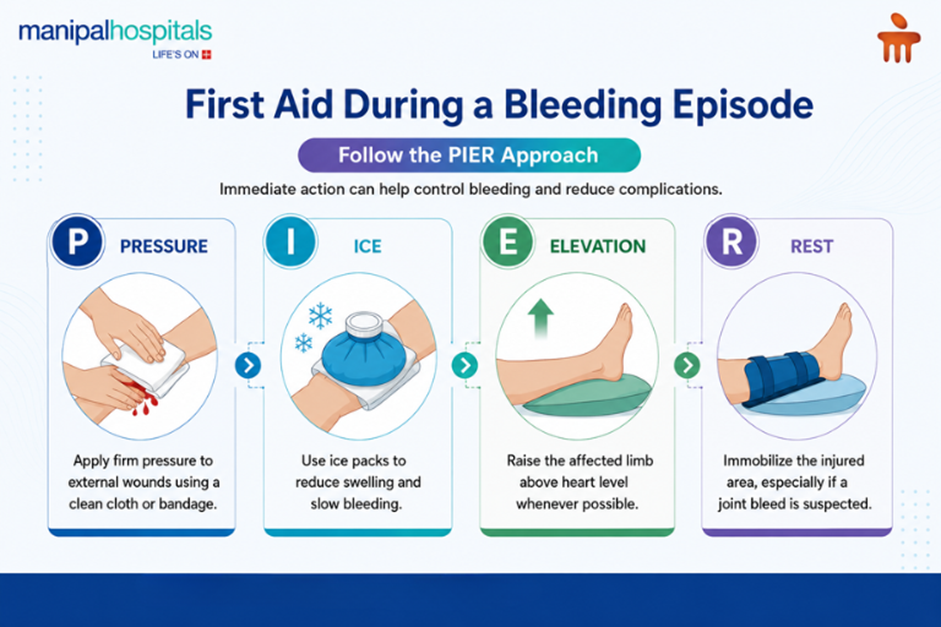
First Aid During a Bleeding Episode
Conclusion
Managing an inherited bleeding condition requires consistent monitoring and a reliable, preventative approach to care. If you require advanced factor tracking or want comprehensive haemophilia treatment in Varthur Road, Bangalore, booking a consultation at Manipal Hospitals, Varthur Road, Bangalore, connects you with advanced clinical support needed to manage your health safely and comfortably.
Frequently Asked Questions
While the condition predominantly affects males due to its X-linked genetic nature, females can be impacted. A female can experience symptoms if she inherits the altered gene from both parents or if she is a carrier whose single active X chromosome does not produce a sufficient amount of clotting factor, leading to mild or moderate bleeding tendencies.
Yes, though it is exceptionally rare. This is known as acquired haemophilia. Unlike the inherited genetic form, it is an autoimmune condition where the body’s immune system mistakenly develops antibodies that target and destroy its clotting factors, typically Factor VIII. It is usually diagnosed in older adults or during late-stage pregnancy.
When bleeding occurs inside joint spaces, a condition called haemarthrosis, it causes swelling, warmth, and sharp pain, most commonly in the knees, elbows, and ankles. If these episodes happen repeatedly and you leave them untreated, the pooled blood damages the protective cartilage over time, leading to early arthritis and limited mobility.
High-impact contact sports like rugby, football, and boxing carry a high risk of head injuries and deep tissue bleeding, so they are generally discouraged. However, staying active is vital for joint strength. Low-impact activities such as swimming, cycling, and walking are highly recommended, especially when paired with a regular preventative treatment plan.
Diagnosis begins with screening tests, including an activated partial thromboplastin time (aPTT) test and a Prothrombin Time (PT) test, which measure how many seconds it takes for a blood sample to clot. If the aPTT test shows delayed clotting, a specific factor assay blood test is ordered to measure the exact percentage of Factor VIII or Factor IX present.
Share this Article


Recent Blogs

When a Baby Struggles to Breathe at Birth: A Guide to Medical Definitions and Care Paths for Birth Asphyxia
30 Jun 20267 Min Read
Preparing for the arrival of a newborn is a journey filled with milestones, from setting up the nursery to imagining that very first cry in the delivery room. The moment of birth represents a monumental physical transition for a baby. In a matter of seconds, a newborn must shift from receiving all its oxygen through the maternal placenta to expanding its lungs and breathing room air for the first time. While this intricate biological shift usually occurs seamlessly, there are instances where a baby faces a delay and requires immediate, hands-on help from the delivery team to establish steady breathing. If your medical team mentions that your baby experienced a breathing delay at birth, it is completely natural to feel overwhelmed and look for clear answers. This blog will explore what happens when a newborn's initial breathing is interrupted, look closely at the underlying physical reasons behind the event, and outline the advanced medical therapies used to protect a child's long-term health and development.
Read NowLiving with Haemophilia: What Happens When the Body's Clotting System Changes?
29 Jun 20267 Min Read
When you bump your knee or get a tiny scratch, your body immediately goes to work behind the scenes. Within minutes, a natural sealing process stops the minor bleeding, allows a small bruise to form, and begins the healing cycle without you having to give it a second thought. But for some individuals, this automatic internal repair crew lacks a vital tool, turning routine bumps into situations that require a bit more attention and care. This blog breaks down exactly how this specialised bleeding variation operates within the body. You will discover the specific genetic factors behind it, how medical professionals classify its different severity levels, and the precise, modern therapies that allow individuals to manage their health effectively and live highly active lives.
Read NowManaging Chronic Neck Stiffness: A Practical Guide to Cervical Spondylosis
29 Jun 20267 Min Read
Have you ever woken up with a stubborn, dull ache in your neck, assuming you simply slept at an awkward angle? Or perhaps you notice a distinct grinding sensation when turning your head to check a blind spot while driving. For many of us, neck stiffness is a temporary inconvenience caused by a long day hunched over a laptop or using an unsupportive pillow. However, when that stiffness evolves into a persistent ache or starts spreading down into your shoulders and arms, it often indicates a very common, age-related structural shift in the spine. This progressive wear and tear of the spinal discs and joints in your neck is known as cervical spondylosis. In this blog, we will look at how these spinal changes develop, the specific warning signs to keep track of, the medical reasons behind the joint shifts, and the modern medical treatments available to help restore your comfort and neck mobility.
Read NowBariatric Surgery Explained: Benefits, Risks, Recovery, and Results
25 May 20269 Min Read
For many people, weight problems build slowly over time. At first, it may just feel like getting tired more easily or struggling with stairs and long walks. Later, sleep may get disturbed, movement may become uncomfortable, and health problems like diabetes or joint pain may begin to affect routine life. Most people try different methods before thinking about surgery. Some manage weight with exercise and food changes, while others continue struggling despite repeated efforts over several years. This stage is where bariatric surgery may be discussed. Before deciding, people usually want clear information about how the surgery works, possible risks, recovery, eating changes, and the kind of results they may notice later. This blog explains bariatric surgery meaning, its benefits, side effects, risks, and life before and after surgery in a simple way.
Read NowUnderstanding Sunstroke Symptoms: Warning Signs, Treatment & Recovery
25 May 20267 Min Read
A hot summer afternoon may seem harmless at first. You step outside for work, a cricket match, a long drive, or even a quick walk, and within hours, exhaustion starts creeping in. The body feels drained, the head begins to pound, and suddenly, even standing feels difficult. While many people brush this off as “too much heat,” it can sometimes be something far more serious: sunstroke. Every year, rising temperatures across India lead to a sharp increase in heat-related illnesses. The danger is that many people fail to recognise early sunstroke symptoms until the condition becomes severe. Unlike ordinary tiredness or dehydration, sunstroke can affect the brain, heart, kidneys, and muscles if you delay medical care. In this blog, you will learn the definition of sunstroke, its causes, symptoms, and safe treatment options. Also covered are some helpful methods to prevent sunstroke.
Read NowCan Cubital Tunnel Syndrome Go Away Naturally? Diagnosis and Treatment Guide
25 May 20268 Min Read
A tingling sensation in the little finger and ring finger is often ignored at first. Some people notice it only while holding a phone, driving, or sleeping with the elbow bent. In many cases, the feeling comes and goes in the beginning, which is why people do not immediately seek treatment. Cubital tunnel syndrome develops when the ulnar nerve gets compressed near the elbow. Over time, pressure on the nerve can begin to affect hand strength, finger movement, and everyday tasks. Mild symptoms often settle with early attention and adjustments to daily habits, but ongoing nerve compression should not be ignored. Recognising these signs early allows for simpler adjustments to daily habits, which can often prevent the condition from progressing to permanent nerve damage. This blog explores cubital tunnel syndrome, its symptoms, causes, treatment options, recovery, and when it is worth seeking medical advice.
Read NowAtrial Fibrillation Treatment: Complete Guide For Patients
22 May 20267 Min Read
It usually happens when you least expect it. You might be sitting quietly at your desk, driving, or climbing a flight of stairs when your chest suddenly feels like it is pounding or racing completely out of sync. It is a hard sensation to ignore, and it is natural to feel anxious when your heart rhythm suddenly feels unpredictable. People ignore these signs at first, thinking it is stress, caffeine, lack of sleep, or anxiety. But sometimes, these occasional flutters or sudden bouts of unexplained exhaustion aren't just signs of a stressful week. They are often the first noticeable indicators of atrial fibrillation, commonly called AFib. If you are experiencing this erratic rhythm, learning about atrial fibrillation treatment and understanding your options is the most effective way to take control of your health and get back to your routine. This blog will discuss atrial fibrillation (AFib) symptoms, causes, treatment, potential complications, and important pointers on how to live well with AFib.
Read NowNeonatal Jaundice: What are the Causes, Types, and Treatment Options
20 Apr 20267 Min Read
Did you know that many newborns develop a yellowish tint on their skin within the first few days of life? While the condition can be worrying for parents, neonatal jaundice is quite common and, in most cases, harmless. It usually starts around the face or eyes and may gradually spread downward, becoming more noticeable over time. This condition occurs when bilirubin builds up in a baby’s blood. A newborn’s liver is still developing, so it may not clear bilirubin well, which leads to the yellowish skin and eyes seen in jaundice. While most cases resolve naturally as the liver strengthens, understanding the specific triggers and variations is key to ensure that your baby's health is well. Depending on the severity and timing, some infants may require specialized medical intervention to prevent complications. In this guide, we will break down: The different types of neonatal jaundice. Common causes and risk factors. Modern treatment options, ranging from simple home care to professional phototherapy. Where to find expert jaundice treatment in Varthur Road to ensure your little one receives the best possible care.
Read NowUnderstanding Trigeminal Neuralgia: Symptoms, Diagnosis and Management
20 Apr 20268 Min Read
A sudden burst of pain in your face can be unexpected. Some people feel it like an electric shock, while others describe it as a sharp, stabbing pain on one side. These episodes may last only a few seconds, but they can make simple things like eating or brushing your teeth difficult. This kind of pain is often linked to trigeminal neuralgia, a condition that affects the facial nerve. The trigeminal nerve carries sensory signals from the face to the brain. When this nerve becomes irritated or compressed, it can lead to abnormal pain signals. Trigeminal neuralgia symptoms often appear suddenly and may be triggered by everyday movements. Because the pain can resemble dental or sinus issues, many people first consult a dentist or general physician, which may delay diagnosis. Understanding trigeminal neuralgia causes and recognising early signs can help ensure timely care. With the right care, symptoms can often be managed well, and people looking for trigeminal neuralgia treatment in Varthur Road may benefit from seeing a specialist for a proper evaluation.
Read NowThalassemia: Understanding the Genetic Blood Disorder, Its Symptoms, Diagnosis, and Treatment
17 Apr 20267 Min Read
Thalassemia is a hereditary blood disorder that affects the body’s ability to produce haemoglobin, the oxygen-carrying component of red blood cells. When haemoglobin production is disrupted, the body cannot deliver enough oxygen to tissues, resulting in anaemia that can range from mild to life-threatening. At its core, haemoglobin is made up of four protein chains, two alpha (α) and two beta (β). Thalassemia occurs when mutations affect the genes responsible for producing these chains. Since these mutations are inherited from parents, the condition is present from birth and varies significantly in severity depending on how many genes are affected. In countries like India, where thalassemia prevalence is relatively high, awareness and early diagnosis play a crucial role in managing the condition effectively.
Read Now