


Can Cubital Tunnel Syndrome Go Away Naturally? Diagnosis and Treatment Guide
Reviewed by: Dr. Rajesh Srinivas
Posted on
8 Min Read

Not sure what you’re looking for?
Get in touch with our representatives for help!
Contact UsA tingling sensation in the little finger and ring finger is often ignored at first. Some people notice it only while holding a phone, driving, or sleeping with the elbow bent. In many cases, the feeling comes and goes in the beginning, which is why people do not immediately seek treatment.
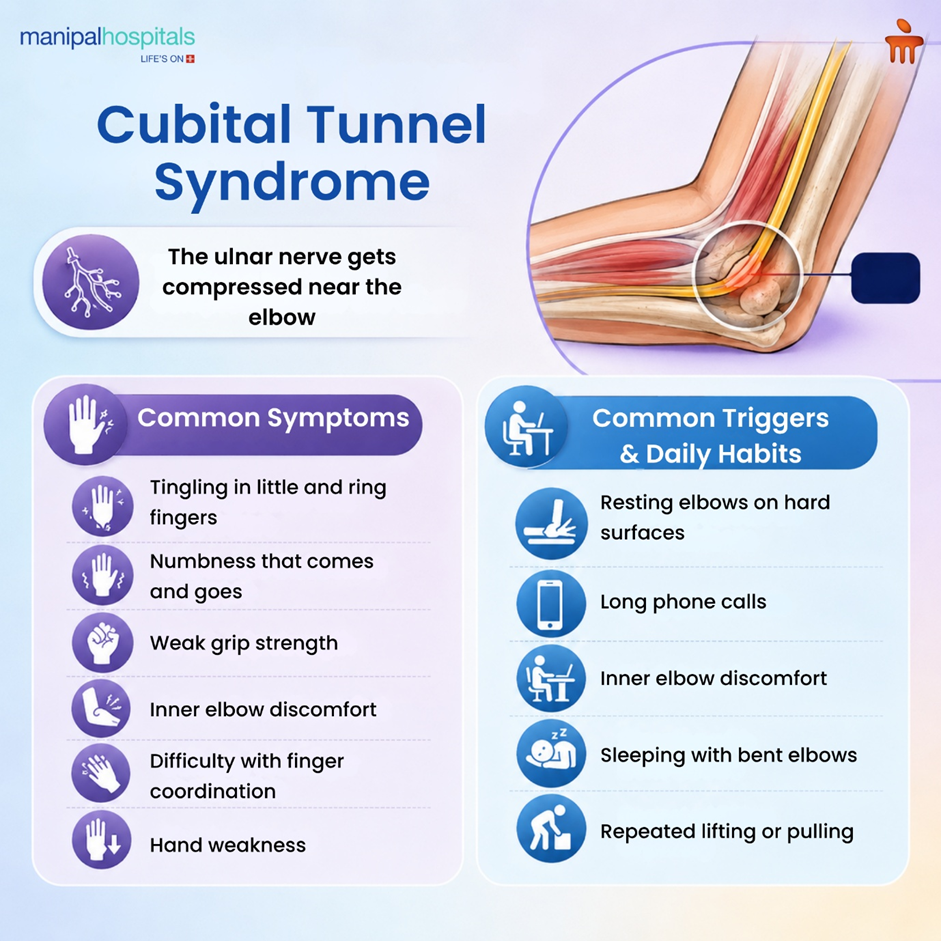
Cubital tunnel syndrome develops when the ulnar nerve gets compressed near the elbow. Over time, pressure on the nerve can begin to affect hand strength, finger movement, and everyday tasks. Mild symptoms often settle with early attention and adjustments to daily habits, but ongoing nerve compression should not be ignored. Recognising these signs early allows for simpler adjustments to daily habits, which can often prevent the condition from progressing to permanent nerve damage.
This blog explores cubital tunnel syndrome, its symptoms, causes, treatment options, recovery, and when it is worth seeking medical advice.
Understanding Cubital Tunnel Syndrome
To understand cubital tunnel syndrome, it helps to know how the ulnar nerve functions inside the arm. The ulnar nerve travels from the neck down to the hand and passes through a narrow tunnel behind the elbow called the cubital tunnel. Because the space is limited, the nerve can easily become irritated when extra pressure builds around the elbow area.
Most people have felt a sudden tingling sensation after hitting the “funny bone". That feeling happens because the ulnar nerve becomes irritated for a short time. In cubital tunnel syndrome, however, the irritation keeps returning because the nerve remains under pressure. The condition usually develops slowly rather than suddenly. Without treatment, long-term nerve compression may begin affecting muscle control in the hand. This is why recognising symptoms early is important.
Why Symptoms Often Become Worse at Night
Many people notice symptoms of cubital tunnel syndrome becoming worse during the night or early morning because the elbows often remain bent during sleep for several hours. Bending the elbow raises the pressure inside the cubital tunnel and puts the ulnar nerve under greater stretch. Because of this, tingling, numbness, and discomfort tend to become more noticeable during sleep.
Some people wake up because of hand discomfort and feel temporary relief only after straightening the arm. In people with ongoing nerve irritation, disturbed sleep can gradually become more frequent. Doctors sometimes recommend elbow splints at night because they help keep the arm in a more relaxed position and reduce unnecessary strain on the nerve.
Understanding Cubital Tunnel Syndrome Symptoms
Cubital tunnel syndrome symptoms start mild but get worse over time if the nerve stays irritated.
-
Tingling in the fingers: A pins-and-needles sensation commonly develops in the little finger and ring finger. Some people notice it more while using a phone or resting their elbow on a table.
-
Numbness that comes and goes: In the early stage, numbness may appear occasionally and improve after straightening the arm. Over time, the sensation may last longer.
-
Weak grip strength: Ongoing nerve compression may weaken hand muscles, making gripping, opening jars, or carrying objects more difficult.
-
Pain near the elbow: Mild aching or discomfort may develop along the inner side of the elbow, especially after repetitive movement.
-
Difficulty with finger movement: In more advanced cases, finger coordination may become affected, making small hand movements harder.
Daily Activities That Can Trigger Symptoms
Certain everyday activities and habits may unknowingly place added pressure on the ulnar nerve, especially around the elbow. The table below highlights common daily activities that may contribute to irritation and how they can affect the elbow and nerve:
|
Activity or Habit |
Effect on the Elbow and Nerve |
|
Resting the elbow on hard surfaces |
It can irritate the nerve behind the elbow |
|
Sleeping with bent elbows |
Keeps pressure on the nerve for several hours |
|
Long phone calls |
The elbow remains bent continuously |
|
Desk-based work |
Poor arm posture may strain the nerve |
|
Repetitive lifting or pulling |
Repeated movement may increase irritation |
Common Causes of Cubital Tunnel Syndrome
Cubital tunnel syndrome typically arises from the ulnar nerve getting irritated repeatedly over time near the elbow. For most folks, it builds up through daily habits rather than a one-off injury.
-
Keeping the elbow bent for ages is a major trigger. Think of holding the phone to your ear, tapping away at a desk, reading in bed, or taking long drives.
-
Many lean on their elbows while sitting or working. That constant rub on hard surfaces grinds away at the nerve behind the elbow.
-
Repetitive arm movements add to it, too. Frequent lifting, pulling, or steady arm use strains the tissues around the joint.
-
Past elbow injuries can sometimes trigger problems. Leftover swelling, joint shifts, or old fractures squeeze the nerve's space.
-
How you sleep matters as well. Arms folded or elbows tucked tight overnight often wake you with tingling or numbness.
How Do Doctors Diagnose Cubital Tunnel Syndrome?
Doctors figure out cubital tunnel syndrome by asking about symptoms, checking you over, and running nerve tests:
-
They test grip strength and finger movement, search for numb spots, and may gently tap near the nerve at the elbow to see whether tingling symptoms are triggered, which may suggest ulnar nerve irritation.
-
They'll ask about your work, repeated activities, how you sleep, and when symptoms started.
-
A nerve conduction study checks signal speed along the ulnar nerve. Electromyography (EMG) helps assess whether nerve compression has started affecting muscle function.
-
X-rays spot bone spurs or arthritis around the elbow that might squeeze the nerve.
Cubital Tunnel Syndrome Treatment
Treatment for cubital tunnel syndrome depends on how severe the symptoms are and how much the nerve has been affected.
-
Activity modification: Avoiding repeated elbow bending and reducing pressure on the elbow may help settle mild symptoms.
-
Elbow splints or braces: Wearing elbow support during sleep can help keep the arm in a better position and reduce nighttime irritation.
-
Pain relief medicines: Doctors may prescribe medicines to reduce discomfort and inflammation around the nerve.
-
Physiotherapy: Stretching and strengthening exercises may help improve arm movement and reduce strain around the elbow.
-
Lifestyle and posture correction: Improving work posture and avoiding habits that increase nerve pressure can support recovery.
-
Surgery: If numbness, weakness, or hand function continues worsening despite treatment, surgery may be advised to relieve pressure on the nerve.
Cubital Tunnel Syndrome Exercises
Certain cubital tunnel syndrome exercises may help improve flexibility and reduce stiffness around the arm and elbow.
-
Nerve gliding exercises: These exercises help the ulnar nerve move more freely and may reduce irritation.
-
Wrist stretching exercises: Gentle stretches may help reduce tightness in the forearm and wrist.
-
Forearm strengthening exercises: Improving muscle support around the arm may reduce strain during movement.
-
Posture correction exercises: Shoulder and upper arm positioning can affect nerve pressure, so posture training may help.
Can Cubital Tunnel Syndrome Heal on Its Own?
Mild cubital tunnel syndrome can settle on its own if you stop putting repeated strain on the elbow. Just avoid leaning on it or keeping it bent too long-that helps some people get by. But don't ignore it if numbness, tingling, or weakness comes back again and again. Your hand ends up feeling weaker when you do everyday stuff like holding things. If symptoms drag on for weeks, get proper treatment to fix it right.
Recovery and Healing Time
Recovery time really depends on how severe the nerve compression is and how soon you get treatment started. With mild symptoms, most people see improvement in just a few weeks after cutting back on elbow pressure, such as avoiding leaning on it or keeping it bent too long. Moderate cases take more time, though, and usually mean heading to physio for sessions, using night splints, or doing targeted exercises to help things along.
After surgery, it's different for everyone. Some bounce back in weeks and feel strong again, but others need a few months for the nerve to heal up properly and get their hand strength back to normal.
Conclusion
Cubital tunnel syndrome often starts small – a tingle in your ring finger while typing at work. If elbow nerve pressure keeps up, numbness spreads, and hand weakness sets in over time. Catch symptoms early: fix posture, try exercises, and get treatment to avoid worse problems. Mild cases may improve with basic care, but see the doctor if numbness, pain, or grip weakness continues. For cubital tunnel syndrome treatment in Varthur Road, orthopaedic specialists at Manipal Hospitals offer evaluation, treatment plans, rehab support, and long-term follow-up care.
Frequently Asked Questions
Yes. Typing, writing, phone use, carrying bags, or bent elbows all day make it uncomfortable and harder to get work done properly. People often struggle with routine tasks.
No. Most people feel tingling, numb fingers, or weakness more than actual pain right at the elbow area. The hand symptoms stand out more usually.
Yes. Less pressure and no repeated strain let mild symptoms ease up, especially if you catch it early on and stick with the changes.
Sleeping with bent elbows presses the nerve for hours straight and ramps up the tingling or numbness big time every single night.
Yes. Work strain, bad posture, daily habits, or too much elbow bending can bring it back over time if you don't watch those things carefully.
Share this Article


Recent Blogs

When a Baby Struggles to Breathe at Birth: A Guide to Medical Definitions and Care Paths for Birth Asphyxia
30 Jun 20267 Min Read
Preparing for the arrival of a newborn is a journey filled with milestones, from setting up the nursery to imagining that very first cry in the delivery room. The moment of birth represents a monumental physical transition for a baby. In a matter of seconds, a newborn must shift from receiving all its oxygen through the maternal placenta to expanding its lungs and breathing room air for the first time. While this intricate biological shift usually occurs seamlessly, there are instances where a baby faces a delay and requires immediate, hands-on help from the delivery team to establish steady breathing. If your medical team mentions that your baby experienced a breathing delay at birth, it is completely natural to feel overwhelmed and look for clear answers. This blog will explore what happens when a newborn's initial breathing is interrupted, look closely at the underlying physical reasons behind the event, and outline the advanced medical therapies used to protect a child's long-term health and development.
Read NowLiving with Haemophilia: What Happens When the Body's Clotting System Changes?
29 Jun 20267 Min Read
When you bump your knee or get a tiny scratch, your body immediately goes to work behind the scenes. Within minutes, a natural sealing process stops the minor bleeding, allows a small bruise to form, and begins the healing cycle without you having to give it a second thought. But for some individuals, this automatic internal repair crew lacks a vital tool, turning routine bumps into situations that require a bit more attention and care. This blog breaks down exactly how this specialised bleeding variation operates within the body. You will discover the specific genetic factors behind it, how medical professionals classify its different severity levels, and the precise, modern therapies that allow individuals to manage their health effectively and live highly active lives.
Read NowManaging Chronic Neck Stiffness: A Practical Guide to Cervical Spondylosis
29 Jun 20267 Min Read
Have you ever woken up with a stubborn, dull ache in your neck, assuming you simply slept at an awkward angle? Or perhaps you notice a distinct grinding sensation when turning your head to check a blind spot while driving. For many of us, neck stiffness is a temporary inconvenience caused by a long day hunched over a laptop or using an unsupportive pillow. However, when that stiffness evolves into a persistent ache or starts spreading down into your shoulders and arms, it often indicates a very common, age-related structural shift in the spine. This progressive wear and tear of the spinal discs and joints in your neck is known as cervical spondylosis. In this blog, we will look at how these spinal changes develop, the specific warning signs to keep track of, the medical reasons behind the joint shifts, and the modern medical treatments available to help restore your comfort and neck mobility.
Read NowBariatric Surgery Explained: Benefits, Risks, Recovery, and Results
25 May 20269 Min Read
For many people, weight problems build slowly over time. At first, it may just feel like getting tired more easily or struggling with stairs and long walks. Later, sleep may get disturbed, movement may become uncomfortable, and health problems like diabetes or joint pain may begin to affect routine life. Most people try different methods before thinking about surgery. Some manage weight with exercise and food changes, while others continue struggling despite repeated efforts over several years. This stage is where bariatric surgery may be discussed. Before deciding, people usually want clear information about how the surgery works, possible risks, recovery, eating changes, and the kind of results they may notice later. This blog explains bariatric surgery meaning, its benefits, side effects, risks, and life before and after surgery in a simple way.
Read NowUnderstanding Sunstroke Symptoms: Warning Signs, Treatment & Recovery
25 May 20267 Min Read
A hot summer afternoon may seem harmless at first. You step outside for work, a cricket match, a long drive, or even a quick walk, and within hours, exhaustion starts creeping in. The body feels drained, the head begins to pound, and suddenly, even standing feels difficult. While many people brush this off as “too much heat,” it can sometimes be something far more serious: sunstroke. Every year, rising temperatures across India lead to a sharp increase in heat-related illnesses. The danger is that many people fail to recognise early sunstroke symptoms until the condition becomes severe. Unlike ordinary tiredness or dehydration, sunstroke can affect the brain, heart, kidneys, and muscles if you delay medical care. In this blog, you will learn the definition of sunstroke, its causes, symptoms, and safe treatment options. Also covered are some helpful methods to prevent sunstroke.
Read NowCan Cubital Tunnel Syndrome Go Away Naturally? Diagnosis and Treatment Guide
25 May 20268 Min Read
A tingling sensation in the little finger and ring finger is often ignored at first. Some people notice it only while holding a phone, driving, or sleeping with the elbow bent. In many cases, the feeling comes and goes in the beginning, which is why people do not immediately seek treatment. Cubital tunnel syndrome develops when the ulnar nerve gets compressed near the elbow. Over time, pressure on the nerve can begin to affect hand strength, finger movement, and everyday tasks. Mild symptoms often settle with early attention and adjustments to daily habits, but ongoing nerve compression should not be ignored. Recognising these signs early allows for simpler adjustments to daily habits, which can often prevent the condition from progressing to permanent nerve damage. This blog explores cubital tunnel syndrome, its symptoms, causes, treatment options, recovery, and when it is worth seeking medical advice.
Read NowAtrial Fibrillation Treatment: Complete Guide For Patients
22 May 20267 Min Read
It usually happens when you least expect it. You might be sitting quietly at your desk, driving, or climbing a flight of stairs when your chest suddenly feels like it is pounding or racing completely out of sync. It is a hard sensation to ignore, and it is natural to feel anxious when your heart rhythm suddenly feels unpredictable. People ignore these signs at first, thinking it is stress, caffeine, lack of sleep, or anxiety. But sometimes, these occasional flutters or sudden bouts of unexplained exhaustion aren't just signs of a stressful week. They are often the first noticeable indicators of atrial fibrillation, commonly called AFib. If you are experiencing this erratic rhythm, learning about atrial fibrillation treatment and understanding your options is the most effective way to take control of your health and get back to your routine. This blog will discuss atrial fibrillation (AFib) symptoms, causes, treatment, potential complications, and important pointers on how to live well with AFib.
Read NowNeonatal Jaundice: What are the Causes, Types, and Treatment Options
20 Apr 20267 Min Read
Did you know that many newborns develop a yellowish tint on their skin within the first few days of life? While the condition can be worrying for parents, neonatal jaundice is quite common and, in most cases, harmless. It usually starts around the face or eyes and may gradually spread downward, becoming more noticeable over time. This condition occurs when bilirubin builds up in a baby’s blood. A newborn’s liver is still developing, so it may not clear bilirubin well, which leads to the yellowish skin and eyes seen in jaundice. While most cases resolve naturally as the liver strengthens, understanding the specific triggers and variations is key to ensure that your baby's health is well. Depending on the severity and timing, some infants may require specialized medical intervention to prevent complications. In this guide, we will break down: The different types of neonatal jaundice. Common causes and risk factors. Modern treatment options, ranging from simple home care to professional phototherapy. Where to find expert jaundice treatment in Varthur Road to ensure your little one receives the best possible care.
Read NowUnderstanding Trigeminal Neuralgia: Symptoms, Diagnosis and Management
20 Apr 20268 Min Read
A sudden burst of pain in your face can be unexpected. Some people feel it like an electric shock, while others describe it as a sharp, stabbing pain on one side. These episodes may last only a few seconds, but they can make simple things like eating or brushing your teeth difficult. This kind of pain is often linked to trigeminal neuralgia, a condition that affects the facial nerve. The trigeminal nerve carries sensory signals from the face to the brain. When this nerve becomes irritated or compressed, it can lead to abnormal pain signals. Trigeminal neuralgia symptoms often appear suddenly and may be triggered by everyday movements. Because the pain can resemble dental or sinus issues, many people first consult a dentist or general physician, which may delay diagnosis. Understanding trigeminal neuralgia causes and recognising early signs can help ensure timely care. With the right care, symptoms can often be managed well, and people looking for trigeminal neuralgia treatment in Varthur Road may benefit from seeing a specialist for a proper evaluation.
Read NowThalassemia: Understanding the Genetic Blood Disorder, Its Symptoms, Diagnosis, and Treatment
17 Apr 20267 Min Read
Thalassemia is a hereditary blood disorder that affects the body’s ability to produce haemoglobin, the oxygen-carrying component of red blood cells. When haemoglobin production is disrupted, the body cannot deliver enough oxygen to tissues, resulting in anaemia that can range from mild to life-threatening. At its core, haemoglobin is made up of four protein chains, two alpha (α) and two beta (β). Thalassemia occurs when mutations affect the genes responsible for producing these chains. Since these mutations are inherited from parents, the condition is present from birth and varies significantly in severity depending on how many genes are affected. In countries like India, where thalassemia prevalence is relatively high, awareness and early diagnosis play a crucial role in managing the condition effectively.
Read Now