


Dehydration Signs: Urine Colour Explained Simply
Reviewed by: Manipal Hospitals
Posted on
8 Min Read

Not sure what you’re looking for?
Get in touch with our representatives for help!
Contact UsPeople rarely think about their pee until something feels wrong. However, the colour of your urine is like a real-time dashboard for your health. Depending on the shade, from a clear straw yellow to a deep amber, your body is telling you exactly how much water it needs.
Changes in colour are usually the very first indicator that you are running low on fluids. Along with a darker shade, you might notice urine dehydration symptoms like a burning feeling when you go, dizziness, headaches, and a dry mouth. Symptoms related to dehydration and urine changes are often managed by the Nephrology department, which specialises in kidney and urinary health.
People frequently ask things like:
-
Can dehydration cause blood in urine?
-
Does dehydration cause painful urination?
-
Can dehydration cause frequent urination?
The short answer is yes. Falling short on water can impact your urinary tract in ways you might not expect. This blog explains what to look for, how your urine color changes, and simple habits to stay properly hydrated.
What Happens to the Body During Dehydration?
Dehydration occurs when the body loses more fluid than it takes in. The body needs water for almost all processes, such as regulating temperature, digestion, blood circulation, kidney function, and waste elimination.
As a way of retaining the little fluids in the body, the kidneys make more concentrated urine, which explains why dehydrated urine appears darker in colour.
Understanding Urine Colour: What Is Normal?
Healthy, well-hydrated urine is usually a pale, clear yellow thanks to a natural pigment called urochrome. When your fluid levels drop, that pigment becomes heavily concentrated.
|
Urine Colour |
What It Means |
|
Clear |
Highly hydrated (or maybe drinking a bit too much water) |
|
Pale Yellow |
Perfect, healthy hydration |
|
Dark Yellow |
Mild dehydration, time to grab a glass of water |
|
Amber or Honey |
Moderate dehydration: your body is actively asking for fluids |
|
Dark Brown |
Severe dehydration, or potentially a liver issue |
|
Pink or Red |
Possible blood in your urine needs checking |
|
Cloudy |
It could mean an infection or highly concentrated waste |
Common Urine Dehydration Symptoms
Other physical symptoms often accompany changes in urine.
Typical urine dehydration symptoms include the following:
-
Dark-colored urine: Concentrated waste shows you’re not drinking enough water.
-
Strong smell: The fluid levels drop, and the smell gets stronger.
-
Going less often: Your body reclaims water to protect your organs, leaving your bladder empty for longer stretches.
-
Dry mouth and thirst: The classic first signs that your salivary glands are running low on fluid.
-
Headaches: When dehydration occurs rapidly, your brain screams out at you.
-
Fatigue: When dehydrated, there is an early depletion of energy levels.
-
Dizziness: Dehydration affects the regulation of blood pressure.
-
Muscle Cramps: The electrolyte imbalance brings about painful cramps in the muscles.
Some people ignore these symptoms until they become severe. Listening to your body early can prevent complications.
Can Dehydration Cause Blood in Urine?
It is a scary thing to notice, and a very common question is, can dehydration cause blood in urine?
In direct terms, severe dehydration can heavily irritate your bladder lining and the tubes of your urinary tract. It also drastically spikes your risk of developing kidney stones and urinary tract infections (UTIs). Both of these conditions can cause micro-tears or intense irritation that results in blood appearing in your pee.
However, you should never simply assume blood is just from a lack of water. It can also point to deeper infections, kidney issues, or bladder conditions. If your urine looks pink, red, or the colour of cola, you need to see a healthcare professional immediately.
Does Dehydration Cause Painful Urination?
Many patients also ask, "Does dehydration cause painful urination?" Yes, dehydration can sometimes make urination uncomfortable.
When urine becomes highly concentrated:
-
It contains more waste chemicals
-
The bladder lining may become irritated
-
Burning sensations can occur
Dehydration can also increase the likelihood of urinary infections, which commonly cause painful urination.
Can Dehydration Cause Frequent Urination?
At first glance, this sounds backward. Usually, a lack of water means you pee less often. However, can dehydration cause frequent urination?
Yes, under specific conditions. When your urine becomes highly concentrated and acidic, it acts as a direct irritant to the bladder wall. This irritation can cause your bladder muscles to spasm, giving you a false, frequent urge to rush to the bathroom even if your bladder is nearly empty.
Additionally, if your dehydration has triggered an underlying urinary tract infection, frequent urination is one of the classic side effects.
Signs of Severe Dehydration You Should Never Ignore
Severe dehydration can become dangerous if untreated.
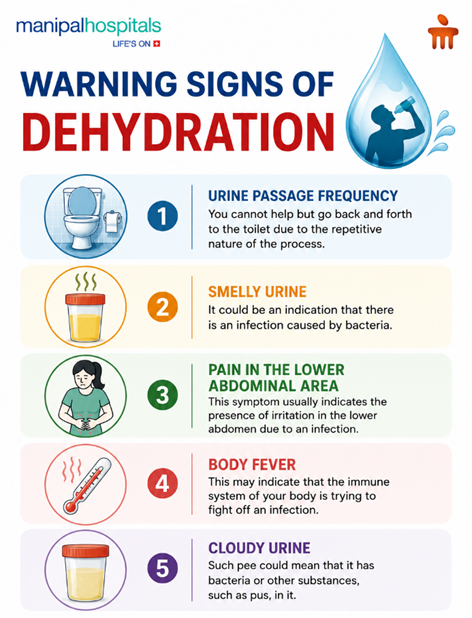
Warning Signs Include:
-
Urine passage frequency: You cannot help but go back and forth to the toilet due to the repetitive nature of the process.
-
Smelly Urine: It could be an indication that there is an infection caused by bacteria.
-
Pain in the lower abdominal area: This symptom usually indicates the presence of irritation in the lower abdomen due to an infection.
-
Body fever: This may indicate that the immune system of your body is trying to fight off an infection.
-
Cloudy urine: Such pee could mean that it has bacteria or other substances, such as pus, in it.
Children and older adults are especially vulnerable to dehydration complications.
How Much Water Does the Body Actually Need
There is no single "perfect" number because your needs change based on your size, the climate, and how active you are. However, standard health guidelines suggest aiming for:
-
Men: Roughly 3 to 3.7 liters a day.
-
Women: Roughly 2 to 2.7 liters a day.
If you are working out hard, lifting heavy items, or living in a hot area, you will need to increase these targets to balance out what you lose through sweat.
Spotting Dehydration in Kids
Children run out of fluids much faster than adults do. If your little one is down with a bug or running around in hot weather, keep a close eye out for these signs:
-
Dry, cracked lips and a dry mouth.
-
Crying but not actually producing any tears.
-
Fewer wet nappies or not going to the toilet as much as usual.
-
A sunken look around their eyes.
-
Seeming unusually sleepy, floppy, or just incredibly cranky.
If you notice these, start giving them small, frequent sips of water or a rehydration drink right away.
When Should You See a Doctor?
Mild dehydration is easily fixed by drinking water. However, you should contact a doctor or visit a clinic if you notice any of these warning signs:
-
Your urine stays dark and concentrated even after drinking plenty of water for a few hours.
-
You notice any pink, red, or dark blood in your pee.
-
Pain or a burning feeling persists every time you use the bathroom.
-
You develop a fever, severe chills, or uncontrollable vomiting that prevents you from keeping liquids down.
-
You feel severe weakness, confusion, or extreme dizziness.
For individuals experiencing severe symptoms or complications, professional medical centres can provide targeted support. Seeking medical attention or finding specialised treatment ensures you get quick access to therapies like IV fluids, electrolyte balance corrections, and swift screening for underlying kidney or urinary tract infections.
Conclusion
Understanding how dehydrated urine appears in terms of colour will allow you to detect when you are suffering from dehydration early on. Urine with a dark yellow or amber colour indicates dehydration. In addition to these signs, other symptoms of dehydration include fatigue, headaches, dizziness, and dry mouth.Professional dehydration treatment in Salem can determine the reasons for your symptoms and help you hydrate safely. Staying hydrated is the easiest way to ensure good health in general. If dehydration symptoms affect your urinary health, experts in nephrology at Manipal Hospitals can provide detailed evaluation and personalised care.
Frequently Asked Questions
The reason is that dehydration leads to a greater concentration of toxic compounds in urine, thus causing a strong odour and dark colour of the liquid because the volume of the body's water decreases.
Dehydration might cause decreased blood flow to the brain, leading to irritability, lack of focus, drowsiness, headaches, and impaired mental clarity.
Yes, morning urine tends to be darker since no drinking takes place overnight during sleep time.
Yes, dehydration causes increased concentration of mineral compounds in the urine, which may result in stone formation.
Indeed, it can. People tend to forget about thirst while spending a lot of time inside air-conditioned rooms.
Share this Article


Recent Blogs

When Does a Heart Condition Require a Pacemaker? A Patient's Guide
26 Jun 20269 Min Read
A normal heartbeat is something most people take for granted. It’s because under typical circumstances, the heart expands and contracts consistently throughout the day, ensuring that oxygen and vital nutrients reach every organ. However, when the internal electrical system responsible for managing this rhythm encounters an interruption, the body notices the impact almost immediately. You might experience a sudden wave of dizziness while standing up from a chair, feel unusually exhausted after climbing a short flight of stairs, or notice an irregular fluttering sensation in your chest. When the heart beats too slowly or is not well coordinated, daily life can be very unpredictable. In some situations, a small implantable medical device is frequently recommended to restore a regular rhythm for these electrical disturbances. Understanding who needs a pacemaker and how modern cardiac care treats these conditions can ease the unknowns and help you get a better idea of your treatment options. In this blog, we will discuss the specific medical reasons for an irregular rhythm and how this medical intervention supports long-term health.
Read NowUnderstanding the Biopsy Process: Purposes, Methods, and Patient Recovery
26 Jun 20268 Min Read
When you go for tests because of an unexplained lump, an ongoing change in your skin, or unusual blood test results, a doctor might suggest a tissue evaluation. Hearing that you need this type of medical test can make you feel anxious and leave you with many questions. However, it is a routine and foundational part of medical care that brings clear answers when imaging scans or general lab tests do not give a final conclusion. A recommendation for this test does not mean you have a severe condition like cancer. Doctors use it to check a wide range of health issues, including long-term inflammation, non-cancerous growths, and everyday tissue changes. This blog explains the test's purpose, common methods medical teams use, and what to expect before, during, and after your appointment.
Read NowSudden Seizures in Adulthood: Understanding Causes, Triggers, and Diagnostic Steps
26 Jun 20269 Min Read
Witnessing or experiencing a seizure for the very first time in adult life can be a profoundly unsettling event. For most people, seizures are mistakenly thought of as a condition that only begins during early childhood. When a seizure occurs suddenly in an adult who has never experienced any neurological issues before, it naturally raises immediate questions and concern for the family. It is natural to ask why it happened and what it means for the future. The good news is that a single seizure is not necessarily a sign of epilepsy, and many first-time seizures have a clear cause that can be treated or reversed. If you or someone close to you experiences a sudden episode, understanding what causes seizures in adults can help replace worry with clear, practical knowledge. This article explains the most common reasons a seizure might appear for the first time in adulthood, the triggers that can set one off, and the steps you need to take after such an event.
Read NowMale Fertility Guide: Recognising Low Sperm Count Symptoms and Treatment Options
26 Jun 20268 Min Read
When a couple faces difficulties conceiving, attention frequently turns to understanding fertility factors. A common factor in male fertility issues is a lower-than-average concentration of sperm in the semen, a condition medically known as oligospermia. Because reproductive health is a sensitive subject, many men hesitate to discuss it or feel anxious about what the condition means for their future family plans. A key point to understand is that having a lower sperm concentration does not mean conception is impossible; it simply means it may take more time and require targeted medical guidance. Many men do not realise there is an issue until they actively try to start a family. This blog covers how to identify hidden indicators, what biological factors contribute to the condition, and how modern medical care can help you navigate this reproductive challenge.
Read NowUnderstanding an Upper Endoscopy: A Practical Patient Guide to Comfort and Care
26 Jun 20268 Min Read
When a doctor recommends an upper gastrointestinal evaluation to look inside your digestive tract, the first question most people ask is: is endoscopy painful? It is completely natural to feel nervous before any medical test that involves inserting an instrument into your body. This anxiety is usually caused by a lack of clear information about what actually happens during the procedure. An upper endoscopy is a standard diagnostic test used to investigate persistent symptoms such as chronic heartburn, swallowing difficulties, unexplained nausea, or upper stomach pain. The Gastroenterology Department provides comprehensive evaluation and advanced diagnostic procedures for a wide range of digestive health conditions.Understanding how the equipment functions, how your comfort is managed, and what the recovery phase looks like can help remove your worries before your appointment.
Read NowStuck in an Endless Loop of Binge Eating? Let’s Take a Deep Dive
01 Jun 20267 Min Read
Is your stress making its way onto your plate? Do you often find yourself eating more than your body needs, only to feel bloated or sick to your stomach afterwards? If your answer is yes, you may be experiencing a binge eating disorder. If you are wondering what binge eating disorder is, it is a condition that causes you to compulsively eat large amounts of food, often very quickly and without control. Many people draw similarities between binge eating and other eating disorders, such as bulimia nervosa, which involve consuming large quantities of food followed by vomiting and excessive exercise to compensate. However, in binge eating disorder, individuals typically do not engage in purging or excessive physical activity. Instead, if they feel guilty or ashamed after a binge, they go through phases of severe food restriction. This often has the opposite effect, as it creates stronger urges to binge, leading to a repetitive cycle of binge eating. Over time, this cycle may contribute to physical health concerns such as obesity, diabetes, high blood pressure, and other metabolic complications that often require comprehensive care through the Internal Medicine Department.
Read NowDehydration Signs: Urine Colour Explained Simply
29 May 20268 Min Read
People rarely think about their pee until something feels wrong. However, the colour of your urine is like a real-time dashboard for your health. Depending on the shade, from a clear straw yellow to a deep amber, your body is telling you exactly how much water it needs. Changes in colour are usually the very first indicator that you are running low on fluids. Along with a darker shade, you might notice urine dehydration symptoms like a burning feeling when you go, dizziness, headaches, and a dry mouth. Symptoms related to dehydration and urine changes are often managed by the Nephrology department, which specialises in kidney and urinary health. People frequently ask things like: Can dehydration cause blood in urine? Does dehydration cause painful urination? Can dehydration cause frequent urination? The short answer is yes. Falling short on water can impact your urinary tract in ways you might not expect. This blog explains what to look for, how your urine color changes, and simple habits to stay properly hydrated.
Read NowHow to Get Rid of Piles: Effective Treatments & Home Remedies
29 May 20267 Min Read
Piles, also known as haemorrhoids, are a painful ailment experienced by millions of people across the world. It leads to pain, itching, inflammation, bleeding during bowel movements, and even discomfort while sitting down. While being quite harmless, piles could affect your daily life and might become an irritant if not treated properly. It's surprising how many people look for tips on getting rid of piles silently, embarrassed to discuss the problem openly. However, it's good news to know that there is hope, since there are ways to cure piles through changes in your lifestyle and some easy methods that could help alleviate the symptoms.Patients with piles can seek treatment through the Gastro Sciences department for expert evaluation and personalised care. This blog explains everything you need to know about piles, their symptoms, causes, home treatments, medical interventions, and how to prevent them from returning.
Read NowUTI During Pregnancy: Signs You Shouldn’t Ignore
29 May 20268 Min Read
Pregnancy turns your body completely upside down, bringing a whole wave of physical and hormonal changes. While most of these are just part of the journey, some changes are warning flags you shouldn't brush off. One of the most common issues to look out for is a urine infection in pregnancy. A urinary tract infection (UTI) happens when bacteria get into your bladder, urethra, or kidneys. The trouble with pregnancy is that it makes you much more likely to catch one. Because early signs of urine infection in pregnancy can be incredibly subtle, like a mild sting when you pee, a heavy ache in your belly, or needing the toilet every five minutes, it is effortless to assume it’s "just a pregnancy thing." But leaving an infection to clear up on its own can lead to real dangers for both you and your baby. The Urology department provides expert care for urine infections in pregnancy, ensuring timely diagnosis and safe treatment options.This blog explains the causes, symptoms, complications, diagnosis, and UTI treatment during pregnancy.
Read NowFirst Degree Heart Block Explained: Signs, Facts & Treatment
28 May 20268 Min Read
The heart does much more than simply pump blood; it relies on a carefully coordinated electrical system that controls every heartbeat. When these electrical signals slow down or become delayed, it can affect how efficiently the heart functions. One such condition is **first-degree heart block**, a mild but important heart rhythm abnormality that is commonly detected during routine cardiac evaluations. For many people, the diagnosis comes as a surprise because the condition often develops silently without obvious symptoms. However, while it is usually not life-threatening, understanding the condition is important because it can sometimes indicate underlying heart problems or increase the risk of future rhythm disturbances. Knowing the first-degree heart block symptoms, understanding the causes, and learning when medical care is necessary can help patients manage the condition with confidence. In this blog, we’ll explain everything you need to know, from symptoms and diagnosis to treatment and long-term management. If needed, early evaluation by the Department of Cardiology can help ensure accurate diagnosis and proper heart care.
Read Now