


How to Get Rid of Piles: Effective Treatments & Home Remedies
Reviewed by: Manipal Hospitals
Posted on
7 Min Read
Not sure what you’re looking for?
Get in touch with our representatives for help!
Contact UsPiles, also known as haemorrhoids, are a painful ailment experienced by millions of people across the world. It leads to pain, itching, inflammation, bleeding during bowel movements, and even discomfort while sitting down. While being quite harmless, piles could affect your daily life and might become an irritant if not treated properly.
It's surprising how many people look for tips on getting rid of piles silently, embarrassed to discuss the problem openly. However, it's good news to know that there is hope, since there are ways to cure piles through changes in your lifestyle and some easy methods that could help alleviate the symptoms.Patients with piles can seek treatment through the Gastro Sciences department for expert evaluation and personalised care.
This blog explains everything you need to know about piles, their symptoms, causes, home treatments, medical interventions, and how to prevent them from returning.
Understanding Piles: What Exactly Are They?
Piles are enlarged, swollen blood vessels located in the lower rectum or around the anus. They develop when the veins in this sensitive area are subjected to excessive pressure.
There are two major types of piles:
| Type of Piles |
Location |
Common Symptoms |
| Internal Piles |
Inside the rectum |
Painless bleeding, internal discomfort, prolapse |
| External Piles |
Around the anus |
Sharp pain, itching, swelling, severe irritation |
External piles are usually more painful because they involve the highly sensitive skin surrounding the anus. Many patients specifically search for how to get rid of external piles because they cause immediate, sharp discomfort when sitting, walking, or having a bowel movement.
What Actually Causes Piles?
Piles happen for a pretty simple reason: too much pressure on the blood vessels in your back passage. When the veins down there get squeezed or strained too much, they stretch out, swell up, and get irritated.
That extra pressure usually comes from a mix of your daily routine and physical things:
1. Bathroom & Gut Troubles
-
Constipation: Pushing and straining to pass hard stools forces a lot of blood into those veins, making them swell.
-
Not Enough Fibre: Skipping out on fruit, veg, and grains makes your stools hard and difficult to pass.
-
Diarrhoea: Going to the toilet constantly irritates and inflames the whole area.
2. Everyday Habits
-
Sitting Too Long: Spending hours sitting down—especially scrolling on your phone on the toilet—puts steady pressure on those pelvic veins.
-
Heavy Lifting: Lugging heavy objects around makes you tense your stomach muscles and pushes pressure straight down.
-
Not Moving Enough: Sitting around too much slows your digestion right down, which leads back to constipation.
3. Physical Factors
-
Pregnancy: The weight of the baby presses heavily on the pelvic veins, and pregnancy hormones make vein walls stretch easier.
-
Carrying Extra Weight: Being overweight puts constant, extra pressure on the lower part of your body.
-
Getting Older: As we get older, the tissue holding those veins in place naturally gets a bit weaker and slacker.
Early Signs You Should Not Ignore
Early diagnosis of symptoms can prevent complications
Common symptoms of piles
-
Bright red blood after passing stool
-
Pain or burning sensation during bowel movements
-
Swelling near the anus
-
Itching and irritation
-
Feeling of incomplete bowel emptying
-
Mucus discharge
-
Pain while sitting
If the bleeding is frequent or heavy, it is important to get medical attention to rule out other digestive conditions.
How to Get Rid of Piles Naturally at Home
Mild to moderate cases often improve without surgery. Wondering how to get rid of piles without surgery? Home care and lifestyle changes often provide significant relief.
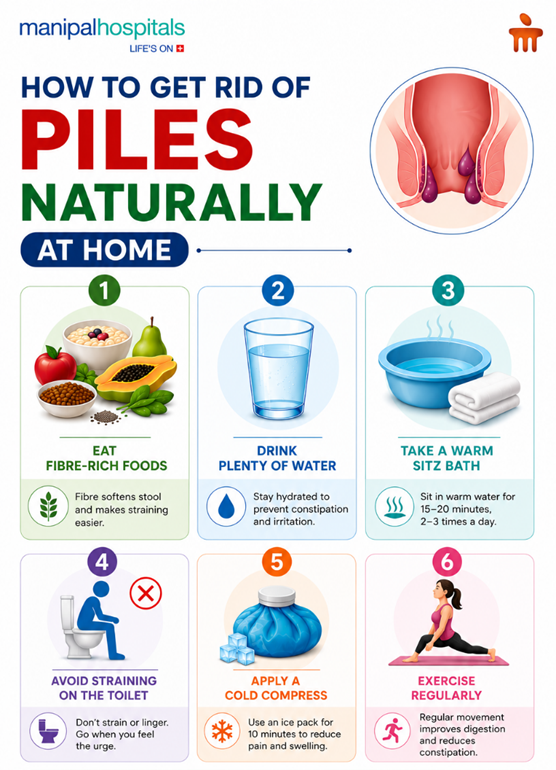
1. Include a Fibre-Rich Diet
Fibre softens stool and makes straining easier. Some fibre-rich foods include oats, brown rice, apples, pears, papaya, spinach, lentils, beans, and chia seeds. Doctors recommend 25-35 grams of fibre daily.
2. Drink Plenty of Water
Dehydration forces the colon to absorb water from your waste, making constipation worse and irritating existing haemorrhoids. Aim for 2 to 3 litres of fluids daily, including water, herbal teas, and clear broths. Avoid excessive alcohol and highly caffeinated drinks, which can dehydrate your system.
3. Warm Sitz Bath
A sitz bath is one of the most effective ways to experience immediate relief from pain and swelling. Fill a shallow basin or your bathtub with warm water and sit in it for 15–20 minutes, repeating 2–3 times a day. The warm water relaxes the sphincter muscles and improves localised blood circulation.
4. Avoid Straining on the Toilet
Forcing a bowel movement puts intense pressure on your rectal veins. Keep toilet trips short, avoid lingering with your phone, and never ignore the urge to go. Delaying only makes stools harder and much more difficult to pass later.
5. Apply a Cold Compress
An ice pack works great for numbing sharp pain and bringing down swelling. Just wrap it in a clean cloth and hold it gently against the area for 10 minutes. Never put bare ice straight onto your skin.
6. Exercise Regularly
Regular movement improves digestion and reduces constipation. Recommended activities include walking, yoga, swimming, and light stretching. Even 30 minutes of walking daily can help improve symptoms.
Best Foods for Piles Recovery
Your diet dictates the texture of your stool, making it the ultimate tool for a natural cure.
-
Foods to Enjoy: Fresh fruits (with skins), cruciferous vegetables, whole grains, lentils, natural yoghurt (for probiotics), nuts, and seeds.
-
Foods to Strictly Limit: Highly spicy dishes, deep-fried foods, heavily processed snacks, excessive red meat, and refined flour (like white bread and pastries).
How to Get Rid of External Piles Safely
Because external piles interact constantly with clothing and movement, they require specific attention. If you want to know how to remove external piles, your approach must scale with the severity of the condition:
-
Mild External Piles: These can generally be managed at home using targeted over-the-counter soothing ointments, sitz baths, meticulous hygiene (using damp wipes instead of dry paper), and a high-fibre diet.
-
Severe External Piles: If a blood clot forms inside an external haemorrhoid (known as a thrombosed haemorrhoid), it can become incredibly painful and feel like a hard lump. This requires immediate medical evaluation, as a doctor may need to perform a simple, quick incision to drain the clot and provide instant relief.
Medical Treatments for Piles
Home remedies may not always work, especially in advanced stages. Medical evaluation becomes important if symptoms persist.
Non-Surgical Treatments
People often ask about how to get rid of piles. There are some minimally invasive options.
Common Non-Surgical Procedures
|
Treatment |
How It Works |
Recovery Time |
|
Rubber Band Ligation |
A small band cuts off the blood supply to the pile, causing it to drop off naturally. |
Few days |
|
Sclerotherapy |
A chemical solution is injected to shrink the swollen blood vessels. |
Minimal (1–2 days) |
|
Infrared Coagulation |
Infrared light/heat is used to scar and shrink internal pile tissue. |
Quick |
|
Laser Treatment |
A precise laser beam vaporizes and shrinks the swollen tissues. |
Fast recovery with minimal pain |
These treatments are less painful than traditional surgery.
When Is Surgery Needed?
Surgical intervention is typically reserved for advanced or unresponsive cases, such as:
-
Very Large Piles: Advanced internal piles that remain permanently prolapsed (protruding outside the anus).
-
Severe, Continuous Bleeding: Bleeding that cannot be controlled through diet or lifestyle modifications.
-
Recurring Piles: Cases that continually return and disrupt your quality of life.
-
Thrombosed Haemorrhoids: Severe, painful blood clots that cannot be resolved with conservative care.
Common Surgery Choices:
-
Haemorrhoidectomy: The traditional surgical removal of excess hemorrhoidal tissue. It is definitive and highly effective for severe cases.
-
Stapled Haemorrhoidopexy: A modern procedure where prolapsed tissue is safely stapled back into its normal anatomical position, reducing blood flow to the piles.
Daily Habits That Prevent Piles
Prevention is always more comfortable than treatment. Protect your vascular health with these daily habits:
-
Maintain Regular Bowel Movements: Keep your digestive routine steady by staying consistent with your diet.
-
Stay Active: Avoid sitting for hours at a time. If you have a desk job, stand up and stretch every hour to relieve pressure points.
-
Avoid Heavy Lifting Strains: Use your legs, not your back and abdomen, if you must lift heavy items.
-
Maintain a Healthy Weight: Reducing excess body weight directly lowers the pressure on your pelvic veins.
-
Ditch the Phone in the Bathroom: Avoid reading or browsing your phone while sitting on the toilet, as this unknowingly prolongs straining time.
When Should You See a Doctor?
Do not hesitate to seek professional healthcare advice if you experience:
-
Heavy or continuous bleeding from your back passage.
-
Severe, throbbing pain that makes it impossible to sit or walk.
-
Long-term constipation that doesn't get better after changing your diet.
-
A fever you can't explain, alongside swelling or discharge down there.
-
A large, firm lump that you can't gently push back inside.
Conclusion
Living with piles can be disruptive, but the condition is highly treatable. While mild cases recover well with early dietary and lifestyle changes, modern medical interventions ensure that severe cases are handled quickly, safely, and with minimal downtime.
Exceptional clinical care is available locally at Manipal Hospitals, meaning you can access advanced medical piles treatment near Salem without the need to travel far. Their specialised departments provide comprehensive care, offering everything from non-surgical therapies to advanced laser procedures.Consulting a colorectal specialist early is the best way to secure a personalised treatment plan and achieve long-term relief.
Frequently Asked Questions
Yes, mild piles often improve naturally with fibre-rich diets, hydration, regular exercise, proper toilet habits, and avoiding constipation consistently.
Walking comfortably heals piles. Walking aids digestion, prevents constipation, improves blood circulation, and also decreases pressure on the rectal veins.
Nighttime itching is worse because there are fewer distractions to occupy the mind and take it away from the irritation. Sweating and sitting for long periods may worsen the discomfort temporarily.
Stress can affect digestion and increase the risk of constipation. It can also lead to unhealthy eating habits. All of these factors can indirectly worsen the discomfort of piles and bowel irregularities to a great extent.
Sleeping on your side relieves pressure on swollen veins, increases comfort, and may reduce irritation from prolonged direct pressure.
Share this Article


Recent Blogs

When Does a Heart Condition Require a Pacemaker? A Patient's Guide
26 Jun 20269 Min Read
A normal heartbeat is something most people take for granted. It’s because under typical circumstances, the heart expands and contracts consistently throughout the day, ensuring that oxygen and vital nutrients reach every organ. However, when the internal electrical system responsible for managing this rhythm encounters an interruption, the body notices the impact almost immediately. You might experience a sudden wave of dizziness while standing up from a chair, feel unusually exhausted after climbing a short flight of stairs, or notice an irregular fluttering sensation in your chest. When the heart beats too slowly or is not well coordinated, daily life can be very unpredictable. In some situations, a small implantable medical device is frequently recommended to restore a regular rhythm for these electrical disturbances. Understanding who needs a pacemaker and how modern cardiac care treats these conditions can ease the unknowns and help you get a better idea of your treatment options. In this blog, we will discuss the specific medical reasons for an irregular rhythm and how this medical intervention supports long-term health.
Read NowUnderstanding the Biopsy Process: Purposes, Methods, and Patient Recovery
26 Jun 20268 Min Read
When you go for tests because of an unexplained lump, an ongoing change in your skin, or unusual blood test results, a doctor might suggest a tissue evaluation. Hearing that you need this type of medical test can make you feel anxious and leave you with many questions. However, it is a routine and foundational part of medical care that brings clear answers when imaging scans or general lab tests do not give a final conclusion. A recommendation for this test does not mean you have a severe condition like cancer. Doctors use it to check a wide range of health issues, including long-term inflammation, non-cancerous growths, and everyday tissue changes. This blog explains the test's purpose, common methods medical teams use, and what to expect before, during, and after your appointment.
Read NowSudden Seizures in Adulthood: Understanding Causes, Triggers, and Diagnostic Steps
26 Jun 20269 Min Read
Witnessing or experiencing a seizure for the very first time in adult life can be a profoundly unsettling event. For most people, seizures are mistakenly thought of as a condition that only begins during early childhood. When a seizure occurs suddenly in an adult who has never experienced any neurological issues before, it naturally raises immediate questions and concern for the family. It is natural to ask why it happened and what it means for the future. The good news is that a single seizure is not necessarily a sign of epilepsy, and many first-time seizures have a clear cause that can be treated or reversed. If you or someone close to you experiences a sudden episode, understanding what causes seizures in adults can help replace worry with clear, practical knowledge. This article explains the most common reasons a seizure might appear for the first time in adulthood, the triggers that can set one off, and the steps you need to take after such an event.
Read NowMale Fertility Guide: Recognising Low Sperm Count Symptoms and Treatment Options
26 Jun 20268 Min Read
When a couple faces difficulties conceiving, attention frequently turns to understanding fertility factors. A common factor in male fertility issues is a lower-than-average concentration of sperm in the semen, a condition medically known as oligospermia. Because reproductive health is a sensitive subject, many men hesitate to discuss it or feel anxious about what the condition means for their future family plans. A key point to understand is that having a lower sperm concentration does not mean conception is impossible; it simply means it may take more time and require targeted medical guidance. Many men do not realise there is an issue until they actively try to start a family. This blog covers how to identify hidden indicators, what biological factors contribute to the condition, and how modern medical care can help you navigate this reproductive challenge.
Read NowUnderstanding an Upper Endoscopy: A Practical Patient Guide to Comfort and Care
26 Jun 20268 Min Read
When a doctor recommends an upper gastrointestinal evaluation to look inside your digestive tract, the first question most people ask is: is endoscopy painful? It is completely natural to feel nervous before any medical test that involves inserting an instrument into your body. This anxiety is usually caused by a lack of clear information about what actually happens during the procedure. An upper endoscopy is a standard diagnostic test used to investigate persistent symptoms such as chronic heartburn, swallowing difficulties, unexplained nausea, or upper stomach pain. The Gastroenterology Department provides comprehensive evaluation and advanced diagnostic procedures for a wide range of digestive health conditions.Understanding how the equipment functions, how your comfort is managed, and what the recovery phase looks like can help remove your worries before your appointment.
Read NowStuck in an Endless Loop of Binge Eating? Let’s Take a Deep Dive
01 Jun 20267 Min Read
Is your stress making its way onto your plate? Do you often find yourself eating more than your body needs, only to feel bloated or sick to your stomach afterwards? If your answer is yes, you may be experiencing a binge eating disorder. If you are wondering what binge eating disorder is, it is a condition that causes you to compulsively eat large amounts of food, often very quickly and without control. Many people draw similarities between binge eating and other eating disorders, such as bulimia nervosa, which involve consuming large quantities of food followed by vomiting and excessive exercise to compensate. However, in binge eating disorder, individuals typically do not engage in purging or excessive physical activity. Instead, if they feel guilty or ashamed after a binge, they go through phases of severe food restriction. This often has the opposite effect, as it creates stronger urges to binge, leading to a repetitive cycle of binge eating. Over time, this cycle may contribute to physical health concerns such as obesity, diabetes, high blood pressure, and other metabolic complications that often require comprehensive care through the Internal Medicine Department.
Read NowDehydration Signs: Urine Colour Explained Simply
29 May 20268 Min Read
People rarely think about their pee until something feels wrong. However, the colour of your urine is like a real-time dashboard for your health. Depending on the shade, from a clear straw yellow to a deep amber, your body is telling you exactly how much water it needs. Changes in colour are usually the very first indicator that you are running low on fluids. Along with a darker shade, you might notice urine dehydration symptoms like a burning feeling when you go, dizziness, headaches, and a dry mouth. Symptoms related to dehydration and urine changes are often managed by the Nephrology department, which specialises in kidney and urinary health. People frequently ask things like: Can dehydration cause blood in urine? Does dehydration cause painful urination? Can dehydration cause frequent urination? The short answer is yes. Falling short on water can impact your urinary tract in ways you might not expect. This blog explains what to look for, how your urine color changes, and simple habits to stay properly hydrated.
Read NowHow to Get Rid of Piles: Effective Treatments & Home Remedies
29 May 20267 Min Read
Piles, also known as haemorrhoids, are a painful ailment experienced by millions of people across the world. It leads to pain, itching, inflammation, bleeding during bowel movements, and even discomfort while sitting down. While being quite harmless, piles could affect your daily life and might become an irritant if not treated properly. It's surprising how many people look for tips on getting rid of piles silently, embarrassed to discuss the problem openly. However, it's good news to know that there is hope, since there are ways to cure piles through changes in your lifestyle and some easy methods that could help alleviate the symptoms.Patients with piles can seek treatment through the Gastro Sciences department for expert evaluation and personalised care. This blog explains everything you need to know about piles, their symptoms, causes, home treatments, medical interventions, and how to prevent them from returning.
Read NowUTI During Pregnancy: Signs You Shouldn’t Ignore
29 May 20268 Min Read
Pregnancy turns your body completely upside down, bringing a whole wave of physical and hormonal changes. While most of these are just part of the journey, some changes are warning flags you shouldn't brush off. One of the most common issues to look out for is a urine infection in pregnancy. A urinary tract infection (UTI) happens when bacteria get into your bladder, urethra, or kidneys. The trouble with pregnancy is that it makes you much more likely to catch one. Because early signs of urine infection in pregnancy can be incredibly subtle, like a mild sting when you pee, a heavy ache in your belly, or needing the toilet every five minutes, it is effortless to assume it’s "just a pregnancy thing." But leaving an infection to clear up on its own can lead to real dangers for both you and your baby. The Urology department provides expert care for urine infections in pregnancy, ensuring timely diagnosis and safe treatment options.This blog explains the causes, symptoms, complications, diagnosis, and UTI treatment during pregnancy.
Read NowFirst Degree Heart Block Explained: Signs, Facts & Treatment
28 May 20268 Min Read
The heart does much more than simply pump blood; it relies on a carefully coordinated electrical system that controls every heartbeat. When these electrical signals slow down or become delayed, it can affect how efficiently the heart functions. One such condition is **first-degree heart block**, a mild but important heart rhythm abnormality that is commonly detected during routine cardiac evaluations. For many people, the diagnosis comes as a surprise because the condition often develops silently without obvious symptoms. However, while it is usually not life-threatening, understanding the condition is important because it can sometimes indicate underlying heart problems or increase the risk of future rhythm disturbances. Knowing the first-degree heart block symptoms, understanding the causes, and learning when medical care is necessary can help patients manage the condition with confidence. In this blog, we’ll explain everything you need to know, from symptoms and diagnosis to treatment and long-term management. If needed, early evaluation by the Department of Cardiology can help ensure accurate diagnosis and proper heart care.
Read Now