


Tips To Control Asthma During the Rainy Season
Reviewed by: Dr. Elakya
Posted on
6 Min Read

Not sure what you’re looking for?
Get in touch with our representatives for help!
Contact UsBreathing problems in the rainy season are a common concern for people with asthma, a type of chronic respiratory disease, causing inflammation and resistance of the airways. Asthma during rainy seasons flares up mostly due to highly humid weather conditions, growth of moulds, and fluctuations in temperature, making it challenging for the affected. Preventive measures should be taken to control asthma and ensure it is safe during these months. In this blog, let us discuss asthma prevention tips to keep your symptoms in check, even when the weather isn't on your side.
Why Asthma Flares Up During the Rainy Season?
During the rainy season, various environmental causes exacerbate asthma symptoms. There is a sudden increase in humidity along with the growth of mould and mildew – which leads to poor air quality. In asthmatics, irritation from cold air, combined with pollen levels, can give room to symptoms like continuous coughing, wheezing, and shortness of breath. An individual usually suffers from viral infections, such as a common cold or flu, during this period, but for those suffering from asthma, infections can worsen their condition.
The better you understand how these factors interact with your body, the better care you will take of yourself. This season demands special care and caution to prevent severe asthma attacks. Our top pulmonologist in Salem can help you guide your asthma care.
Top Tips to Control Asthma During the Rainy Season
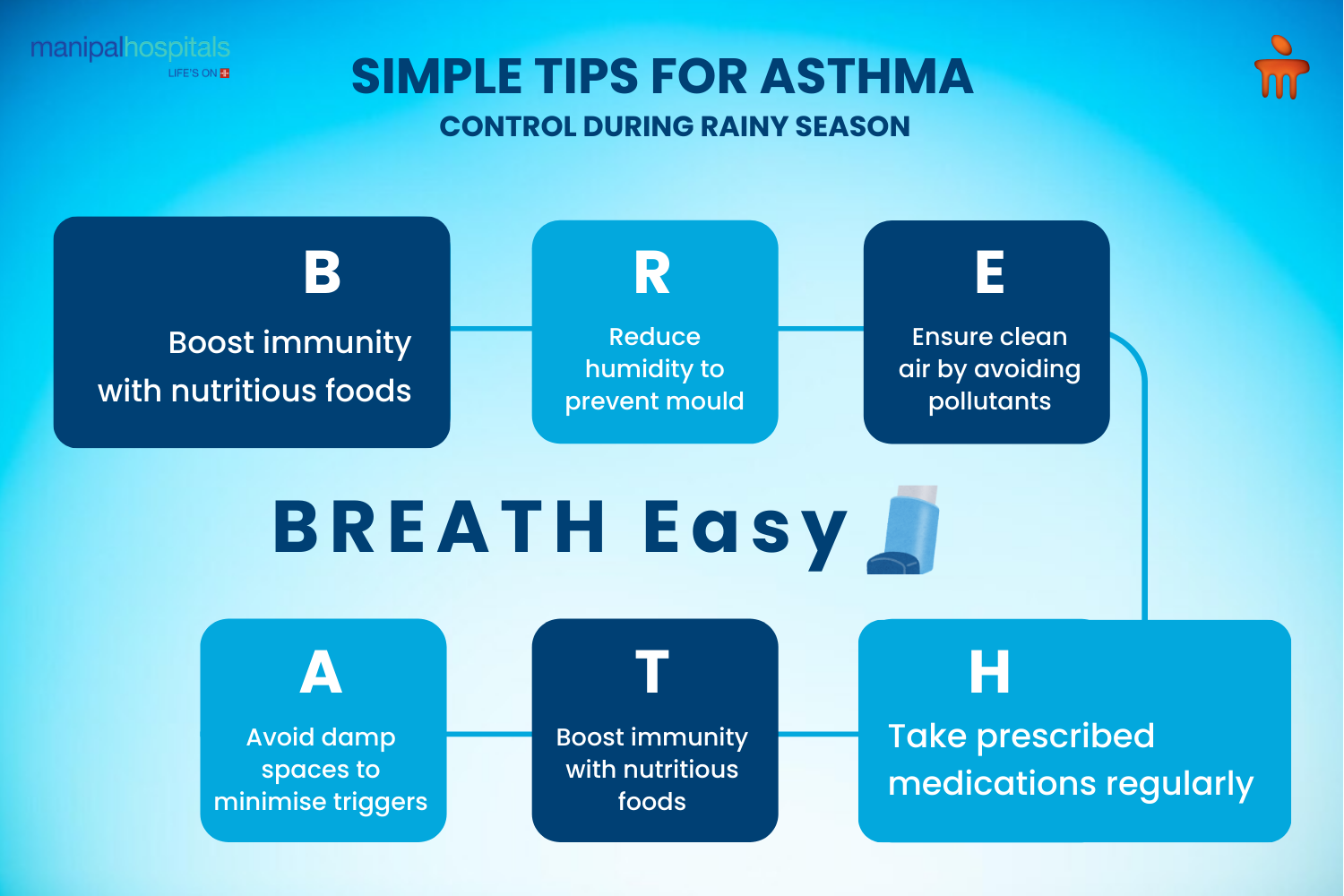
1. Keep Indoor Air Clean and Dry
Rainy weather contributes to a higher indoor moisture level. Mould, mildew, and dust mites find the ideal atmosphere to grow. All these allergens are known asthmatic triggers. Here's what you can do to minimize the impact of these triggers and control your asthma effectively:
-
Maintain indoor humidity levels of 30-50% using a dehumidifier.
-
Clean often damp areas, like bathrooms and kitchens, regularly.
-
Do not hang wet clothes inside the home, as this increases humidity.
-
All rooms need to be well-ventilated so that the air remains fresh and moistures are circulated out.
2. Monitor the Weather and Stay Prepared
Such days with rain often have tremendous fluctuations in temperature and high counts of pollen, which may trigger asthma.
-
Monitor weather forecasts, particularly when high levels of humidity can be expected.
-
Always carry your asthma medications and inhalers.
-
Try to keep yourself indoors on a rainy day if you are feeling any kind of asthma attack.
3. Use Your Medication Regularly
Asthma control depends on regular use of medication. Do not omit preventive medications even when you are feeling well.
-
Use inhalers or prescribed long-term medications as instructed by your doctor.
-
It may be necessary that you have to alter your dosage when the rainy season arrives. Ask your doctor if this might likely be so.
-
Carry your rescue inhaler with you at all times and in case of sudden asthma attacks.
4. Limit Exposure to Allergens
Allergens like pollen, dust mites, and mould are abundant during the rainy season. Follow the below asthma prevention tips to minimize your exposure:
-
Avoid outdoor activities when pollen counts are high, or the air is too humid.
-
Wear a face mask when stepping outside to prevent inhalation of allergens.
-
Wash your bedding frequently in hot water to kill dust mites.
-
Keep windows and doors closed, especially on humid or rainy days.
5. Stay Active but Indoors
Physical exercise can improve lung function, but during the rainy season, it’s safer to exercise indoors.
-
Opt for low-impact exercises such as yoga, which focuses on breathing techniques and helps build lung capacity.
-
Walking or cycling indoors in a gym can also be beneficial.
-
Always warm up before exercising and use your inhaler if needed before starting your routine.
6. Manage Stress and Anxiety
Asthma and stress often go hand in hand. The rainy season can increase anxiety due to the uncertainty of weather and worsening symptoms.
-
Practice deep breathing exercises daily to improve lung function and reduce anxiety.
-
Consider meditation or mindfulness techniques to manage mental health.
-
Get adequate sleep, as rest strengthens your immune system and reduces stress.
7. Get Vaccinated
The rainy season often brings an increase in respiratory infections, such as the flu, which can exacerbate asthma symptoms.
-
Get vaccinated against the flu before the rainy season starts.
-
Maintain proper hygiene by washing your hands regularly.
-
Avoid close contact with anyone who has flu-like symptoms.
8. Follow a Healthy Diet
Your diet plays a significant role in maintaining overall health, which indirectly supports asthma control.
-
Eat foods rich in omega-3 fatty acids, such as fish, walnuts, and flaxseeds. These foods are known to reduce inflammation in the body.
-
Include a variety of fruits and vegetables rich in antioxidants, as they support immune function.
-
Stay hydrated to ensure that your respiratory system functions optimally.
9. Regularly Check Your Peak Flow
Monitoring your lung function is an effective way to understand how well-controlled your asthma is. This becomes particularly important during the rainy season.
-
Use a peak flow meter to measure your breathing capacity daily.
-
Record your readings and consult your doctor if you notice any decline in your breathing levels.
-
Adjust your medication based on your doctor’s advice if your peak flow is consistently lower than usual.
10. Keep Your Home Allergy-Proof
To reduce the impact of asthma triggers indoors:
-
Install air purifiers with HEPA filters to remove allergens from the air.
-
Use allergen-proof covers on pillows and mattresses to reduce dust mites.
-
Regularly vacuum carpets and rugs using a vacuum cleaner with a HEPA filter to trap dust and allergens.
-
Avoid keeping houseplants that may contribute to mould growth indoors.
Consult our pulmonology hospital in Salem if you are experiencing symptoms of asthma.
Conclusion
Being prepared and taking preventive measures during the rainy season is pertinent to control asthma. By keeping your area clean, reducing contact with allergens, and being compliant with the medication you're prescribed, you can prevent an asthma attack from happening. A healthy lifestyle accompanied by such asthma prevention tips will ensure you enjoy the rainy season without compromising your health.
Book an appointment with our top pulmonologist in Salem for a comprehensive asthma care plan.
Frequently Asked Questions
Breathing problems in the rainy season are common for asthmatics. But, you can still exercise outdoors during the day times. When humidity and allergens are high, you can carry on with your workouts indoors. Ensure you use your inhaler before exercising and monitor your asthma symptoms.
No, you can use air conditioning, but make sure the filters are clean. Air conditioners help remove humidity and allergens, improving indoor air quality.
Ensure your child follows their prescribed asthma treatment, avoids known triggers, and carries their inhaler. Keep their environment clean, dry, and allergen-free.
Share this Article


Similar Blogs

Understanding an Upper Endoscopy: A Practical Patient Guide to Comfort and Care
26 Jun 20268 Min Read
When a doctor recommends an upper gastrointestinal evaluation to look inside your digestive tract, the first question most people ask is: is endoscopy painful? It is completely natural to feel nervous before any medical test that involves inserting an instrument into your body. This anxiety is usually caused by a lack of clear information about what actually happens during the procedure. An upper endoscopy is a standard diagnostic test used to investigate persistent symptoms such as chronic heartburn, swallowing difficulties, unexplained nausea, or upper stomach pain. The Gastroenterology Department provides comprehensive evaluation and advanced diagnostic procedures for a wide range of digestive health conditions.Understanding how the equipment functions, how your comfort is managed, and what the recovery phase looks like can help remove your worries before your appointment.
Read NowStuck in an Endless Loop of Binge Eating? Let’s Take a Deep Dive
01 Jun 20267 Min Read
Is your stress making its way onto your plate? Do you often find yourself eating more than your body needs, only to feel bloated or sick to your stomach afterwards? If your answer is yes, you may be experiencing a binge eating disorder. If you are wondering what binge eating disorder is, it is a condition that causes you to compulsively eat large amounts of food, often very quickly and without control. Many people draw similarities between binge eating and other eating disorders, such as bulimia nervosa, which involve consuming large quantities of food followed by vomiting and excessive exercise to compensate. However, in binge eating disorder, individuals typically do not engage in purging or excessive physical activity. Instead, if they feel guilty or ashamed after a binge, they go through phases of severe food restriction. This often has the opposite effect, as it creates stronger urges to binge, leading to a repetitive cycle of binge eating. Over time, this cycle may contribute to physical health concerns such as obesity, diabetes, high blood pressure, and other metabolic complications that often require comprehensive care through the Internal Medicine Department.
Read NowHow to Get Rid of Piles: Effective Treatments & Home Remedies
29 May 20267 Min Read
Piles, also known as haemorrhoids, are a painful ailment experienced by millions of people across the world. It leads to pain, itching, inflammation, bleeding during bowel movements, and even discomfort while sitting down. While being quite harmless, piles could affect your daily life and might become an irritant if not treated properly. It's surprising how many people look for tips on getting rid of piles silently, embarrassed to discuss the problem openly. However, it's good news to know that there is hope, since there are ways to cure piles through changes in your lifestyle and some easy methods that could help alleviate the symptoms.Patients with piles can seek treatment through the Gastro Sciences department for expert evaluation and personalised care. This blog explains everything you need to know about piles, their symptoms, causes, home treatments, medical interventions, and how to prevent them from returning.
Read NowWhat Causes Pain in the Right Side of Your Stomach? A Complete Guide
03 Apr 20268 Min Read
Most people ignore abdominal discomfort until it starts interfering with daily life. A dull ache after a heavy meal or a sudden sharp sensation can feel harmless at first. Yet, pain in the right side of the stomach is not something that should always be brushed aside. While it may sometimes settle quickly, persistent or recurring pain may indicate an underlying problem that needs your attention. What makes it tricky is that the right side of the abdomen contains several important organs. The liver, gallbladder, appendix, and parts of the intestine all sit in this region. Each of them can trigger symptoms that feel quite similar. That is why understanding the right side stomach pain reason is not always straightforward. In this blog, we will look at why right-sided stomach pain happens, how to differentiate between pain in the upper right side of the stomach and pain in the lower right side of the stomach, and when to seek stomach pain treatment in Salem.
Read NowUnderstanding Myoclonic Seizures: A Parent's Essential Guide to Childhood Muscle Jerks and Care
31 Mar 20266 Min Read
As a parent, witnessing your child experience sudden, involuntary muscle jerks can be a deeply alarming experience. These brief, shock-like movements might occur in a single muscle or group of muscles, often leading to immediate concern and questions about your child's health. While some jerks, like hypnic jerks during sleep, are normal, others can indicate an underlying neurological condition known as myoclonic seizures. Understanding these movements, their causes, symptoms, and available treatments is crucial for ensuring your child receives the best possible care.
Read NowUnderstanding IBS: Symptoms, triggers and Daily Management
27 Feb 20267 Min Read
Have you been noticing belly pain after meals, bloating that won’t quit, or alternating constipation and diarrhoea? Those are the kinds of signs that make you ask whether this is just stress, something you ate, or irritable bowel syndrome (IBS). Although IBS isn’t life-threatening, it affects daily life and comfort, and knowing how to spot the pattern and manage it makes a big difference. Irritable bowel syndrome is a functional gut disorder where the gut doesn’t behave normally: there is pain, changes in bowel habits, and a range of other symptoms without a clear structural disease. This article describes common signs, likely causes, typical triggers, and practical approaches to care. It explains how screening and simple tests support an accurate IBS diagnosis, which in turn informs effective IBS management.
Read NowHow to Increase Baby Weight Safely: Tips for Healthy Growth
27 Feb 20268 Min Read
Will your baby hit those healthy growth milestones at the right time? Seeing your child grow is one of the best parts of being a parent. Every giggle, rolling over, and achievement feels rewarding and reassuring. Parents often wonder how to increase baby weight and how much the baby's weight should be. Many parents seek medical advice for safe weight gain tips for their babies. This blog offers healthy, evidence-based tips to help your baby gain weight safely. It covers pregnancy, fetal development during pregnancy, birth, and the newborn stage.
Read NowUnderstanding Gestational Diabetes: Symptoms, Causes, and Care
27 Feb 20267 Min Read
Could pregnancy bring unexpected changes to blood sugar levels, even when everything else seems normal? Gestational diabetes is a condition that develops only during pregnancy and often shows no warning signs. Early identification matters because it affects both mother and baby, and appropriate care makes outcomes far better. This article explains the condition in straightforward language so readers understand screening, common signs, likely causes, the range of treatment options, and dietary steps that support safe glucose control.
Read NowWater in the Lungs (Pulmonary Edema): Symptoms, Causes, and Treatment
18 Feb 20266 Min Read
Could unexplained breathing difficulty be a warning sign of a serious lung condition? Breathing is usually effortless, but difficulty breathing can signal serious health problems. Sudden trouble breathing, a heavy feeling in the chest, or waking up gasping for air can be concerning. Pulmonary edema, also known as 'water in the lungs,' is a serious condition that may cause these symptoms. In this blog post, we’ll explain what pulmonary edema is, how to recognize its symptoms, the most common causes, and the latest treatment options.
Read NowIntestinal Obstruction Explained: Causes and Modern Treatment Approaches
17 Feb 20267 Min Read
What should you do if abdominal pain, vomiting, and increasing bloating appear and do not settle? Intestinal obstruction is a common and potentially serious problem in which passage through the small or large bowel is partially or completely blocked. Early recognition matters because some blockages can lead to loss of blood supply to the bowel and tissue death. In this blog, we will look at what causes intestinal obstruction and how doctors treat it today.
Read NowRecent Blogs
When Does a Heart Condition Require a Pacemaker? A Patient's Guide
26 Jun 20269 Min Read
A normal heartbeat is something most people take for granted. It’s because under typical circumstances, the heart expands and contracts consistently throughout the day, ensuring that oxygen and vital nutrients reach every organ. However, when the internal electrical system responsible for managing this rhythm encounters an interruption, the body notices the impact almost immediately. You might experience a sudden wave of dizziness while standing up from a chair, feel unusually exhausted after climbing a short flight of stairs, or notice an irregular fluttering sensation in your chest. When the heart beats too slowly or is not well coordinated, daily life can be very unpredictable. In some situations, a small implantable medical device is frequently recommended to restore a regular rhythm for these electrical disturbances. Understanding who needs a pacemaker and how modern cardiac care treats these conditions can ease the unknowns and help you get a better idea of your treatment options. In this blog, we will discuss the specific medical reasons for an irregular rhythm and how this medical intervention supports long-term health.
Read NowUnderstanding the Biopsy Process: Purposes, Methods, and Patient Recovery
26 Jun 20268 Min Read
When you go for tests because of an unexplained lump, an ongoing change in your skin, or unusual blood test results, a doctor might suggest a tissue evaluation. Hearing that you need this type of medical test can make you feel anxious and leave you with many questions. However, it is a routine and foundational part of medical care that brings clear answers when imaging scans or general lab tests do not give a final conclusion. A recommendation for this test does not mean you have a severe condition like cancer. Doctors use it to check a wide range of health issues, including long-term inflammation, non-cancerous growths, and everyday tissue changes. This blog explains the test's purpose, common methods medical teams use, and what to expect before, during, and after your appointment.
Read NowSudden Seizures in Adulthood: Understanding Causes, Triggers, and Diagnostic Steps
26 Jun 20269 Min Read
Witnessing or experiencing a seizure for the very first time in adult life can be a profoundly unsettling event. For most people, seizures are mistakenly thought of as a condition that only begins during early childhood. When a seizure occurs suddenly in an adult who has never experienced any neurological issues before, it naturally raises immediate questions and concern for the family. It is natural to ask why it happened and what it means for the future. The good news is that a single seizure is not necessarily a sign of epilepsy, and many first-time seizures have a clear cause that can be treated or reversed. If you or someone close to you experiences a sudden episode, understanding what causes seizures in adults can help replace worry with clear, practical knowledge. This article explains the most common reasons a seizure might appear for the first time in adulthood, the triggers that can set one off, and the steps you need to take after such an event.
Read NowMale Fertility Guide: Recognising Low Sperm Count Symptoms and Treatment Options
26 Jun 20268 Min Read
When a couple faces difficulties conceiving, attention frequently turns to understanding fertility factors. A common factor in male fertility issues is a lower-than-average concentration of sperm in the semen, a condition medically known as oligospermia. Because reproductive health is a sensitive subject, many men hesitate to discuss it or feel anxious about what the condition means for their future family plans. A key point to understand is that having a lower sperm concentration does not mean conception is impossible; it simply means it may take more time and require targeted medical guidance. Many men do not realise there is an issue until they actively try to start a family. This blog covers how to identify hidden indicators, what biological factors contribute to the condition, and how modern medical care can help you navigate this reproductive challenge.
Read NowUnderstanding an Upper Endoscopy: A Practical Patient Guide to Comfort and Care
26 Jun 20268 Min Read
When a doctor recommends an upper gastrointestinal evaluation to look inside your digestive tract, the first question most people ask is: is endoscopy painful? It is completely natural to feel nervous before any medical test that involves inserting an instrument into your body. This anxiety is usually caused by a lack of clear information about what actually happens during the procedure. An upper endoscopy is a standard diagnostic test used to investigate persistent symptoms such as chronic heartburn, swallowing difficulties, unexplained nausea, or upper stomach pain. The Gastroenterology Department provides comprehensive evaluation and advanced diagnostic procedures for a wide range of digestive health conditions.Understanding how the equipment functions, how your comfort is managed, and what the recovery phase looks like can help remove your worries before your appointment.
Read NowStuck in an Endless Loop of Binge Eating? Let’s Take a Deep Dive
01 Jun 20267 Min Read
Is your stress making its way onto your plate? Do you often find yourself eating more than your body needs, only to feel bloated or sick to your stomach afterwards? If your answer is yes, you may be experiencing a binge eating disorder. If you are wondering what binge eating disorder is, it is a condition that causes you to compulsively eat large amounts of food, often very quickly and without control. Many people draw similarities between binge eating and other eating disorders, such as bulimia nervosa, which involve consuming large quantities of food followed by vomiting and excessive exercise to compensate. However, in binge eating disorder, individuals typically do not engage in purging or excessive physical activity. Instead, if they feel guilty or ashamed after a binge, they go through phases of severe food restriction. This often has the opposite effect, as it creates stronger urges to binge, leading to a repetitive cycle of binge eating. Over time, this cycle may contribute to physical health concerns such as obesity, diabetes, high blood pressure, and other metabolic complications that often require comprehensive care through the Internal Medicine Department.
Read NowDehydration Signs: Urine Colour Explained Simply
29 May 20268 Min Read
People rarely think about their pee until something feels wrong. However, the colour of your urine is like a real-time dashboard for your health. Depending on the shade, from a clear straw yellow to a deep amber, your body is telling you exactly how much water it needs. Changes in colour are usually the very first indicator that you are running low on fluids. Along with a darker shade, you might notice urine dehydration symptoms like a burning feeling when you go, dizziness, headaches, and a dry mouth. Symptoms related to dehydration and urine changes are often managed by the Nephrology department, which specialises in kidney and urinary health. People frequently ask things like: Can dehydration cause blood in urine? Does dehydration cause painful urination? Can dehydration cause frequent urination? The short answer is yes. Falling short on water can impact your urinary tract in ways you might not expect. This blog explains what to look for, how your urine color changes, and simple habits to stay properly hydrated.
Read NowHow to Get Rid of Piles: Effective Treatments & Home Remedies
29 May 20267 Min Read
Piles, also known as haemorrhoids, are a painful ailment experienced by millions of people across the world. It leads to pain, itching, inflammation, bleeding during bowel movements, and even discomfort while sitting down. While being quite harmless, piles could affect your daily life and might become an irritant if not treated properly. It's surprising how many people look for tips on getting rid of piles silently, embarrassed to discuss the problem openly. However, it's good news to know that there is hope, since there are ways to cure piles through changes in your lifestyle and some easy methods that could help alleviate the symptoms.Patients with piles can seek treatment through the Gastro Sciences department for expert evaluation and personalised care. This blog explains everything you need to know about piles, their symptoms, causes, home treatments, medical interventions, and how to prevent them from returning.
Read NowUTI During Pregnancy: Signs You Shouldn’t Ignore
29 May 20268 Min Read
Pregnancy turns your body completely upside down, bringing a whole wave of physical and hormonal changes. While most of these are just part of the journey, some changes are warning flags you shouldn't brush off. One of the most common issues to look out for is a urine infection in pregnancy. A urinary tract infection (UTI) happens when bacteria get into your bladder, urethra, or kidneys. The trouble with pregnancy is that it makes you much more likely to catch one. Because early signs of urine infection in pregnancy can be incredibly subtle, like a mild sting when you pee, a heavy ache in your belly, or needing the toilet every five minutes, it is effortless to assume it’s "just a pregnancy thing." But leaving an infection to clear up on its own can lead to real dangers for both you and your baby. The Urology department provides expert care for urine infections in pregnancy, ensuring timely diagnosis and safe treatment options.This blog explains the causes, symptoms, complications, diagnosis, and UTI treatment during pregnancy.
Read NowFirst Degree Heart Block Explained: Signs, Facts & Treatment
28 May 20268 Min Read
The heart does much more than simply pump blood; it relies on a carefully coordinated electrical system that controls every heartbeat. When these electrical signals slow down or become delayed, it can affect how efficiently the heart functions. One such condition is **first-degree heart block**, a mild but important heart rhythm abnormality that is commonly detected during routine cardiac evaluations. For many people, the diagnosis comes as a surprise because the condition often develops silently without obvious symptoms. However, while it is usually not life-threatening, understanding the condition is important because it can sometimes indicate underlying heart problems or increase the risk of future rhythm disturbances. Knowing the first-degree heart block symptoms, understanding the causes, and learning when medical care is necessary can help patients manage the condition with confidence. In this blog, we’ll explain everything you need to know, from symptoms and diagnosis to treatment and long-term management. If needed, early evaluation by the Department of Cardiology can help ensure accurate diagnosis and proper heart care.
Read Now