


Navigating Mantle Cell Lymphoma: Hope, Strength, and Advanced Care
Reviewed by: Manipal Hospitals
Posted on
6 Min Read

Not sure what you’re looking for?
Get in touch with our representatives for help!
Contact UsHearing the words “mantle cell lymphoma” for the first time can leave anyone feeling anxious and uncertain. Questions about treatment, recovery, survival, and the future begin to surface immediately. For many families, it becomes an emotional journey filled with fear, hope, and countless medical decisions. At Manipal Hospitals Pune, patients diagnosed with rare blood cancers receive compassionate support, advanced diagnostics, and personalised treatment plans designed to improve both survival and quality of life.
Mantle cell lymphoma (MCL) is considered a rare and aggressive form of non-Hodgkin lymphoma. While the diagnosis may sound frightening, modern medicine has brought remarkable advancements in treatment over the last decade. Today, many patients are living longer, healthier, and more fulfilling lives thanks to newer therapies and specialised cancer care.
Understanding Mantle Cell Lymphoma
Mantle cell lymphoma develops from abnormal B-lymphocytes, which are white blood cells responsible for helping the body fight infections. These cancerous cells usually originate in the “mantle zone” of the lymph node, giving the disease its name.
Unlike slow-growing lymphomas, MCL tends to behave aggressively and may spread quickly to different organs,, such as
-
Bone marrow
-
Liver
-
Spleen
-
Gastrointestinal tract
-
Blood circulation
Although mantle cell lymphoma accounts for only around 6% of all non-Hodgkin lymphoma cases, it often requires prompt diagnosis and specialised treatment because of its rapid progression.
The good news is that medical research and targeted cancer therapies have transformed the treatment landscape significantly in recent years.
Early Symptoms That Should Not Be Ignored
One of the biggest challenges with MCL is that its symptoms may appear gradually. Many people initially mistake them for general fatigue or minor infections.
Some common mantle cell lymphoma symptoms include the following:
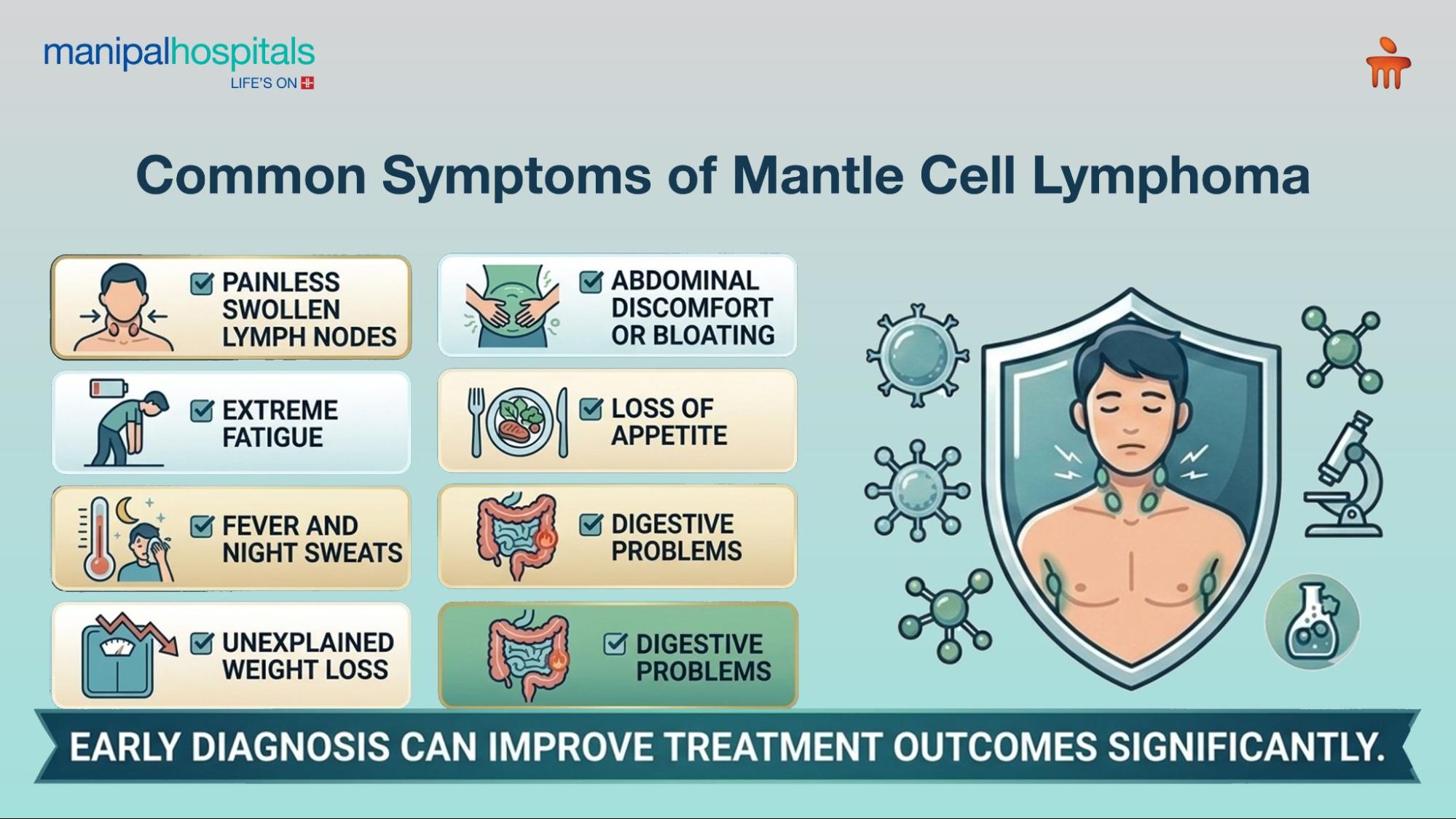
Swollen Lymph Nodes
Painless swelling in the neck, underarms, or groin is one of the most common warning signs.
Extreme Fatigue
Persistent tiredness that does not improve with rest may indicate underlying blood disorders.
Fever and Night Sweats
Many lymphoma patients experience recurring fever and drenching night sweats.
Unexplained Weight Loss
Sudden weight loss without dieting or increased exercise should always be medically evaluated.
Abdominal Discomfort
An enlarged spleen or liver may cause bloating, stomach pain, or a feeling of fullness.
Digestive Problems
Since MCL may involve the gastrointestinal tract, symptoms such as nausea, diarrhoea, or abdominal cramps can occur.
At Manipal Hospitals Baner, specialists encourage patients not to ignore persistent symptoms, especially when they continue for several weeks without improvement.
How Mantle Cell Lymphoma is Diagnosed
Accurate diagnosis is essential because treatment planning depends heavily on disease stage and molecular characteristics.
Doctors usually recommend a combination of advanced tests, including:
Lymph Node Biopsy
A biopsy is considered the gold standard for diagnosing lymphoma. Tissue samples are carefully examined under a microscope to identify cancerous cells.
PET-CT and CT Scans
Imaging scans help doctors determine how far the disease has spread throughout the body.
Bone Marrow Examination
This test checks whether lymphoma cells have reached the bone marrow.
Blood Tests
Blood investigations help evaluate overall health, organ function, and immune system status.
Molecular and Genetic Testing
One hallmark feature of MCL is the chromosomal translocation involving chromosomes 11 and 14.
t(11;14)t(11;14)t(11;14)
This genetic abnormality leads to overproduction of cyclin D1 protein, which drives uncontrolled cell growth. Advanced molecular testing helps specialists confirm the diagnosis accurately and choose the most suitable treatment strategy.
Treatment Approaches for Mantle Cell Lymphoma
Treatment for mantle cell lymphoma is highly individualised. Doctors consider factors such as the following:
-
Age
-
Overall health
-
Disease stage
-
Presence of symptoms
-
Genetic findings
At Manipal Hospitals Pune, multidisciplinary teams of oncologists, haematologists, pathologists, and radiation specialists work together to create customised treatment plans for every patient.
Chemotherapy
Combination chemotherapy remains one of the most commonly used treatments for aggressive lymphoma. These medicines target rapidly growing cancer cells and help induce remission.
Immunotherapy
Immunotherapy uses the body’s immune system to attack lymphoma cells more effectively. Monoclonal antibodies are often combined with chemotherapy for improved outcomes.
Targeted Therapy
Targeted therapy has become one of the biggest breakthroughs in MCL treatment. Medicines such as BTK inhibitors specifically block pathways that help
lymphoma cells survive.
Compared to traditional chemotherapy, targeted therapies are often more precise and may cause fewer side effects.
Stem Cell Transplantation
For younger and medically fit patients, stem cell transplantation may provide longer-lasting remission after intensive chemotherapy.
CAR T-Cell Therapy
In certain relapsed or resistant cases, CAR T-cell therapy offers new hope. This innovative treatment modifies a patient’s immune cells to recognise and destroy cancer cells more effectively.
Is mantle cell lymphoma curable?
One of the most emotional questions patients ask is whether mantle cell lymphoma can be cured completely.
The reality is that MCL can be difficult to cure permanently because it tends to relapse. However, tremendous progress in treatment has dramatically improved survival outcomes.
Today, many patients achieve long-term remission and maintain a good quality of life for several years after diagnosis.
Modern treatment goals focus on:
-
Controlling disease progression
-
Achieving remission
-
Managing symptoms effectively
-
Improving quality of life
-
Extending survival
With continuous advancements in oncology research, the future for MCL patients is far more hopeful than it was a decade ago.
Living with Mantle Cell Lymphoma
Cancer treatment affects not only the body but also emotional and mental well-being. Patients often experience fear, stress, and uncertainty during treatment.
Simple lifestyle habits can help support recovery:
Healthy Practices
-
Follow treatment schedules carefully
-
Eat nutritious meals
-
Stay hydrated
-
Get adequate rest
-
Engage in light physical activity if approved by doctors
-
Maintain regular follow-ups
Things to Avoid
-
Smoking and alcohol
-
Self-medication without medical advice
-
Ignoring new symptoms
-
Skipping appointments
-
Isolating emotionally from loved ones
Family support, counselling, and support groups often play a major role in helping patients stay emotionally strong throughout their cancer journey.
Frequently Asked Questions
The exact cause is unknown, but it is linked to a genetic abnormality involving chromosomes 11 and 14.
No, MCL is generally not inherited from parents. The genetic changes usually develop during a person’s lifetime.
It is considered rare and accounts for approximately 6% of all non-Hodgkin lymphoma cases.
Yes, relapse can occur, but newer therapies provide effective options for disease control and extended remission.
Yes, targeted therapies, CAR T-cell therapy, immunotherapy, and stem cell transplantation have significantly improved outcomes.
Share this Article


Recent Blogs

Early Heart Disease Symptoms, Common Causes, and Advanced Treatment Methods
27 May 20268 Min Read
Heart disease remains one of the top causes of death in the world and impacts millions of lives each year. Heart disease is an umbrella term encompassing a range of conditions that impair the structure and function of the heart. These include constricted blood vessels, irregular heart rhythms, cardiac muscle problems, or congenital defects. Some cardiac diseases develop slowly. Others might appear unexpectedly and can be life-threatening if not treated soon. Modern lifestyle habits such as unhealthy eating, smoking, stress, lack of physical activity, and poor sleep have significantly increased the risk of cardiovascular problems. Recognising heart disease symptoms early on and seeking timely treatment can help reduce serious complications and support long-term heart health. This blog explores the common types of heart disease, their symptoms, treatment options, and practical ways to support your heart health.
Read NowNavigating Hemiplegic Migraine: Understanding the Temporary Paralysis
25 May 20266 Min Read
Migraines are commonly known for causing severe headaches, nausea, and sensitivity to light or sound. However, there is one rare type of migraine that can be especially frightening because it affects movement and speech as well. This condition is known as hemiplegic migraine, a neurological disorder that can temporarily cause weakness or paralysis on one side of the body. At Manipal Hospitals Pune, specialists often see patients who initially mistake these symptoms for a stroke because the warning signs can appear very similar. Hemiplegic migraine is uncommon, but for the people living with it, the impact can be significant. The condition affects the nervous system and causes temporary disruptions in brain function. During an attack, a person may suddenly struggle to move one arm or leg, experience slurred speech, or notice visual disturbances before the headache even begins. These episodes can last from a few hours to several days, creating anxiety and uncertainty for both patients and their families. The good news is that with early diagnosis, proper treatment, and lifestyle management, most people recover fully after each episode and can successfully manage the condition over time.
Read NowNavigating Mantle Cell Lymphoma: Hope, Strength, and Advanced Care
25 May 20266 Min Read
Hearing the words “mantle cell lymphoma” for the first time can leave anyone feeling anxious and uncertain. Questions about treatment, recovery, survival, and the future begin to surface immediately. For many families, it becomes an emotional journey filled with fear, hope, and countless medical decisions. At Manipal Hospitals Pune, patients diagnosed with rare blood cancers receive compassionate support, advanced diagnostics, and personalised treatment plans designed to improve both survival and quality of life. Mantle cell lymphoma (MCL) is considered a rare and aggressive form of non-Hodgkin lymphoma. While the diagnosis may sound frightening, modern medicine has brought remarkable advancements in treatment over the last decade. Today, many patients are living longer, healthier, and more fulfilling lives thanks to newer therapies and specialised cancer care.
Read NowSudden Cardiac Arrest vs Heart Attack: The First 10 Minutes Can Save a Life
22 May 20268 Min Read
There are moments in life when every second truly matters. A cardiac emergency is one of them. I still remember a case shared by a senior doctor—someone collapsed during a morning walk, and the people around thought he had simply fainted. No one acted immediately. By the time help arrived, precious minutes had already slipped away. This is exactly why understanding the difference between a heart attack and sudden cardiac arrest is not just medical knowledge; it is life-saving awareness. At Manipal Hospital Pune, doctors often emphasise that quick recognition and immediate action in the first 10 minutes can dramatically increase survival rates. Let’s break this down in a simple, real-world way.
Read NowStroke Rehabilitation: Regaining Speech, Movement & Independence After a Brain Stroke
15 May 20266 Min Read
A stroke can feel like life has suddenly paused. One moment, everything is normal, and the next, simple actions like speaking, walking, or even holding a cup become challenging. Often called a “brain attack,” a stroke occurs when the blood supply to a part of the brain is interrupted, either due to a clot or a ruptured blood vessel. While the impact can be overwhelming, the story does not end here. With the right care, timely intervention, and consistent rehabilitation, recovery is not just possible, it can be transformative. At Manipal Hospital Pune, we often meet patients and families who feel uncertain after a stroke diagnosis. What we tell them is simple: recovery is a journey, and every small step matters.
Read Nowरोगप्रतिकारक शक्ती वाढवणारी फळे: फायदे, पोषण आणि सर्वोत्तम रोगप्रतिकारक शक्ती वाढवणारे अन्न
24 Apr 20263 Min Read
आजच्या धावपळीच्या जीवनशैलीत निरोगी राहण्यासाठी मजबूत रोगप्रतिकारक शक्ती असणे खूप महत्त्वाचे आहे. वारंवार सर्दी, खोकला किंवा थकवा जाणवत असेल, तर तुमची रोगप्रतिकारक शक्ती कमी असू शकते. त्यामुळेच योग्य आहार घेऊन तुमची रोगप्रतिकारक शक्ती वाढवा हा आजच्या काळातील सर्वात मोठा आरोग्य मंत्र ठरतो.
Read NowNerve Pain: Causes, Symptoms, and Treatment Options
31 Mar 20267 Min Read
Nerve pain is one of those conditions that people struggle to explain unless they’ve felt it themselves. It’s not like a normal ache or muscle pain. Instead, it often feels sharp, burning, electric, or tingling, sometimes appearing without any obvious injury. Many patients describe it as unpredictable and exhausting, especially when it begins to interfere with sleep, work, and daily activities. Understanding nerve pain symptoms, identifying the root cause early, and consulting the right neurologist in Pune for nerve pain treatment can make a significant difference in recovery and long-term relief.
Read NowSudden Breathlessness: Emergency Causes You Shouldn’t Ignore
20 Mar 20265 Min Read
Feeling breathless all of a sudden can be frightening. One moment you’re fine, and the next, you’re struggling to catch your breath. Breathlessness, especially when it comes on suddenly, is not something to ignore. While mild breathlessness can sometimes be linked to stress or exertion, sudden shortness of breath may signal a serious medical emergency that needs immediate attention. Doctors at Manipal Hospital Pune often see patients who delay care, assuming breathlessness will pass. In many cases, early treatment could have prevented complications. Understanding the possible causes, warning signs, and when to seek help can truly save lives.
Read NowPulmonary Edema Causes: Why Fluid Builds Up in the Lungs
20 Mar 20268 Min Read
Breathing is something most of us never think about until it suddenly becomes difficult. One condition that can make breathing frighteningly hard is pulmonary edema. It happens when fluid builds up in the lungs, preventing oxygen from reaching the bloodstream properly. Understanding the pulmonary edema causes, early warning signs, and possible complications can make a life-saving difference. At Manipal Hospitals Pune, specialists often see patients arrive with sudden breathlessness that turns out to be pulmonary edema. Early diagnosis and timely treatment play a crucial role in recovery.
Read NowFoods to Lose Belly Fat: Best Diet Choices Explained
06 Mar 20260 Min Read
Belly fat is one of the most stubborn and frustrating health concerns for many people. Whether it’s caused by long sitting hours, stress, hormonal changes, or unhealthy eating habits, excess abdominal fat is not just about appearance it can increase the risk of diabetes, heart disease, and metabolic problems. The good news? What you eat plays a major role in reducing belly fat. Choosing the right foods consistently can help your body burn fat more efficiently, improve digestion, and reduce bloating. In this blog, we explain the best foods to lose belly fat, foods to avoid, and how to build a sustainable diet for long-term results, with expert guidance aligned with preventive healthcare at Manipal Hospital Pune.
Read Now