


Run Pain-Free: A Comprehensive Guide to Runner's Knee Management at Manipal Hospitals Patiala
Reviewed by: Dr. Paramjit Singh Chahal
Posted on
7 Min Read

Not sure what you’re looking for?
Get in touch with our representatives for help!
Contact UsFor many active individuals, particularly runners, knee pain can be a frustrating roadblock. Among the most common culprits is a condition known as Runner's Knee, or Patellofemoral Pain Syndrome (PFPS). This isn't just an inconvenience; it's a signal from your body that something needs attention. Our dedicated team of orthopaedics in Patiala understands the impact such conditions have on your daily life and performance. We are committed to providing comprehensive solutions for effective knee pain treatment, helping you get back on your feet and back to your passion.
Runner's knee affects an estimated 25% of all runners at some point in their careers, making it one of the most prevalent running-related injuries. But it's not exclusive to runners; cyclists, hikers, and even those with physically demanding jobs can experience it. The good news is that with proper diagnosis and tailored treatment, over 90% of individuals with Runner's Knee experience significant improvement and often full recovery. Understanding its causes, recognising the symptoms, and knowing how to prevent it are crucial steps towards maintaining an active, pain-free lifestyle.
Understanding Runner's Knee: What is it?
Runner's Knee refers to a dull, aching pain around or behind your kneecap (patella). It occurs when repetitive stress on the knee causes irritation or inflammation of the cartilage underneath the kneecap or the surrounding soft tissues. This can happen due to a variety of factors, often related to how the kneecap tracks in its groove at the end of the thighbone (femur).
Common Causes of Runner's Knee
Several factors can contribute to the development of Runner's Knee. Often, it's a combination of issues rather than a single cause. Identifying these factors is key to effective knee pain treatment.
-
Overuse or Sudden Increase in Activity: Rapidly increasing mileage, intensity, or duration of exercise without adequate conditioning or rest.
-
Improper Footwear: Worn-out shoes or footwear that doesn't provide adequate support can alter gait mechanics.
-
Weak Thigh Muscles: Weak quadriceps, especially the vastus medialis obliquus (VMO), can lead to improper tracking of the kneecap.
-
Tight Muscles: Tight hamstrings, quadriceps, IT band (iliotibial band), or calf muscles can pull the kneecap out of alignment.
-
Biomechanical Issues:
-
Flat feet (pronation) or high arches.
-
Misalignment of the patella.
-
Problems with hip or ankle stability.
-
-
High-Impact Activities: Repeated stress from activities like running, jumping, or prolonged stair climbing.
Recognising the Symptoms
The symptoms of Runner's Knee typically develop gradually and worsen over time if left unaddressed. Early recognition can prevent the condition from becoming chronic.
-
Pain Around or Behind the Kneecap: This is the hallmark symptom, often described as a dull ache.
-
Pain Worsened by Activity: Especially noticeable during or after running, climbing stairs, squatting, or prolonged sitting with bent knees (like in a car or movie theatre).
-
Clicking or Grinding Sensation: Sometimes, a crunching or grinding feeling (crepitus) can be felt when moving the knee.
-
Swelling: Mild swelling around the kneecap may occur in some cases.
-
Tenderness: The area around the kneecap might be tender to the touch.
Diagnosis at Manipal Hospitals
Diagnosing Runner's Knee involves a thorough physical examination by an experienced orthopaedic specialist. Our orthopaedics in Patiala will assess your knee's range of motion, observe your gait, check for muscle imbalances, and gently palpate the area to identify pain points. While imaging, such as X-rays or MRI, might be used to rule out other conditions, such as a knee ligament injury treatment need or early signs of osteoarthritis knee treatment, Runner's Knee is often diagnosed clinically. It's crucial to differentiate it from more severe injuries like a dislocated knee treatment, which requires immediate and specific intervention.
Effective Treatment Strategies for Runner's Knee
The primary goal of Runner's Knee treatment is to reduce pain and inflammation, correct underlying biomechanical issues, and restore full function. A multi-pronged approach is often most effective.
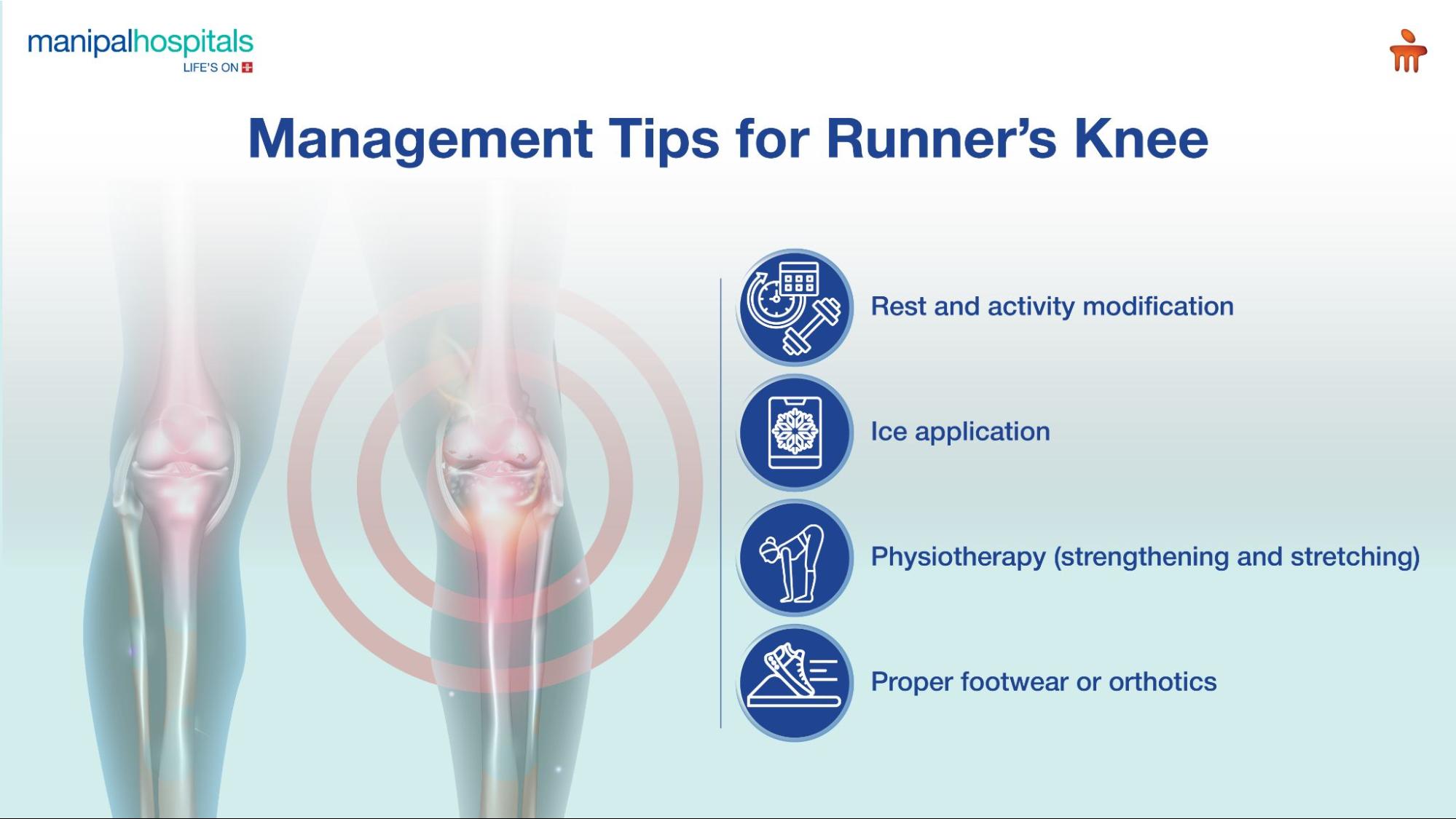
Initial Self-Care & Conservative Management
For mild cases, initial steps can often provide significant relief:
-
RICE Protocol:
- Rest: Reduce or temporarily stop activities that aggravate your knee pain. This is paramount for healing.
- Ice: Apply ice packs to the affected area for 15-20 minutes, several times a day, to reduce inflammation.
- Compression: A compression bandage can help manage swelling.
- Elevation: Elevate your leg when resting.
-
Over-the-Counter Pain Relief: Non-steroidal anti-inflammatory drugs (NSAIDs) can help manage pain and inflammation.
-
Stretching and Strengthening: Gentle stretches for tight muscles (quads, hamstrings, and IT band) and strengthening exercises for weak muscles (quads and glutes) are vital.
Physical Therapy and Rehabilitation
When self-care isn't enough, professional guidance is invaluable. Our physiotherapists work closely with our orthopaedics in Patiala to create personalised rehabilitation plans. Physical therapy is often the cornerstone of successful knee pain treatment for Runner's Knee, with studies showing an 85% success rate for patients adhering to a structured programme.
-
Targeted Exercises: Focusing on strengthening the quadriceps, hip abductors, and core muscles to improve knee stability and patellar tracking.
-
Flexibility Training: Specific stretches to improve flexibility in tight muscle groups.
-
Gait Analysis: Identifying and correcting improper running mechanics or walking patterns.
-
Footwear and Orthotics: Recommendations for appropriate running shoes or custom orthotics to correct foot mechanics.
-
Taping Techniques: Patellar taping can help reduce pain and improve kneecap alignment during activity.
In rare, persistent cases where conservative treatments fail, your specialist might discuss other options. However, surgical intervention for Runner's Knee is highly uncommon and typically considered only after extensive non-surgical efforts. Our approach prioritises minimally invasive and conservative treatments wherever possible.
Runner's knee doesn't have to put an end to your active lifestyle. With the right approach to treatment and prevention, guided by our expert orthopaedics in Patiala at Manipal Hospitals, you can return to your favourite activities stronger and wiser. Remember, proactive care is key to long-term knee health.
If you are experiencing knee pain, it's crucial to seek timely medical advice. Book an appointment with our expert orthopaedics at Manipal Hospitals, Patiala, today.
Share this Article


Recent Blogs

Aortic Stenosis: Early Symptoms You Should Not Ignore
06 Oct 20267 Min Read
Heart valve disorders often develop gradually, making them easy to overlook until they begin affecting daily life. Aortic stenosis is one such condition that can remain silent for years before causing serious complications. Recognising the warning signs early can help prevent life-threatening outcomes and improve long-term heart health. If you or a loved one notices symptoms that could indicate aortic stenosis, seeking timely evaluation from our cardiologists in Patiala can make a significant difference. In this guide, you'll learn about the early signs of aortic stenosis, its causes, risk factors, diagnosis, available aortic stenosis treatment options, and when you should seek medical care.
Read Nowलिवर के स्वास्थ्य के लिए भोजन: स्वस्थ लिवर के लिए क्या खाएं और क्या न खाएं – पूरी डाइट गाइड
10 Jun 20266 Min Read
लिवर शरीर का एक अत्यंत महत्वपूर्ण अंग है, जो शरीर से विषैले पदार्थों को बाहर निकालने, पाचन में सहायता करने, पोषक तत्वों को स्टोर करने और मेटाबॉलिज्म को नियंत्रित करने का कार्य करता है। लेकिन खराब खानपान, अत्यधिक शराब सेवन, मोटापा और अनियमित जीवनशैली के कारण आज लिवर से जुड़ी बीमारियां तेजी से बढ़ रही हैं। ऐसे में सही लिवर के स्वास्थ्य के लिए भोजन चुनना बेहद जरूरी हो जाता है। संतुलित डाइट न केवल फैटी लिवर, हेपेटाइटिस और लिवर इंफ्लेमेशन के खतरे को कम करती है, बल्कि लिवर की कार्यक्षमता को भी बेहतर बनाती है। इस लेख में हम विस्तार से समझेंगे कि स्वस्थ लिवर के लिए क्या खाना चाहिए, किन चीजों से बचना चाहिए, कौन-से लिवर डिटॉक्स करने वाले खाद्य पदार्थ फायदेमंद होते हैं और कब डॉक्टर से सलाह लेना जरूरी हो जाता है।
Read NowCancer screening tests every adult over 40 should get done
08 Jun 20267 Min Read
Turning 40 is an important milestone for preventive healthcare. As age increases, the risk of developing several types of cancer also rises significantly. While many cancers may not cause noticeable symptoms in their early stages, timely cancer screening tests can help detect abnormalities before the disease progresses. Early diagnosis often improves treatment success, survival rates, and long-term health outcomes. Understanding which cancer screening tests are recommended after 40 can help individuals make informed decisions about preventive healthcare and reduce the risk of delayed cancer diagnosis. At Manipal Hospitals, our oncologists in Patiala encourage proactive cancer prevention through evidence-based screening programmes tailored to age, family history, lifestyle, and individual risk factors.
Read NowPolycystic kidney disease (PKD): understanding a hereditary condition
08 Jun 20266 Min Read
Kidney diseases often progress silently, but some inherited conditions begin affecting the body long before obvious warning signs appear. One such condition is Polycystic Kidney Disease (PKD), a genetic disorder that gradually damages the kidneys over time. Recognising polycystic kidney disease symptoms early can help prevent severe complications and improve long-term kidney health. In this detailed guide, we explain everything you need to know about PKD, including causes, early warning signs, diagnosis, kidney disease treatment options, dietary care, and when to seek medical attention.
Read NowHip replacement surgery: complete guide to procedure and recovery
05 Jun 20267 Min Read
Chronic hip pain can severely affect mobility, independence, sleep quality, and overall quality of life. When medications, physiotherapy, and lifestyle modifications no longer provide relief, hip replacement surgery may become the most effective solution for restoring movement and reducing pain. Modern hip replacement surgery has transformed the lives of millions of patients worldwide by improving joint function, reducing disability, and enabling people to return to everyday activities with greater comfort. Understanding the procedure, recovery process, expected outcomes, and possible hip replacement complications can help patients make informed treatment decisions. At Manipal Hospitals, our orthopaedics in Patiala provide advanced joint replacement care using evidence-based surgical techniques and personalised rehabilitation plans to optimise patient recovery and long-term mobility.
Read NowMigraine vs Tension Headache: Symptoms, Differences and How to Identify the Cause
05 Jun 20267 Min Read
Headaches are among the most common neurological complaints worldwide, yet many people struggle to identify the exact cause of their pain. Understanding the difference between migraine and tension headaches is essential because each condition has distinct triggers, symptoms, and headache treatment approaches. While some headaches are mild and temporary, others may indicate more severe headache causes that require medical attention. Recognising headache types early can help patients receive faster diagnosis, better headache relief, and improved quality of life. At Manipal Hospitals, our neurologists in Patiala evaluate a wide range of headache disorders using advanced neurological assessment and personalised treatment strategies to identify the underlying severe headache causes affecting each patient.
Read NowAtrial fibrillation (AFib): causes, risks and when to seek help
03 Jun 20267 Min Read
Heart rhythm disturbances are becoming increasingly common across all age groups, yet many people ignore the early warning signs until serious complications occur. Among the most prevalent forms of heart rhythm disorder is atrial fibrillation (AFib), a condition that can silently increase the risk of stroke, heart failure, and other cardiovascular complications if left untreated. Understanding atrial fibrillation symptoms, recognising atrial fibrillation causes, and knowing when to seek medical attention can significantly improve outcomes. With timely atrial fibrillation treatment, patients can effectively manage symptoms, restore heart rhythm stability, and reduce long-term risks. At Manipal Hospitals, our cardiologists in Patiala provide comprehensive evaluation and advanced atrial fibrillation treatment plans tailored to each patient’s condition, lifestyle, and cardiovascular risk profile.
Read NowRun Pain-Free: A Comprehensive Guide to Runner's Knee Management at Manipal Hospitals Patiala
13 May 20267 Min Read
For many active individuals, particularly runners, knee pain can be a frustrating roadblock. Among the most common culprits is a condition known as Runner's Knee, or Patellofemoral Pain Syndrome (PFPS). This isn't just an inconvenience; it's a signal from your body that something needs attention. Our dedicated team of orthopaedics in Patiala understands the impact such conditions have on your daily life and performance. We are committed to providing comprehensive solutions for effective knee pain treatment, helping you get back on your feet and back to your passion. Runner's knee affects an estimated 25% of all runners at some point in their careers, making it one of the most prevalent running-related injuries. But it's not exclusive to runners; cyclists, hikers, and even those with physically demanding jobs can experience it. The good news is that with proper diagnosis and tailored treatment, over 90% of individuals with Runner's Knee experience significant improvement and often full recovery. Understanding its causes, recognising the symptoms, and knowing how to prevent it are crucial steps towards maintaining an active, pain-free lifestyle.
Read NowEarly Diagnosis of Heart Failure Improves Outcomes by 40%: Know the Signs
13 May 20268 Min Read
Heart failure, often misunderstood as the heart stopping, is actually a chronic, progressive condition where the heart muscle cannot pump enough blood to meet the body's needs. This vital organ works tirelessly, but when its function is impaired, it can lead to a cascade of symptoms that, if recognised early, can significantly alter the course of the disease and improve quality of life. Our cardiologists in Patiala believe in empowering our patients with knowledge, enabling timely action that can make a profound difference. Understanding the early signs—such as breathlessness, swelling, and persistent tiredness—is your first step towards safeguarding your heart health.
Read NowHow High Blood Pressure Silently Leads to Stroke
13 May 20266 Min Read
High Blood Pressure is often referred to as a “silent killer” - and for good reason. Many people live with High Blood Pressure for years without noticeable symptoms, unaware that it is steadily damaging their blood vessels and increasing their risk of life-threatening conditions like stroke. Our neurologists in Patiala frequently see patients who were unaware of their condition until a serious complication occurred. Understanding how High Blood Pressure contributes to stroke is crucial for prevention, early detection, and timely intervention, which is why our neurologists in Patiala emphasise proactive screening and education.
Read Now