


Understanding Urinary Tract Infection (UTI): Everything Patients Should Know
Reviewed by: Manipal Hospitals
Posted on
7 Min Read

Not sure what you’re looking for?
Get in touch with our representatives for help!
Contact UsA burning feeling while urinating, needing to use the toilet more often, or discomfort in the lower abdomen are symptoms many people tend to ignore at first. However, these can sometimes point to a urinary tract infection (UTI), one of the most common infections affecting the urinary system. If left untreated, it can affect the bladder, urethra, or even the kidneys. Knowing what causes UTIs and understanding UTI symptoms and when to get care can make a huge difference in recovery.
Through this blog, we will help you learn about urinary tract infections, what they are, what causes them, what they feel like, and what effective UTI treatment looks like in real life.
What Is A Urinary Tract Infection
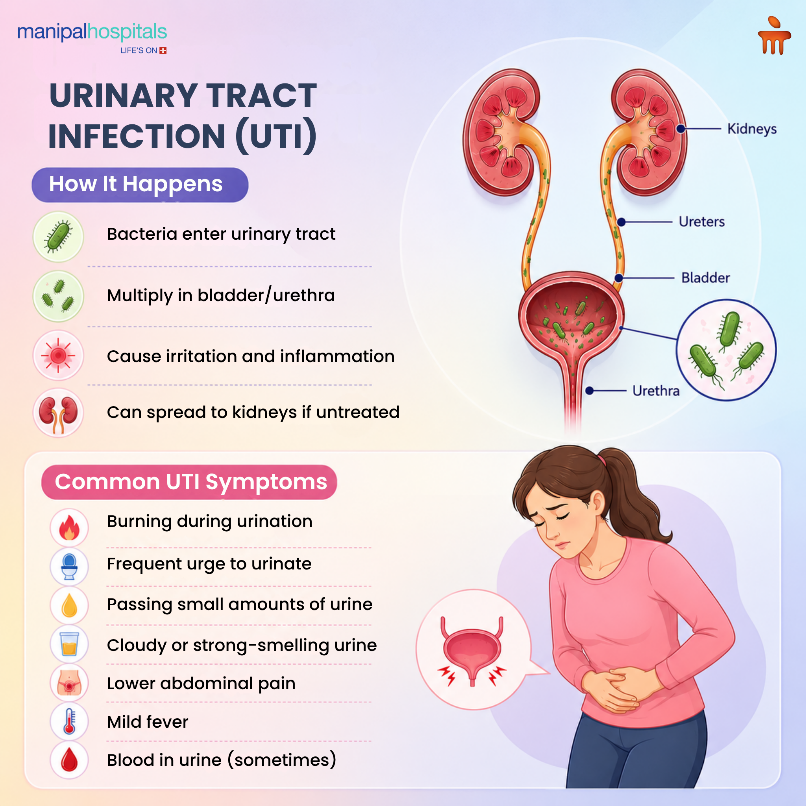
A urinary tract infection, commonly called a UTI, happens when bacteria enter the urinary system and begin to multiply. The urinary system includes the kidneys, ureters, bladder, and urethra.
Most UTIs begin in the bladder, and the symptoms often start off mild. Because of that, many people wait and hope the discomfort goes away on its own. However, if the infection is not treated, it can sometimes spread to the kidneys and become more difficult to manage.
While UTIs are more commonly seen in women, they can affect men and children as well. One reason women are more prone to these infections is that the female urethra is shorter, which allows bacteria to enter the bladder more easily.
UTI Symptoms
The symptoms of a urinary tract infection can vary from person to person, but some signs are quite common. Paying attention to these symptoms early can help prevent the infection from becoming more serious.
UTIs are often characterised by:
-
Pain or a burning sensation when urinating
-
The urge to urinate frequently, but only releasing small amounts
-
Urine that is cloudy or has a pungent smell
-
Lower abdominal pain
-
Sometimes accompanied by a mild fever
-
In some cases, blood is seen in the urine
Conditions That Can Cause Frequent Urination
Many people notice they are urinating more often and immediately think it is a UTI. Although it can indeed be a case of a UTI, there are a few other conditions and factors that can also contribute to frequent urination. If it persists for a few days, particularly with pain or burning, then one needs to pay attention.
Frequent urination causes may include:
-
Urinary tract infection
-
Diabetes
-
Consumption of large volumes of fluid
-
Pregnancy
-
Medicines including diuretics
-
Overactive bladder conditions
Properly understanding all these causes and factors can help prevent any confusion or misinformation and ensure you get the necessary help when needed.
What Causes a UTI?
A urinary tract infection usually happens when bacteria enter the urinary tract and begin to grow. In most cases, the infection starts in the bladder or urethra. If it is not treated on time, it can sometimes spread further into the urinary system.
Several factors can increase the chances of developing a UTI. Some of these UTI causes include:
-
Poor hygiene habits
-
Holding urine for long periods
-
Not drinking enough water
-
Sexual activity
-
Kidney stones or blockage in the urinary tract
-
Use of urinary catheters
-
Diabetes or weak immunity
UTIs are more common in women, which is why many people associate them only with women’s health. But infections can happen in anyone, including men and children.
When Can a UTI Become Serious?
A simple UTI can become a serious problem if it spreads to the kidneys. Warning signs include:
-
Elevated temperature
-
Pain in the back or side
-
Nausea or throwing up
-
Shudders
At this point, you’ll need to treat the UTI right away to prevent complications such as a kidney infection. If you are experiencing these symptoms, consult the top urologists in Old Airport Road for timely diagnosis and UTI treatment.
Who Is More Likely to Get a UTI?
Some people have a higher chance of developing urinary tract infections. These include:
-
Women
-
Pregnant women
-
Older adults
-
People with diabetes
-
Individuals with kidney stones
-
People with weak immunity
-
Those who frequently hold urine for long periods
Understanding these risk factors can help people take preventive steps early.
Treatment for Urinary Tract Infection
Not every UTI feels the same, so the treatment can also differ from person to person depending on the severity of the infection.
Mild to Moderate Cases
-
Antibiotics are prescribed by a doctor.
-
Increased intake of fluids
-
Pain relief medicines
-
Avoiding irritants such as caffeine
Severe Cases
-
IV antibiotics: For advanced infection
-
Hospital monitoring: Prevent complications
-
Imaging tests: See if the kidneys are involved
When a UTI is treated early, the symptoms usually settle down much faster, and the infection is less likely to return.
Simple Ways to Prevent UTIs
It’s often easier to prevent than to treat.
-
Stay well hydrated: Drink plenty of water to help flush bacteria from your urinary tract.
-
Don’t hold urine: Emptying your bladder regularly can lower your risk of infection.
-
Keep clean: Practice good hygiene to help prevent bacteria from spreading.
-
Voiding after sexual activity: Urinate after sex to help clear away any bacteria that may have been introduced.
-
Choose cotton underwear: Wear cotton underwear, since this breathable fabric helps keep the area dry.
-
Avoid harsh soaps: Use gentle cleansers instead of harsh soaps to protect your body’s natural balance.
-
Eat probiotic foods: Include probiotic foods in your diet, as healthy bacteria can support urinary health.
-
Limit sugary drinks: Try to limit sugary drinks, since too much sugar may encourage bacterial growth.
These habits may help prevent urinary tract infections.
When Should You See a Doctor
Seek medical attention if:
-
Symptoms persist longer than 2-3 days.
-
You have a fever and/or back pain
-
Blood in urine
-
UTIs keep coming back.
Early assessment is important to ensure the correct treatment of UTI and to avoid complications. f symptoms persist, consult urology doctors at Old Airport Road for expert evaluation and appropriate UTI treatment.
Conclusion
A urinary tract infection may seem insignificant initially, but it can be serious when left untreated. Identifying the symptoms of UTI early, learning about the causes of UTI and treating the causes of frequent urination can help prevent complications.
If symptoms persist or worsen, professional care is essential. UTI treatment in Old Airport Road at Manipal Hospitals offers urine tests for accurate diagnosis, targeted antibiotic therapy, assessment of underlying causes, and prevention in the long term. Timely treatment helps in faster recovery and also reduces the risk of recurrence.
Frequently Asked Questions
Mild symptoms may occasionally improve with hydration. However, the vast majority require antibiotic therapy. Leaving a UTI without treatment is dangerous since bacteria can multiply and aggravate your condition.
It is due to anatomical features, where the urethra is shorter than in men, making it easier for bacteria to access the urinary system. Hygiene problems can contribute to the development of the disease.
IUTI is not infectious; nevertheless, bacteria can pass from one partner to another sexually. Proper hygiene reduces the risk of passing UTIs.
Unfortunately, some patients develop recurring UTIs due to certain predisposing circumstances. The condition requires proper medical supervision for the future prevention of such infections.
It is necessary to avoid any products that irritate the bladder. It includes coffee, alcohol, and spices, as well as maintaining proper hydration and balanced nutrition.
Share this Article


Recent Blogs

dummy blog data
26 Sept 20260 Min Read
Dr. Himanshu Shukla is a distinguished surgical oncologist with over 15 years of experience. He is renowned for his surgical techniques and dedicated commitment to delivering cancer care to the highest standards. His expertise spans the treatment of cancers in the head and neck, breast, thoracic, gastrointestinal.
Read NowTest 3: Bulging Disc Symptoms and Treatment: What You Need to Know
02 Sept 20262 Min Read
When to Seek Medical Help? Many cases of minor spinal strain improve with basic posture corrections, rest, and short-term activity modifications. However, you should arrange a consultation with a spine specialist if your symptoms do not change after a few weeks or if they steadily interfere with your basic daily movements. You should seek prompt clinical evaluation if your spinal symptoms include: Pain that continuously wakes you up in the middle of the night Progressive weakness in your leg or foot, making it difficult to lift your toes when walking Sharp, electric pain that radiates past your knee down into your foot Any sudden numbness in your groin or saddle area
Read NowBest Home Remedies for Cough and Cold During Monsoon
22 Jul 20266 Min Read
The arrival of the monsoon brings welcome relief from the summer heat, but it also creates the perfect environment for viral infections that cause coughs, colds, sore throats, and nasal congestion. Increased humidity, fluctuating temperatures, and exposure to rain can weaken the body's natural defence mechanisms, making respiratory infections more common during this season. While most colds are mild and resolve within a week, they can cause significant discomfort and interfere with daily activities. Fortunately, several simple home remedies can help relieve symptoms, support recovery, and keep you comfortable. However, it is equally important to recognise when medical attention is necessary, especially if symptoms persist or worsen. In this blog, we explore some of the most effective home remedies for cold and cough, along with tips to ease nasal congestion and soothe a sore throat during the monsoon.
Read NowSubserosal Uterine Fibroid Treatment Options: From Laser Therapy to Natural Remedies
13 Jul 20266 Min Read
Uterine fibroids are among the most common non-cancerous growths affecting women during their reproductive years. While some fibroids remain small and symptom-free, others can cause discomfort, pain, and impact quality of life. One particular type, known as a subserosal fibroid, develops on the outer surface of the uterus and can grow outward into the pelvic cavity. The good news is that several effective treatment options are available today, ranging from careful monitoring and lifestyle modifications to advanced minimally invasive procedures. Understanding the available subserosal uterine fibroid treatment options can help women make informed decisions about their health and seek timely medical care when needed.
Read NowWhat is Ovarian Cancer? Symptoms, Risk Factors & Diagnosis
13 Jul 20268 Min Read
Ovarian cancer is one of the most common gynaecological cancers affecting women worldwide. It develops when abnormal cells in the ovaries begin to grow uncontrollably, forming a tumour that can spread to nearby tissues and other parts of the body if left untreated. Although ovarian cancer can occur at any age, it is more frequently diagnosed in women after menopause.
Read NowWhat Causes High Triglycerides and How to Manage Them Effectively
26 Jun 20267 Min Read
When discussing heart health, most people are familiar with cholesterol. However, another important factor that often goes unnoticed is triglycerides. These are a type of fat found in the blood that the body uses as a source of energy. While triglycerides are essential for normal functioning, having high levels can increase the risk of cardiovascular diseases, stroke, and pancreatitis. The challenge with high triglycerides is that they rarely cause obvious symptoms in the early stages. Many individuals discover the condition only during routine blood tests. With changing lifestyles, sedentary habits, increased consumption of processed foods, and rising rates of obesity and diabetes, elevated triglycerides have become increasingly common. Understanding what causes high triglycerides and learning how to manage them effectively can help reduce long-term health risks and improve overall well-being.
Read NowUnderstanding PMOS Weight Gain and Practical Treatment Approaches
03 Jun 20268 Min Read
Many women find themselves trapped in a frustrating cycle: they eat mindfully and work out regularly, and yet the numbers on the scale refuse to budge, or worse, they keep climbing. It can feel like your body is actively working against you. If this scenario sounds familiar, it is crucial to know that this isn't a failure of willpower or a matter of "trying harder." Medical science has evolved to recognize that what was long called Polycystic Ovary Syndrome (PCOS) is actually a much broader, systemic condition now officially classified as Polyendocrine Metabolic Ovarian Syndrome (PMOS). Globally, PMOS affects 1 in 8 women, amounting to over 170 million individuals. Yet, because the old name focused narrowly on the ovaries, up to 70% of individuals remain undiagnosed. PMOS alters your body's hormonal and metabolic environment, making it incredibly easy to store fat and significantly harder to lose it. The condition frequently manifests as stubborn weight gain concentrated around the abdomen, often referred to as "PMOS belly." To manage this condition effectively, we need to understand its underlying causes. This blog explains the reasons behind weight gain in PMOS, its consequences, and medically sound advice on achieving weight loss with PMOS.
Read NowUnderstanding Urinary Tract Infection (UTI): Everything Patients Should Know
01 Jun 20267 Min Read
A burning feeling while urinating, needing to use the toilet more often, or discomfort in the lower abdomen are symptoms many people tend to ignore at first. However, these can sometimes point to a urinary tract infection (UTI), one of the most common infections affecting the urinary system. If left untreated, it can affect the bladder, urethra, or even the kidneys. Knowing what causes UTIs and understanding UTI symptoms and when to get care can make a huge difference in recovery. Through this blog, we will help you learn about urinary tract infections, what they are, what causes them, what they feel like, and what effective UTI treatment looks like in real life.
Read NowWhat Is An Electroencephalogram (EEG)? Procedure, Uses & Results
01 Jun 20268 Min Read
Have you ever wondered how doctors can “see” what’s happening inside your brain without any surgery? If you have been advised by your doctor to undergo an electroencephalogram, it is natural to feel a bit unsure or curious about what the test involves. An EEG is simply a test that records the brain’s electrical activity. Small sensors are placed on the scalp to pick up these signals, helping doctors understand how the brain is working. This blog will walk you through the EEG test procedure, the reasons why it may be recommended, and how to understand your EEG test results.
Read NowWhat Is a TMT Test? Procedure, Benefits & Results Explained
27 May 20268 Min Read
Most people assume that if the heart feels fine at rest, it must be healthy overall. But some heart problems only show up when the body is under strain, otherwise lying dormant and undetected while your body is at rest. That’s why doctors use a heart stress test to understand how the heart works during activity. If you’ve been advised to take a treadmill test, it’s natural to wonder what it measures and why it matters. Understanding what is TMT test is can help clear that doubt. It’s not just a routine test but a way to spot early signs of heart-related issues. In this blog, we’ll walk through how the test works, what to expect during the procedure, how results are interpreted, and what is considered a TMT test normal range.
Read Now