


How to Reduce Hyperpigmentation in Skin: Achieve Brighter, Even-Toned Skin
Reviewed by: Dr. Deepti D'souza
Posted on
4 Min Read

Not sure what you’re looking for?
Get in touch with our representatives for help!
Contact UsMelanin, the natural pigment that gives our skin, hair, and eyes their colour, plays a crucial role in protecting us from the sun's harmful ultraviolet (UV) rays. However, sometimes an overproduction or uneven distribution of melanin can lead to conditions like hyperpigmentation, dark spots, or an overall desire for a more even and brighter skin tone. We understand these concerns and offer expert guidance and advanced treatments to help you achieve your skin goals safely and effectively.
Understanding Melanin
Melanin is produced by specialised cells called melanocytes, located in the outermost layer of our skin. Its primary function is to absorb UV radiation, acting as a natural sunscreen to prevent DNA damage to skin cells, which can lead to premature ageing and skin cancer. The amount and type of melanin produced determine skin colour.
Several factors can trigger increased melanin production, leading to areas of darker skin:
-
Sun Exposure: The most common cause. UV radiation stimulates melanocytes to produce more melanin as a protective response.
-
Hormonal Changes: Conditions like melasma (tan, brown or grey hyperpigmented patches) are linked to hormonal fluctuations during pregnancy, with birth control pills, or hormone replacement therapy.
-
Inflammation and Injury: Post-inflammatory hyperpigmentation (PIH) can occur after skin injuries, acne breakouts, eczema, or other inflammatory conditions.
-
Genetics: Our inherent genetic makeup determines our base skin colour and how prone we are to developing pigmentation issues.
-
Certain Medications: Some drugs can cause increased sun sensitivity or directly trigger hyperpigmentation
How to Reduce Hyperpigmentation in Skin Naturally?
While complete and permanent reduction of all melanin isn't feasible or advisable (given its protective role), you can certainly manage and decrease hyperpigmentation and achieve a brighter, more even complexion using natural methods and lifestyle adjustments. These include:
-
Strict Sun Protection: This is arguably the most critical step. Consistent use of a broad-spectrum sunscreen (SPF 30 or higher) daily, even on cloudy days, can prevent further melanin production. Wearing protective clothing, wide-brimmed hats, and seeking shade, especially between 10 AM and 4 PM, significantly reduces UV exposure. Studies show that regular use of broad-spectrum sunscreen can reduce the risk of new pigmentation by up to 50%.
-
Antioxidant-Rich Diet: A diet rich in antioxidants can help protect skin cells from damage and support overall skin health. Incorporating fruits and vegetables like berries, citrus fruits (rich in Vitamin C), leafy greens, and green tea can aid in skin repair and contribute to a healthier glow.
-
Vitamin C: A powerful antioxidant, Vitamin C serums can brighten skin and reduce the appearance of dark spots.
-
Kojic Acid: Derived from fungi, it is a common ingredient in skin-lightening products.
-
Alpha Arbutin: A natural derivative of hydroquinone, found in bearberry plants, known for its skin-brightening properties.
-
Niacinamide (Vitamin B3): Helps reduce the transfer of melanin to skin cells, improving overall tone
Advanced Medical Treatments for Hyperpigmentation
For more stubborn pigmentation, a range of cutting-edge medical treatments are available, some of which include:
-
Chemical Peels: These involve applying a chemical solution to the skin, which exfoliates the top layers and encourages new, less pigmented skin to regenerate. Various strengths of peels are offered, tailored to your skin type and specific concerns.
-
Laser Therapy: Advanced laser treatments specifically target melanin in the skin, breaking it down into smaller particles that the body then clears away. This is highly effective for sunspots, melasma, and post-inflammatory hyperpigmentation.
-
Topical Prescription Medications: Dermatologists may prescribe stronger topical creams containing ingredients that effectively inhibit melanin production or accelerate skin cell turnover. These are used under strict medical supervision for optimal results and safety
Can We Permanently Reduce Hyperpigmentation in Skin?
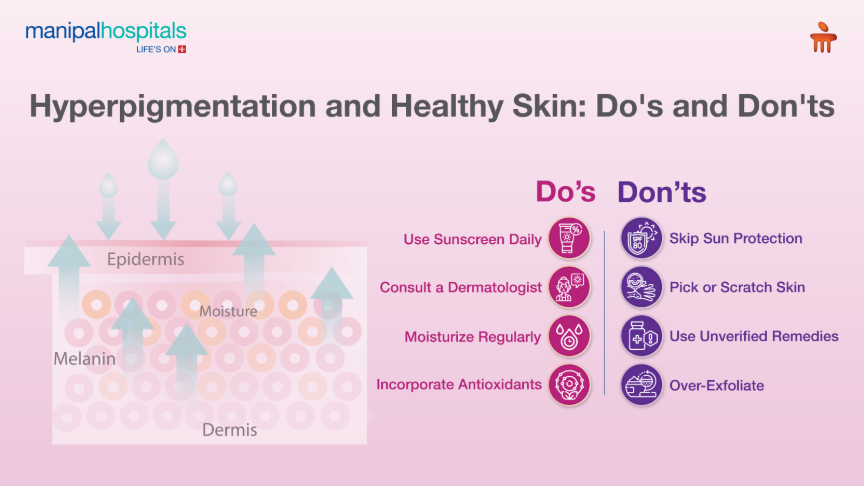
While medical treatments can significantly reduce hyperpigmentation and inhibit new melanin production, melanocytes are still present in the skin. Therefore, reducing hyperpigmentation requires a multi-faceted approach:
-
Consistent Maintenance: Even after successful treatments, adherence to sun protection and a good skincare regimen is crucial.
-
Lifestyle Management: Addressing underlying causes like hormonal imbalances or inflammatory skin conditions.
-
Periodic Follow-ups: Regular consultations with your dermatologist can help monitor your skin and adjust your treatment plan as needed.
Conclusion
If you are experiencing pigmentation concerns or wish to achieve a brighter, more even skin tone, it's crucial to seek timely medical advice from trusted experts. Our expert dermatologists in Mangalore provide personalised plans, leveraging advanced technology to safely and effectively help manage conditions like hyperpigmentation.
Frequently Asked Questions
Complete permanent removal of all melanin is not possible nor recommended, as melanin protects your skin. However, medical treatments and consistent skincare can significantly reduce existing pigmentation and inhibit future production, providing long-lasting, brighter, and more even skin tone.
The timeline varies depending on the treatment type, the severity of the pigmentation, and the individual skin response. Natural methods can take several weeks to months, while medical procedures, such as laser therapy, may show noticeable improvement within a few sessions, typically over a period of 2-3 months.
When performed by qualified dermatologists using approved methods, melanin reduction treatments are generally safe. Thorough assessments are conducted, and state-of-the-art equipment is used to ensure effective and secure outcomes.
Many natural remedies, such as Vitamin C or certain plant extracts, can be beneficial. However, it's always best to patch-test new products and consult with a dermatologist, especially if you have sensitive skin or existing skin conditions, to avoid adverse reactions.
Lifestyle changes, especially diligent sun protection, can help maintain the results of any treatments. A healthy diet also supports overall skin vitality.
Share this Article


Recent Blogs

Understanding Open Fractures: Types, Treatment, and What to Expect
29 Jun 20267 Min Read
An open fracture is one of the most urgent injuries an orthopaedic surgeon sees. Unlike a broken bone that stays hidden beneath intact skin, an open fracture breaks through the skin’s protective barrier, leaving the bone exposed to the outside environment. The moment that barrier is lost, the risk shifts from a straightforward bone healing process to one complicated by potential infection, soft tissue damage, and the need for precise surgical reconstruction. While the thought of a bone piercing the skin is frightening, it is important to know that modern orthopedic care has transformed the outlook for these injuries. With early, systematic open fracture management, most patients go on to heal successfully and return to daily life. In this article, expert insights from a top orthopaedic hospital in Mangaluru help you learn about what is an open fracture, the common types, the potential open fracture complications, and what to expect during recovery.
Read NowIs Circumcision Painful? What to Expect Before and After the Procedure
17 Apr 20266 Min Read
Circumcision is a surgical procedure to remove the foreskin, the fold of skin that covers the head (glans) of the penis. While often performed on infants for religious or cultural reasons, it is also a safe and common procedure for adults, typically for medical reasons or personal preference. Modern surgical techniques, coupled with effective pain management, have significantly evolved to prioritise patient comfort, so that you don’t have to wonder: “is circumcision painful?”
Read NowHow to Relieve Nerve Pain in Your Leg: Tips and Treatments That Work
13 Apr 20265 Min Read
Leg nerve pain or neuropathy, often described as a burning sensation, tingling, numbness, or shooting pain, can be debilitating, affecting daily activities and overall quality of life. Conditions like sciatica, peripheral neuropathy, and nerve compression can cause this discomfort, originating from various points along the nerve pathways. While nerve pain can be challenging, studies show that conservative treatments, including physiotherapy and targeted exercises, successfully alleviate symptoms within a few weeks to months, helping individuals reclaim their comfort and mobility.
Read NowHow to Reduce Hyperpigmentation in Skin: Achieve Brighter, Even-Toned Skin
08 Apr 20264 Min Read
Melanin, the natural pigment that gives our skin, hair, and eyes their colour, plays a crucial role in protecting us from the sun's harmful ultraviolet (UV) rays. However, sometimes an overproduction or uneven distribution of melanin can lead to conditions like hyperpigmentation, dark spots, or an overall desire for a more even and brighter skin tone. We understand these concerns and offer expert guidance and advanced treatments to help you achieve your skin goals safely and effectively.
Read Nowಮುಟ್ಟಿನ ಸಮಯದಲ್ಲಿ ಕಡಿಮೆ ರಕ್ತಸ್ರಾವ: ಕಾರಣಗಳು, ಲಕ್ಷಣಗಳು ಮತ್ತು ವೈದ್ಯರನ್ನು ಯಾವಾಗ ಸಂಪರ್ಕಿಸಬೇಕು?
30 Mar 20265 Min Read
ಸಾಮಾನ್ಯಕ್ಕಿಂತ ಹಗುರವಾದ ಮುಟ್ಟು ಯಾವುದೇ ಆಂತರಿಕ ಆರೋಗ್ಯ ಸಮಸ್ಯೆಯ ಸೂಚನೆಯಾಗಿರಬಹುದೇ? ಅನೇಕ ಮಹಿಳೆಯರು ಮುಟ್ಟಿನ ಸಮಯದಲ್ಲಿ ಕಡಿಮೆ ರಕ್ತಸ್ರಾವವನ್ನು ಗಮನಿಸದೆ ಬಿಡುತ್ತಾರೆ, ಆದರೆ ಇದು ಕೆಲವೊಮ್ಮೆ ಹಾರ್ಮೋನಲ್ ಅಥವಾ ಸಂತಾನೋತ್ಪತ್ತಿ ಸಂಬಂಧಿತ ಸಮಸ್ಯೆಗಳ ಸೂಚನೆಯಾಗಿರಬಹುದು. ಹಗುರವಾದ ಮುಟ್ಟು ಯಾವಾಗ ಸಾಮಾನ್ಯವಾಗಿರುತ್ತದೆ ಮತ್ತು ಯಾವಾಗ ವೈದ್ಯರ ಸಲಹೆ ಪಡೆಯಬೇಕು ಎಂಬುದನ್ನು ತಿಳಿದುಕೊಳ್ಳುವುದರಿಂದ ನಿಮ್ಮ ದೀರ್ಘಕಾಲದ ಆರೋಗ್ಯವನ್ನು ಕಾಪಾಡಲು ಸಹಾಯ ಮಾಡುತ್ತದೆ. ಈ ಬ್ಲಾಗ್ ಮುಟ್ಟಿನ ಸಮಯದಲ್ಲಿ ಕಡಿಮೆ ರಕ್ತಸ್ರಾವದ ಕಾರಣಗಳು, ಸಂಬಂಧಿತ ಲಕ್ಷಣಗಳು ಮತ್ತು ವೈದ್ಯರನ್ನು ಯಾವಾಗ ಸಂಪರ್ಕಿಸಬೇಕು ಎಂಬುದನ್ನು ವಿವರಿಸುತ್ತದೆ.
Read NowAntenatal Care During Pregnancy: Complete Checklist for Expecting Mothers
13 Mar 20266 Min Read
As you prepare to welcome a new life, ensuring the best possible health for both you and your baby becomes the utmost priority during pregnancy. This is where comprehensive antenatal care becomes important. Effective antenatal care for mothers is not just about medical check-ups; it is a holistic approach that encompasses physical, emotional, and psychological well-being.
Read NowA Comprehensive Guide to Knee Pain – Causes, Diagnosis, and Advanced Relief & Treatment Options
04 Feb 20266 Min Read
Knee pain is not just a common ailment; it is one of the leading musculoskeletal complaints that can significantly affect a person’s quality of life. For people living with knee pain, a casual walk or climbing a simple flight of stairs becomes a dreaded challenge. Whether you're experiencing a sharp, sudden twinge or a persistent, dull knee ache, remedy is needed to live life pain free. Understanding the complexities of this joint and the causes behind its pain is the crucial first step toward lasting knee pain relief.
Read NowUnderstanding Liver Function Tests: Purpose, Types & Interpretation
17 Oct 20255 Min Read
In India, liver disease has become the 11th leading cause of death, with over 2 million deaths annually, accounting for 4% of all deaths — that is, 1 in every 25 deaths worldwide. The mortality rate due to chronic liver diseases is seeing an upward trend. Diagnosing and treating liver diseases early can help increase survival rates. Thus, liver function tests are the most commonly used laboratory tests to assess the functioning of the liver and its overall health. This test measures various substances produced by the liver, giving insights into liver health, making it crucial to undergo this test periodically. This blog will help you understand what is a liver function test is, why it is done, how the liver test is done, and the interpretation of results.
Read NowLiving With Bipolar Disorder: Recognising The Signs and Finding The Right Treatment
01 Aug 20256 Min Read
Bipolar disorder is a severe mental illness that causes radical shifts in mood from euphoric highs (mania or hypomania) that last for days to a state of deep, prolonged lows (depression) that lasts for weeks. According to the World Health Organisation, an estimated 40 million people live with bipolar disorder; however, misdiagnosis or lack of treatment coverage is a major hurdle for effectively managing this disease. 1, 2 As a result, this can impact an individual’s psychosocial functioning, with impairments in work, family, and social relationships. In this blog post, we will explore what bipolar disorder is, its causes, symptoms, and treatments of bipolar disorder to help you recognise and manage this condition effectively.
Read NowEverything You Should Know About Total Hip Replacement (Arthroplasty) Surgery
01 Aug 20256 Min Read
Total Hip Replacement Surgery (THR surgery) is a standard of care for end-stage hip osteoarthritis, providing patients with pain relief and improved joint function. Total Hip Replacement is widely regarded as one of the most cost-effective planned surgeries, in terms of Quality-Adjusted Life Years (QALYs) gained. Hip Replacement Surgery is one of the most frequent and effective surgeries performed worldwide for hip osteoarthritis. In India, the procedure is set to grow at the highest rate in the world from the period 2020 to 2026.1. The surgery is recommended for hip conditions that are getting worse, not improving with other methods, or causing excessive pain or difficulty in moving. This article helps you understand the benefits and limitations of Total Hip Replacement Surgery.
Read Now