


10 Ways To Naturally Reduce Anxiety
Reviewed by: Mahesh BS
Posted on
4 Min Read

Not sure what you’re looking for?
Get in touch with our representatives for help!
Contact UsDo you frequently experience increased heart rate, jitters, and a sense of unease, how to control anxiety when faced with challenging tasks or new social situations? Welcome to the world of anxiety where everything feels like a threat causing the mind and by extension, the body to go haywire.
Whenever there is a ‘perceived’ threat, the sympathetic arm of the nervous system turns on and increases the heart rate and blood flow to the muscles to ‘fight’ or ‘fight’ the threat. This response is called anxiety, which is essential to tackle many stressors. But if this anxiety remains on for too long, it becomes a disorder. Anxiety disorders show a variety of symptoms like:
- panic attacks where you are unable to breathe
- stomach pain and the feeling to poop
- gassiness and bloating
- cough
- sweating
- nightmares
- painful and end-of-the-world kind of thoughts
- chest pain
While persistent anxiety carries with it many physical complications, there are several simple methods to calm ourselves. Some of these methods include:
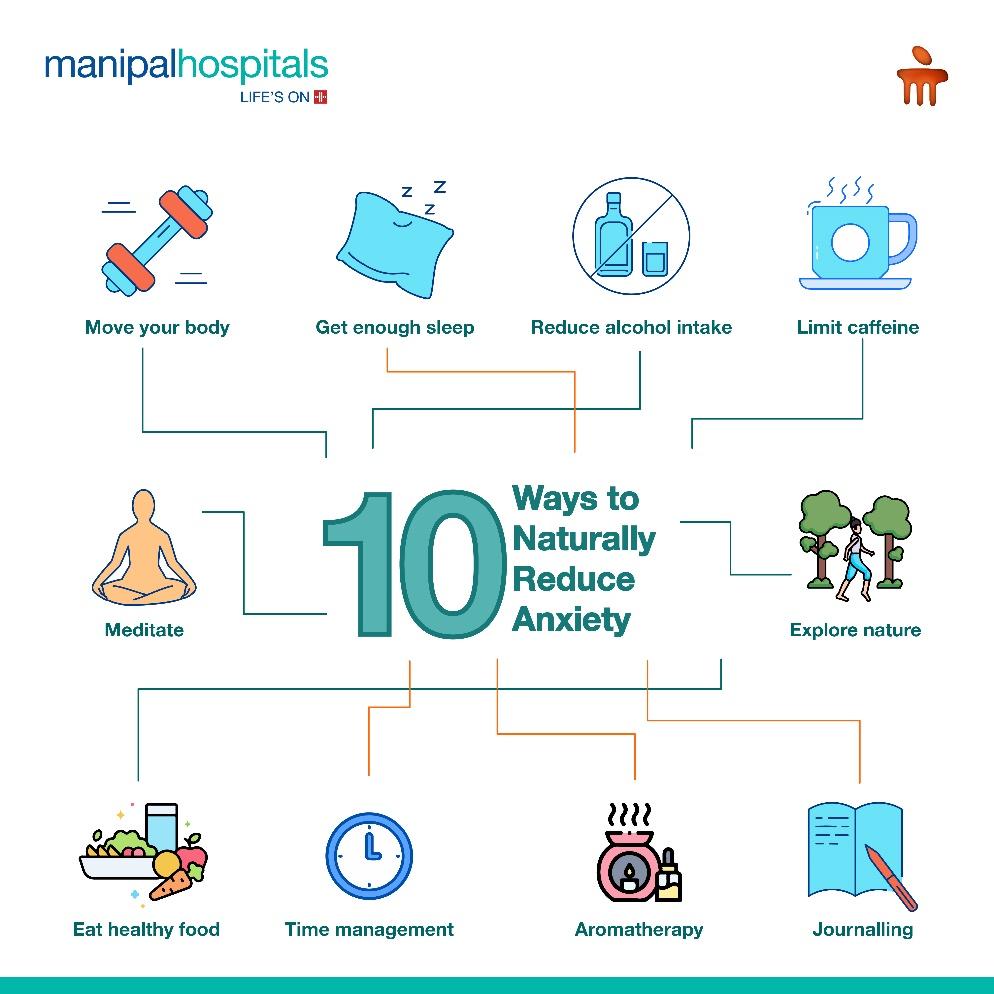
1. Physical Movement and Exercise:
Exercise diverts your attention away from thoughts that may trigger and exacerbate anxiety. Increasing your heart rate also alters brain chemistry, boosting anti-anxiety neurotransmitters like serotonin, gamma-aminobutyric acid (GABA), brain-derived neurotrophic factor (BDNF), and endocannabinoids.
2. Getting Enough Sleep
A good night’s sleep regulates mood and emotional brain circuits. Even a single night of poor sleep can increase emotional reactivity and cause the amygdala (the part of the brain involved in fear and negative emotions) to overdrive, worsening anxiety. Moreover, a lack of sleep affects concentration, and decision-making, further increasing feelings of worry and stress.
Hence, uninterrupted and proper sleep becomes essential in helping regulate heightened emotions. This can be achieved by incorporating better sleep hygiene habits:
- Sleeping when tired,
- Sleeping at the same time every day
- Limiting screen time before bed
- Eating at least 2 hours before bed
- Keeping the room dark and cool
- Writing down thoughts before bed
3. Reducing Alcohol
Consuming excessive amounts of alcohol disrupts the brain's mood-regulating neurotransmitters and increases the risk of chronic sleep issues both of which could potentially induce anxiety. A 2019 study from the University of Minnesota, USA, has found that there’s a link between anxiety and alcohol consumption, with anxiety disorders and alcohol use disorder often occurring in concordance.
Hence, experts advise reducing and even quitting alcohol consumption. While anxiety may temporarily spike due to withdrawal after quitting, these symptoms tend to improve over time.
4. Limiting Caffeine Consumption
While our daily coffee provides a needed energy boost, excessive dependence on caffeine can fuel anxiety. As a nervous system stimulant, caffeine promotes increased adrenaline production, heightened brain activity, elevated heart rate, and raised blood pressure. Consuming caffeine at odd hours also disrupts sleep cycles, worsening anxiety symptoms.
However, moderate coffee intake is not inherently harmful. Drinking coffee in the early hours, ideally before 3:30 pm, and gradually reducing daily caffeine consumption can help mitigate its effects on anxiety.
5. Practising Meditation and Mindfulness
When you are anxious, you are often caught up with the thoughts in your head. This is where meditation and mindfulness practices step in and anchor you into the present moment. A central goal of meditation is to become aware of the present moment by focusing on the breath and identifying thoughts in a non-judgmental way. This provides feelings of calm and contentment allowing you to tolerate all thoughts and feelings mindfully.
6. Going Out in the Nature
Numerous studies have shown that spending time in green spaces and exposure to fresh air decreases stress hormones like cortisol, adrenaline, and norepinephrine helping counteract the bodily effects of anxiety. Spending time outdoors during the day (especially in the morning) also exposes us to sunlight or natural light which regulates circadian rhythms and improves sleep quality.
7. Eating a Nutrient-rich Diet
A good diet packed with essential nutrition not only helps the body but also provides an array of benefits for the brain. Many nutrients aid in several brain functions and processes that influence mood and anxiety levels. Some of these include:
- Omega-3 fatty acids are important for brain structure and function and have many anti-anxiety effects.
- B vitamins (B6, B12, folate): Required for making and regulating the levels of neurotransmitters.
- Magnesium: Involved in neural pathways regulating anxiety and stress response.
- Zinc: Essential for neural communication and emotional regulation.
Nutrient deficiencies can cause fatigue, poor concentration, and low mood - factors that exacerbate anxiety. A balanced diet provides steady energy to help combat anxious restlessness.
8. Learning Time Management Skills
Piling up tasks can leave you feeling overwhelmed which triggers anxiety. One way to tackle this is through effective time management that helps prioritise and accordingly do the responsibilities, making them feel manageable. It provides a sense of control by allowing planning, anticipating setbacks, and adapting schedules. Additionally, separating work and personal time through strategies like scheduling buffers and prioritising life roles promotes better work-life balance, alleviating anxiety.
9. Aromatherapy
Studies have found that the aromatic compounds in essential oils like lavender, bergamot, and chamomile positively influence the limbic system in the brain, which processes emotions and memories. These oils can also modulate neurotransmitters linked to anxiety, such as increasing calming GABA levels or boosting serotonin and dopamine. Additionally, many essential oils possess natural sedative and muscle-relaxing properties that can induce the body's relaxation response, counteracting the physiological effects of anxiety like rapid heartbeat and high blood pressure.
10. Journaling and Writing it Out
Journaling provides an outlet to release worries and negative thoughts from one's mind onto paper. It promotes mindfulness and present-moment focus, countering anxiety's tendency toward excessive future-oriented rumination. Journaling boosts feelings of control while tracking entries over time allows individuals to recognise patterns, effective coping strategies, and their progress. The simple act of putting pen to paper provides a calming ritual for self-exploration and organisation of anxious thoughts.
Having persistent feelings of anxiety can greatly affect a person’s quality of life. Thankfully, there are many simple ways to counteract this constant feeling of dread and help you gain control of the situation. If your symptoms of anxiety persist, don't hesitate to reach out to mental health professionals at KMC Hospital, Mangalore who will help you navigate the disorder and also offer you tools to overcome anxiety.
Frequently Asked Questions
While biological factors make some more anxiety-prone, managing stress, getting counselling, and practising relaxation can help prevent or reduce symptoms.
If anxiety is persistent, excessive, and interfering with daily life, it could indicate an underlying anxiety disorder requiring treatment.
Symptoms can include persistent worries, intense repetitive negative thoughts, anxious and controlling, feeling restless/on edge, breathing difficulties, uneasiness in the stomach, easily fatigued, difficulty concentrating, irritability, muscle tension, and sleep problems.
Yes, eating a nutritious diet with foods rich in omega-3s, zinc, and magnesium and avoiding processed foods/sugar can help regulate mood.
It is better to first consult an RCI-licensed Clinical Psychologist who will evaluate in detail by gathering the history of the anxiety and understand if you need psychotherapy only or a combination of therapy and medications depending on the severity of the symptoms and the diagnosis. For many, usually, therapy combined with anti-anxiety medications can be very effective, in which case the clinical psychologist usually will refer you to a psychiatrist to understand how to control anxiety. Additionally, lifestyle changes are also important in managing anxiety.
Share this Article


Similar Blogs

ಮುಟ್ಟಿನ ಸಮಯದಲ್ಲಿ ಕಡಿಮೆ ರಕ್ತಸ್ರಾವ: ಕಾರಣಗಳು, ಲಕ್ಷಣಗಳು ಮತ್ತು ವೈದ್ಯರನ್ನು ಯಾವಾಗ ಸಂಪರ್ಕಿಸಬೇಕು?
30 Mar 20265 Min Read
ಸಾಮಾನ್ಯಕ್ಕಿಂತ ಹಗುರವಾದ ಮುಟ್ಟು ಯಾವುದೇ ಆಂತರಿಕ ಆರೋಗ್ಯ ಸಮಸ್ಯೆಯ ಸೂಚನೆಯಾಗಿರಬಹುದೇ? ಅನೇಕ ಮಹಿಳೆಯರು ಮುಟ್ಟಿನ ಸಮಯದಲ್ಲಿ ಕಡಿಮೆ ರಕ್ತಸ್ರಾವವನ್ನು ಗಮನಿಸದೆ ಬಿಡುತ್ತಾರೆ, ಆದರೆ ಇದು ಕೆಲವೊಮ್ಮೆ ಹಾರ್ಮೋನಲ್ ಅಥವಾ ಸಂತಾನೋತ್ಪತ್ತಿ ಸಂಬಂಧಿತ ಸಮಸ್ಯೆಗಳ ಸೂಚನೆಯಾಗಿರಬಹುದು. ಹಗುರವಾದ ಮುಟ್ಟು ಯಾವಾಗ ಸಾಮಾನ್ಯವಾಗಿರುತ್ತದೆ ಮತ್ತು ಯಾವಾಗ ವೈದ್ಯರ ಸಲಹೆ ಪಡೆಯಬೇಕು ಎಂಬುದನ್ನು ತಿಳಿದುಕೊಳ್ಳುವುದರಿಂದ ನಿಮ್ಮ ದೀರ್ಘಕಾಲದ ಆರೋಗ್ಯವನ್ನು ಕಾಪಾಡಲು ಸಹಾಯ ಮಾಡುತ್ತದೆ. ಈ ಬ್ಲಾಗ್ ಮುಟ್ಟಿನ ಸಮಯದಲ್ಲಿ ಕಡಿಮೆ ರಕ್ತಸ್ರಾವದ ಕಾರಣಗಳು, ಸಂಬಂಧಿತ ಲಕ್ಷಣಗಳು ಮತ್ತು ವೈದ್ಯರನ್ನು ಯಾವಾಗ ಸಂಪರ್ಕಿಸಬೇಕು ಎಂಬುದನ್ನು ವಿವರಿಸುತ್ತದೆ.
Read NowAntenatal Care During Pregnancy: Complete Checklist for Expecting Mothers
13 Mar 20266 Min Read
As you prepare to welcome a new life, ensuring the best possible health for both you and your baby becomes the utmost priority during pregnancy. This is where comprehensive antenatal care becomes important. Effective antenatal care for mothers is not just about medical check-ups; it is a holistic approach that encompasses physical, emotional, and psychological well-being.
Read NowUnderstanding Liver Function Tests: Purpose, Types & Interpretation
17 Oct 20255 Min Read
In India, liver disease has become the 11th leading cause of death, with over 2 million deaths annually, accounting for 4% of all deaths — that is, 1 in every 25 deaths worldwide. The mortality rate due to chronic liver diseases is seeing an upward trend. Diagnosing and treating liver diseases early can help increase survival rates. Thus, liver function tests are the most commonly used laboratory tests to assess the functioning of the liver and its overall health. This test measures various substances produced by the liver, giving insights into liver health, making it crucial to undergo this test periodically. This blog will help you understand what is a liver function test is, why it is done, how the liver test is done, and the interpretation of results.
Read NowLiving With Bipolar Disorder: Recognising The Signs and Finding The Right Treatment
01 Aug 20256 Min Read
Bipolar disorder is a severe mental illness that causes radical shifts in mood from euphoric highs (mania or hypomania) that last for days to a state of deep, prolonged lows (depression) that lasts for weeks. According to the World Health Organisation, an estimated 40 million people live with bipolar disorder; however, misdiagnosis or lack of treatment coverage is a major hurdle for effectively managing this disease. 1, 2 As a result, this can impact an individual’s psychosocial functioning, with impairments in work, family, and social relationships. In this blog post, we will explore what bipolar disorder is, its causes, symptoms, and treatments of bipolar disorder to help you recognise and manage this condition effectively.
Read NowTooth Sensitivity Vs. Sensitive Toothache: What's the Difference?
30 May 20257 Min Read
Have you ever taken a sip of cold water or bitten into ice cream, only to be greeted by a sharp, uncomfortable jolt in your teeth? Or maybe you’ve felt a deep, lingering toothache that just won’t let you enjoy your day? If yes, you’re not alone. Many people often confuse tooth sensitivity with a sensitive toothache, but they are actually quite different. Understanding the difference can help you find the right solution faster and save you from unnecessary pain.
Read NowWhat is Ectopic Pregnancy? Symptoms, Causes and Treatments
28 Mar 20255 Min Read
An ectopic pregnancy is a serious medical condition that requires immediate attention. It occurs when a fertilised egg implants itself outside the uterus, most commonly in the fallopian tube. The fallopian tube can’t hold a growing embryo, leading to bleeding. An ectopic pregnancy can have significant risks to the mother if left untreated. In this blog, we’ll explore the causes, symptoms, and treatments of ectopic pregnancy to help you understand this condition better.
Read NowBruxism (Teeth Grinding): Symptoms, Causes, & Treatment
05 Mar 20257 Min Read
Bruxism is also known as teeth grinding. It’s a common condition that can occur during sleep or while awake. Many people may not realise they have it until they experience symptoms like jaw pain, headaches, or worn-down teeth. While occasional grinding may not be harmful, persistent bruxism can lead to serious dental and health issues. Identifying the symptoms, causes, and treatment options is essential to managing this condition effectively. Various methods exist to stop grinding teeth, including natural remedies, dental guards, and professional bruxism treatments. Let’s explore these options.
Read NowMumps Viral Disease: Causes, Symptoms & Treatments
04 Mar 20256 Min Read
Mumps is a contagious viral disease mainly affecting the salivary glands, causing swelling and discomfort. While it was once a common childhood illness, the introduction of vaccines has significantly reduced its occurrence. However, mumps still exists, particularly in people who have not received mumps immunisation. Let's understand mumps, its causes, symptoms, complications, treatment, and prevention methods. Whether you are looking for information about mumps viral disease, its treatment, mumps disease symptoms, or how mumps immunisation can help, this guide will provide everything you need to know.
Read NowExercises to Strengthen Your Back And Spine
17 Jan 20256 Min Read
Back pain is a common ailment. It affects millions of individuals globally, including a significant proportion of the Indian population. Statistics reveal that nearly 20% of adults in India suffer from chronic back pain, with its prevalence increasing due to sedentary lifestyles, poor posture, and lack of physical activity. Globally, lower back pain ranks among the top reasons for missed workdays and disability. Your spine is a central pillar of your body, supporting movement, flexibility, and balance while protecting vital nerves. Strengthening the back and spine through targeted exercises can significantly alleviate pain, enhance posture, and prevent future complications. Let's dive into proven exercises for sore lower back and spine and essential lifestyle tips that can help you maintain a strong and healthy back and spine.
Read NowTooth Cavity: A Parent's Guide to Prevention and Treatment
02 Dec 20246 Min Read
Children often complain of a toothache that seems to get worse with time. When we consult or visit the dentist, we are generally told by the dentist, "Your child has a cavity." Tooth decay is one of the most common health issues children face, and it's not always easy to spot until it causes pain. In fact, according to the Centres for Disease Control and Prevention (CDC), nearly 1 in 5 children aged 5 to 11 have at least one untreated decayed tooth. This blog post will provide parents with essential information about tooth decay, its causes, prevention strategies, and available treatments.
Read NowRecent Blogs
Understanding Open Fractures: Types, Treatment, and What to Expect
29 Jun 20267 Min Read
An open fracture is one of the most urgent injuries an orthopaedic surgeon sees. Unlike a broken bone that stays hidden beneath intact skin, an open fracture breaks through the skin’s protective barrier, leaving the bone exposed to the outside environment. The moment that barrier is lost, the risk shifts from a straightforward bone healing process to one complicated by potential infection, soft tissue damage, and the need for precise surgical reconstruction. While the thought of a bone piercing the skin is frightening, it is important to know that modern orthopedic care has transformed the outlook for these injuries. With early, systematic open fracture management, most patients go on to heal successfully and return to daily life. In this article, expert insights from a top orthopaedic hospital in Mangaluru help you learn about what is an open fracture, the common types, the potential open fracture complications, and what to expect during recovery.
Read NowIs Circumcision Painful? What to Expect Before and After the Procedure
17 Apr 20266 Min Read
Circumcision is a surgical procedure to remove the foreskin, the fold of skin that covers the head (glans) of the penis. While often performed on infants for religious or cultural reasons, it is also a safe and common procedure for adults, typically for medical reasons or personal preference. Modern surgical techniques, coupled with effective pain management, have significantly evolved to prioritise patient comfort, so that you don’t have to wonder: “is circumcision painful?”
Read NowHow to Relieve Nerve Pain in Your Leg: Tips and Treatments That Work
13 Apr 20265 Min Read
Leg nerve pain or neuropathy, often described as a burning sensation, tingling, numbness, or shooting pain, can be debilitating, affecting daily activities and overall quality of life. Conditions like sciatica, peripheral neuropathy, and nerve compression can cause this discomfort, originating from various points along the nerve pathways. While nerve pain can be challenging, studies show that conservative treatments, including physiotherapy and targeted exercises, successfully alleviate symptoms within a few weeks to months, helping individuals reclaim their comfort and mobility.
Read NowHow to Reduce Hyperpigmentation in Skin: Achieve Brighter, Even-Toned Skin
08 Apr 20264 Min Read
Melanin, the natural pigment that gives our skin, hair, and eyes their colour, plays a crucial role in protecting us from the sun's harmful ultraviolet (UV) rays. However, sometimes an overproduction or uneven distribution of melanin can lead to conditions like hyperpigmentation, dark spots, or an overall desire for a more even and brighter skin tone. We understand these concerns and offer expert guidance and advanced treatments to help you achieve your skin goals safely and effectively.
Read Nowಮುಟ್ಟಿನ ಸಮಯದಲ್ಲಿ ಕಡಿಮೆ ರಕ್ತಸ್ರಾವ: ಕಾರಣಗಳು, ಲಕ್ಷಣಗಳು ಮತ್ತು ವೈದ್ಯರನ್ನು ಯಾವಾಗ ಸಂಪರ್ಕಿಸಬೇಕು?
30 Mar 20265 Min Read
ಸಾಮಾನ್ಯಕ್ಕಿಂತ ಹಗುರವಾದ ಮುಟ್ಟು ಯಾವುದೇ ಆಂತರಿಕ ಆರೋಗ್ಯ ಸಮಸ್ಯೆಯ ಸೂಚನೆಯಾಗಿರಬಹುದೇ? ಅನೇಕ ಮಹಿಳೆಯರು ಮುಟ್ಟಿನ ಸಮಯದಲ್ಲಿ ಕಡಿಮೆ ರಕ್ತಸ್ರಾವವನ್ನು ಗಮನಿಸದೆ ಬಿಡುತ್ತಾರೆ, ಆದರೆ ಇದು ಕೆಲವೊಮ್ಮೆ ಹಾರ್ಮೋನಲ್ ಅಥವಾ ಸಂತಾನೋತ್ಪತ್ತಿ ಸಂಬಂಧಿತ ಸಮಸ್ಯೆಗಳ ಸೂಚನೆಯಾಗಿರಬಹುದು. ಹಗುರವಾದ ಮುಟ್ಟು ಯಾವಾಗ ಸಾಮಾನ್ಯವಾಗಿರುತ್ತದೆ ಮತ್ತು ಯಾವಾಗ ವೈದ್ಯರ ಸಲಹೆ ಪಡೆಯಬೇಕು ಎಂಬುದನ್ನು ತಿಳಿದುಕೊಳ್ಳುವುದರಿಂದ ನಿಮ್ಮ ದೀರ್ಘಕಾಲದ ಆರೋಗ್ಯವನ್ನು ಕಾಪಾಡಲು ಸಹಾಯ ಮಾಡುತ್ತದೆ. ಈ ಬ್ಲಾಗ್ ಮುಟ್ಟಿನ ಸಮಯದಲ್ಲಿ ಕಡಿಮೆ ರಕ್ತಸ್ರಾವದ ಕಾರಣಗಳು, ಸಂಬಂಧಿತ ಲಕ್ಷಣಗಳು ಮತ್ತು ವೈದ್ಯರನ್ನು ಯಾವಾಗ ಸಂಪರ್ಕಿಸಬೇಕು ಎಂಬುದನ್ನು ವಿವರಿಸುತ್ತದೆ.
Read NowAntenatal Care During Pregnancy: Complete Checklist for Expecting Mothers
13 Mar 20266 Min Read
As you prepare to welcome a new life, ensuring the best possible health for both you and your baby becomes the utmost priority during pregnancy. This is where comprehensive antenatal care becomes important. Effective antenatal care for mothers is not just about medical check-ups; it is a holistic approach that encompasses physical, emotional, and psychological well-being.
Read NowA Comprehensive Guide to Knee Pain – Causes, Diagnosis, and Advanced Relief & Treatment Options
04 Feb 20266 Min Read
Knee pain is not just a common ailment; it is one of the leading musculoskeletal complaints that can significantly affect a person’s quality of life. For people living with knee pain, a casual walk or climbing a simple flight of stairs becomes a dreaded challenge. Whether you're experiencing a sharp, sudden twinge or a persistent, dull knee ache, remedy is needed to live life pain free. Understanding the complexities of this joint and the causes behind its pain is the crucial first step toward lasting knee pain relief.
Read NowUnderstanding Liver Function Tests: Purpose, Types & Interpretation
17 Oct 20255 Min Read
In India, liver disease has become the 11th leading cause of death, with over 2 million deaths annually, accounting for 4% of all deaths — that is, 1 in every 25 deaths worldwide. The mortality rate due to chronic liver diseases is seeing an upward trend. Diagnosing and treating liver diseases early can help increase survival rates. Thus, liver function tests are the most commonly used laboratory tests to assess the functioning of the liver and its overall health. This test measures various substances produced by the liver, giving insights into liver health, making it crucial to undergo this test periodically. This blog will help you understand what is a liver function test is, why it is done, how the liver test is done, and the interpretation of results.
Read NowLiving With Bipolar Disorder: Recognising The Signs and Finding The Right Treatment
01 Aug 20256 Min Read
Bipolar disorder is a severe mental illness that causes radical shifts in mood from euphoric highs (mania or hypomania) that last for days to a state of deep, prolonged lows (depression) that lasts for weeks. According to the World Health Organisation, an estimated 40 million people live with bipolar disorder; however, misdiagnosis or lack of treatment coverage is a major hurdle for effectively managing this disease. 1, 2 As a result, this can impact an individual’s psychosocial functioning, with impairments in work, family, and social relationships. In this blog post, we will explore what bipolar disorder is, its causes, symptoms, and treatments of bipolar disorder to help you recognise and manage this condition effectively.
Read NowEverything You Should Know About Total Hip Replacement (Arthroplasty) Surgery
01 Aug 20256 Min Read
Total Hip Replacement Surgery (THR surgery) is a standard of care for end-stage hip osteoarthritis, providing patients with pain relief and improved joint function. Total Hip Replacement is widely regarded as one of the most cost-effective planned surgeries, in terms of Quality-Adjusted Life Years (QALYs) gained. Hip Replacement Surgery is one of the most frequent and effective surgeries performed worldwide for hip osteoarthritis. In India, the procedure is set to grow at the highest rate in the world from the period 2020 to 2026.1. The surgery is recommended for hip conditions that are getting worse, not improving with other methods, or causing excessive pain or difficulty in moving. This article helps you understand the benefits and limitations of Total Hip Replacement Surgery.
Read Now