


Postpartum Meaning: Understanding the Period After Childbirth
Reviewed by: Dr. Shashikala Hande
Posted on
8 Min Read

Not sure what you’re looking for?
Get in touch with our representatives for help!
Contact UsAfter childbirth, life can feel a little overwhelming at first. While you are looking after the baby, your body is also trying to recover from pregnancy and delivery. Tiredness, body pain, sleep trouble, breast discomfort, and mood changes are all common during this time. Knowing the meaning of postpartum can help make this stage feel a little less confusing.
The postpartum period starts right after delivery and continues while the body heals and settles into a new routine. Some women feel better fairly quickly, while others need more time, rest, and support, especially after a caesarean birth.
Good postpartum care helps with both physical recovery and emotional well-being after childbirth. This blog looks at common postpartum symptoms, recovery after delivery, emotional changes, and simple after-childbirth care tips that can help during this time.
What is the Postpartum Period?
Postpartum refers to the stage after childbirth when the mother’s body begins returning to its pre-pregnancy condition. Doctors generally consider the postpartum period to last around six weeks, although physical and emotional recovery may continue for several months. This stage begins immediately after delivery of the baby and placenta. Hormone levels drop quickly, and the uterus gradually returns to its pre-pregnancy size.
Those who have delivered via a cesarean method will have a more extended recovery period as a result of healing from the wound created in the operation. There is an enormous difference in the recovery process.
The emotional side of the postpartum period also deserves attention. Motherhood adaptation, feedings, and insomnia are known to have an impact on one’s emotions in the first weeks following birth.
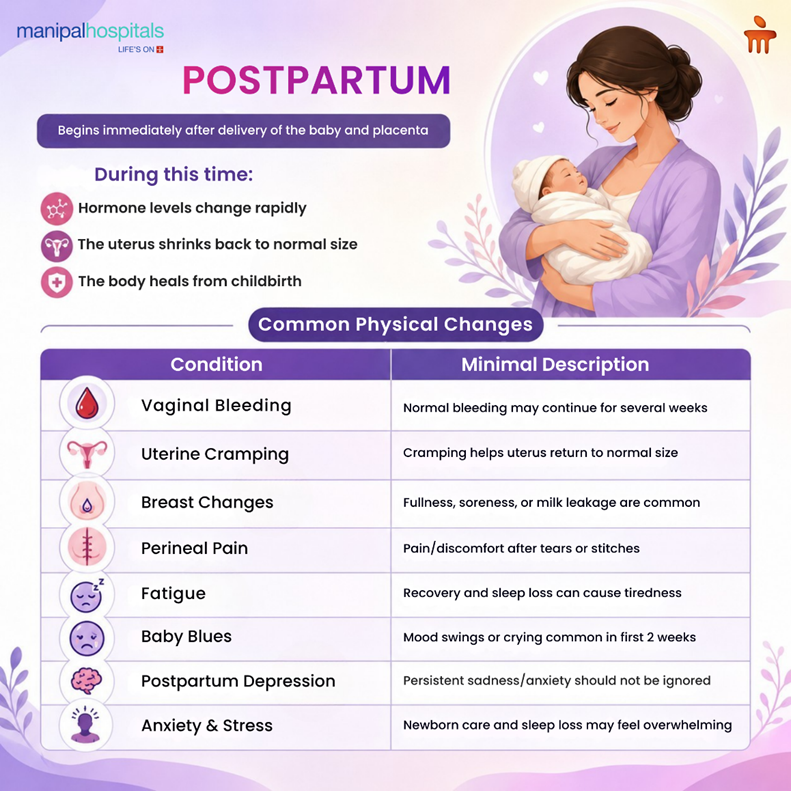
Physical Changes After Childbirth
The body experiences several visible and invisible changes during the postpartum period. Some symptoms improve quickly, while others take time to settle.
Vaginal Bleeding
Bleeding after childbirth is normal and usually lasts for several weeks. It starts heavily and gradually reduces over time. This process is part of natural postpartum recovery.
Uterine Cramping
Most women feel cramp-like pain after childbirth. These cramps help the uterus return to its pre-pregnancy size.
Breast Changes
After childbirth, it is common for the breasts to become sore, heavy, or tender as they begin producing milk.
Perineal Pain
Women who have vaginal tears or stitches often experience discomfort while sitting or walking. Good hygiene and rest help during after childbirth care.
Fatigue
Extreme tiredness is one of the most common complaints during the postpartum period. Recovery from labour combined with interrupted sleep can leave mothers physically drained.
Emotional Changes During the Postpartum Period
Physical healing is only one part of recovery. Emotional changes are equally common after childbirth.
Baby Blues
Many mothers feel emotional, irritable, or unusually sensitive during the first few days after delivery. This usually improves naturally within two weeks.
Postpartum Depression
Despite the occurrence of temporary emotional shifts, postpartum depression stands out due to its length and impact on one’s routine. Do not minimise feelings of sadness, anxiety, or hopelessness or problems with bonding with your baby.
Consulting with a doctor would be of great importance to one during the postpartum period.
Anxiety and Stress
The pressure of caring for a newborn can feel overwhelming, especially for first-time mothers. Emotional support from family members plays an important role in effective postpartum care.
Common Postpartum Symptoms
The following table explains some common postpartum symptoms and situations where medical attention may be necessary:
|
Symptom |
Common Cause |
When to Consult a Doctor |
|
Uterine healing |
Heavy bleeding or large clots |
|
|
Breast pain |
Milk production |
Fever or redness in the breasts |
|
Pelvic discomfort |
Healing after delivery |
Severe or worsening pain |
|
Fatigue |
Lack of sleep and recovery |
Extreme weakness or dizziness |
|
Mood swings |
Hormonal changes |
Symptoms lasting more than two weeks |
|
Constipation |
Reduced bowel activity |
Severe abdominal pain |
Recognising unusual symptoms early is an important part of safe care after childbirth.
Importance of Postpartum Care
Some women focus entirely on newborn care and forget their health needs. However, proper postpartum care is essential for long-term recovery.
-
Medical Follow-Up: Regular check-ups help doctors monitor healing, blood pressure, bleeding, and emotional health during the postpartum period.
-
Nutrition and Hydration: Balanced meals help restore energy and support tissue healing. Women who breastfeed also need adequate hydration throughout the day.
-
Rest and Recovery: Rest is often difficult with a newborn at home, but recovery becomes harder without enough sleep. Even short periods of rest can support postpartum recovery.
-
Hygiene: Maintaining personal hygiene cuts down the risk of infections. After a caesarean, women should keep the incision site clean and dry as part of postpartum care.
Nutrition During Postpartum Recovery
Food choices can influence healing, energy levels, and emotional well-being after childbirth.
-
A healthy recovery diet should include:
-
Protein-rich foods for tissue repair
-
Iron-rich foods after blood loss
-
Calcium for bone health
-
Fibre to reduce constipation
-
Plenty of fluids for hydration
Simple home-cooked meals are often easier to tolerate during the postpartum period than heavily processed foods.
Breastfeeding and Recovery
Breastfeeding supports bonding and provides ideal nutrition for newborns. It also helps the uterus contract after delivery. However, breastfeeding can come with challenges. Some mothers experience nipple soreness, breast engorgement, or difficulty with latching. Lactation guidance may improve comfort and confidence during postpartum recovery. Women should continue practising proper postpartum care while breastfeeding, including eating nutritious meals and staying hydrated.
Exercise After Childbirth
Physical activity should restart gradually after delivery. Gentle movement can improve circulation, reduce stiffness, and support mental well-being.
Safe activities include:
-
Walking
-
Pelvic floor exercises
-
Gentle stretching
-
Deep breathing exercises
Women recovering from surgery may need additional time before returning to regular exercise routines during the postpartum period.
Warning Signs That Need Medical Attention
Although mild discomfort is common, some symptoms should never be ignored during postpartum recovery.
Seek immediate medical care in Jayanagar if there is:
-
Heavy bleeding, soaking pads quickly
-
Chest pain or breathing difficulty
-
High fever
-
Severe headache with blurred vision
-
Foul-smelling discharge
-
Severe depression or self-harm thoughts
Prompt treatment helps prevent serious complications during the postpartum period.
Practical Tips for After Childbirth Care
Recovery often feels easier when mothers receive practical support at home. Helpful steps include:
-
Drinking enough water daily
-
Eating regular, nourishing meals
-
Accepting help from family members
-
Sleeping whenever possible
-
Avoiding heavy lifting
-
Attending follow-up appointments
-
Speaking openly about emotional struggles
These small habits can make after childbirth care more manageable and less stressful.
Long-Term Recovery and Adjustment
Postpartum is an important phase of healing and adaptation after delivery. The physical as well as emotional aspects of postpartum involve many difficulties. An understanding of the postpartum definition makes women aware of the normal phases of postpartum recovery and when to seek assistance. Postpartum care is achieved by following certain healthy practices, seeking emotional support and getting medical check-ups done.
Conclusion
The postpartum period is a major stage of healing and adjustment after childbirth. From physical recovery to emotional changes, mothers experience several challenges during this time. Understanding the postpartum meaning helps women recognise common recovery experiences and seek help when needed. Proper postpartum care, healthy routines, emotional support, and medical follow-up all contribute to safer postpartum recovery.
For expert maternity guidance and specialised after childbirth care, visit us at Manipal Hospital Jayanagar.
Frequently Asked Questions
A majority of women are able to recuperate from childbirth within six weeks; nevertheless, recuperation after childbirth could take many months, depending on the mode of birth and any pre-existing medical conditions.
Some of the postpartum symptoms that one may suffer from include bleeding, tender breasts, fatigue, backache, constipation, mood swings, and sleep problems.
Postpartum care is essential because it ensures proper healing, prevents diseases, improves emotional wellness, promotes effective lactation, and detects complications.
Gentle walking and stretching exercises may normally be started soon after normal delivery. Heavy exercises can commence after the recommendation of the doctor.
If a woman suffers from excessive bleeding, fever, chest pain, severe headaches, difficulty breathing, or persistent feelings of depression after childbirth, she should urgently contact her doctor.
Share this Article


Recent Blogs

Gas Trouble in Chest: Symptoms, Causes, and Relief Options
29 Jun 20266 Min Read
A sudden feeling of pressure, tightness, or discomfort in the chest can be alarming. Many people immediately worry about a heart problem, yet in some cases, the culprit is something much less dangerous - trapped gas within the digestive tract. Even so, chest discomfort should never be dismissed without understanding what is causing it. Gas trouble can create sensations that feel surprisingly intense, ranging from bloating and fullness to sharp pains that seem to radiate through the chest. The challenge is that digestive symptoms and certain medical emergencies can occasionally feel similar, making it important to recognise the differences. Understanding what is normal, what deserves attention, and what requires urgent care can help you respond with confidence rather than fear. This blog explains the common symptoms, underlying causes, practical relief measures, warning signs that need medical evaluation, and ways to reduce future episodes of gas trouble.
Read NowNeonatal Sepsis: A Complete Guide for Parents with Newborn Babies
29 Jun 20268 Min Read
The arrival of a newborn into the family usually brings great joy, love, and a series of new duties. In the early weeks of their lives, changes in feeding, activity levels, breathing patterns, or temperature regulation can sometimes be early indicators of serious illness in newborns. Although most worries about newborn health issues are normally harmless, there are certain situations that warrant emergency medical intervention, and neonatal sepsis is one of them. Neonatal sepsis is a condition characterised by infection in newborn infants that can become fatal without proper identification and treatment as soon as possible. Luckily for infants, modern neonatology care has enabled doctors to save many more lives than before. Knowing what to look out for and when medical care should be sought could prove crucial. In this blog, neonatal sepsis is covered comprehensively in terms of causes, symptoms, diagnostic criteria, treatment, risk factors, prevention, and recovery.
Read NowMouth Cancer: Causes, Warning Signs and Modern Treatment Approaches
29 Jun 20268 Min Read
Discovering an unusual change inside your mouth, like a stubborn ulcer or a strange patch on your tongue, is all too simple to dismiss as a minor irritation. However, because these early warning signs frequently mimic common issues like canker sores or friction from a sharp tooth, many individuals delay seeking a medical evaluation. While these changes are not always cancerous, recognising them early can make a significant difference to treatment outcomes and long-term health. The good news is that advances in diagnosis and treatment have considerably improved survival rates, especially when the condition is identified at an early stage. Understanding the warning signs, knowing who is at risk, and learning what happens during testing can help reduce uncertainty and empower you to seek timely care. This blog explores the key risk factors, the early mouth cancer symptoms to watch for, how a biopsy confirms the diagnosis, and the treatment options available today.
Read NowAngioplasty Procedure Explained: What to Expect, Recovery, and Risks
26 Jun 20266 Min Read
Coronary artery disease remains one of the leading causes of cardiovascular illness worldwide, and in India, it has emerged as a critical public health challenge. India accounts for nearly 60% of the world's coronary artery disease cases, with the disease striking at a younger age, approximately 5-10 years earlier than in Western countries. As the arteries supplying blood to the heart narrow or become blocked, they can cause symptoms such as chest pain, breathlessness, and reduced exercise tolerance. In such cases, procedures such as angioplasty may be required to restore circulation and reduce the risk of serious cardiac events. For many people, it offers rapid symptom relief, improves blood flow to the heart, and helps reduce the risk of serious cardiac complications. This blog explains what is angioplasty, how the angioplasty procedure is performed, who may need it, what recovery looks like, and the lifestyle changes that help ensure long-term heart health.
Read NowCan Insulin Resistance Be Cured? Treatment and Management Options
29 May 20268 Min Read
Insulin resistance is something that many people live with without realising it at first. It may start with constant tiredness, feeling hungry more often, gaining weight around the waist, or simply not feeling as active as before. Since these changes happen slowly, they are often mistaken for stress, poor sleep, or a busy routine. The condition develops when the body’s cells do not respond properly to insulin, the hormone that helps sugar move from the blood into the cells for energy. To handle this situation, the body starts making more insulin to keep blood sugar levels normal. Over time, such behaviour can increase the risk of prediabetes and type 2 diabetes. Although insulin resistance is common, it can often be managed well with early attention. Simple changes like eating balanced meals, staying physically active, sleeping properly, and managing stress can help improve insulin sensitivity and support better overall health.
Read Nowಇಂಟರ್ಸ್ಟಿಷಿಯಲ್ ಲಂಗ್ ರೋಗ: ಕಾರಣಗಳು, ಹಂತಗಳು, ಲಕ್ಷಣಗಳು ಮತ್ತು ಚಿಕಿತ್ಸೆ ಮಾರ್ಗದರ್ಶಿ
29 May 20266 Min Read
ಶ್ವಾಸಕೋಶಗಳು ನಮ್ಮ ದೇಹದ ಅತ್ಯಂತ ನಿರ್ಣಾಯಕ ಅಂಗಗಳಲ್ಲಿ ಒಂದಾಗಿದ್ದು, ಅವುಗಳ ಆರೋಗ್ಯ ನಮ್ಮ ಒಟ್ಟಾರೆ ಯೋಗಕ್ಷೇಮಕ್ಕೆ ಅತ್ಯಗತ್ಯ. ಆದಾಗ್ಯೂ, ಕೆಲವು ಕಾಯಿಲೆಗಳು ಶ್ವಾಸಕೋಶದ ಸೂಕ್ಷ್ಮ ರಚನೆಗಳನ್ನು ಬಾಧಿಸಿ, ಉಸಿರಾಟವನ್ನು ಕಷ್ಟಕರವಾಗಿಸಬಹುದು. ಅಂತಹ ಒಂದು ಕಾಯಿಲೆಯೆಂದರೆ ಇಂಟರ್‌ಸ್ಟಿಷಿಯಲ್ ಲಂಗ್ ರೋಗ (Interstitial Lung Disease - ILD), ಇದು ಶ್ವಾಸಕೋಶದ ಅಂಗಾಂಶಗಳ ಮೇಲೆ ಪರಿಣಾಮ ಬೀರುವ ಒಂದು ಸಂಕೀರ್ಣ ಸ್ಥಿತಿಯಾಗಿದೆ. ಮಣಿಪಾಲ ಆಸ್ಪತ್ರೆಗಳಲ್ಲಿ, ಈ ಸ್ಥಿತಿಯನ್ನು ಅರ್ಥಮಾಡಿಕೊಳ್ಳುವುದು ಮತ್ತು ಅದಕ್ಕೆ ಸೂಕ್ತ ಚಿಕಿತ್ಸೆಯನ್ನು ಒದಗಿಸುವುದು ನಮ್ಮ ಆದ್ಯತೆಯಾಗಿದೆ.
Read NowPostpartum Meaning: Understanding the Period After Childbirth
25 May 20268 Min Read
After childbirth, life can feel a little overwhelming at first. While you are looking after the baby, your body is also trying to recover from pregnancy and delivery. Tiredness, body pain, sleep trouble, breast discomfort, and mood changes are all common during this time. Knowing the meaning of postpartum can help make this stage feel a little less confusing. The postpartum period starts right after delivery and continues while the body heals and settles into a new routine. Some women feel better fairly quickly, while others need more time, rest, and support, especially after a caesarean birth. Good postpartum care helps with both physical recovery and emotional well-being after childbirth. This blog looks at common postpartum symptoms, recovery after delivery, emotional changes, and simple after-childbirth care tips that can help during this time.
Read NowAortic Stenosis: When Your Heart Valve Narrows
25 May 20268 Min Read
It often starts in a way that is easy to miss. You may feel more tired than usual, get breathless while climbing stairs, or notice chest discomfort during things that were never a problem before. Most people do not immediately think of a heart issue. They assume it is stress, ageing, or simply a busy life catching up with them. These signs can sometimes mean aortic stenosis. This can sometimes happen because the aortic valve narrows and restricts blood flow from the heart. Because the change happens slowly, many people adjust to it without realising what is going on. This blog explains the causes of aortic valve narrowing, the symptoms that should not be ignored, how doctors diagnose the condition, the treatment options available, and when valve replacement surgery may be recommended.
Read NowSunburn Explained: Skin Damage, Meaning, and Natural Treatment Options
25 May 20268 Min Read
It usually starts very casually – a few extra minutes in the sun during a walk, a day at the beach, an outdoor event, or even sitting near a pool for too long. At first, nothing feels wrong. But later in the day, the skin begins to feel hot, tight, and sore. By night, even wearing clothes can feel uncomfortable. A lot of people brush off sunburn as something harmless, but too much time in the sun can sometimes leave the skin painfully red, dry, peeling, and even blistered. Repeated sun damage can also affect the skin over time and increase the risk of early ageing and skin cancer. Because the symptoms appear after the damage is already done, many people do not realise how serious sunburn can become. Knowing how to manage sunburn early and protect the skin from further damage can make recovery much easier. This blog explores the symptoms of sunburn, what causes skin damage from sun exposure, when medical attention may be needed, and practical tips to help prevent future sun damage.
Read NowUnderstanding Uterine Fibroids – Types, Symptoms, Causes and Treatment modalities
22 Apr 20266 Min Read
Being told you have fibroids can feel unsettling. Many women immediately begin to wonder, “Is this serious? Will I need surgery?” The good news is that there are many ways to treat uterine fibroids now, depending on your symptoms, age, and plans for having children in the future. The treatment modalities also vary according to the size, location, and symptoms of the fibroid. Many women discover fibroids during a routine scan, often without any symptom at all. Some women may not need treatment, while others may need medication or surgery. This blog explains uterine fibroids, their types, causes, and treatment options in a clear and simple way, from what uterine fibroids are to the different types of uterine fibroids, what causes them, and the best treatment options available today.
Read Now