


Angioplasty Procedure Explained: What to Expect, Recovery, and Risks
Reviewed by: Dr. Afsar Pasha
Posted on
6 Min Read

Not sure what you’re looking for?
Get in touch with our representatives for help!
Contact UsCoronary artery disease remains one of the leading causes of cardiovascular illness worldwide, and in India, it has emerged as a critical public health challenge. India accounts for nearly 60% of the world's coronary artery disease cases, with the disease striking at a younger age, approximately 5-10 years earlier than in Western countries. As the arteries supplying blood to the heart narrow or become blocked, they can cause symptoms such as chest pain, breathlessness, and reduced exercise tolerance.
In such cases, procedures such as angioplasty may be required to restore circulation and reduce the risk of serious cardiac events. For many people, it offers rapid symptom relief, improves blood flow to the heart, and helps reduce the risk of serious cardiac complications. This blog explains what is angioplasty, how the angioplasty procedure is performed, who may need it, what recovery looks like, and the lifestyle changes that help ensure long-term heart health.
What is Angioplasty?
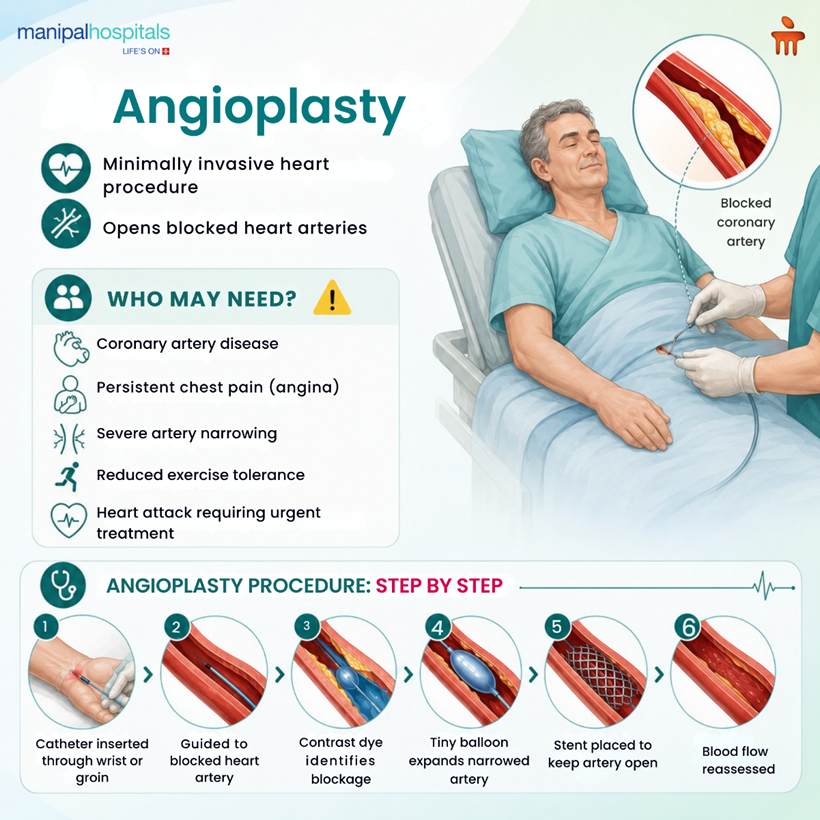
When arteries supplying blood to the heart become narrowed due to fatty deposits called plaques, the heart muscle may not receive enough oxygen-rich blood. This can lead to chest pain, breathlessness, reduced exercise capacity, or even a heart attack. During angioplasty, a cardiologist uses a thin tube called a catheter to reach the blocked artery and restore blood flow.
The procedure is commonly recommended for:
-
Coronary artery disease causing symptoms
-
Significant arterial narrowing detected during testing
-
Heart attacks requiring urgent restoration of blood supply
-
Persistent angina despite medication
-
Multiple risk factors with evidence of severe blockage
Although some people refer to it as "angio surgery," angioplasty is generally performed through a small puncture in the wrist or groin rather than a large surgical incision.
How is it different from bypass surgery?
The terms can sometimes create confusion because they are often used interchangeably in everyday conversations. While angioplasty uses a catheter to open narrowed arteries from within, coronary artery bypass grafting (CABG) is a major surgical operation that creates an alternative route around blocked arteries.
Angioplasty is often preferred when:
-
There are fewer blockages
-
The narrowed segments are accessible by catheter
-
Rapid treatment is required during a heart attack
-
Recovery time needs to be shorter
Bypass surgery may be recommended for extensive disease involving multiple major arteries or complex patterns of blockage. Your cardiologist evaluates imaging findings, overall health, and long-term outcomes before recommending the most suitable treatment option.
How is the Angioplasty Procedure Performed?
Knowing what happens step by step often helps reduce anxiety before treatment. The procedure is usually performed in a specialised cardiac catheterisation laboratory under local anaesthesia.
The angioplasty procedure typically involves:
-
A small catheter is inserted through an artery in the wrist or groin.
-
The catheter is carefully guided toward the heart arteries with imaging guidance.
-
Contrast dye is injected to identify the exact location and severity of the blockage.
-
A tiny balloon is advanced to the narrowed segment.
-
The balloon is inflated to widen the artery.
-
In most cases, a stent is placed to help keep the artery open.
-
Blood flow is reassessed before the catheter is removed.
Most procedures take between 30 minutes and two hours, depending on the complexity and number of blockages being treated.
Types of Stents Used During Angioplasty
The stent plays an important role in maintaining blood flow after treatment. Different stent technologies have been developed to improve long-term outcomes and reduce the likelihood of re-narrowing. The following are the different types of stens used and benefits each provides:
|
Stent Type |
Key Feature |
Typical Advantage |
Consideration |
|
Bare Metal Stent |
Simple metallic framework |
Rapid healing of vessel lining |
Higher chance of artery narrowing again |
|
Drug-eluting Stent |
Releases medication gradually |
Lower risk of re-blockage |
Requires longer use of blood-thinning medication |
|
Bioabsorbable Scaffold |
Designed to dissolve over time |
Leaves no permanent implant |
Not suitable for all blockage types |
|
Covered Stent |
Special protective covering |
Useful in selected complex situations |
Reserved for specific clinical indications |
|
Dual Therapy Stent |
Combines healing-promoting surface with drug release |
Balances healing and restenosis prevention |
Used selectively based on patient profile |
The choice of stent depends on factors such as the artery involved, medical history, bleeding risk, and overall heart condition.
Recovery After Angioplasty
Recovery is often much quicker than people expect. Most individuals notice an improvement in symptoms soon after blood flow is restored. During the first few hours, the access site is monitored while the patient is kept under observation. Depending on the clinical situation, discharge may occur the same day or after a short hospital stay.
First Week
-
Mild bruising or tenderness at the catheter insertion site
-
Temporary fatigue
-
Gradual return to walking and routine daily activities
-
Regular medication use as prescribed
First Month
-
Improved exercise tolerance
-
Better control of angina symptoms
-
Follow-up consultations to monitor progress
-
Introduction of structured cardiac rehabilitation if recommended
Long-Term Recovery
Successful treatment does not eliminate the underlying tendency to develop artery disease. Long-term recovery focuses on protecting heart health through:
-
Smoking cessation
-
Blood pressure control
-
Cholesterol management
-
Regular physical activity
-
Weight management
-
A heart-healthy diet
-
Diabetes control when applicable
These measures help maintain the benefits achieved through the angioplasty procedure.
Understanding the Risks of Angioplasty
While angioplasty is considered safe and routinely performed worldwide, every medical procedure carries some degree of risk. Knowing these possibilities helps create realistic expectations rather than unnecessary fear. Potential complications include:
-
Bleeding at the catheter insertion site
-
Allergic reactions to contrast dye
-
Irregular heart rhythms
-
Blood clot formation within the stent
-
Damage to the treated artery
-
Kidney complications in susceptible individuals
-
Stroke, though uncommon
-
Heart attack during the procedure, which is rare
Serious complications are uncommon, particularly when the procedure is performed by experienced interventional cardiologists, and appropriate precautions are followed.
When Should You Contact Your Doctor After Angioplasty?
Most recoveries are smooth, but certain symptoms should never be ignored. Prompt medical attention can prevent complications from becoming more serious.
Contact your healthcare team if you experience:
-
Increasing swelling at the puncture site
-
Persistent bleeding
-
Fever or signs of infection
-
New chest discomfort
-
Dizziness or fainting
-
Sudden weakness or difficulty speaking
Conclusion
Learning what is angioplasty and understanding the recovery process can make the experience far less intimidating. Modern angioplasty has helped millions of people regain quality of life by restoring healthy blood flow to the heart with minimal disruption to daily activities. While every procedure carries risks, careful patient selection, advanced techniques, and ongoing lifestyle changes contribute significantly to successful outcomes.
For angioplasty surgery in Jayanagar, Bangalore, and long-term heart health support, consult our experienced cardiac specialists at Manipal Hospital Jayanagar.
Frequently Asked Questions
Yes. Some individuals may require repeat angioplasty if new blockages develop in different arteries or if previously treated areas become narrowed again. The need for additional procedures depends on lifestyle factors, medical conditions, and progression of coronary artery disease.
Most people remain awake but relaxed throughout the procedure. Local anaesthesia numbs the insertion site, and mild sedative medication may be given to help you feel comfortable. General anesthesia is rarely required.
Modern coronary stents are minimal and generally do not trigger airport security systems. You can travel normally after receiving medical clearance from your cardiologist.
Extreme temperatures can place additional stress on the cardiovascular system. Very hot or freezing weather may increase the heart's workload, so it is wise to stay hydrated, dress appropriately, and avoid strenuous activity during severe weather conditions.
Long-term emotional stress can contribute to high blood pressure, unhealthy lifestyle habits, and increased cardiovascular risk. Stress management through exercise, relaxation techniques, adequate sleep, and social support plays an important role in maintaining heart health after treatment.
Share this Article


Recent Blogs

Gas Trouble in Chest: Symptoms, Causes, and Relief Options
29 Jun 20266 Min Read
A sudden feeling of pressure, tightness, or discomfort in the chest can be alarming. Many people immediately worry about a heart problem, yet in some cases, the culprit is something much less dangerous - trapped gas within the digestive tract. Even so, chest discomfort should never be dismissed without understanding what is causing it. Gas trouble can create sensations that feel surprisingly intense, ranging from bloating and fullness to sharp pains that seem to radiate through the chest. The challenge is that digestive symptoms and certain medical emergencies can occasionally feel similar, making it important to recognise the differences. Understanding what is normal, what deserves attention, and what requires urgent care can help you respond with confidence rather than fear. This blog explains the common symptoms, underlying causes, practical relief measures, warning signs that need medical evaluation, and ways to reduce future episodes of gas trouble.
Read NowNeonatal Sepsis: A Complete Guide for Parents with Newborn Babies
29 Jun 20268 Min Read
The arrival of a newborn into the family usually brings great joy, love, and a series of new duties. In the early weeks of their lives, changes in feeding, activity levels, breathing patterns, or temperature regulation can sometimes be early indicators of serious illness in newborns. Although most worries about newborn health issues are normally harmless, there are certain situations that warrant emergency medical intervention, and neonatal sepsis is one of them. Neonatal sepsis is a condition characterised by infection in newborn infants that can become fatal without proper identification and treatment as soon as possible. Luckily for infants, modern neonatology care has enabled doctors to save many more lives than before. Knowing what to look out for and when medical care should be sought could prove crucial. In this blog, neonatal sepsis is covered comprehensively in terms of causes, symptoms, diagnostic criteria, treatment, risk factors, prevention, and recovery.
Read NowMouth Cancer: Causes, Warning Signs and Modern Treatment Approaches
29 Jun 20268 Min Read
Discovering an unusual change inside your mouth, like a stubborn ulcer or a strange patch on your tongue, is all too simple to dismiss as a minor irritation. However, because these early warning signs frequently mimic common issues like canker sores or friction from a sharp tooth, many individuals delay seeking a medical evaluation. While these changes are not always cancerous, recognising them early can make a significant difference to treatment outcomes and long-term health. The good news is that advances in diagnosis and treatment have considerably improved survival rates, especially when the condition is identified at an early stage. Understanding the warning signs, knowing who is at risk, and learning what happens during testing can help reduce uncertainty and empower you to seek timely care. This blog explores the key risk factors, the early mouth cancer symptoms to watch for, how a biopsy confirms the diagnosis, and the treatment options available today.
Read NowAngioplasty Procedure Explained: What to Expect, Recovery, and Risks
26 Jun 20266 Min Read
Coronary artery disease remains one of the leading causes of cardiovascular illness worldwide, and in India, it has emerged as a critical public health challenge. India accounts for nearly 60% of the world's coronary artery disease cases, with the disease striking at a younger age, approximately 5-10 years earlier than in Western countries. As the arteries supplying blood to the heart narrow or become blocked, they can cause symptoms such as chest pain, breathlessness, and reduced exercise tolerance. In such cases, procedures such as angioplasty may be required to restore circulation and reduce the risk of serious cardiac events. For many people, it offers rapid symptom relief, improves blood flow to the heart, and helps reduce the risk of serious cardiac complications. This blog explains what is angioplasty, how the angioplasty procedure is performed, who may need it, what recovery looks like, and the lifestyle changes that help ensure long-term heart health.
Read NowCan Insulin Resistance Be Cured? Treatment and Management Options
29 May 20268 Min Read
Insulin resistance is something that many people live with without realising it at first. It may start with constant tiredness, feeling hungry more often, gaining weight around the waist, or simply not feeling as active as before. Since these changes happen slowly, they are often mistaken for stress, poor sleep, or a busy routine. The condition develops when the body’s cells do not respond properly to insulin, the hormone that helps sugar move from the blood into the cells for energy. To handle this situation, the body starts making more insulin to keep blood sugar levels normal. Over time, such behaviour can increase the risk of prediabetes and type 2 diabetes. Although insulin resistance is common, it can often be managed well with early attention. Simple changes like eating balanced meals, staying physically active, sleeping properly, and managing stress can help improve insulin sensitivity and support better overall health.
Read Nowಇಂಟರ್ಸ್ಟಿಷಿಯಲ್ ಲಂಗ್ ರೋಗ: ಕಾರಣಗಳು, ಹಂತಗಳು, ಲಕ್ಷಣಗಳು ಮತ್ತು ಚಿಕಿತ್ಸೆ ಮಾರ್ಗದರ್ಶಿ
29 May 20266 Min Read
ಶ್ವಾಸಕೋಶಗಳು ನಮ್ಮ ದೇಹದ ಅತ್ಯಂತ ನಿರ್ಣಾಯಕ ಅಂಗಗಳಲ್ಲಿ ಒಂದಾಗಿದ್ದು, ಅವುಗಳ ಆರೋಗ್ಯ ನಮ್ಮ ಒಟ್ಟಾರೆ ಯೋಗಕ್ಷೇಮಕ್ಕೆ ಅತ್ಯಗತ್ಯ. ಆದಾಗ್ಯೂ, ಕೆಲವು ಕಾಯಿಲೆಗಳು ಶ್ವಾಸಕೋಶದ ಸೂಕ್ಷ್ಮ ರಚನೆಗಳನ್ನು ಬಾಧಿಸಿ, ಉಸಿರಾಟವನ್ನು ಕಷ್ಟಕರವಾಗಿಸಬಹುದು. ಅಂತಹ ಒಂದು ಕಾಯಿಲೆಯೆಂದರೆ ಇಂಟರ್‌ಸ್ಟಿಷಿಯಲ್ ಲಂಗ್ ರೋಗ (Interstitial Lung Disease - ILD), ಇದು ಶ್ವಾಸಕೋಶದ ಅಂಗಾಂಶಗಳ ಮೇಲೆ ಪರಿಣಾಮ ಬೀರುವ ಒಂದು ಸಂಕೀರ್ಣ ಸ್ಥಿತಿಯಾಗಿದೆ. ಮಣಿಪಾಲ ಆಸ್ಪತ್ರೆಗಳಲ್ಲಿ, ಈ ಸ್ಥಿತಿಯನ್ನು ಅರ್ಥಮಾಡಿಕೊಳ್ಳುವುದು ಮತ್ತು ಅದಕ್ಕೆ ಸೂಕ್ತ ಚಿಕಿತ್ಸೆಯನ್ನು ಒದಗಿಸುವುದು ನಮ್ಮ ಆದ್ಯತೆಯಾಗಿದೆ.
Read NowPostpartum Meaning: Understanding the Period After Childbirth
25 May 20268 Min Read
After childbirth, life can feel a little overwhelming at first. While you are looking after the baby, your body is also trying to recover from pregnancy and delivery. Tiredness, body pain, sleep trouble, breast discomfort, and mood changes are all common during this time. Knowing the meaning of postpartum can help make this stage feel a little less confusing. The postpartum period starts right after delivery and continues while the body heals and settles into a new routine. Some women feel better fairly quickly, while others need more time, rest, and support, especially after a caesarean birth. Good postpartum care helps with both physical recovery and emotional well-being after childbirth. This blog looks at common postpartum symptoms, recovery after delivery, emotional changes, and simple after-childbirth care tips that can help during this time.
Read NowAortic Stenosis: When Your Heart Valve Narrows
25 May 20268 Min Read
It often starts in a way that is easy to miss. You may feel more tired than usual, get breathless while climbing stairs, or notice chest discomfort during things that were never a problem before. Most people do not immediately think of a heart issue. They assume it is stress, ageing, or simply a busy life catching up with them. These signs can sometimes mean aortic stenosis. This can sometimes happen because the aortic valve narrows and restricts blood flow from the heart. Because the change happens slowly, many people adjust to it without realising what is going on. This blog explains the causes of aortic valve narrowing, the symptoms that should not be ignored, how doctors diagnose the condition, the treatment options available, and when valve replacement surgery may be recommended.
Read NowSunburn Explained: Skin Damage, Meaning, and Natural Treatment Options
25 May 20268 Min Read
It usually starts very casually – a few extra minutes in the sun during a walk, a day at the beach, an outdoor event, or even sitting near a pool for too long. At first, nothing feels wrong. But later in the day, the skin begins to feel hot, tight, and sore. By night, even wearing clothes can feel uncomfortable. A lot of people brush off sunburn as something harmless, but too much time in the sun can sometimes leave the skin painfully red, dry, peeling, and even blistered. Repeated sun damage can also affect the skin over time and increase the risk of early ageing and skin cancer. Because the symptoms appear after the damage is already done, many people do not realise how serious sunburn can become. Knowing how to manage sunburn early and protect the skin from further damage can make recovery much easier. This blog explores the symptoms of sunburn, what causes skin damage from sun exposure, when medical attention may be needed, and practical tips to help prevent future sun damage.
Read NowUnderstanding Uterine Fibroids – Types, Symptoms, Causes and Treatment modalities
22 Apr 20266 Min Read
Being told you have fibroids can feel unsettling. Many women immediately begin to wonder, “Is this serious? Will I need surgery?” The good news is that there are many ways to treat uterine fibroids now, depending on your symptoms, age, and plans for having children in the future. The treatment modalities also vary according to the size, location, and symptoms of the fibroid. Many women discover fibroids during a routine scan, often without any symptom at all. Some women may not need treatment, while others may need medication or surgery. This blog explains uterine fibroids, their types, causes, and treatment options in a clear and simple way, from what uterine fibroids are to the different types of uterine fibroids, what causes them, and the best treatment options available today.
Read Now