


Peptic Ulcer Types: All You Need to Know About Stomach and Duodenal Ulcers
Reviewed by: Manipal Hospitals
Posted on
8 Min Read

Not sure what you’re looking for?
Get in touch with our representatives for help!
Contact UsMost of us have experienced that sharp, gnawing sensation in the upper belly that we usually blame on a spicy meal or a stressful deadline. We often reach for an antacid and wait for the "heartburn" to pass, assuming it’s just a temporary digestive glitch. However, when that burning sensation becomes a recurring guest, it is often a signal of something more significant happening in your digestive lining.
A peptic ulcer is a sore that forms inside your digestive system. In peptic ulcer disease, the sore develops when the balance between stomach acid and the protective lining is disturbed, and the inner lining can no longer handle the acid inside the stomach. These ulcers can show up in two places. One is the stomach, and the other is the first part of the small intestine called the duodenum.
Knowing the types of peptic ulcers makes it easier to understand your symptoms. The timing of pain, how it feels after eating, and how your body responds can vary depending on the ulcer's location. That is why doctors look at the type before deciding on treatment.
In this blog, an experienced gastroenterologist in Hebbal, Bengaluru, explains peptic ulcers and goes into detail about everything you need to know to stay informed.
What is a Peptic Ulcer?
Inside your stomach and small intestine, there is a thin layer of mucus that protects the surface from strong digestive juices. When that layer becomes weak or gets worn down, a sore can form in that area. That sore is what we call an ulcer.
In peptic ulcer disease, two causes often come up. One is a bacterial infection called Helicobacter pylori, which is a common cause linked to many cases. The other is the frequent use of painkillers like aspirin or ibuprofen over a long time. Both of these slowly damage that protective mucus layer.
Once that protection reduces, the acid in your stomach starts irritating the surface directly. Over time, that irritation deepens into a sore. That is how peptic ulcer disease develops and why the cause needs to be treated, not just the symptoms.
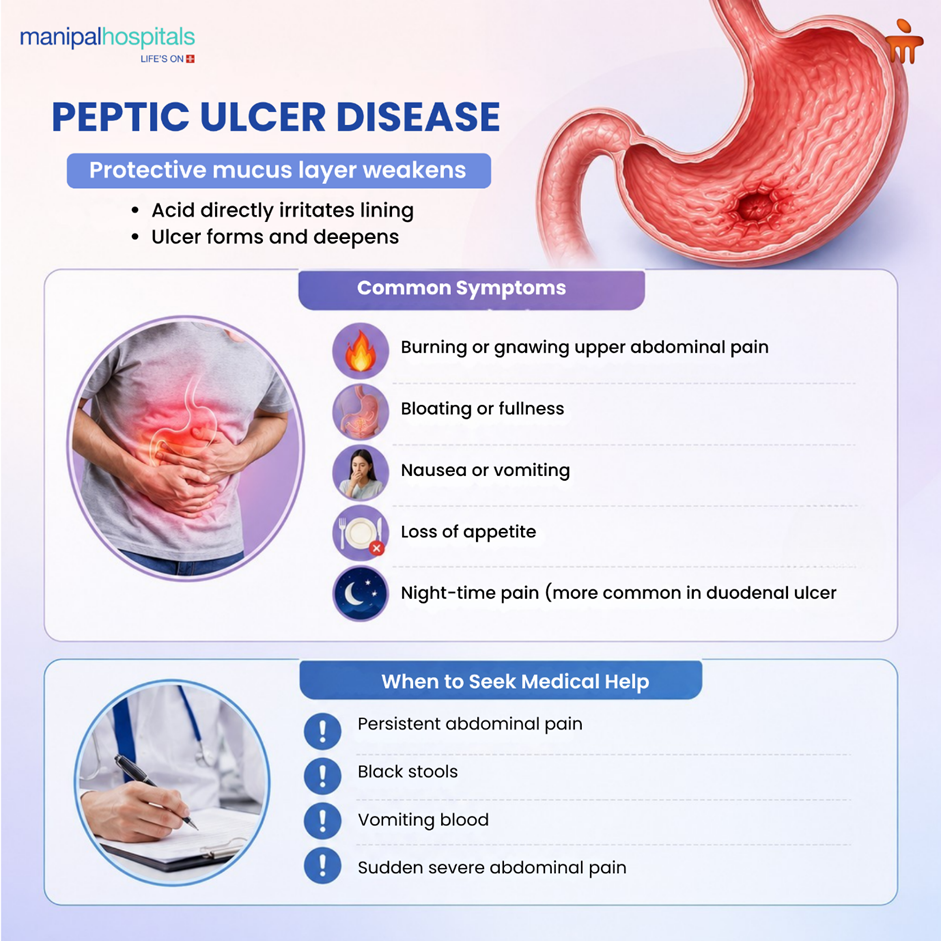
Types of Peptic Ulcer
Doctors group ulcers based on where they form inside the digestive tract. These are the main types of peptic ulcer, and knowing the location helps explain why symptoms feel different from person to person.
Stomach Ulcer (Gastric Ulcer)
This type affects the stomach lining. The pain often follows a pattern that many people notice and usually starts soon after eating. Eating stimulates acid production, which can irritate the ulcer further, so meals may make the discomfort worse instead of relieving it.
The common causes remain the same. Infection with Helicobacter pylori can weaken the stomach’s protection over time. Regular use of painkillers like aspirin or ibuprofen also damages that protective layer. Once the surface is exposed, acid keeps irritating it, and the sore deepens.
You may notice symptoms like:
-
Burning or gnawing pain in the upper abdomen
-
Pain that begins shortly after meals
-
Nausea or occasional vomiting
-
Feeling full very quickly while eating
-
Loss of appetite in some cases
If the ulcer worsens, it can start bleeding. That may show up as black stools or vomiting that looks dark. When comparing stomach ulcers and duodenal ulcers, you have to understand that a gastric ulcer is more likely to cause pain after eating rather than when the stomach is empty.
Duodenal Ulcer
This type occurs in the first part of the small intestine, called the duodenum, and has a different pain pattern. Many people notice pain when the stomach is empty, such as between meals or late at night. Eating may bring temporary relief, as food can reduce the direct effect of acid for a short time.
The causes are similar. Helicobacter pylori infection and long-term use of painkillers can weaken the protective lining in this area. Once that protection reduces, acid irritates the surface and an ulcer forms. Duodenal ulcers are also more common than stomach ulcers.
You may notice symptoms like:
-
Burning pain in the upper abdomen
-
Pain that comes when the stomach is empty
-
Discomfort that wakes you up at night
-
Relief for a short time after eating
Key Differences Between Stomach and Duodenal Ulcers
A side-by-side comparison makes it easier to understand how these two differ in daily life.
|
Feature |
Stomach Ulcer |
Duodenal Ulcer |
|
Location |
Inner lining of the stomach |
First part of the small intestine (duodenum) |
|
Pain timing |
Begins shortly after eating |
Starts when the stomach is empty, between meals or at night |
|
Effect of food |
Food often makes pain worse |
Food may reduce pain for a short time |
|
Nature of pain |
Burning or gnawing discomfort after meals |
Burning pain that comes and goes, often at night |
|
Frequency |
Seen less often |
Seen more often in practice |
|
Common cause pattern |
Frequently linked to long-term NSAID use |
Strongly linked to Helicobacter pylori infection |
|
Appetite pattern |
Eating may feel uncomfortable, and reduced intakeEating may feel uncomfortable, and reduced intake |
Eating may temporarily reduce discomfort |
|
Night symptoms |
Less common |
More commonly, it may wake you from sleep |
|
Risk of complications |
Higher chance of bleeding in some cases |
Complications are possible if untreated |
Causes and Risk Factors
Most ulcers develop because of a combination of infection and medication effects.
-
Helicobacter pylori infection: The bacteria damage the stomach’s protective mucus lining, allowing acid to irritate the tissue. It is a common cause of many cases of peptic ulcer disease.
-
Regular use of NSAIDs: Drugs like aspirin and ibuprofen weaken the stomach’s protective lining. With repeated use, the lining becomes more vulnerable to acid, increasing the risk of ulcers.
-
Smoking: Smoking reduces blood flow to the stomach lining and slows healing. Ulcers may last longer and are more likely to come back.
-
Alcohol intake: Alcohol irritates the stomach lining and can worsen existing damage. While it is not usually a direct cause on its own, it can increase discomfort and delay healing, making peptic ulcer symptoms more noticeable.
-
Stress: Stress does not directly create ulcers, but it can influence acid levels and make peptic ulcer symptoms feel stronger or more frequent.
How Peptic Ulcers Are Treated
Treatment focuses on healing the ulcer and removing the cause.
-
Antibiotics for Helicobacter pylori: When this infection is present, a course of antibiotics is given to clear the bacteria. It is usually combined with acid-reducing medicines to help the lining heal.
-
Medicines that reduce acid (PPIs): These lower stomach acids, giving the sore time to heal. They are a key part of peptic ulcer treatment.
-
Stopping NSAIDs where possible: If painkillers are contributing, doctors may advise stopping them or switching to safer options, as continued use can delay healing.
-
Other acid-reducing medicines: Some drugs reduce acid in different ways and are used when needed.
-
Medicines that protect the lining: These help coat the inner surface and support healing by reducing direct acid contact.
-
Severe cases: Surgery is rarely needed and is considered only if complications like bleeding, perforation, or blockage occur.
Possible Complications of Peptic Ulcers
Ignoring symptoms can lead to serious internal damage.
-
Bleeding can occur if the ulcer reaches a blood vessel. Stools may turn black, and vomit may look dark, and you may feel weak or low on energy.
-
In severe cases, the ulcer can deepen and create a hole in the stomach or duodenal wall. This can cause sudden, severe pain and needs immediate medical care.
-
Swelling or scarring can block the movement of food. You may feel full very quickly, vomit often, or find it difficult to eat.
-
If peptic ulcer treatment is delayed, these problems can worsen and may require emergency care.
Conclusion
Stomach ulcers and duodenal ulcers can feel similar, but the pattern of pain helps tell them apart. If you notice ongoing burning pain, nausea, black stools, or vomiting, it is better not to wait. These are signs your body is asking for attention. Early diagnosis makes treatment simpler and helps avoid complications. You can consult the best gastro hospital near Hebbal for expert evaluation and treatment.
Consult our experienced gastroenterologists at Manipal Hospital Hebbal, Bengalore, for a detailed evaluation of your symptoms, identification of the cause, and the right treatment plan.
Frequently Asked Questions
The main difference is when the pain shows up. If you feel pain after eating, it could be a stomach ulcer. If the pain comes when your stomach is empty and feels better after eating, it may be a duodenal ulcer.
Some mild ulcers may settle for a while, but the underlying cause does not go away on its own. If the infection or trigger is not treated, the ulcer can come back or get worse.
Watch for warning signs. Black stools, vomiting blood, sudden severe pain, or feeling very weak are not normal. These need medical attention without delay.
Yes, it can be treated with a course of antibiotics along with medicines that reduce acid. Once treated properly, the ulcer can heal.
Food triggers can vary from person to person. If certain foods, like spicy or acidic items, make your pain worse, it is better to avoid them until healing improves.
Share this Article


Recent Blogs

Test 2 : Bulging Disc Symptoms and Treatment: What You Need to Know
21 Sept 20263 Min Read
When to Seek Medical Help? Many cases of minor spinal strain improve with basic posture corrections, rest, and short-term activity modifications. However, you should arrange a consultation with a spine specialist if your symptoms do not change after a few weeks or if they steadily interfere with your basic daily movements. You should seek prompt clinical evaluation if your spinal symptoms include: Pain that continuously wakes you up in the middle of the night Progressive weakness in your leg or foot, making it difficult to lift your toes when walking Sharp, electric pain that radiates past your knee down into your foot Any sudden numbness in your groin or saddle area
Read NowUnderstanding Cervical Cerclage: A Guide for Expectant Mothers
29 Jun 20269 Min Read
Pregnancy is a journey marked by excitement, anticipation, and memorable milestones. Yet for some women, worries about the health of their pregnancy and the possibility of carrying their baby safely to term can become a major source of anxiety and uncertainty. One condition that may increase the risk of pregnancy loss or premature birth is cervical insufficiency (the historical terminology was "cervical incompetence," which has shifted to "cervical insufficiency," which is a more clinical and neutral term). In this condition, the cervix begins to shorten or open too early without contractions. In carefully selected cases, a cervical cerclage procedure can help provide additional support to the cervix and improve the chances of continuing the pregnancy for longer. While hearing that you may need a surgical intervention during pregnancy can feel unsettling, understanding why it is recommended and what it involves often brings reassurance. In this blog, a top obstetrician and gynaecologist in Hebbal, Bangalore, explains what cervical cerclage is, when it may be advised, the different techniques available, including laparoscopic abdominal cerclage, the benefits and risks involved, and what you can expect before and after the procedure.
Read NowManaging Kidney Pain at Home: What Works and When to See a Doctor
29 Jun 20267 Min Read
Kidney pain can be unsettling, especially when it appears suddenly or becomes intense enough to interfere with daily activities. Unlike general back discomfort, pain arising from the kidneys often signals an underlying problem that needs attention, ranging from infections and kidney stones to urinary tract blockages and other medical conditions. Understanding the cause is important because the right approach to relief depends on what is triggering the pain. While some episodes improve with simple supportive measures, others require prompt medical evaluation to prevent complications. Knowing which remedies are genuinely helpful and which practices may worsen the situation can make a significant difference in both comfort and recovery. Through this blog, we explain common causes of kidney pain, practical ways to ease discomfort safely, warning signs that should never be ignored, treatment options, and habits that support long-term kidney health.
Read NowHormone Therapy for Breast Cancer: How It Works and What to Expect
29 Jun 20267 Min Read
Breast cancer is not a single disease with a one-size-fits-all treatment approach. It encompasses several distinct types and subtypes, each with its own unique biological characteristics and behaviour and, hence, response to therapy. As a result, treatment plans can vary considerably and are typically tailored to the individual patient, considering factors such as age, general health, comorbidities, and perceived ability to tolerate the treatment offered along with the cancer subtype, stage, and tumour biology. One of the many treatment methods is hormone therapy for breast cancer, especially in the case of hormone receptor-positive breast cancer. Such a therapy helps block the hormones that promote tumour growth and prevent their recurrence. Being aware of the different treatment options and the various aspects related to the treatment process is key to overcoming difficulties associated with the condition. Information about why a specific treatment method was chosen, how it affects the body, and what awaits the patient in the course of the treatment provides him with greater confidence in recovery. In this blog, an experienced surgical oncologist in Hebbal, Bangalore, explains crucial aspects of hormone therapy for breast cancer, including what it involves, who can benefit from it the most, the different treatment options, the possible side effects, and everything caregivers need to consider for long-term care.
Read NowLiving with Chronic Migraine: Symptoms, Treatment, and Recovery Expectations
29 Jun 20267 Min Read
Migraine is far more than a severe headache. For some people, it becomes a persistent neurological condition that interferes with work, family life, sleep, and emotional well-being. When migraine attacks occur frequently enough, they can evolve into a condition known as chronic migraine, bringing symptoms that affect everyday functioning for months or even years. Living with recurring migraine episodes can be exhausting. The unpredictability of attacks, the fear of triggers, and the disruption to daily routines often leave people feeling frustrated and misunderstood. Understanding the condition is an important step towards regaining control and finding effective relief. In this blog, a top neurologist in Hebbal, Bangalore, discusses in detail the chronic migraine symptoms and also explains what chronic migraine is, discusses how doctors diagnose the condition, reviews available treatment options, and helps you understand what to expect during long-term management.
Read NowJoint Cracking Explained: Causes, Warning Signs, and When to Seek Help
24 Jun 20267 Min Read
A cracking sound in joints is something most people experience at some point in life. It may happen when you stand up from a chair, stretch after sitting for a long time, climb stairs, or rotate your neck. For many, these sounds are simply an interesting quirk of the body, while some genuinely enjoy the feeling, especially after being in the same position for a long time. For others, they can be a source of concern, especially when the noises become too frequent or are accompanied by discomfort. In most cases, joint sounds are completely harmless and occur as a natural part of movement. However, there are situations where persistent cracking, particularly when associated with pain, swelling, stiffness, or reduced mobility, may indicate an underlying joint condition that deserves medical attention. Understanding the difference between normal joint noises and warning signs can help you make informed decisions about your health. In this blog, a top orthopaedic expert in Hebbal, Bangalore, explains the common causes of joint cracking, explores the science behind these sounds, highlights symptoms that should not be ignored, and discusses ways to maintain healthy joints as you age.
Read NowBalloon Angioplasty for Heart Disease: What to Expect Before, During, and After Treatment
24 Jun 20267 Min Read
Coronary artery disease occurs due to the formation of plaque inside the arteries that deliver blood to the heart. Over time, such plaques narrow these passages and restrict proper blood circulation to the organ, resulting in insufficient oxygen levels. It may manifest as angina, fatigue, chest pain, or even a heart attack. With recent advances in the field of cardiology, numerous procedures can be performed without the need for open-heart surgery and enable quick patient recovery. One such effective method for treating blocked coronary arteries includes balloon angioplasty. A minimally invasive procedure, this treatment often eases patients' minds and gives them a greater sense of confidence during the procedure and throughout the healing and recovery phases. In this blog, a leading interventional cardiologist at Hebbal, Bangalore, explains what balloon angioplasty is, when it should be used, how cardiac specialists perform the procedure, the recovery process associated with balloon angioplasty, and the necessary precautions to be taken.
Read NowBeyond Age and Comorbidities: A Case-Based Look at Pelvic Organ Prolapse Surgery in a High-Risk Patient
17 Jun 202612 Min Read
Pelvic organ prolapse (POP) is a common problem in older women, particularly after the menopause. Over time, the supporting muscles and connective tissues of the pelvic floor may weaken, which can allow such organs as the uterus, bladder, rectum, or small bowel to descend into or beyond the vaginal canal. Some women have only mild symptoms, but some develop significant discomfort that affects mobility, bladder and bowel function, activities of daily living, and quality of life. As life expectancy increases, more women are presenting for treatment of pelvic floor disorders in their seventies and beyond. But many also suffer from age-related medical conditions like heart disease, diabetes, or hypertension, which complicates treatment decisions. Many people think that if you're older or have multiple medical problems, surgery is out of the question. In this blog, an experienced obstetrician and gynaecologist from Hebbal, Bengaluru, takes you through a real clinical case to show how treatment decisions should not be based on age alone, but on a thorough evaluation of the patient’s overall health, functional status, symptoms, goals, and quality-of-life expectations. This case emphasizes the importance of multidisciplinary planning and individualized decision-making in a 73-year-old woman with significant cardiovascular risk factors to safely undergo definitive surgical treatment for advanced pelvic organ prolapse.
Read NowDifference Between Seizure and Epilepsy: What You Need to Know About Causes and Diagnosis
05 Jun 20268 Min Read
Watching someone suddenly lose awareness, stare blankly, or experience uncontrolled movements can be frightening, especially when the terms "seizure" and "epilepsy" start being mentioned together. For many people, the two words seem to mean the same thing, which often leads to confusion after a first episode. In reality, they are closely related but not identical. The difference between the two becomes clearer when you understand it clinically. A seizure is a single episode caused by sudden, abnormal electrical activity in the brain. Epilepsy is a condition where a person has repeated seizures that are not triggered by a temporary cause. One seizure on its own does not mean epilepsy. In this blog, an experienced neurologist in Hebbal, Bengaluru, explains in detail the difference between the two and what it means for you. This way, you would be getting a comprehensive idea about the seizure, the diagnosis of epilepsy, and the relationship between the two.
Read NowPeptic Ulcer Types: All You Need to Know About Stomach and Duodenal Ulcers
03 Jun 20268 Min Read
Most of us have experienced that sharp, gnawing sensation in the upper belly that we usually blame on a spicy meal or a stressful deadline. We often reach for an antacid and wait for the "heartburn" to pass, assuming it’s just a temporary digestive glitch. However, when that burning sensation becomes a recurring guest, it is often a signal of something more significant happening in your digestive lining. A peptic ulcer is a sore that forms inside your digestive system. In peptic ulcer disease, the sore develops when the balance between stomach acid and the protective lining is disturbed, and the inner lining can no longer handle the acid inside the stomach. These ulcers can show up in two places. One is the stomach, and the other is the first part of the small intestine called the duodenum. Knowing the types of peptic ulcers makes it easier to understand your symptoms. The timing of pain, how it feels after eating, and how your body responds can vary depending on the ulcer's location. That is why doctors look at the type before deciding on treatment. In this blog, an experienced gastroenterologist in Hebbal, Bengaluru, explains peptic ulcers and goes into detail about everything you need to know to stay informed.
Read Now