


Difference Between Seizure and Epilepsy: What You Need to Know About Causes and Diagnosis
Reviewed by: Dr. Ramesh Patil
Posted on
8 Min Read

Not sure what you’re looking for?
Get in touch with our representatives for help!
Contact UsWatching someone suddenly lose awareness, stare blankly, or experience uncontrolled movements can be frightening, especially when the terms "seizure" and "epilepsy" start being mentioned together. For many people, the two words seem to mean the same thing, which often leads to confusion after a first episode.
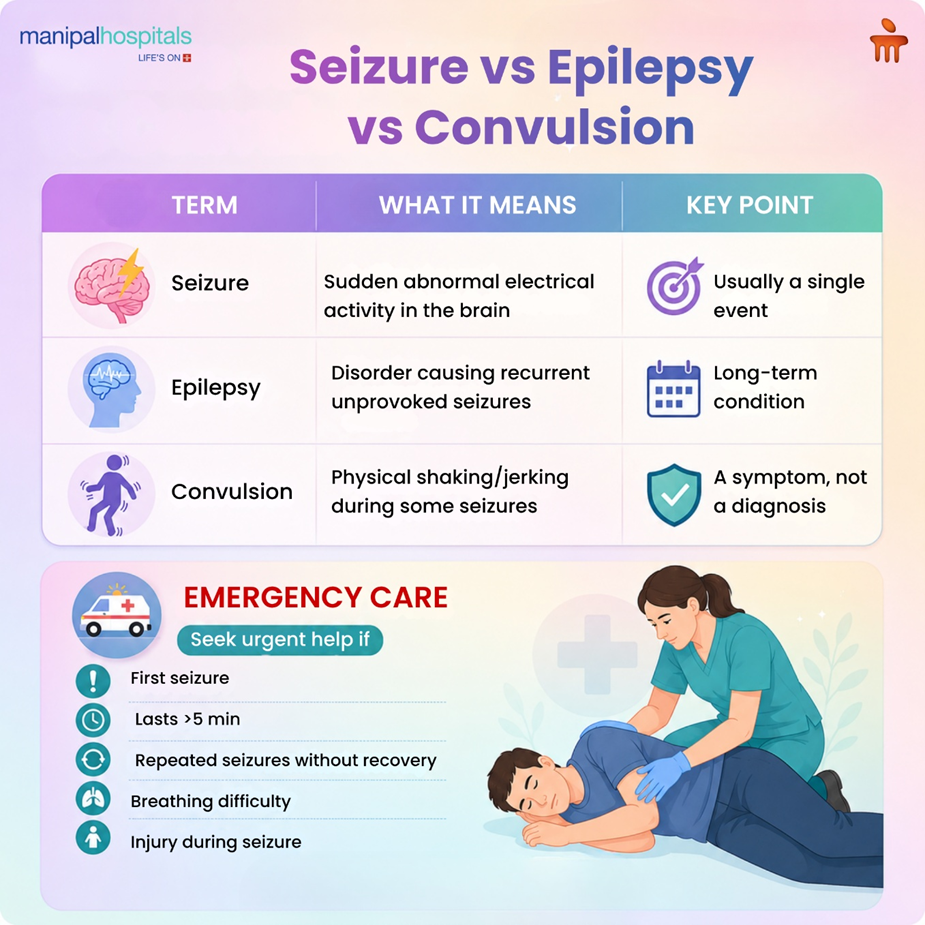
In reality, they are closely related but not identical. The difference between the two becomes clearer when you understand it clinically. A seizure is a single episode caused by sudden, abnormal electrical activity in the brain. Epilepsy is a condition where a person has repeated seizures that are not triggered by a temporary cause. One seizure on its own does not mean epilepsy.
In this blog, an experienced neurologist in Hebbal, Bengaluru, explains in detail the difference between the two and what it means for you. This way, you would be getting a comprehensive idea about the seizure, the diagnosis of epilepsy, and the relationship between the two.
What Is a Seizure?
A seizure happens when there is a sudden surge of abnormal electrical activity in the brain. This disrupts how signals are sent and received for a short time. Because the brain controls many functions, the symptoms can vary a lot from one person to another. Some episodes are obvious. Some are easy to miss. In some people, no clear cause is found for a single seizure. That does not mean epilepsy. The context, trigger, and pattern over time help doctors decide what it represents.
Doctors group seizures based on where they begin:
-
Focal seizures: Start in one specific part of the brain. Symptoms depend on that area
-
Generalised seizures: Involve both sides of the brain from the start and often affect consciousness
A seizure can affect:
-
Movement: Jerking of arms or legs, stiffening, sudden falls
-
Awareness: Staring spells, not responding, confusion after the episode
-
eSensation: Tingling, unusual smells or tastes, a sudden feeling of fear or déjà vu
-
Consciousness: Brief loss of awareness or complete blackout
Causes of seizures are important because many are triggered events, not a long-term condition:
-
Fever, especially in children
-
Head injury or trauma to the brain
-
Brain infections such as meningitis or encephalitis
-
Low blood sugar or other metabolic disturbances
-
Stroke or reduced blood flow to the brain
-
Substance or alcohol withdrawal
-
Certain medications or toxic exposures
What Is Epilepsy?
Epilepsy is a long-term condition in which a person has repeated seizures over time. A single seizure does not mean epilepsy. The key difference is that these episodes happen again without a clear temporary cause.
In epilepsy, the brain tends to produce sudden, abnormal electrical activity. Because of these factors, seizures can occur without warning. The way it appears can vary. Some people may have brief episodes with loss of awareness, while others may experience jerking movements or confusion after a seizure.
Epilepsy can occur at any age. It could start from childhood or develop during adulthood. The key is how it progresses over time.
Common causes include:
-
Genetic factors in some individuals
-
Structural changes in the brain, such as injury, birth defects, or malformations
-
Stroke or reduced blood flow to the brain
-
Brain infections such as meningitis or encephalitis
-
Brain tumours or previous head injury
What Is a Convulsion?
A convulsion is a symptom rather than a disease. This term describes an episode whereby the body begins to shake or jerk involuntarily. This happens due to abnormal impulses in the brain that interfere with muscle movements.
Convulsions are often seen in certain types of seizures, which is why the two terms are sometimes used as if they mean the same thing. However, they are not the same. A seizure starts in the brain, while a convulsion is how it may show up in the body.
Not all seizures entail shaking; sometimes a person may only stare blankly, have a look of confusion, or lose consciousness without any form of body movement at all. Moreover, shaking could occur even without a seizure being present.
Common causes of convulsions include:
-
Seizures related to conditions like Epilepsy
-
High fever, especially in young children (febrile seizures)
-
Head injury or trauma to the brain
-
Brain infections such as meningitis or encephalitis
-
Low blood sugar or other metabolic imbalances
-
Withdrawal from alcohol or certain substances
-
Exposure to toxins or certain medications
Differences Between Seizure, Epilepsy, and Convulsion
Understanding the basic difference between a seizure and epilepsy and a convulsion can make medical discussions much clearer and help patients better understand a diagnosis. The comparison below breaks it down for you:
|
Feature |
Seizure |
Epilepsy |
Convulsion |
|
Definition |
Sudden abnormal electrical activity in the brain |
Chronic neurological disorder with recurrent, unprovoked seizures |
Physical symptom with involuntary muscle jerking |
|
Frequency |
Can occur once or occasionally |
Recurrent episodes over time |
Occurs during some seizures |
|
Cause |
Often triggered by temporary factors |
Often unprovoked or due to an underlying brain condition |
Result of abnormal brain activity affecting muscles |
|
Diagnosis |
Based on a single clinical event |
Based on pattern and recurrence |
Not a diagnosis, only a symptom |
|
Brain involvement |
Temporary disturbance in activity |
Ongoing tendency for abnormal activity |
Visible physical response to brain signals |
How Doctors Diagnose Seizures and Epilepsy
Diagnosis depends on history, pattern, and specific tests. Understanding what is the difference between epilepsy and seizures becomes clearer during diagnosis, where recurrence and cause guide the final decision.
Diagnosing a Seizure
-
Doctors start with a detailed history of what exactly happened during the episode.
-
Description from a witness is often important if the person does not remember the event.
-
They look for possible triggers such as fever, injury, low blood sugar, or infection.
-
A single episode leads to evaluation of the underlying cause, not a long-term diagnosis.
-
Tests may include EEG to check for abnormal electrical activity in the brain and CT or MRI scans to identify structural problems.
Diagnosing Epilepsy
Doctors look for two or more unprovoked seizures or one with a high recurrence risk.
-
The absence of a temporary trigger becomes an important clue
-
EEG findings may show a tendency for repeated abnormal activity
-
Imaging helps identify long-term causes like injury or lesions
-
Other conditions that can mimic seizures are carefully ruled out
When Should You Seek Medical Help?
Some seizure situations need immediate medical attention.
-
First-time seizure: Such an event always needs medical evaluation to understand the cause.
-
Seizure lasting more than 5 minutes: Longer episodes need urgent care.
-
Repeated seizures without recovery: If awareness does not return between episodes, get help immediately.
-
Injury during the episode: Any fall or head injury should be checked.
-
Breathing difficulty: Irregular or delayed breathing needs attention.
Unusual or prolonged symptoms after the event: Ongoing confusion or difficulty waking up should not be ignored.
Conclusion
If you or someone around you has had a seizure, do not assume what it means on your own. One episode does not always point to epilepsy, but it should not be ignored either. What matters is the pattern, the cause, and how the episode presents. Getting this distinction right early with the support of specialised neurology care near Hebbal can change how the condition is managed.
If you are unsure about what the episode means, it is best to get it checked. A detailed history, along with the right tests, helps doctors understand what is happening and what to expect next. Our experienced neurologists at Manipal Hospital Hebbal, Bengalore, focus on careful assessment and clear guidance so you know exactly where you stand and what steps to take next.
Frequently Asked Questions
Yes, and this is something we see regularly. If you’ve had a single seizure, it may be linked to a trigger like fever, low sugar, an injury, or an infection. It does not always mean a long-term condition.
Not all seizures cause convulsions. Sometimes a person may simply stare, go still, or stop mid-activity suddenly, with no shaking at all. This can happen without any obvious warning signs, either.
Doctors look at whether seizures happen repeatedly over time. If seizures happen again without a clear reason, it raises concern for epilepsy. One isolated episode is handled differently.
Yes, epilepsy can start at any age. It may follow a stroke, head injury, or infection. Sometimes, despite tests, doctors cannot find a clear cause in some people.
Not always. Many settle down on their own in a short time. But if a seizure lasts longer, repeats quickly, or affects breathing or causes injury, you should seek medical care right away.
Share this Article


Recent Blogs

Test 2 : Bulging Disc Symptoms and Treatment: What You Need to Know
21 Sept 20263 Min Read
When to Seek Medical Help? Many cases of minor spinal strain improve with basic posture corrections, rest, and short-term activity modifications. However, you should arrange a consultation with a spine specialist if your symptoms do not change after a few weeks or if they steadily interfere with your basic daily movements. You should seek prompt clinical evaluation if your spinal symptoms include: Pain that continuously wakes you up in the middle of the night Progressive weakness in your leg or foot, making it difficult to lift your toes when walking Sharp, electric pain that radiates past your knee down into your foot Any sudden numbness in your groin or saddle area
Read NowUnderstanding Cervical Cerclage: A Guide for Expectant Mothers
29 Jun 20269 Min Read
Pregnancy is a journey marked by excitement, anticipation, and memorable milestones. Yet for some women, worries about the health of their pregnancy and the possibility of carrying their baby safely to term can become a major source of anxiety and uncertainty. One condition that may increase the risk of pregnancy loss or premature birth is cervical insufficiency (the historical terminology was "cervical incompetence," which has shifted to "cervical insufficiency," which is a more clinical and neutral term). In this condition, the cervix begins to shorten or open too early without contractions. In carefully selected cases, a cervical cerclage procedure can help provide additional support to the cervix and improve the chances of continuing the pregnancy for longer. While hearing that you may need a surgical intervention during pregnancy can feel unsettling, understanding why it is recommended and what it involves often brings reassurance. In this blog, a top obstetrician and gynaecologist in Hebbal, Bangalore, explains what cervical cerclage is, when it may be advised, the different techniques available, including laparoscopic abdominal cerclage, the benefits and risks involved, and what you can expect before and after the procedure.
Read NowManaging Kidney Pain at Home: What Works and When to See a Doctor
29 Jun 20267 Min Read
Kidney pain can be unsettling, especially when it appears suddenly or becomes intense enough to interfere with daily activities. Unlike general back discomfort, pain arising from the kidneys often signals an underlying problem that needs attention, ranging from infections and kidney stones to urinary tract blockages and other medical conditions. Understanding the cause is important because the right approach to relief depends on what is triggering the pain. While some episodes improve with simple supportive measures, others require prompt medical evaluation to prevent complications. Knowing which remedies are genuinely helpful and which practices may worsen the situation can make a significant difference in both comfort and recovery. Through this blog, we explain common causes of kidney pain, practical ways to ease discomfort safely, warning signs that should never be ignored, treatment options, and habits that support long-term kidney health.
Read NowHormone Therapy for Breast Cancer: How It Works and What to Expect
29 Jun 20267 Min Read
Breast cancer is not a single disease with a one-size-fits-all treatment approach. It encompasses several distinct types and subtypes, each with its own unique biological characteristics and behaviour and, hence, response to therapy. As a result, treatment plans can vary considerably and are typically tailored to the individual patient, considering factors such as age, general health, comorbidities, and perceived ability to tolerate the treatment offered along with the cancer subtype, stage, and tumour biology. One of the many treatment methods is hormone therapy for breast cancer, especially in the case of hormone receptor-positive breast cancer. Such a therapy helps block the hormones that promote tumour growth and prevent their recurrence. Being aware of the different treatment options and the various aspects related to the treatment process is key to overcoming difficulties associated with the condition. Information about why a specific treatment method was chosen, how it affects the body, and what awaits the patient in the course of the treatment provides him with greater confidence in recovery. In this blog, an experienced surgical oncologist in Hebbal, Bangalore, explains crucial aspects of hormone therapy for breast cancer, including what it involves, who can benefit from it the most, the different treatment options, the possible side effects, and everything caregivers need to consider for long-term care.
Read NowLiving with Chronic Migraine: Symptoms, Treatment, and Recovery Expectations
29 Jun 20267 Min Read
Migraine is far more than a severe headache. For some people, it becomes a persistent neurological condition that interferes with work, family life, sleep, and emotional well-being. When migraine attacks occur frequently enough, they can evolve into a condition known as chronic migraine, bringing symptoms that affect everyday functioning for months or even years. Living with recurring migraine episodes can be exhausting. The unpredictability of attacks, the fear of triggers, and the disruption to daily routines often leave people feeling frustrated and misunderstood. Understanding the condition is an important step towards regaining control and finding effective relief. In this blog, a top neurologist in Hebbal, Bangalore, discusses in detail the chronic migraine symptoms and also explains what chronic migraine is, discusses how doctors diagnose the condition, reviews available treatment options, and helps you understand what to expect during long-term management.
Read NowJoint Cracking Explained: Causes, Warning Signs, and When to Seek Help
24 Jun 20267 Min Read
A cracking sound in joints is something most people experience at some point in life. It may happen when you stand up from a chair, stretch after sitting for a long time, climb stairs, or rotate your neck. For many, these sounds are simply an interesting quirk of the body, while some genuinely enjoy the feeling, especially after being in the same position for a long time. For others, they can be a source of concern, especially when the noises become too frequent or are accompanied by discomfort. In most cases, joint sounds are completely harmless and occur as a natural part of movement. However, there are situations where persistent cracking, particularly when associated with pain, swelling, stiffness, or reduced mobility, may indicate an underlying joint condition that deserves medical attention. Understanding the difference between normal joint noises and warning signs can help you make informed decisions about your health. In this blog, a top orthopaedic expert in Hebbal, Bangalore, explains the common causes of joint cracking, explores the science behind these sounds, highlights symptoms that should not be ignored, and discusses ways to maintain healthy joints as you age.
Read NowBalloon Angioplasty for Heart Disease: What to Expect Before, During, and After Treatment
24 Jun 20267 Min Read
Coronary artery disease occurs due to the formation of plaque inside the arteries that deliver blood to the heart. Over time, such plaques narrow these passages and restrict proper blood circulation to the organ, resulting in insufficient oxygen levels. It may manifest as angina, fatigue, chest pain, or even a heart attack. With recent advances in the field of cardiology, numerous procedures can be performed without the need for open-heart surgery and enable quick patient recovery. One such effective method for treating blocked coronary arteries includes balloon angioplasty. A minimally invasive procedure, this treatment often eases patients' minds and gives them a greater sense of confidence during the procedure and throughout the healing and recovery phases. In this blog, a leading interventional cardiologist at Hebbal, Bangalore, explains what balloon angioplasty is, when it should be used, how cardiac specialists perform the procedure, the recovery process associated with balloon angioplasty, and the necessary precautions to be taken.
Read NowBeyond Age and Comorbidities: A Case-Based Look at Pelvic Organ Prolapse Surgery in a High-Risk Patient
17 Jun 202612 Min Read
Pelvic organ prolapse (POP) is a common problem in older women, particularly after the menopause. Over time, the supporting muscles and connective tissues of the pelvic floor may weaken, which can allow such organs as the uterus, bladder, rectum, or small bowel to descend into or beyond the vaginal canal. Some women have only mild symptoms, but some develop significant discomfort that affects mobility, bladder and bowel function, activities of daily living, and quality of life. As life expectancy increases, more women are presenting for treatment of pelvic floor disorders in their seventies and beyond. But many also suffer from age-related medical conditions like heart disease, diabetes, or hypertension, which complicates treatment decisions. Many people think that if you're older or have multiple medical problems, surgery is out of the question. In this blog, an experienced obstetrician and gynaecologist from Hebbal, Bengaluru, takes you through a real clinical case to show how treatment decisions should not be based on age alone, but on a thorough evaluation of the patient’s overall health, functional status, symptoms, goals, and quality-of-life expectations. This case emphasizes the importance of multidisciplinary planning and individualized decision-making in a 73-year-old woman with significant cardiovascular risk factors to safely undergo definitive surgical treatment for advanced pelvic organ prolapse.
Read NowDifference Between Seizure and Epilepsy: What You Need to Know About Causes and Diagnosis
05 Jun 20268 Min Read
Watching someone suddenly lose awareness, stare blankly, or experience uncontrolled movements can be frightening, especially when the terms "seizure" and "epilepsy" start being mentioned together. For many people, the two words seem to mean the same thing, which often leads to confusion after a first episode. In reality, they are closely related but not identical. The difference between the two becomes clearer when you understand it clinically. A seizure is a single episode caused by sudden, abnormal electrical activity in the brain. Epilepsy is a condition where a person has repeated seizures that are not triggered by a temporary cause. One seizure on its own does not mean epilepsy. In this blog, an experienced neurologist in Hebbal, Bengaluru, explains in detail the difference between the two and what it means for you. This way, you would be getting a comprehensive idea about the seizure, the diagnosis of epilepsy, and the relationship between the two.
Read NowPeptic Ulcer Types: All You Need to Know About Stomach and Duodenal Ulcers
03 Jun 20268 Min Read
Most of us have experienced that sharp, gnawing sensation in the upper belly that we usually blame on a spicy meal or a stressful deadline. We often reach for an antacid and wait for the "heartburn" to pass, assuming it’s just a temporary digestive glitch. However, when that burning sensation becomes a recurring guest, it is often a signal of something more significant happening in your digestive lining. A peptic ulcer is a sore that forms inside your digestive system. In peptic ulcer disease, the sore develops when the balance between stomach acid and the protective lining is disturbed, and the inner lining can no longer handle the acid inside the stomach. These ulcers can show up in two places. One is the stomach, and the other is the first part of the small intestine called the duodenum. Knowing the types of peptic ulcers makes it easier to understand your symptoms. The timing of pain, how it feels after eating, and how your body responds can vary depending on the ulcer's location. That is why doctors look at the type before deciding on treatment. In this blog, an experienced gastroenterologist in Hebbal, Bengaluru, explains peptic ulcers and goes into detail about everything you need to know to stay informed.
Read Now