


Difference Between Benign and Malignant Tumors
Reviewed by: Dr. Kundan
Posted on
7 Min Read

Not sure what you’re looking for?
Get in touch with our representatives for help!
Contact UsDiscovering a lump or abnormal growth in the body can be alarming. One of the first questions people ask is whether it is cancerous or non-cancerous. Understanding the difference between benign and malignant tumours is essential because it helps patients make informed decisions about diagnosis, treatment, and long-term health management.
At the earliest sign of an unusual growth, consulting our oncologists in Ghaziabad can help ensure timely evaluation and appropriate treatment. While not every tumour is cancerous, identifying the difference between benign and malignant tumours at an early stage can significantly impact outcomes.
In this comprehensive guide, we explain the difference between benign and malignant tumours, their symptoms, causes, diagnosis, treatment options, and when to seek medical attention.
What Is a Tumour?
A tumour is an abnormal mass of tissue that develops when cells grow and divide uncontrollably. Tumours can occur almost anywhere in the body and are broadly classified into two categories:
-
Benign tumour
-
Malignant tumour
Understanding the various types of tumours is crucial because their behaviour, growth pattern, and treatment approach differ significantly.
Difference Between Benign and Malignant Tumours
The primary difference between benign and malignant tumours lies in their ability to invade surrounding tissues and spread to other parts of the body.
|
Feature |
Benign Tumour |
Malignant Tumor |
|
Growth Rate |
Slow |
Often rapid |
|
Spread to Other Organs |
No |
Yes |
|
Tissue Invasion |
Limited |
Invades nearby tissues |
|
Recurrence Risk |
Lower |
Higher |
|
Cancerous Nature |
Non-cancerous |
Cancerous |
|
Life-Threatening Potential |
Usually low |
Potentially high |
The difference between benign and malignant tumours is not always visible through symptoms alone. Diagnostic tests are often required to determine the exact nature of a tumour.
What Is a Benign Tumour?
A benign tumour is a non-cancerous growth that remains localised and does not spread to other parts of the body. Although benign tumours are generally less dangerous, some can still cause complications if they compress nearby nerves, organs, or blood vessels.
Common examples include:
-
Lipoma (fat tissue tumour)
-
Fibroma
-
Uterine fibroids
-
Adenoma
-
Meningioma
Benign Tumour Symptoms
The severity of benign tumour symptoms depends on the tumour's size and location.
Common benign tumour symptoms include:
-
Localised swelling or lump
-
Mild discomfort or pressure
-
Headaches (in certain brain tumours)
-
Changes in bowel or bladder habits
-
Restricted movement near joints
-
Hormonal disturbances in endocrine tumours
Many benign tumours remain asymptomatic and are discovered during routine health examinations or imaging studies.
What Is a Malignant Tumour?
A malignant tumour consists of cancerous cells that can invade surrounding tissues and spread to distant organs through the bloodstream or lymphatic system.
Unlike a benign tumour, a malignant tumour has the potential to grow aggressively and affect vital organs, making early detection critical.
Common examples include:
-
Lung cancer
-
Colon cancer
-
Ovarian cancer
Malignant Tumour Symptoms
The most common malignant tumour symptoms vary depending on the affected organ,n but may include:
-
Unexplained weight loss
-
Persistent fatigue
-
Pain that worsens over time
-
Unusual bleeding
-
Persistent cough
-
Difficulty swallowing
-
Changes in bowel habits
-
Enlarged lymph nodes
-
Non-healing wounds
If you experience any persistent malignant tumour symptoms, seeking prompt medical evaluation is strongly recommended.
Benign vs Malignant Tumour: Key Biological Differences
When discussing a benign vs malignant tumour, several biological characteristics help distinguish one from the other.
-
Cell Structure - Benign tumour cells closely resemble normal cells and tend to grow in an organised manner. In contrast, malignant tumour cells often appear abnormal and divide uncontrollably.
-
Growth Pattern - A benign tumour usually grows slowly and remains confined within a capsule. A malignant tumour frequently infiltrates nearby tissues.
-
Metastasis - The most significant distinction in a benign vs malignant tumour comparison is metastasis. Benign tumours do not spread, whereas malignant tumours can travel to distant organs and establish secondary tumours.
-
Impact on Health - While benign tumours may cause discomfort due to their location, malignant tumours can become life-threatening if not treated appropriately.
Causes and Risk Factors for Tumours
Several factors may contribute to the development of both benign and malignant tumours:
-
Genetic mutations
-
Family history of cancer
-
Smoking and tobacco use
-
Excessive alcohol consumption
-
Obesity
-
Radiation exposure
-
Chronic infections
-
Environmental toxins
-
Hormonal imbalances
Understanding these risk factors can help reduce the likelihood of developing certain types of tumours.
Types of Tumours
There are numerous types of tumours, including:
-
Benign Tumours
-
Lipoma
-
Fibroma
-
Adenoma
-
Hemangioma
-
Papilloma
Malignant Tumours
-
Carcinoma
-
Sarcoma
-
Leukaemia
-
Lymphoma
-
Melanoma
Each of these types of tumours requires specific diagnostic and treatment strategies.
How Are Tumours Diagnosed?
Determining the difference between benign and malignant tumours typically requires a combination of diagnostic tests.
Common investigations include:
Physical Examination
Doctors assess the size, consistency, and mobility of the growth.
Imaging Tests
-
Ultrasound
-
CT Scan
-
PET Scan
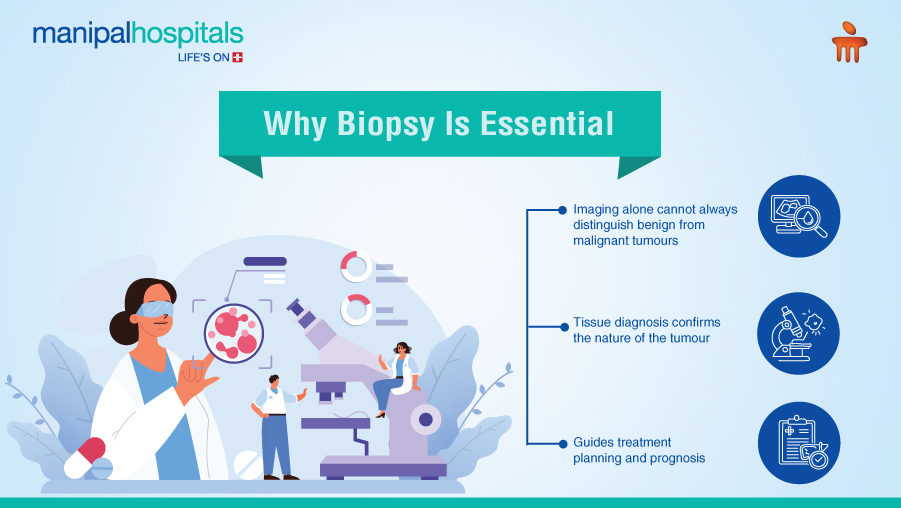
Biopsy
A biopsy remains the gold standard for confirming whether a tumour is a benign tumour or a malignant tumour.
Accurate diagnosis by our oncologists in Ghaziabad enables personalised treatment planning and better outcomes.
Treatment Options for Benign and Malignant Tumours
Treatment for Benign Tumours
Many benign tumours require observation only. However, treatment may be recommended if symptoms develop.
Options include:
-
Regular monitoring
-
Surgical removal
-
Hormonal therapy in selected cases
Treatment for Malignant Tumours
Treatment for a malignant tumour depends on the type, stage, and location of the cancer.
Options may include:
-
Targeted therapy
-
Hormonal therapy
Consulting our cancer expert in Ghaziabad can help patients understand the most suitable treatment approach based on their diagnosis.
When Should You See an Oncologist?
You should seek medical attention if you notice:
-
A new lump or swelling
-
Rapidly growing mass
-
Persistent pain
-
Unexplained weight loss
-
Chronic fatigue
-
Unusual bleeding
-
Persistent cough or voice changes
Early assessment by our oncologists in Ghaziabad may help identify serious conditions before they progress.
Can Benign Tumours Become Malignant?
Most benign tumours remain non-cancerous throughout life. However, some specific tumour types have the potential to undergo malignant transformation over time. Regular monitoring and follow-up are therefore important, especially for high-risk lesions.
Final Thoughts on the Difference Between Benign and Malignant Tumours
Understanding the difference between benign and malignant tumours is crucial for recognising warning signs and seeking timely medical care. While a benign tumour generally remains localised and non-cancerous, a malignant tumour can invade surrounding tissues and spread to distant organs.
Recognising benign tumour symptoms, identifying malignant tumour symptoms, and understanding the various types of tumours can empower patients to make informed healthcare decisions. If you notice any unusual growth or persistent symptoms, consulting our oncologists in Ghaziabad is the best step towards an accurate diagnosis and effective treatment.
Frequently Asked Questions
The main difference between benign and malignant tumours is that benign tumours are non-cancerous and do not spread, whereas malignant tumours are cancerous and can invade nearby tissues and metastasise to other organs.
Most benign tumours do not become cancerous. However, certain tumour types may undergo malignant transformation and require regular monitoring.
Common benign tumour symptoms include a painless lump, swelling, pressure effects, headaches, and restricted movement, depending on the tumour's location.
Common malignant tumour symptoms include unexplained weight loss, persistent fatigue, abnormal bleeding, chronic pain, enlarged lymph nodes, and changes in bowel or bladder habits.
Doctors typically use physical examinations, imaging tests, and biopsy procedures to accurately determine the difference between benign and malignant tumours.
Share this Article


Recent Blogs

Kidney Profile Test: Normal Range and Why It Matters
17 Jun 20266 Min Read
Your kidneys silently perform some of the most important functions in the body every single day. They filter waste, regulate blood pressure, maintain electrolyte balance, and help keep your body healthy. Yet many kidney problems develop without noticeable symptoms until significant damage has already occurred. This is why a kidney profile test is one of the most important health investigations for early detection and prevention. At our hospital, our nephrologists in Ghaziabad frequently emphasise the importance of routine kidney screening, particularly for individuals with diabetes, hypertension, obesity, or a family history of kidney disease. In this guide, we explain what a kidney profile test measures, the kidney function test normal range, how to interpret results, and when you should seek medical attention.
Read NowDifference Between Benign and Malignant Tumors
12 Jun 20267 Min Read
Discovering a lump or abnormal growth in the body can be alarming. One of the first questions people ask is whether it is cancerous or non-cancerous. Understanding the difference between benign and malignant tumours is essential because it helps patients make informed decisions about diagnosis, treatment, and long-term health management. At the earliest sign of an unusual growth, consulting our oncologists in Ghaziabad can help ensure timely evaluation and appropriate treatment. While not every tumour is cancerous, identifying the difference between benign and malignant tumours at an early stage can significantly impact outcomes. In this comprehensive guide, we explain the difference between benign and malignant tumours, their symptoms, causes, diagnosis, treatment options, and when to seek medical attention.
Read NowBotox for Migraines: Benefits, Cost, Eligibility and Expected Results | A Modern Migraine Treatment Guide
12 Jun 20267 Min Read
Migraines can be far more than just a headache. For many people, they are a debilitating neurological condition that interferes with work, sleep, productivity and overall quality of life. While conventional migraine treatment options such as medications and lifestyle modifications help many patients, some individuals continue to experience persistent attacks despite multiple therapies. In such cases, Botox injections have emerged as an effective and clinically proven migraine treatment for chronic sufferers. At the first sign of recurring headaches, consulting our neurologists in Ghaziabad can help identify the most suitable treatment pathway and prevent the condition from worsening. If you experience frequent migraine episodes every month, understanding how Botox works, who qualifies for it, its benefits, expected results and costs can help you make an informed healthcare decision.
Read NowNormal cholesterol levels by age — what your lipid profile numbers mean
10 Jun 20267 Min Read
Heart disease remains one of the leading health concerns worldwide, making regular monitoring of cholesterol levels essential. A lipid profile test is one of the most important investigations for assessing cardiovascular risk, identifying abnormal cholesterol levels, and protecting long-term heart health. If you're unsure whether your cholesterol numbers are healthy, understanding the results of a lipid profile test can help you take timely action. At routine screenings, our cardiologists in Ghaziabad often meet patients who are confused about what their cholesterol report actually means. Understanding your cholesterol levels is the first step towards preventing serious heart complications and maintaining optimal wellbeing.
Read Nowकब्ज़ का सही इलाज — कारण, लक्षण और घरेलू उपाय
10 Jun 20265 Min Read
कब्ज़ आज की सबसे आम पाचन समस्याओं में से एक है, लेकिन इसे नज़रअंदाज़ करना आगे चलकर कई स्वास्थ्य समस्याओं का कारण बन सकता है। यदि आप बार-बार कब्ज़ का सामना कर रहे हैं और कब्ज़ का इलाज खोज रहे हैं, तो सही जानकारी और समय पर कदम उठाना बेहद ज़रूरी है. गाजियाबाद में हमारे गैस्ट्रोएंटेरोलॉजिस्ट बताते हैं कि जीवनशैली, खान-पान और कुछ चिकित्सीय स्थितियाँ कब्ज़ के पीछे प्रमुख कारण हो सकती हैं। इस लेख में हम कब्ज़ का इलाज, कब्ज़ के कारण, कब्ज़ के लक्षण, और प्रभावी कब्ज़ के घरेलू उपाय विस्तार से समझेंगे।
Read NowCan a Torn Meniscus Heal on Its Own? What the Evidence Says
10 Jun 20266 Min Read
A meniscus injury is one of the most common knee problems affecting athletes, fitness enthusiasts, and even older adults. While many people hope that a torn meniscus will simply heal with rest, the reality depends on the type, location, and severity of the injury. At our orthopaedics in Ghaziabad, we frequently evaluate patients who delay treatment because they assume the pain will resolve on its own. If you have persistent knee pain, swelling, locking, or difficulty walking, understanding the science behind a meniscus injury can help you make informed decisions about your treatment and recovery.
Read NowUnderstanding the 5 Stages of Chronic Kidney Disease and What Each One Means for You
20 May 20267 Min Read
Chronic Kidney Disease (CKD) is a progressive condition affecting millions worldwide, often silently. Understanding its stages is not just about medical jargon; it's about empowering yourself with knowledge to take control of your health. At Manipal Hospitals, our dedicated nephrologists in Ghaziabad are committed to guiding you through every step of your kidney health journey. They emphasise that early detection and proactive management are key to maintaining quality of life. The expertise of our nephrologists in Ghaziabad ensures you receive personalised care tailored to your specific needs. Consulting with our experienced nephrologists in Ghaziabad can make a significant difference in slowing the progression of CKD. We pride ourselves on the compassionate approach taken by our nephrologists in Ghaziabad, who are always ready to answer your questions. For comprehensive kidney care, you can rely on our nephrologists in Ghaziabad.
Read NowThyroid Surgery: When Is It Needed and What Should Patients Expect?
19 May 20267 Min Read
Thyroid surgery, also known as a thyroidectomy, is a common procedure performed to remove all or part of the thyroid gland. This small, butterfly-shaped gland located at the base of your neck plays a crucial role in regulating your metabolism, energy levels, and overall well-being. When conditions affect the thyroid, surgery may become a necessary and highly effective treatment option. At Manipal Hospitals, our team of expert general surgeons in Ghaziabad specialises in advanced thyroid care, providing compassionate and precise surgical solutions. Patients trust our general surgeons in Ghaziabad for their expertise in managing various thyroid conditions. When considering thyroid surgery, understanding its indications and what to expect can significantly ease patient anxieties. Our general surgeons in Ghaziabad ensure every patient is well-informed throughout their journey. For complex cases, patients are often referred to our general surgeons in Ghaziabad, who work collaboratively to achieve optimal outcomes. The dedication of our general surgeons in Ghaziabad to patient-centric care is paramount. The decision to undergo thyroid surgery is made carefully, often after exploring other treatment avenues. Globally, approximately 1.5% of the population will undergo thyroid surgery at some point in their lives, highlighting its prevalence and importance in managing thyroid diseases. This procedure boasts a high success rate, with studies indicating over 95% of patients achieving significant improvement in their condition post-surgery. Let’s delve into when thyroid surgery is recommended and what patients can anticipate during their treatment journey.
Read NowPeptic Ulcer Disease: Causes, H. Pylori Connection & Effective Treatment
18 May 20267 Min Read
Peptic ulcer disease is a common condition affecting millions globally, characterised by open sores that develop on the inside lining of your stomach, the upper part of your small intestine, or sometimes the oesophagus. These ulcers can cause significant discomfort and, if left untreated, lead to more severe health complications. At Manipal Hospitals, our dedicated team of experts, including our gastroenterologists in Ghaziabad, is committed to providing comprehensive care, from accurate diagnosis to advanced stomach ulcer treatment, helping you reclaim your digestive health. Understanding the causes and recognising the peptic ulcer symptoms early is crucial for effective management. This guide will explore the primary factors contributing to peptic ulcers, the significant role of H pylori infection, and how modern medicine, coupled with lifestyle changes, offers hope and healing.
Read Nowथायरॉइड कैंसर: लक्षण, प्रकार और शुरुआती जाँच क्यों ज़रूरी है
18 May 20266 Min Read
थायरॉइड कैंसर आज के समय में तेजी से पहचान में आने वाली बीमारियों में से एक है। अच्छी बात यह है कि यदि थायरॉइड कैंसर के लक्षण समय रहते पहचान लिए जाएँ, तो इसका इलाज काफी प्रभावी और सफल हो सकता है। गाजियाबाद में हमारे कैंसर विशेषज्ञ इस बात पर ज़ोर देते हैं कि शुरुआती पहचान ही मरीज के बेहतर परिणामों की कुंजी होती है। इस ब्लॉग में हम विस्तार से समझेंगे कि थायरॉइड कैंसर के लक्षण क्या होते हैं, इसके प्रकार कौन-कौन से हैं, और समय पर जाँच क्यों ज़रूरी है।
Read Now