


How Spastic Cerebral Palsy Affects Movement: Symptoms & Therapy Approaches
Reviewed by: Dr. Amlan Tapan Mohapatra
Posted on
7 Min Read

Not sure what you’re looking for?
Get in touch with our representatives for help!
Contact UsDuring early childhood, children learn how to coordinate their movements, balance, and explore their environment. However, in the case of children with spastic cerebral palsy, muscle tightness can cause mobility issues, which may interfere with this crucial development process.
In spastic cerebral palsy, the muscles remain in a state of contraction rather than relaxation at all times. As a result, simple movements like sitting, standing, and walking become extremely difficult. As a result, parents may notice delayed milestones or stiffness when handling their child.
Early identification of its symptoms can make a real difference, because support started at the right time often improves outcomes. While the condition cannot be reversed, the right therapy can improve movement and make daily activities easier over time.
What is spastic cerebral palsy?
Spastic cerebral palsy is characterised as a neurological condition involving damage to the baby's brain that happens before, during, or immediately after birth. Due to the injury, the brain loses its ability to control body movements and muscle tone.
The main symptom of this disorder is spasticity, meaning that the muscles are tense rather than relaxed and exhibit involuntary spasms. The severity can vary widely, ranging from mild stiffness to more significant movement challenges. Identification of the signs of spastic cerebral palsy may facilitate the process of therapy and result in successful treatment.
How is movement affected?
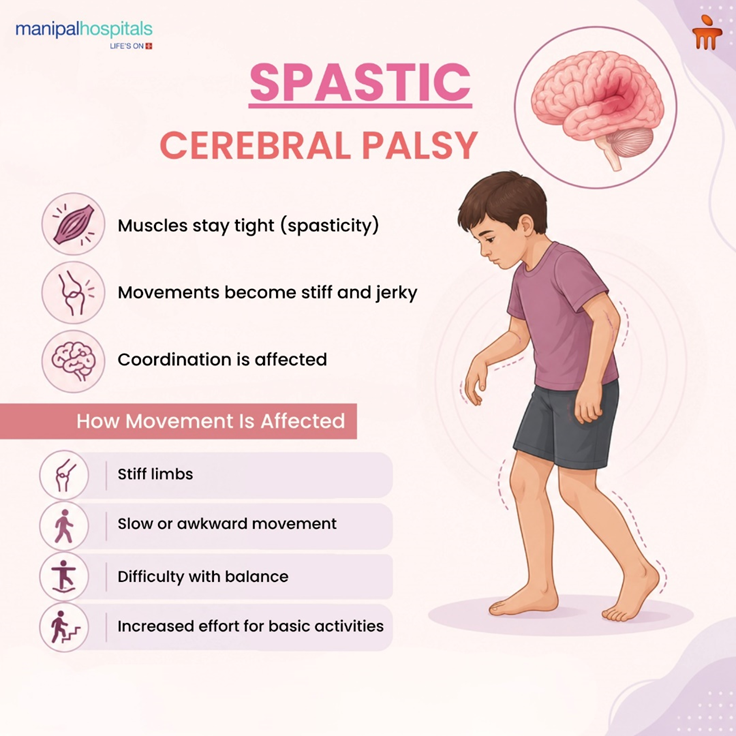
In spastic cerebral palsy, the brain becomes incapable of sending clear messages to the muscles, resulting in restricted and staccato-like movement of the limbs. Movements are usually slow for a child due to their lack of ability to crawl, walk, or maintain balance. Sometimes, movements are overdone, and this may be characterised by muscle stiffness, resulting in excessive tiredness due to the increased effort needed.
A person's fine motor skills are also affected. Writing, holding items in their hands, or buttoning clothes are among the activities that are particularly challenging for patients to accomplish easily.
Types of Spastic Cerebral Palsy
Spastic cerebral palsy is classified based on the parts of the body affected.
Spastic Diplegia
This form mainly involves the lower limbs, so the legs are more affected than the upper body. For children suffering from this form of cerebral palsy, there is a tendency to have a stiff gait while walking. There might also be a case of toe walking by the affected individuals. It could also involve the use of aids like walkers and braces in certain situations.
Spastic Hemiplegia
This type affects one side of the body, usually involving both the arm and leg on the same side. Differences in strength and coordination may become more noticeable as the child grows. Activities like holding objects or walking may require more effort due to this imbalance.
Spastic Quadriplegia
This is the most severe form and involves all four limbs along with the trunk. Movements are highly restricted, and maintaining posture may be challenging. The children affected by this form of spastic cerebral palsy may also face more neurological difficulties.
The knowledge about the different forms of spastic cerebral palsy will help healthcare professionals formulate suitable treatment plans for their patients.
Spastic Cerebral Palsy Symptoms
The symptoms can vary from child to child, but they mainly affect muscle control and movement.
|
Symptom |
Description |
Impact |
|
Muscle stiffness |
Tight muscles |
Limited flexibility |
|
Delayed milestones |
Late sitting or walking |
Slower development |
|
Poor coordination |
Difficulty controlling movement |
Balance issues |
|
Muscle spasms |
Sudden contractions |
Interrupted motion |
|
Abnormal posture |
Unusual positioning |
Affects alignment |
Spastic cerebral palsy symptoms often become more noticeable as the child grows. Early signs may be subtle, but they can progress as movement demands increase.
Early Diagnosis and Therapy
An early diagnosis is essential so that treatment can be given as soon as possible to maximise mobility. Diagnosis of muscle tone, posture, and developmental markers is assessed by doctors.
In certain cases, physicians may conduct imaging studies to detect any abnormalities in the brain. Depending on the imaging reports, we can determine the therapy and treatment approach accordingly.
Approaches to Therapy
There are usually multiple methods employed when treating spastic cerebral palsy, focusing on motion and functionality.
-
Physiotherapy - Physiotherapy seeks to build up muscle strength, movement, and flexibility. Through continuous physiotherapy, the child will finally be able to reduce stiffness and learn how to move better.
-
Occupational Therapy - Occupational therapy is effective in helping the child learn and execute simple everyday activities like writing, dressing, and eating.
-
Speech Therapy - The condition affects the ability to speak and swallow in some children. In such cases, speech therapy has been found to be helpful.
-
Medication - The child may also be required to take medication to reduce muscle stiffness and increase comfort levels.
-
Assistive Devices - Devices such as braces, walkers, or wheelchairs may be used to support movement.
Specialists often use a combination of these approaches tailored to each child’s needs to treat the condition.
Living with Spastic Cerebral Palsy
Some children with spastic cerebral palsy may need ongoing support from parents or caregivers for daily activities. With the correct treatment regimen, most of them end up improving their ability to move around.
The participation of the family is essential in keeping up with the treatment regimen as well as making sure that improvements are made.
Even though there are numerous obstacles, many people with spastic cerebral palsy lead productive lives.
Preventing Complications
While the condition cannot be prevented, complications can be managed through:
-
Regular physiotherapy
-
Proper posture and positioning
-
Early use of assistive devices
-
Routine medical monitoring
When to Seek Medical Advice
Parents are often the first to notice small changes, and it’s better to get them checked rather than wait. You should consider seeing a best brain specialist in Bhubaneswar if you notice:
-
Delays in milestones like sitting, crawling, or walking
-
Increased stiffness in the arms or legs
-
Poor coordination or difficulty maintaining balance
-
Trouble controlling movements or unusual body postures
-
One side of the body is being used more than the other
These signs don’t always point to something serious, but it’s still worth getting them checked. In the event it is something serious, then recognising the signs early on can also allow care and support to begin at the right time. Such steps can make a real difference later.
Conclusion
For many families, managing spastic cerebral palsy becomes part of everyday life. While movement challenges can make simple activities harder, steady progress is possible with the right support. Improvements may take time, often coming in small steps, but with regular therapy and consistent care, children can become more comfortable in their movements.
What makes a difference is ongoing support, patience, and the right guidance at each stage. Every child is different, so care needs to be adapted to their specific needs. Over time, this can help build confidence and make daily activities easier to handle, and consulting experienced best neurology doctors at Manipal Hospital Bhubaneswar can support personalised long-term care.
For those seeking specialised neurology care in bhubaneshwar, for spastic cerebral palsy treatment in Bhubaneswar is available at Manipal Hospital Bhubaneswar, where treatment plans are tailored to each child.
Frequently Asked Questions
Spastic cerebral palsy is a neurological condition where muscle stiffness affects movement and coordination. It is caused by damage to the developing brain, usually before, during, or shortly after birth.
Common spastic cerebral palsy symptoms include muscle stiffness, delayed milestones, poor coordination, and difficulty with movement and posture. These may become more noticeable as the child grows and movement demands increase.
Spastic cerebral palsy may have various types depending on the part of the body where the condition has developed. Accordingly, the type may be identified as diplegia, hemiplegia, or quadriplegia.
Even though the problem cannot be cured, symptoms and movement difficulties can often be managed effectively. Treatment and therapy can help the child move freely and be more functional.
Spastic cerebral palsy treatment in Bhubaneswar is available at specialised centres offering physiotherapy, rehabilitation, and neurological care.
Share this Article


Recent Blogs

How Spastic Cerebral Palsy Affects Movement: Symptoms and Therapy Approaches
26 Jun 20269 Min Read
Moving around seems simple, but it actually takes a lot of back-and-forth talk between your brain and your muscles. If the parts of the brain that control movement get hurt while a baby is still growing, those signals get mixed up. This is what causes cerebral palsy. Out of all the different forms, spastic cerebral palsy is the one people get diagnosed with most often, making up about 80% of all cases. It causes high muscle tone, meaning the muscles stay tight and stiff instead of relaxing when they should, which makes movements look rigid or awkward. Even though the disorder is a lifelong condition, spastic cerebral palsy doesn't get worse over time because the original brain injury stays the same. Getting an early check from a doctor and starting steady therapy can change everything for a child. This blog explores different types of spastic cerebral palsy, how they affect the body, what signs to look for, and the treatment choices available.
Read Nowଅଙ୍ଗ ପ୍ରତ୍ୟାରୋପଣ: ଅଙ୍ଗ ଦାନ ର ଗୁରୁତ୍ୱ, ଅଙ୍ଗ ସଂଗ୍ରହ ପ୍ରକ୍ରିୟା ଏବଂ ଅଙ୍ଗ ପ୍ରତିରୋପଣର ପ୍ରକାର
23 Jun 20266 Min Read
ଅଙ୍ଗ ପ୍ରତ୍ୟାରୋପଣ ହେଉଛି ଆଧୁନିକ ଚିକିତ୍ସା ବିଜ୍ଞାନର ଏକ ଅସାଧାରଣ ଅବଦାନ। ଏହି ଚିକିତ୍ସା ପ୍ରଯୁକ୍ତି ମାଧ୍ୟମରେ ବିଶ୍ୱର ଲକ୍ଷ ଲକ୍ଷ ଲୋକଙ୍କ ଜୀବନ ରକ୍ଷା କରିବା ସମ୍ଭବ ହୋଇଛି। ଯେତେବେଳେ ମଣିଷର ଶରୀରର କୌଣସି ଅଙ୍ଗ ଗୁରୁତର ଭାବରେ କ୍ଷତିଗ୍ରସ୍ତ ହୁଏ କିମ୍ବା ସମ୍ପୂର୍ଣ୍ଣ ଭାବେ କାର୍ଯ୍ୟ କରିବା ବନ୍ଦ କରିଦିଏ, ସେତେବେଳେ ସୁସ୍ଥ ଅଙ୍ଗ ପ୍ରତ୍ୟାରୋପଣ ମାଧ୍ୟମରେ ତାହାର କାର୍ଯ୍ୟକ୍ଷମତା ପୁନଃସ୍ଥାପିତ କରାଯାଇପାରେ। ଏହି ପ୍ରକ୍ରିୟାକୁ ସଫଳ କରିବାରେ ଅଙ୍ଗ ଦାନ ଏକ ଅତ୍ୟନ୍ତ ଗୁରୁତ୍ୱପୂର୍ଣ୍ଣ ଭୂମିକା ନିଭାଏ। ଅଙ୍ଗ ଦାନ ମାଧ୍ୟମରେ ଅନେକ ଗୁରୁତର ରୋଗୀ ନୂତନ ଜୀବନ ପାଇବାର ସୁଯୋଗ ଲାଭ କରନ୍ତି। ଏହି ବ୍ଲଗ୍‌ରେ ଆମେ ଅଙ୍ଗ ପ୍ରତ୍ୟାରୋପଣ ବିଷୟରେ ବିସ୍ତୃତ ଭାବରେ ଆଲୋଚନା କରିବୁ, ଯେଉଁଥିରେ ଅଙ୍ଗ ପ୍ରତିରୋପଣର ପ୍ରକାର, ଅଙ୍ଗ ଦାନର ଗୁରୁତ୍ୱ, ଏହାର ପ୍ରକ୍ରିୟା ଏବଂ ଜୀବନ ରକ୍ଷା କରିବାରେ ଏହାର ଭୂମିକା ସମ୍ପର୍କରେ ଜାଣିପାରିବେ।
Read NowOrthopaedics: How to Fix a Dislocated Shoulder: Treatment and Recovery
22 Jun 20267 Min Read
Your shoulder is the most flexible joint in your body, allowing you to lift, swing, and rotate your arm in almost any direction. However, this incredible range of motion comes with a downside: it makes the shoulder highly vulnerable to slipping out of place. A dislocated shoulder happens when the ball at the top of your arm bone pops right out of its socket. It usually takes a hard blow to do this, like a nasty fall, a sports collision, or a car accident, leaving you with instant, severe pain and an arm you cannot move at all. Many people mistake severe shoulder strain for a minor tweak, but a true dislocation is a medical emergency that requires immediate professional care. Trying to pop the joint back in by yourself or letting an untrained person pull your arm can cause permanent damage to the surrounding blood vessels, muscles, and nerves. Recognising the signs early and knowing exactly what to do can protect your joint health over the long term. This blog outlines the common dislocated shoulder symptoms, what immediate steps to take, and what your treatment and recovery options look like today.
Read NowMonsoon Diseases: Smart Ways For Prevention and Staying Healthy
22 Jun 20268 Min Read
While the monsoon brings relief from intense summer heat, it also increases the risk of several seasonal infections. The conditions during the monsoon make it easy for many infections and illnesses to thrive. Monsoon illnesses increase due to stagnant water, mosquito breeding, contaminated food and water, and environmental conditions that promote the spread of infectious diseases. Children, older adults, pregnant women, and individuals with weakened immune systems are particularly vulnerable. Monsoon sicknesses normally start off with the same signs, which include fever, stomach pain, body ache, coughing, and fatigue. Some infections are mild and self-limiting, while others may require prompt medical attention. Being aware of the monsoon diseases and prevention measures can keep your family safe from many illnesses and other health issues. This blog highlights common monsoon diseases, their symptoms, some practical prevention measures, and when to consult a doctor.
Read NowHoLEP vs Traditional Prostate Surgery: Which Is Better?
22 Jun 20268 Min Read
As men age, many silently struggle with frustrating urinary issues: waking up multiple times a night, dealing with a weak stream, straining to empty the bladder, or suddenly needing to rush to the bathroom. While these symptoms develop slowly, they can eventually have a serious impact on sleep, daily comfort, and overall confidence. When medications stop working, surgery becomes necessary to keep the blockage from causing long-term damage to your bladder or kidneys. For decades, the standard treatment for an enlarged prostate was traditional prostate surgery. Today, advanced options like HoLEP surgery are completely changing how these conditions are treated, giving patients a much better alternative. With patients today prioritising safer options, minimal complications, and faster recovery, the core question is straightforward: Between HoLEP and traditional prostate surgery, which option is genuinely better? Comparing how these 2 procedures perform regarding healing times, patient benefits, and long-term results is the best way to determine the right choice for your care. This blog covers everything you need to know about both treatments to help you make an informed decision.
Read NowCan Plantar Fasciitis Be Cured? Treatment Options & Recovery Timeline
27 May 20267 Min Read
Waking up with a stabbing pain near the heel can make even a short walk across the room uncomfortable. In many cases, this discomfort in the feet points to plantar fasciitis, a condition that develops due to strain and irritation in the foot and affects millions of people worldwide. One common question is, “Can plantar fasciitis be cured?” The excellent news is that most people improve significantly with the right treatment and consistent care. In this blog, we’ll cover everything from causes and diagnosis to effective plantar fasciitis heel pain treatment and typical recovery times.
Read NowTop Reasons for Throat Cancer & How Symptoms Progress Over Time
27 May 20267 Min Read
Most of us don’t think much about a sore throat. It comes and goes, usually because of an infection or a change in weather. But sometimes, symptoms that seem minor at first can point to something more serious. Throat cancer is one such condition where early signs are easy to overlook. In many cases, throat cancer symptoms begin quietly. A slight change in voice or a persistent irritation might not raise concern at first. That is one reason early throat cancer is often overlooked, as the symptoms do not always feel alarming in the beginning. As the condition progresses, these symptoms become more noticeable. Understanding the reasons for throat cancer and how symptoms change over time can help you recognise when to seek medical advice early. This blog explains this progression in a simple and practical way.
Read NowHow Spastic Cerebral Palsy Affects Movement: Symptoms & Therapy Approaches
27 May 20267 Min Read
During early childhood, children learn how to coordinate their movements, balance, and explore their environment. However, in the case of children with spastic cerebral palsy, muscle tightness can cause mobility issues, which may interfere with this crucial development process. In spastic cerebral palsy, the muscles remain in a state of contraction rather than relaxation at all times. As a result, simple movements like sitting, standing, and walking become extremely difficult. As a result, parents may notice delayed milestones or stiffness when handling their child. Early identification of its symptoms can make a real difference, because support started at the right time often improves outcomes. While the condition cannot be reversed, the right therapy can improve movement and make daily activities easier over time.
Read NowUnderstanding Fatty Liver Without Alcohol: A Complete Guide
25 May 20267 Min Read
Daily routines, long working hours, irregular meals, and limited physical activity have quietly made liver-related problems more common than many people realise. One such condition is non alcoholic fatty liver disease, where excess fat starts building up in the liver even in people who drink little or no alcohol. Understanding exactly what is non-alcoholic fatty liver disease is important because it often develops silently. Many people do not realise they have it until it progresses or is detected during routine tests. It can gradually lead to inflammation or liver damage if left unmanaged. This blog provides an insight into the causes, symptoms, and treatment for non-alcoholic fatty liver disease. If you know about it early enough, there is much that can be done about it.
Read NowWhat Is Proteinuria? Causes, Symptoms, Levels & Treatment
25 May 20267 Min Read
Morning habits are where some bodily alterations may present themselves subtly. Foam in urine and leg swelling may seem insignificant initially, but such minor indicators can sometimes signify alterations in kidney function. When there is an excessive amount of protein in the urine due to the body's filtration process being compromised, this condition is referred to as proteinuria. Proteinuria is sometimes temporary and resolves on its own. Still, prolonged leakage of proteins into the urine can indicate an underlying kidney problem requiring further medical attention. The development of proteinuria often occurs subtly in many individuals, making it essential to identify the early proteinuria symptoms for prompt diagnosis and treatment. Knowing the proteinuria treatment types will also aid in managing and alleviating the cause and lowering the burden on the kidneys. This blog explores the causes, types, symptoms, and management of proteinuria.
Read Now