


Pancreatic Cancer: 7 Warning Signs You Shouldn’t Ignore
Reviewed by: Manipal Hospitals
Posted on
7 Min Read

Not sure what you’re looking for?
Get in touch with our representatives for help!
Contact UsPancreatic cancer, often dubbed a "silent killer," presents a significant challenge due to its insidious nature. Unfortunately, symptoms of pancreatic cancer often do not manifest until the disease has advanced, making early detection crucial but difficult.
At Manipal Hospitals, we believe in empowering our patients with knowledge, understanding that vigilance and early recognition of pancreatic cancer symptoms are the first step towards better outcomes.
Understanding the signs of pancreatic cancer is paramount for early intervention. This comprehensive guide sheds light on the key warning signs of pancreatic cancer you should be aware of, encouraging you to seek timely medical attention if any of these symptoms arise.
What is Pancreatic Cancer?
Pancreatic cancer begins when abnormal cells in the pancreas grow out of control and form a tumour. The most common type, adenocarcinoma, starts in the cells lining the ducts that carry digestive enzymes out of the pancreas. Because the pancreas is deep inside the body, tumours often grow quite large before they cause any noticeable pancreatic cancer symptoms.
The Silent Threat: 7 Warning Signs of Pancreatic Cancer
Persistent or worsening signs of pancreatic cancer warrant investigation. Here are seven critical pancreatic cancer symptoms you should never ignore:
|
Sign/Symptom |
Description |
Key Indicator |
|
Unexplained Weight Loss |
Losing a significant amount of weight (often 10% or more of body weight within a few months) without trying. |
Tumours affect digestion and metabolism, leading to loss of appetite and muscle wasting. |
|
Jaundice (Yellowing of Skin or Eyes) |
Skin and whites of the eyes turn yellow, often accompanied by dark urine, pale stools, and itchy skin. |
The tumour blocks the bile duct, causing bile backup. This is often one of the most visible pancreatic cancer symptoms, indicating a need for prompt pancreatic cancer treatment. |
|
Abdominal or Back Pain |
A dull ache in the upper abdomen that may radiate to the back. This pancreatic cancer symptom can be constant or intermittent, worsening after eating or lying down. |
Tumour pressing on nerves or organs. Reported by up to 80% of patients as a significant pancreatic cancer symptom. |
|
Changes in Stool |
|
The pancreas isn't producing enough digestive enzymes due to a tumour, leading to improper fat absorption, a key indicator among pancreatic cancer symptoms. |
|
New-Onset or Worsening Diabetes |
Sudden diagnosis of Type 2 diabetes in adults with no risk factors, or rapid worsening of existing diabetes, can be a potential sign of pancreatic cancer. |
A growing tumour impairs the pancreas's insulin production function, leading to elevated blood sugar, a subtle but critical pancreatic cancer symptom. |
|
Nausea, Vomiting, and Loss of Appetite |
|
Tumours can press on the stomach or small intestine, blocking food flow and contributing to weight loss, often linked to other pancreatic cancer symptoms. |
|
Fatigue |
Persistent and overwhelming tiredness that doesn't improve with rest can be another general pancreatic cancer symptom. |
Persistent and overwhelming tiredness that doesn't improve with rest can be another general pancreatic cancer symptom. |
Understanding the Causes of Pancreatic Cancer
While the exact origins of what causes pancreatic cancer are not fully understood, several risk factors have been identified. Understanding what causes pancreatic cancer can help in identifying at-risk individuals:
|
Risk Factor |
Explanation/Impact |
| Smoking |
|
| Obesity |
|
| Diabetes |
|
| Chronic Pancreatitis |
|
| Family History |
|
| Age | The risk increases with age, with most diagnoses of pancreatic cancer occurring after age 45. The median age at diagnosis is 70. |
| Heavy Alcohol Consumption |
|
Diagnosing Pancreatic Cancer
Early and accurate diagnosis is critical for effective pancreatic cancer treatment, and can significantly influence whether pancreatic cancer is curable in your case.
|
Test Type |
Purpose/What it Detects |
|
Blood Tests |
|
|
CT Scan (Computed Tomography) |
Provides detailed cross-sectional images to locate tumours, assess their size, and check for spread to other organs, aiding in planning pancreatic cancer treatment. |
|
MRI (Magnetic Resonance Imaging) |
|
|
Endoscopic Ultrasound (EUS) |
An endoscope with an ultrasound probe is passed down the throat to get close-up images of the pancreas. It can also be used to guide a biopsy for definitive diagnosis of pancreatic cancer. |
|
Biopsy |
A small tissue sample is taken (often during EUS or CT-guided) and examined under a microscope to confirm the presence of cancer cells, which is essential before starting pancreatic cancer treatment. |
|
PET Scan (Positron Emission Tomography) |
Used to detect cancer cells by showing metabolic activity, often combined with CT (PET-CT) to pinpoint areas of spread, crucial for staging and determining the best pancreatic cancer treatment. |
Pancreatic Cancer Treatment Options
The approach to pancreatic cancer treatment is highly individualised and depends on the stage of the cancer, its location, and the patient's overall health. Modern advancements have significantly expanded the arsenal against this disease, leading to improved outcomes for many patients.
|
Treatment Type |
Mechanism/Application |
Goal |
|
Surgery (e.g., Whipple procedure) |
Removal of the tumour and surrounding affected tissues. Procedures like pancreaticoduodenectomy (Whipple) or distal pancreatectomy are key forms of pancreatic cancer treatment. |
Often, the best chance for a cure is for early, localised, resectable pancreatic cancer. Manipal Hospitals' surgical oncology teams have high success rates in this form of pancreatic cancer treatment. |
|
Chemotherapy |
Uses anti-cancer drugs to kill cancer cells throughout the body or slow their growth. Administered intravenously or orally as part of pancreatic cancer treatment. |
Shrink tumours before surgery (neoadjuvant), kill remaining cells after surgery (adjuvant), or control advanced disease progression, making it a versatile pancreatic cancer treatment. |
|
Radiation Therapy |
Uses high-energy X-rays or other particles to destroy cancer cells or inhibit their growth. It can be external beam or internal (brachytherapy) as a component of pancreatic cancer treatment. |
Shrink tumours before surgery, kill residual cells after surgery, or alleviate symptoms like pain in advanced stages of pancreatic cancer. |
|
Targeted Therapy |
Drugs designed to specifically attack cancer cells by targeting unique molecular pathways or proteins involved in cancer growth, offering a precise pancreatic cancer treatment. |
Block specific growth signals or processes unique to cancer cells, often with fewer side effects than traditional chemotherapy. Requires genetic testing for this type of pancreatic cancer treatment. |
|
Immunotherapy |
A newer approach that uses medications to boost the body's own immune system, enabling it to recognise and fight cancer cells more effectively, expanding options for pancreatic cancer treatment. |
Unleash the immune system's power to attack cancer cells. Effective in a subset of patients with specific tumour characteristics for pancreatic cancer. |
|
Palliative Care |
Focuses on providing relief from the symptoms and stress of a serious illness, improving quality of life for both the patient and the family, and is an integral part of holistic pancreatic cancer treatment. |
Manage pain, nausea, fatigue, and other symptoms to enhance comfort and well-being at any stage of pancreatic cancer treatment. |
Advancements in personalised medicine, coupled with multidisciplinary care teams, mean that the 5-year survival rate for pancreatic cancer has improved by over 30% in the last two decades, offering renewed hope for many patients seeking effective pancreatic cancer treatment.
Is Pancreatic Cancer Curable?
The question "Is pancreatic cancer curable?" is complex. While pancreatic cancer is often aggressive, it is curable, especially when detected at an early, localised stage. For patients whose cancer is confined to the pancreas and can be surgically removed as part of their pancreatic cancer treatment, the 5-year survival rate can be as high as 40% or more, depending on various factors and treatment efficacy.
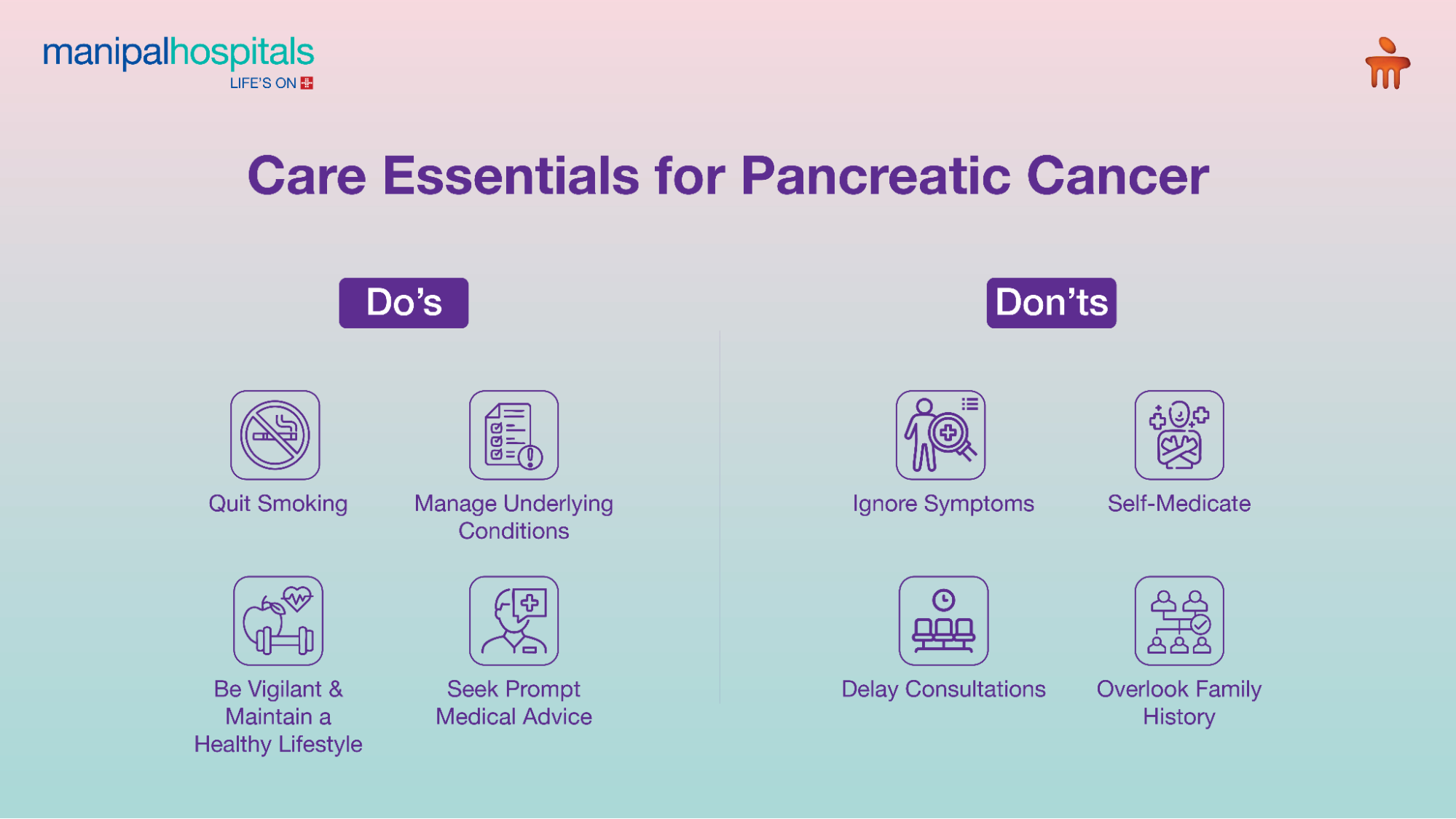
Care Essentials: Do's and Don'ts
|
Do's |
Don'ts |
|
|
|
If you are experiencing these concerning pancreatic cancer symptoms, it's crucial to seek timely medical advice.
Frequently Asked Questions
Individuals with a history of smoking, obesity, chronic pancreatitis, long-standing diabetes, or a family history of pancreatic cancer are at higher risk. These are key factors in understanding what causes pancreatic cancer.
Reducing risk factors like quitting smoking, maintaining a healthy weight, and managing diabetes can significantly lower your chances of developing pancreatic cancer.
Early detection of pancreatic cancer symptoms dramatically improves treatment success rates. When caught at a localised stage and resectable, 5-year survival rates can increase significantly.
Recovery time varies but can range from several weeks to a few months. It depends on the type of surgery, the patient's overall health, and potential complications.
Currently, there's no routine screening test for pancreatic cancer for the general population to detect early pancreatic cancer symptoms. However, surveillance programs involving endoscopic ultrasound or MRI may be recommended.
Share this Article


Recent Blogs

वजन घटाने और पाचन के लिए नींबू पानी: एक प्राकृतिक समाधान जो वाकई काम करता है!
19 Jun 20266 Min Read
आज की भागदौड़ भरी जिंदगी में, स्वस्थ रहना और अपने वजन को नियंत्रित रखना कई लोगों के लिए एक बड़ी चुनौती बन गया है। हम सभी एक ऐसे आसान और प्राकृतिक तरीके की तलाश में रहते हैं जो हमारे स्वास्थ्य लक्ष्यों को प्राप्त करने में मदद कर सके। मणिपाल अस्पताल में, हम समग्र स्वास्थ्य और कल्याण को बढ़ावा देने में विश्वास करते हैं, और इसी कड़ी में, नींबू पानी एक ऐसा सरल लेकिन शक्तिशाली उपाय है जो आपके वजन घटाने और पाचन तंत्र को बेहतर बनाने में महत्वपूर्ण भूमिका निभा सकता है। नींबू पानी सिर्फ एक ताज़ा पेय नहीं है; यह विटामिन सी, एंटीऑक्सिडेंट और अन्य पोषक तत्वों का एक पावरहाउस है जो आपके शरीर को अंदर से साफ करने और उसे तरोताजा रखने में मदद करता है। यह आपके मेटाबॉलिज्म को गति देने से लेकर पेट की समस्याओं को शांत करने तक, कई स्वास्थ्य लाभ प्रदान करता है। आइए, जानें कि कैसे यह खट्टा फल आपके स्वस्थ जीवनशैली के सफर में एक मीठा बदलाव ला सकता है।
Read NowAct Fast: Brain Abscess Causes and Emergency Treatment with a 90% Success Rate
19 Jun 20268 Min Read
A brain abscess is a serious and potentially life-threatening condition where pus collects within the brain tissue, often surrounded by inflammation. While relatively rare, it demands immediate medical attention. At Bhagwan Mahavir Manipal Hospitals, our dedicated team of neurologists and neurosurgeons emphasises early diagnosis and aggressive treatment, which significantly improves outcomes. Understanding the causes and recognising the subtle yet critical brain infection symptoms and brain abscess symptoms can be lifesaving. This blog is a comprehensive guide that features an introduction to this medical condition, its causes, symptoms, and treatment options.
Read NowImmunotherapy for Cancer: Eligibility, Benefits & Modern Treatment
19 Jun 20268 Min Read
A cancer diagnosis can be a life-altering moment, often bringing with it a whirlwind of emotions and questions about treatment options. For decades, surgery, chemotherapy, and radiation therapy have been the cornerstones of cancer care. However, the landscape of oncology is rapidly evolving, ushering in groundbreaking approaches that harness the body's own defence mechanisms to fight cancer. Among these, immunotherapy for cancer stands out as a revolutionary, advanced cancer treatment, offering new hope and improved outcomes for countless patients. At Manipal Hospitals, we are at the forefront of delivering cutting-edge cancer immunotherapy treatment, understanding its profound potential and guiding our patients through every step of their journey. This powerful approach leverages your immune system, which is naturally designed to protect you from diseases, to identify and destroy cancer cells more effectively.
Read NowUnravelling Neck Pain: Beyond Just a Stiff Muscle – Understanding Its Complex Causes
17 Jun 20268 Min Read
Neck pain is a remarkably common ailment, affecting a significant portion of the population at some point in their lives. While often dismissed as a minor stiffness or muscle strain from a long day or awkward sleep, persistent or severe neck pain can be a signal of underlying issues that require medical attention. At Manipal Hospitals, we understand the profound impact neck pain can have on your daily life, productivity, and overall well-being. This comprehensive guide aims to shed light on the diverse causes of neck pain, helping you understand when it’s time to seek expert care.
Read NowPericarditis: When the Sac Around Your Heart Gets Inflamed
10 Jun 20267 Min Read
The human heart works continuously to keep the body alive and functioning. Protecting this vital organ is a thin, fluid-filled sac called the pericardium. This protective covering cushions the heart, reduces friction during heartbeats, and prevents over-expansion. However, when this sac becomes inflamed, it leads to a condition known as pericarditis. Many people experiencing pericarditis symptoms often confuse the condition with a heart attack because the most common sign is sudden chest pain. While the condition can feel frightening, early diagnosis and proper medical care can lead to complete recovery in most cases. At Bhagwan Mahavir Manipal Hospital, experienced cardiologists provide advanced care, accurate diagnosis, and personalised treatment plans for patients suffering from pericarditis and other heart-related conditions. This blog is an informational guide for you to understand this medical condition, how it's different from a heart attack, how it's diagnosed, and aspects related to its treatment and life post-treatment.
Read NowSummer Digestive Issues: Causes, Prevention & How to Keep Your Stomach Cool
15 May 20265 Min Read
As temperatures rise, so does the prevalence of certain digestive discomforts. Summer, while a season of joy and outdoor activities, often brings with it a unique set of challenges for our digestive system. From tempting street food to increased travel, various factors can disrupt our gut health, leading to common summer digestive problems. At Manipal Hospitals, we believe in empowering you with knowledge to keep your stomach cool and your gut healthy, ensuring you enjoy the season to its fullest. Our gastroenterology department reports a significant increase of approximately 30% in cases of acute gastroenteritis during the summer months, highlighting the importance of preventive care.
Read NowOvarian Cancer: Why It's Called a Silent Killer, Stages and Treatment Options
15 May 20267 Min Read
Ovarian cancer, often referred to as the "silent killer," presents a unique challenge in medical diagnosis due to its vague and easily dismissed symptoms. At Manipal Hospitals, we understand the critical importance of early detection and comprehensive care. Our dedicated team, including our oncologists in Ranchi, is committed to providing world-class ovarian cancer treatment, ensuring every patient receives a personalised and empathetic approach. While the moniker "silent killer" can sound alarming, advances in medical science offer hope and effective interventions. It is crucial to understand the nuances of this disease, from its subtle indicators to the sophisticated ovarian cancer treatment options available.
Read Nowस्ट्रोक: शुरुआती FAST चेतावनी संकेत, जोखिम कारक और ठीक होने के बाद का जीवन
15 May 20267 Min Read
स्ट्रोक एक मेडिकल इमरजेंसी है, जिसमें हर मिनट बेहद महत्वपूर्ण होता है। समय पर पहचान और सही उपचार जीवन बचा सकता है तथा स्थायी विकलांगता के जोखिम को कम कर सकता है। रांची में हमारे न्यूरोलॉजिस्ट बताते हैं कि स्ट्रोक के शुरुआती संकेतों को समझना और तुरंत अस्पताल पहुँचना मरीज की रिकवरी में बड़ा अंतर ला सकता है। इस ब्लॉग में हम FAST चेतावनी संकेत, स्ट्रोक के जोखिम कारक, इस्कीमिक बनाम हेमोरेजिक स्ट्रोक, ब्रेन स्ट्रोक का इलाज, और रिकवरी के दौरान किए जाने वाले स्ट्रोक पुनर्वास व्यायाम के बारे में विस्तार से जानेंगे।
Read NowDecoding Heart Palpitations: When to Worry and Consult a Cardiologist
14 May 20266 Min Read
The sensation of your heart skipping a beat, pounding rapidly, or a peculiar heart-fluttering feeling can be unsettling. These are often described as heart palpitations, and they are surprisingly common. While many people experience them occasionally without any serious underlying cause, it's natural to wonder: when are heart palpitations a sign of something more serious, and when should you seek professional medical advice?
Read NowCervical Spondylosis: How It Causes Neck Pain and What You Can Do About It
14 May 20267 Min Read
Neck pain is a common complaint, often dismissed as a minor inconvenience. However, persistent or severe neck pain can significantly impact your daily life, and it’s frequently a symptom of an underlying condition called cervical spondylosis. At Manipal Hospitals, we understand the debilitating effects of chronic discomfort and are dedicated to providing comprehensive care for your spine health. This blog post will demystify cervical spondylosis, explain how it leads to neck pain, and outline effective strategies for management and relief.
Read Now