


Act Fast: Brain Abscess Causes and Emergency Treatment with a 90% Success Rate
Reviewed by: Manipal Hospitals
Posted on
8 Min Read

Not sure what you’re looking for?
Get in touch with our representatives for help!
Contact UsA brain abscess is a serious and potentially life-threatening condition where pus collects within the brain tissue, often surrounded by inflammation. While relatively rare, it demands immediate medical attention. At Bhagwan Mahavir Manipal Hospitals, our dedicated team of neurologists and neurosurgeons emphasises early diagnosis and aggressive treatment, which significantly improves outcomes. Understanding the causes and recognising the subtle yet critical brain infection symptoms and brain abscess symptoms can be lifesaving. This blog is a comprehensive guide that features an introduction to this medical condition, its causes, symptoms, and treatment options.
What is a Brain Abscess?
Imagine a localised pocket of infection forming inside your brain, much like an abscess that might develop on your skin. This is essentially what a brain abscess is. It's usually caused by bacteria or fungi that travel to the brain from another site of infection in the body or enter directly through trauma or surgery. Left untreated, a brain abscess can exert pressure on brain tissue, disrupt normal brain function, and lead to severe complications, including permanent neurological damage or even death. Fortunately, with advancements in medical science and prompt intervention, the prognosis for patients has improved dramatically, with timely treatment offering a success rate of up to 90% in many cases.
Understanding the Causes of Brain Abscess
The development of a brain abscess typically begins when microorganisms penetrate the protective barriers of the brain. Identifying the source of infection is crucial for effective brain abscess treatment. Here are the primary ways these infections can arise:
-
Spread from Nearby Infections: This is a common route. Infections in areas close to the brain can spread directly. These include:
-
Chronic ear infections (otitis media) or mastoiditis.
-
Sinusitis (frontal or ethmoid sinuses).
-
Dental infections or abscesses.
-
-
Statistics show that approximately 25-50% of brain abscesses originate from contiguous sites of infection.
-
Hematogenous Spread (Bloodstream): Bacteria or fungi from infections elsewhere in the body can travel through the bloodstream to the brain. Common distant sources include:
-
Lung infections (e.g., pneumonia, empyema).
-
Heart infections (e.g., endocarditis).
-
Abdominal infections.
-
Skin infections.
-
-
Around 20-30% of brain abscesses are caused by this method.
-
Direct Entry through Trauma or Surgery:
-
Head injuries, especially penetrating ones, can introduce bacteria directly into the brain.
-
Neurosurgical procedures, though rare due to strict sterile protocols, can sometimes lead to infection.
-
-
Compromised Immune System: Individuals with weakened immune systems due to conditions like HIV/AIDS, cancer, organ transplantation, or prolonged steroid use are at a higher risk. Their bodies struggle to fight off infections, making them more susceptible to a brain abscess.
-
Congenital Heart Disease: In some cases, especially in children, certain congenital heart defects can allow bacteria to bypass the lungs' filtering system and reach the brain.
Recognising Brain Abscess Symptoms
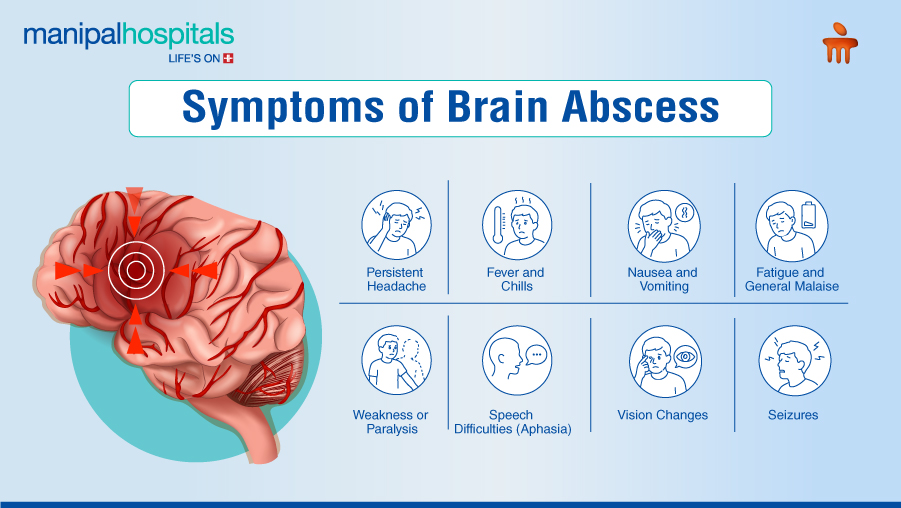
The brain abscess symptoms can vary widely depending on the size, location, and rate of growth of the abscess. They often mimic other neurological conditions, making early and accurate diagnosis critical. Vigilance for these signs is paramount:
- General Symptoms (related to infection and inflammation):
-
Persistent Headache: Often severe, progressive, and not relieved by standard pain medications. It's the most common symptom, present in over 70% of cases.
-
Fever and Chills: Though sometimes absent, particularly in immunocompromised patients.
-
Nausea and Vomiting: Often accompanied by a severe headache, indicating increased pressure within the skull.
-
Fatigue and General Malaise: A feeling of being unwell.
-
-
Focal Neurological Symptoms (related to specific brain area affected):
-
Weakness or Paralysis: On one side of the body (hemiparesis or hemiplegia).
-
Speech Difficulties (Aphasia): Trouble speaking, understanding, or finding words.
-
Vision Changes: Blurred vision, double vision, or visual field loss.
-
Seizures: Occurring in about 25-50% of patients, sometimes as the first symptom.
-
Coordination Problems: Unsteadiness, difficulty walking (ataxia).
-
-
Symptoms of Increased Intracranial Pressure:
-
Altered Mental State: Confusion, drowsiness, lethargy, or even coma.
-
Stiff Neck (Nuchal Rigidity): Though less common than in meningitis.
-
If you or someone you know experiences a combination of these brain infection symptoms, especially a severe, persistent headache accompanied by neurological changes, it’s crucial to seek emergency medical care immediately. Early intervention is key to preventing irreversible damage.
Diagnosis: A Race Against Time
Diagnosing a brain abscess requires prompt and accurate assessment. Our experts at Manipal Hospitals utilise a combination of clinical evaluation and advanced imaging techniques:
-
Neurological Examination: To assess mental status, motor skills, sensory function, reflexes, and coordination.
-
Blood Tests: To look for signs of infection and inflammation.
-
Imaging Studies:
-
Computed Tomography (CT) Scan: Often the first line of investigation, revealing the presence and location of the abscess.
-
Magnetic Resonance Imaging (MRI) Scan: Provides more detailed images of the brain, helping to differentiate the abscess from other conditions and determine its size and extent. MRI has a diagnostic accuracy of over 95% for brain abscesses.
-
-
Stereotactic Biopsy/Aspiration: In some cases, a small sample of the abscess fluid may be taken under image guidance to identify the specific pathogen causing the infection, which guides targeted antibiotic therapy.
Emergency Treatment for Brain Abscess
Emergency brain abscess treatment is aggressive and typically involves a combination of medical and surgical approaches, often initiated without delay:
-
Antibiotic or Antifungal Therapy:
-
Broad-spectrum medications are administered intravenously immediately upon suspicion of a brain abscess, even before the specific pathogen is identified.
-
Once the causative organism is known from culture results (from blood or abscess fluid), the therapy is tailored with specific, highly effective agents. This course of treatment can last for several weeks to months, with close monitoring.
-
Studies show that a well-chosen antibiotic regimen can resolve the abscess in about 30-50% of cases without surgery, especially if detected early and if the abscess is small.
-
-
Surgical Intervention:
-
Aspiration: If the abscess is large or causing significant pressure, neurosurgeons may drain the pus using a needle guided by CT or MRI. This reduces pressure and allows for direct sampling of the pus for culture. This minimally invasive approach has a high success rate, often exceeding 85% for symptom relief and infection control.
-
Excision (Removal): In some cases, particularly for encapsulated abscesses or those resistant to aspiration, surgical removal of the entire abscess may be necessary. This procedure is complex but can be curative.
-
-
Supportive Care:
-
Medications to reduce brain swelling (e.g., corticosteroids).
-
Anticonvulsants to prevent seizures.
-
Close monitoring in an intensive care unit (ICU) may be required.
-
The coordinated expertise of neurosurgeons, neurologists, infectious disease specialists, and critical care teams at Manipal Hospitals ensures comprehensive care, leading to favourable outcomes for many patients. Our rapid response protocols are designed to initiate treatment within hours of diagnosis, critical for patient recovery and minimising long-term complications.
Care Essentials: Do's and Don'ts
Navigating a serious condition like a brain abscess requires careful attention and adherence to medical advice. Here’s a quick guide:
-
Do's:
-
Seek Immediate Medical Attention: At the first sign of severe, persistent headaches or unexplained neurological symptoms.
-
Communicate All Symptoms: Provide a complete medical history to your doctor, including any recent infections or injuries.
-
Adhere strictly to Treatment: Complete the full course of antibiotics or antifungals, even if you start feeling better.
-
Attend All Follow-Up Appointments: Regular check-ups and imaging are crucial to ensure the infection is fully resolved and to monitor for any complications.
-
-
Don'ts:
-
Don't Self-Diagnose or Self-Medicate: Brain abscess symptoms can mimic other conditions. Never delay professional medical evaluation.
-
Don't Ignore Persistent Symptoms: A headache that won't go away or new neurological deficits are not normal.
-
Don't Stop Medication Prematurely: Halting treatment can lead to recurrence and antibiotic resistance.
-
Don't Dismiss Risk Factors: If you have a compromised immune system or a chronic infection, be extra vigilant.
-
Prevention: Steps Towards a Healthier Brain
While not all cases can be prevented, you can significantly reduce your risk of developing a brain abscess by:
-
Promptly treating ear infections, sinusitis, and dental abscesses.
-
Maintaining good oral hygiene.
-
Seeking immediate medical care for head injuries, especially those that break the skin.
-
Managing chronic health conditions that compromise the immune system under medical supervision.
If you or a loved one is experiencing any concerning brain infection symptoms or brain abscess symptoms, do not hesitate. Every moment counts. Book an emergency consultation with our expert neurologists in Ranchi and neurosurgeons at Bhagwan Mahavir Manipal Hospitals today. Our advanced facilities and multidisciplinary team are equipped to provide the highest standard of care.
Frequently Asked Questions
Brain abscesses are relatively rare, affecting about 1 to 2 people per 100,000 population annually. However, their incidence can be higher in specific patient groups, such as those with weakened immune systems or certain chronic conditions.
Yes, with early diagnosis and appropriate, aggressive brain abscess treatment, most brain abscesses can be cured completely. The key is timely medical intervention and adherence to the full treatment regimen, which often includes a prolonged course of antibiotics and sometimes surgery.
Not always. While many patients experience severe headaches, fever, and neurological deficits, the initial symptoms can sometimes be subtle and progress gradually. This is particularly true in immunocompromised individuals, where symptoms might be masked.
An untreated brain abscess can lead to devastating consequences, including rupture of the abscess, widespread brain infection (meningitis or encephalitis), permanent neurological damage (like paralysis or speech impairment), coma, and ultimately, death. This is why immediate emergency treatment is crucial.
Recovery time varies greatly depending on the size and location of the abscess, the extent of brain damage, and the patient's overall health. While initial treatment might resolve the infection in weeks, full recovery of neurological function can take months, often requiring physical therapy, occupational therapy, or speech therapy.
Share this Article


Recent Blogs

वजन घटाने और पाचन के लिए नींबू पानी: एक प्राकृतिक समाधान जो वाकई काम करता है!
19 Jun 20266 Min Read
आज की भागदौड़ भरी जिंदगी में, स्वस्थ रहना और अपने वजन को नियंत्रित रखना कई लोगों के लिए एक बड़ी चुनौती बन गया है। हम सभी एक ऐसे आसान और प्राकृतिक तरीके की तलाश में रहते हैं जो हमारे स्वास्थ्य लक्ष्यों को प्राप्त करने में मदद कर सके। मणिपाल अस्पताल में, हम समग्र स्वास्थ्य और कल्याण को बढ़ावा देने में विश्वास करते हैं, और इसी कड़ी में, नींबू पानी एक ऐसा सरल लेकिन शक्तिशाली उपाय है जो आपके वजन घटाने और पाचन तंत्र को बेहतर बनाने में महत्वपूर्ण भूमिका निभा सकता है। नींबू पानी सिर्फ एक ताज़ा पेय नहीं है; यह विटामिन सी, एंटीऑक्सिडेंट और अन्य पोषक तत्वों का एक पावरहाउस है जो आपके शरीर को अंदर से साफ करने और उसे तरोताजा रखने में मदद करता है। यह आपके मेटाबॉलिज्म को गति देने से लेकर पेट की समस्याओं को शांत करने तक, कई स्वास्थ्य लाभ प्रदान करता है। आइए, जानें कि कैसे यह खट्टा फल आपके स्वस्थ जीवनशैली के सफर में एक मीठा बदलाव ला सकता है।
Read NowAct Fast: Brain Abscess Causes and Emergency Treatment with a 90% Success Rate
19 Jun 20268 Min Read
A brain abscess is a serious and potentially life-threatening condition where pus collects within the brain tissue, often surrounded by inflammation. While relatively rare, it demands immediate medical attention. At Bhagwan Mahavir Manipal Hospitals, our dedicated team of neurologists and neurosurgeons emphasises early diagnosis and aggressive treatment, which significantly improves outcomes. Understanding the causes and recognising the subtle yet critical brain infection symptoms and brain abscess symptoms can be lifesaving. This blog is a comprehensive guide that features an introduction to this medical condition, its causes, symptoms, and treatment options.
Read NowImmunotherapy for Cancer: Eligibility, Benefits & Modern Treatment
19 Jun 20268 Min Read
A cancer diagnosis can be a life-altering moment, often bringing with it a whirlwind of emotions and questions about treatment options. For decades, surgery, chemotherapy, and radiation therapy have been the cornerstones of cancer care. However, the landscape of oncology is rapidly evolving, ushering in groundbreaking approaches that harness the body's own defence mechanisms to fight cancer. Among these, immunotherapy for cancer stands out as a revolutionary, advanced cancer treatment, offering new hope and improved outcomes for countless patients. At Manipal Hospitals, we are at the forefront of delivering cutting-edge cancer immunotherapy treatment, understanding its profound potential and guiding our patients through every step of their journey. This powerful approach leverages your immune system, which is naturally designed to protect you from diseases, to identify and destroy cancer cells more effectively.
Read NowUnravelling Neck Pain: Beyond Just a Stiff Muscle – Understanding Its Complex Causes
17 Jun 20268 Min Read
Neck pain is a remarkably common ailment, affecting a significant portion of the population at some point in their lives. While often dismissed as a minor stiffness or muscle strain from a long day or awkward sleep, persistent or severe neck pain can be a signal of underlying issues that require medical attention. At Manipal Hospitals, we understand the profound impact neck pain can have on your daily life, productivity, and overall well-being. This comprehensive guide aims to shed light on the diverse causes of neck pain, helping you understand when it’s time to seek expert care.
Read NowPericarditis: When the Sac Around Your Heart Gets Inflamed
10 Jun 20267 Min Read
The human heart works continuously to keep the body alive and functioning. Protecting this vital organ is a thin, fluid-filled sac called the pericardium. This protective covering cushions the heart, reduces friction during heartbeats, and prevents over-expansion. However, when this sac becomes inflamed, it leads to a condition known as pericarditis. Many people experiencing pericarditis symptoms often confuse the condition with a heart attack because the most common sign is sudden chest pain. While the condition can feel frightening, early diagnosis and proper medical care can lead to complete recovery in most cases. At Bhagwan Mahavir Manipal Hospital, experienced cardiologists provide advanced care, accurate diagnosis, and personalised treatment plans for patients suffering from pericarditis and other heart-related conditions. This blog is an informational guide for you to understand this medical condition, how it's different from a heart attack, how it's diagnosed, and aspects related to its treatment and life post-treatment.
Read NowSummer Digestive Issues: Causes, Prevention & How to Keep Your Stomach Cool
15 May 20265 Min Read
As temperatures rise, so does the prevalence of certain digestive discomforts. Summer, while a season of joy and outdoor activities, often brings with it a unique set of challenges for our digestive system. From tempting street food to increased travel, various factors can disrupt our gut health, leading to common summer digestive problems. At Manipal Hospitals, we believe in empowering you with knowledge to keep your stomach cool and your gut healthy, ensuring you enjoy the season to its fullest. Our gastroenterology department reports a significant increase of approximately 30% in cases of acute gastroenteritis during the summer months, highlighting the importance of preventive care.
Read NowOvarian Cancer: Why It's Called a Silent Killer, Stages and Treatment Options
15 May 20267 Min Read
Ovarian cancer, often referred to as the "silent killer," presents a unique challenge in medical diagnosis due to its vague and easily dismissed symptoms. At Manipal Hospitals, we understand the critical importance of early detection and comprehensive care. Our dedicated team, including our oncologists in Ranchi, is committed to providing world-class ovarian cancer treatment, ensuring every patient receives a personalised and empathetic approach. While the moniker "silent killer" can sound alarming, advances in medical science offer hope and effective interventions. It is crucial to understand the nuances of this disease, from its subtle indicators to the sophisticated ovarian cancer treatment options available.
Read Nowस्ट्रोक: शुरुआती FAST चेतावनी संकेत, जोखिम कारक और ठीक होने के बाद का जीवन
15 May 20267 Min Read
स्ट्रोक एक मेडिकल इमरजेंसी है, जिसमें हर मिनट बेहद महत्वपूर्ण होता है। समय पर पहचान और सही उपचार जीवन बचा सकता है तथा स्थायी विकलांगता के जोखिम को कम कर सकता है। रांची में हमारे न्यूरोलॉजिस्ट बताते हैं कि स्ट्रोक के शुरुआती संकेतों को समझना और तुरंत अस्पताल पहुँचना मरीज की रिकवरी में बड़ा अंतर ला सकता है। इस ब्लॉग में हम FAST चेतावनी संकेत, स्ट्रोक के जोखिम कारक, इस्कीमिक बनाम हेमोरेजिक स्ट्रोक, ब्रेन स्ट्रोक का इलाज, और रिकवरी के दौरान किए जाने वाले स्ट्रोक पुनर्वास व्यायाम के बारे में विस्तार से जानेंगे।
Read NowDecoding Heart Palpitations: When to Worry and Consult a Cardiologist
14 May 20266 Min Read
The sensation of your heart skipping a beat, pounding rapidly, or a peculiar heart-fluttering feeling can be unsettling. These are often described as heart palpitations, and they are surprisingly common. While many people experience them occasionally without any serious underlying cause, it's natural to wonder: when are heart palpitations a sign of something more serious, and when should you seek professional medical advice?
Read NowCervical Spondylosis: How It Causes Neck Pain and What You Can Do About It
14 May 20267 Min Read
Neck pain is a common complaint, often dismissed as a minor inconvenience. However, persistent or severe neck pain can significantly impact your daily life, and it’s frequently a symptom of an underlying condition called cervical spondylosis. At Manipal Hospitals, we understand the debilitating effects of chronic discomfort and are dedicated to providing comprehensive care for your spine health. This blog post will demystify cervical spondylosis, explain how it leads to neck pain, and outline effective strategies for management and relief.
Read Now