


Multiple Sclerosis Explained: Early Symptoms, Causes & Lifestyle Tips
Reviewed by: Manipal Hospitals
Posted on
9 Min Read

Not sure what you’re looking for?
Get in touch with our representatives for help!
Contact UsMultiple Sclerosis (MS) is a chronic autoimmune disease of the central nervous system that affects millions of people worldwide. In this condition, the body’s immune system mistakenly attacks the myelin sheath, the protective layer of nerve fibres. This disrupts the flow of information between the brain and the rest of the body. Eventually, the condition can permanently damage the nerve fibres.
MS is an extremely debilitating and unpredictable condition owing to its variability in symptoms. While there's no cure for multiple sclerosis, there are treatments to help recover from attacks and manage symptoms.
Causes of Multiple Sclerosis
Despite extensive research, the causes of MS remain largely unknown. However, genetic predisposition and environmental factors are some of the common multiple sclerosis. While MS is not directly inherited, having a close relative with the disease slightly increases the risk.
Several environmental factors that could cause MS include:
-
Vitamin D Deficiency: Studies have linked lower levels of vitamin D to a higher risk of developing MS.
-
Epstein-Barr Virus (EBV) Infection: MS is often a common complication of an EBV infection.
-
Smoking: Smoking not only increases the risk of developing MS but also accelerates disease progression.
-
Obesity: Obesity, especially during adolescence, has been associated with an increased risk of MS.
It's important to note that while these factors may increase susceptibility, they do not guarantee the development of MS. Many individuals with MS may not even have any of these risk factors. The underlying mechanism involves an exaggerated immune response that targets the myelin covering of the nerve fibres within the brain and spinal cord.
Symptoms of Multiple Sclerosis
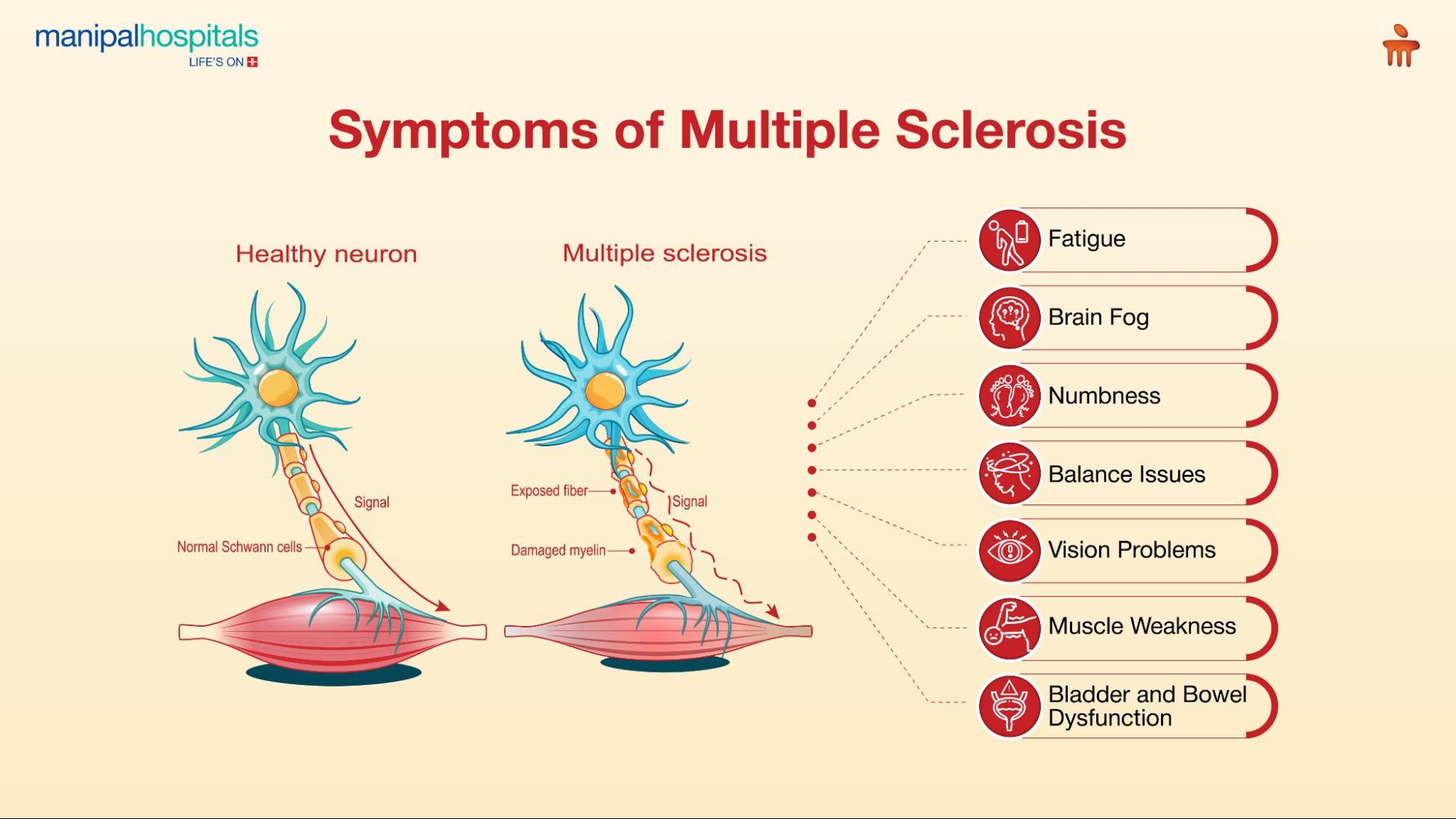
Multiple Sclerosis symptoms vary from one person to another, both in type and severity, and can even fluctuate over time. This variability often makes early diagnosis challenging. Common symptoms include:
-
Fatigue: One of the most debilitating symptoms, patients with MS describe it as an overwhelming exhaustion that is not relieved by rest.
-
Numbness or Tingling: Sensations of pins and needles, or a loss of sensation, can occur in the face, body, or limbs.
-
Vision Problems: Blurred vision, double vision, or eye pain due to inflammation of the optic nerve (optic neuritis) are common early symptoms.
-
Muscle Weakness or Spasticity: Patients with MS often experience weakness in the limbs, difficulty with coordination, and muscle stiffness or spasms.
-
Balance and Coordination Problems: Dizziness, vertigo, and ataxia (unsteady gait) can significantly affect mobility.
-
Bladder and Bowel Dysfunction: Frequent urination, urgency, incontinence, or constipation can be challenging symptoms.
-
Cognitive Issues: Problems with memory, attention, information processing, and executive functions are common, often referred to as "brain fog."
-
Pain: Chronic pain, including neuropathic pain (nerve pain) and musculoskeletal pain, affects many individuals with MS.
-
Speech Difficulties (Dysarthria) and Swallowing Problems (Dysphagia): These occur as nerve damage affects muscles involved in speech and swallowing.
Symptoms can appear suddenly, worsen over days or weeks, and then partially or completely resolve (relapses), or they can progress gradually over time.
Types of Multiple Sclerosis
Types of MS are categorised based on their disease course and progression patterns:
-
Relapsing-Remitting MS (RRMS): This is the most common form, affecting about 85% of people with MS at diagnosis. This relapsing form of MS has clearly defined attacks (relapses) of new or worsening neurological symptoms, followed by periods of partial or complete recovery (remissions). During remissions, symptoms may disappear or significantly improve, although some residual deficits can remain.
-
Primary-Progressive MS (PPMS): Affecting approximately 15% of individuals, this type shows a gradual deterioration of neurological function from onset. The rate of progression can vary, but there are no periods of significant improvement.
-
Secondary-Progressive MS (SPMS): Many individuals initially diagnosed with RRMS will eventually transition to SPMS. In this form, the relapsing-remitting course is followed by a steady and continuous loss of neurological function.
-
Progressive-Relapsing MS (PRMS): This is the least common form, showing steady neurological decline from the onset, with acute attacks.
Diagnosing Multiple Sclerosis
A definitive multiple sclerosis diagnosis is a lengthy process because of how varied and inconsistent the symptoms are. There is no single multiple sclerosis test that confirms the disease. It involves the combination of clinical evaluation of the signs of MS and specialised investigations.
The McDonald Criteria, revised periodically, are the most widely used diagnostic guidelines. Key diagnostic tools include:
-
MRI (Magnetic Resonance Imaging): MRI scans of the brain and spinal cord can reveal the characteristic lesions or plaques (indicating loss of myelin sheath). The presence of lesions in different areas of the CNS and appearing at different times helps determine the diagnosis.
-
Evoked Potentials: These tests measure the electrical activity of the brain in response to sensory stimulation. This test can detect slowed nerve conduction due to myelin damage, even if there are no apparent symptoms.
-
Lumbar Puncture (Spinal Tap): Cerebrospinal fluid (CSF) can reveal unique proteins and elevated immunoglobulin G (IgG) levels, which indicate MS.
-
Blood Tests: While no blood test can diagnose MS, they can rule out other conditions that might mimic MS symptoms, such as Lyme disease, lupus, or vitamin B12 deficiency.
A thorough neurological examination, including assessing reflexes, coordination, balance, vision, and sensation, also plays a vital role in the diagnostic process. Consult expert neurologists in Ranchi today to get an accurate diagnosis and expert guidance.
Multiple Sclerosis Treatment
While there is currently no cure for MS, significant advancements in multiple sclerosis treatment have helped patients with MS manage their condition. Treatment options generally fall into two main categories:
-
Disease-Modifying Therapies (DMTs): These multiple sclerosis medications aim to reduce the frequency and severity of relapses. They also slow disease progression and decrease the accumulation of new lesions on MRI. DMTs work by modulating or suppressing the immune system, preventing it from attacking myelin. Doctors give these medications as injections, oral medicines or intravenous infusions.
-
Symptomatic Treatment: This multiple sclerosis therapy focuses on managing the specific neurological symptoms of MS that can significantly impact daily life. These symptoms can include fatigue, spasticity, pain, bladder dysfunction, cognitive impairment, depression, and vision problems. Symptomatic treatments can involve:
-
Medications: For pain, spasticity, fatigue, bladder issues, and depression.
-
Physical Therapy: To improve strength, balance, coordination, and mobility.
-
Occupational Therapy: To help individuals adapt to daily activities and maintain independence.
-
Speech Therapy: For speech and swallowing difficulties.
-
Cognitive Rehabilitation: To address memory and cognitive issues.
-
Psychological Counselling: To help manage the emotional impact of MS, including depression and anxiety.
Beyond pharmacological interventions, lifestyle management plays a crucial role in living well with MS. This includes maintaining a healthy diet, engaging in regular exercise adapted to individual abilities, managing stress, getting adequate sleep, and avoiding smoking. These choices can contribute to overall well-being and potentially reduce symptom severity. Visit the neurology department at Manipal Hospitals, Ranchi, for expert treatment.
Conclusion
While MS is a chronic and progressive condition, significant advancements in multiple sclerosis treatment have dramatically improved the quality of life for patients with MS.
The ongoing research into the causes and innovative treatment approaches for multiple sclerosis continues to offer immense hope. Scientists are actively investigating strategies for myelin sheath repair, nerve protection, and personalised medicine to tailor treatments based on the unique disease characteristics.
Frequently Asked Questions
Multiple sclerosis can affect a person's daily life in various ways, from physical symptoms like fatigue and muscle weakness to cognitive issues such as memory problems. These symptoms can make routine tasks, work, and social activities more challenging and unpredictable.
Currently, there is no cure for multiple sclerosis. However, with modern treatments, it is now possible to manage the disease, reduce the frequency of relapses, and slow its progression, allowing many people to live full and active lives.
The main cause of multiple sclerosis is a complex combination of genetic and environmental factors that trigger the immune system to attack the central nervous system. While the exact trigger is still unknown, it is believed to involve a mix of genetic susceptibility, viral infections, and other environmental elements.
MS is not directly hereditary in the same way as conditions like cystic fibrosis; however, a genetic predisposition does exist. This means that while it is not passed down directly, certain genes can increase a person's susceptibility to developing the disease.
The seriousness of multiple sclerosis varies greatly from person to person, ranging from mild symptoms with little impact to severe disability. The disease can be serious because it is a lifelong, progressive condition that can lead to significant physical and cognitive challenges if left untreated.
Share this Article


Recent Blogs

वजन घटाने और पाचन के लिए नींबू पानी: एक प्राकृतिक समाधान जो वाकई काम करता है!
19 Jun 20266 Min Read
आज की भागदौड़ भरी जिंदगी में, स्वस्थ रहना और अपने वजन को नियंत्रित रखना कई लोगों के लिए एक बड़ी चुनौती बन गया है। हम सभी एक ऐसे आसान और प्राकृतिक तरीके की तलाश में रहते हैं जो हमारे स्वास्थ्य लक्ष्यों को प्राप्त करने में मदद कर सके। मणिपाल अस्पताल में, हम समग्र स्वास्थ्य और कल्याण को बढ़ावा देने में विश्वास करते हैं, और इसी कड़ी में, नींबू पानी एक ऐसा सरल लेकिन शक्तिशाली उपाय है जो आपके वजन घटाने और पाचन तंत्र को बेहतर बनाने में महत्वपूर्ण भूमिका निभा सकता है। नींबू पानी सिर्फ एक ताज़ा पेय नहीं है; यह विटामिन सी, एंटीऑक्सिडेंट और अन्य पोषक तत्वों का एक पावरहाउस है जो आपके शरीर को अंदर से साफ करने और उसे तरोताजा रखने में मदद करता है। यह आपके मेटाबॉलिज्म को गति देने से लेकर पेट की समस्याओं को शांत करने तक, कई स्वास्थ्य लाभ प्रदान करता है। आइए, जानें कि कैसे यह खट्टा फल आपके स्वस्थ जीवनशैली के सफर में एक मीठा बदलाव ला सकता है।
Read NowAct Fast: Brain Abscess Causes and Emergency Treatment with a 90% Success Rate
19 Jun 20268 Min Read
A brain abscess is a serious and potentially life-threatening condition where pus collects within the brain tissue, often surrounded by inflammation. While relatively rare, it demands immediate medical attention. At Bhagwan Mahavir Manipal Hospitals, our dedicated team of neurologists and neurosurgeons emphasises early diagnosis and aggressive treatment, which significantly improves outcomes. Understanding the causes and recognising the subtle yet critical brain infection symptoms and brain abscess symptoms can be lifesaving. This blog is a comprehensive guide that features an introduction to this medical condition, its causes, symptoms, and treatment options.
Read NowImmunotherapy for Cancer: Eligibility, Benefits & Modern Treatment
19 Jun 20268 Min Read
A cancer diagnosis can be a life-altering moment, often bringing with it a whirlwind of emotions and questions about treatment options. For decades, surgery, chemotherapy, and radiation therapy have been the cornerstones of cancer care. However, the landscape of oncology is rapidly evolving, ushering in groundbreaking approaches that harness the body's own defence mechanisms to fight cancer. Among these, immunotherapy for cancer stands out as a revolutionary, advanced cancer treatment, offering new hope and improved outcomes for countless patients. At Manipal Hospitals, we are at the forefront of delivering cutting-edge cancer immunotherapy treatment, understanding its profound potential and guiding our patients through every step of their journey. This powerful approach leverages your immune system, which is naturally designed to protect you from diseases, to identify and destroy cancer cells more effectively.
Read NowUnravelling Neck Pain: Beyond Just a Stiff Muscle – Understanding Its Complex Causes
17 Jun 20268 Min Read
Neck pain is a remarkably common ailment, affecting a significant portion of the population at some point in their lives. While often dismissed as a minor stiffness or muscle strain from a long day or awkward sleep, persistent or severe neck pain can be a signal of underlying issues that require medical attention. At Manipal Hospitals, we understand the profound impact neck pain can have on your daily life, productivity, and overall well-being. This comprehensive guide aims to shed light on the diverse causes of neck pain, helping you understand when it’s time to seek expert care.
Read NowPericarditis: When the Sac Around Your Heart Gets Inflamed
10 Jun 20267 Min Read
The human heart works continuously to keep the body alive and functioning. Protecting this vital organ is a thin, fluid-filled sac called the pericardium. This protective covering cushions the heart, reduces friction during heartbeats, and prevents over-expansion. However, when this sac becomes inflamed, it leads to a condition known as pericarditis. Many people experiencing pericarditis symptoms often confuse the condition with a heart attack because the most common sign is sudden chest pain. While the condition can feel frightening, early diagnosis and proper medical care can lead to complete recovery in most cases. At Bhagwan Mahavir Manipal Hospital, experienced cardiologists provide advanced care, accurate diagnosis, and personalised treatment plans for patients suffering from pericarditis and other heart-related conditions. This blog is an informational guide for you to understand this medical condition, how it's different from a heart attack, how it's diagnosed, and aspects related to its treatment and life post-treatment.
Read NowSummer Digestive Issues: Causes, Prevention & How to Keep Your Stomach Cool
15 May 20265 Min Read
As temperatures rise, so does the prevalence of certain digestive discomforts. Summer, while a season of joy and outdoor activities, often brings with it a unique set of challenges for our digestive system. From tempting street food to increased travel, various factors can disrupt our gut health, leading to common summer digestive problems. At Manipal Hospitals, we believe in empowering you with knowledge to keep your stomach cool and your gut healthy, ensuring you enjoy the season to its fullest. Our gastroenterology department reports a significant increase of approximately 30% in cases of acute gastroenteritis during the summer months, highlighting the importance of preventive care.
Read NowOvarian Cancer: Why It's Called a Silent Killer, Stages and Treatment Options
15 May 20267 Min Read
Ovarian cancer, often referred to as the "silent killer," presents a unique challenge in medical diagnosis due to its vague and easily dismissed symptoms. At Manipal Hospitals, we understand the critical importance of early detection and comprehensive care. Our dedicated team, including our oncologists in Ranchi, is committed to providing world-class ovarian cancer treatment, ensuring every patient receives a personalised and empathetic approach. While the moniker "silent killer" can sound alarming, advances in medical science offer hope and effective interventions. It is crucial to understand the nuances of this disease, from its subtle indicators to the sophisticated ovarian cancer treatment options available.
Read Nowस्ट्रोक: शुरुआती FAST चेतावनी संकेत, जोखिम कारक और ठीक होने के बाद का जीवन
15 May 20267 Min Read
स्ट्रोक एक मेडिकल इमरजेंसी है, जिसमें हर मिनट बेहद महत्वपूर्ण होता है। समय पर पहचान और सही उपचार जीवन बचा सकता है तथा स्थायी विकलांगता के जोखिम को कम कर सकता है। रांची में हमारे न्यूरोलॉजिस्ट बताते हैं कि स्ट्रोक के शुरुआती संकेतों को समझना और तुरंत अस्पताल पहुँचना मरीज की रिकवरी में बड़ा अंतर ला सकता है। इस ब्लॉग में हम FAST चेतावनी संकेत, स्ट्रोक के जोखिम कारक, इस्कीमिक बनाम हेमोरेजिक स्ट्रोक, ब्रेन स्ट्रोक का इलाज, और रिकवरी के दौरान किए जाने वाले स्ट्रोक पुनर्वास व्यायाम के बारे में विस्तार से जानेंगे।
Read NowDecoding Heart Palpitations: When to Worry and Consult a Cardiologist
14 May 20266 Min Read
The sensation of your heart skipping a beat, pounding rapidly, or a peculiar heart-fluttering feeling can be unsettling. These are often described as heart palpitations, and they are surprisingly common. While many people experience them occasionally without any serious underlying cause, it's natural to wonder: when are heart palpitations a sign of something more serious, and when should you seek professional medical advice?
Read NowCervical Spondylosis: How It Causes Neck Pain and What You Can Do About It
14 May 20267 Min Read
Neck pain is a common complaint, often dismissed as a minor inconvenience. However, persistent or severe neck pain can significantly impact your daily life, and it’s frequently a symptom of an underlying condition called cervical spondylosis. At Manipal Hospitals, we understand the debilitating effects of chronic discomfort and are dedicated to providing comprehensive care for your spine health. This blog post will demystify cervical spondylosis, explain how it leads to neck pain, and outline effective strategies for management and relief.
Read Now