


Everyday Choices That Protect Brain Health and Support Cognition
Reviewed by: Dr. Venugopal Krishna KS
Posted on
8 Min Read

Not sure what you’re looking for?
Get in touch with our representatives for help!
Contact UsHave you ever wondered how your daily choices will shape the way your brain works years from now? Brain health matters at every age. Small daily choices add up over months and years to shape memory, mood, and thinking. This blog gathers insights from expert neurologists in Mysore regarding key lifestyle factors that influence brain health, explains what science and clinicians commonly advise, and gives practical, realistic steps that can be taken to support long-term cognitive health. You will find clear explanations, simple brain health tips, and realistic actions for things you can do today to enhance brain function and keep your mind resilient.
How Do Lifestyle Habits Shape Brain Health?
Brain health depends on the constant interplay of blood flow, neural connections, cell metabolism, and inflammation. Lifestyle habits influence all these pathways. For example, poor sleep disrupts cleaning processes in the brain, lack of exercise reduces growth factors that maintain neurons, and an unhealthy diet increases inflammation. Conversely, regular activity, nourishing food, and social engagement promote plasticity and strengthen networks that support memory and attention. Think of lifestyle as a day-to-day maintenance plan that keeps the brain running smoothly.
Nutrition: Healthy Food for a Healthy Brain
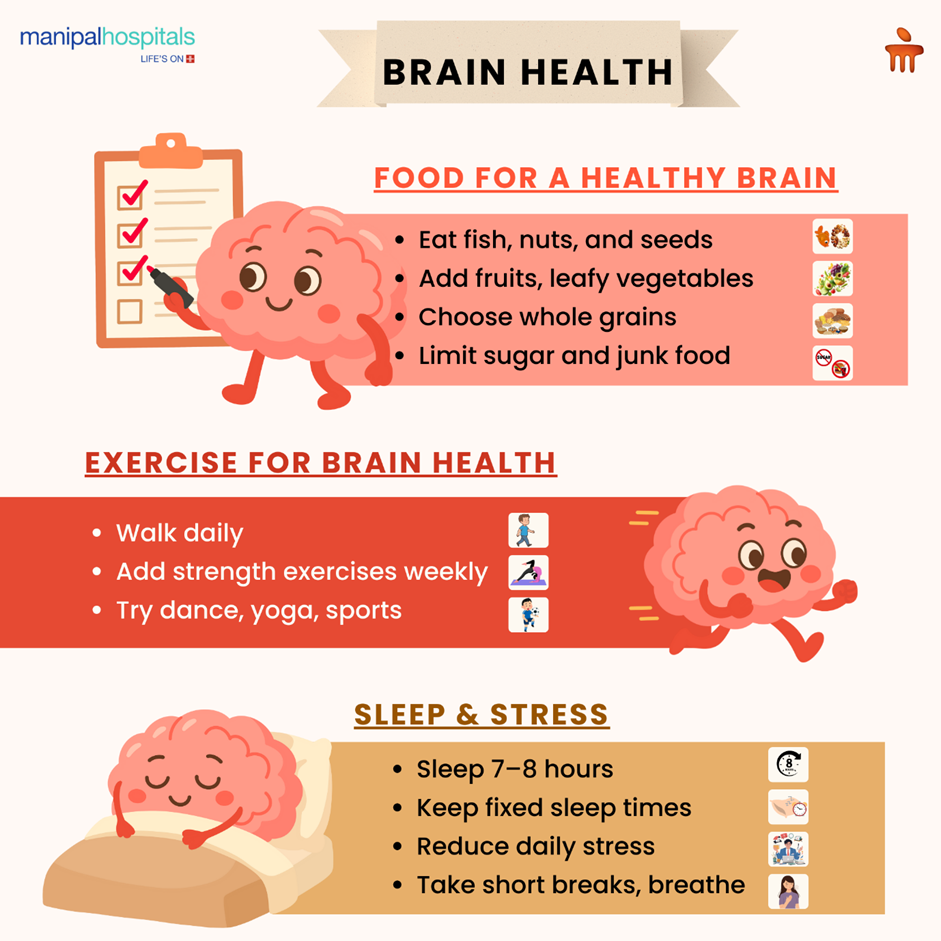
Food provides the building blocks and fuel the brain needs. For a healthy brain:
-
Prioritise whole foods rich in omega-3 fatty acids, such as oily fish and nuts.
-
Include plenty of vegetables and fruit for antioxidants and vitamins.
-
Choose whole grains and legumes for steady glucose release.
-
Ensure sources of vitamin B12 and folate, especially if your diet is restricted.
-
Maintain adequate protein intake to support neurotransmitter production.
Specific foods often described as healthy food for a healthy brain include oily fish, berries, dark leafy greens, nuts, seeds, and beans. Avoid ultra-processed food and excessive sugar, as they can promote inflammation and metabolic changes that are unfavourable for cognition. Small changes, for example, swapping a refined snack for a handful of nuts and a piece of fruit, add up.
Exercise for Brain Health
Regular movement is one of the most powerful ways to support exercise for brain health. Physical activity increases blood flow, stimulates the release of neurotrophic factors that support neuron growth, and improves mood and sleep, all of which help improve brain function. Aim for a mix of:
-
Perform moderate aerobic activity, such as brisk walking or cycling, on most days, amounting to 150 min/week.
-
Add strength training two to three times a week to maintain muscle and metabolic health.
-
Try activities that mix cognitive challenge with movement, like dance or team sports.
Even short, regular bouts of activity benefit attention and memory. If you are new to exercise, start gently and build up gradually; the brain responds to consistency more than intensity.
Sleep, Stress, and Mental Habits
Sleep is essential for the clearance of waste products from the brain, consolidation of memories, and emotional regulation. Poor sleep impairs the ability to keep the brain healthy more than almost any single habit. Aim for regular sleep patterns and address issues such as sleep apnoea and insomnia with medical help when needed.
Chronic stress increases inflammatory signals and weakens the circuits involved in memory. Practising relaxation, setting boundaries, and using brief daily rituals, for example, five minutes of deep breathing or a short walk at lunchtime, all help. Mental habits such as lifelong learning, social engagement, and purposeful tasks also stimulate networks and provide resilience against cognitive decline.
Gadgets and Screen Time
Since digital devices are now a constant part of daily life, screen dependency has become inevitable. It is important to remember that poorly managed screen time may silently affect brain health. Prolonged exposure to screens may suppress melatonin secretion and disturb the sleep cycle, reduce attention span, and increase mental fatigue. Practice these simple, healthy screen habits that support cognition rather than harm it:
-
Follow the 20–20–20 rule (every 20 minutes, look 20 feet away for 20 seconds)
-
Avoiding screens at least an hour before bedtime,
-
Turn off non-essential notifications to reduce cognitive overload
-
Use devices mindfully for learning, communication, or creativity
-
Avoid passive scrolling
How to Stimulate Brain Function and Enhance Brain Function
Stimulation matters across the lifespan. Here is how to stimulate brain function and enhance it:
-
Learn new skills: a language, an instrument, or a craft. Learning forces the brain to form new connections
-
Use dual tasks: Combine movement with thinking, for instance, reading along while underlining the key points.
-
Challenge memory deliberately: Use spaced repetition for facts, practise recall rather than passive review
-
Maintain social contact: Conversation and shared activities are powerful cognitive workouts
-
Rotate habits: Novelty prompts plasticity; change your routine occasionally to create fresh neural demand
These approaches are not about intense brain training apps but about meaningful, varied mental work that fits your life.
How to Improve Brain Health: Practical Daily Steps
If you want actionable ways to improve your brain's health, try this simple plan:
-
Move daily: a brisk 30-minute walk five times a week is a realistic goal.
-
Prioritise sleep: regular bedtimes and a wind-down routine.
-
Eat a balanced plate at most meals, prioritising vegetables, healthy fats, and whole grains.
-
Stop smoking and drinking because these accelerate cognitive ageing.
-
Learn one new thing each week and keep up with social contact.
-
Manage chronic conditions: consult your doctor and manage blood pressure and diabetes.
-
Consistency is the key: small habits compounded produce measurable benefits.
Specific Tips for Different Age Groups
Children and adolescents need stimulation, sleep, and good nutrition to build cognitive reserves. Middle-aged adults benefit particularly from cardiovascular fitness and blood pressure control to reduce later risk. Older adults should focus on social engagement, balance, and strength work to reduce fall risk while continuing cognitive stimulation. For more personalised guidance for specific age groups, it is recommended to consult specialists at the best neurology hospital in Mysore.
|
Lifestyle factor |
Why it matters |
Simple actions |
|
Nutrition |
Provides substrates and reduces inflammation |
Eat oily fish, leafy greens, nuts; limit processed foods |
|
Exercise |
Boosts blood flow and growth factors |
30 minutes brisk activity most days, plus strength training sessions |
|
Sleep |
Clears waste, consolidates memory |
Regular sleep schedule; treat sleep apnoea |
|
Stress |
Chronic stress harms circuits |
Daily relaxation |
|
Substance use |
Can impair attention and memory |
Avoid alcohol, smoking, and use of recreational drugs; review cannabis use with a clinician |
|
Mental stimulation |
Builds resilience and new connections |
Learn new skills; stay socially active |
Brain Health Tips: Small Changes That Matter
The following are practical brain health tips you can use immediately:
-
Break up sitting with short walks to boost circulation.
-
Swap sugary drinks for water or unsweetened tea.
-
Read aloud or discuss books to combine language and social stimulus.
-
Use the dominant hand less often, occasionally to force the brain to adapt.
-
Keep a routine for medication and health checks that affect brain risk.
How to Have a Healthy Brain Long Term
To have a healthy brain long-term, commit to quitting smoking, focus on weight management, blood pressure control, and sensible alcohol use. Address hearing loss and depression early, as these conditions are linked to cognitive decline. Regular check-ups that include assessments of cardiovascular risk are also important, since heart and brain health are closely linked.
When to See a Specialist
If you notice persistent memory loss, confusing episodes, unexplained changes in behaviour or recurrent fainting, get a medical assessment. A neurologist or geriatrician will perform cognitive testing, review medications, and advise imaging if indicated. For specialist care in the region, consider consulting a Neuro Hospital in Mysore that offers diagnostic services and multidisciplinary follow-up for complex concerns.
Conclusion
Healthy brains grow from healthy habits. By focusing on exercise, balanced nutrition, restorative sleep, and mental stimulation, you actively invest in long-term cognitive resilience. If you have concerns about memory, cognition, or the impact of substances on your thinking, seek a medical review. For an expert assessment and tailored advice, book a consultation with a neurologist at a Neuro Hospital in Mysore. Early, practical steps protect thinking power and quality of life for years to come.
Frequently Asked Questions
Regular physical activity and good sleep are two of the strongest single habits that support brain health and cognitive health. Combined with a nutritious diet, these form the foundation.
Some benefits appear quickly: mood and sleep often improve within days to weeks of regular exercise. Cognitive changes such as improved memory and attention build over months of sustained activity, better sleep, and improved diet.
Targeted training can improve specific tasks you practice. Broader benefits come from varied, meaningful activities such as learning a musical instrument, social engagement, and physical exercise, which better enhance brain function across domains.
No. The brain remains capable of learning at all ages. Even in older adults, learning new skills improves attention, confidence, and overall cognitive function.
Seek specialist assessment if you notice persistent memory decline, new confusion, frequent falls or sudden behavioural change. A Neuro Hospital in Mysore can offer diagnostics such as cognitive testing and imaging, and guide medical or rehabilitative care.
Share this Article


Similar Blogs

Stroke in Young Adults: Signs, Symptoms, and Early Warning Indicators
10 Apr 20268 Min Read
People have always thought that stroke is a health problem that only older people have. However, in the last few decades, doctors have observed an increasing number of stroke cases in young adults, including people in their twenties, thirties, and forties. Neurologists and public health experts around the world are worried about this change. Interrupting blood circulation to a part of the brain prevents brain tissue from receiving oxygen and nutrients. Within minutes, brain cells start to die, which can lead to permanent brain damage, long-term disability, or even death. Recognizing the signs and symptoms of stroke early can make a notable difference in recovery and survival. While strokes in younger individuals are less common than in older adults, they often have a profound impact because they occur during the most productive years of life. Increasing awareness of early stroke warning signs, understanding young stroke risk factors, and identifying causes of stroke in young people can help individuals seek timely treatment and prevent complications. In this blog a top neurologist in Mysuru talks about the causes, symptoms, treatment, and outlook for stroke in younger people. The blog also talks about how important it is to get a diagnosis and medical care as soon as possible.
Read NowBrain Blockage: Causes, Symptoms and Emergency Treatment for Ischaemic Stroke
01 Apr 20268 Min Read
A brain blockage, medically referred to as an ischaemic stroke, is a serious medical emergency that occurs when blood flow to a part of the brain is obstructed. This interruption prevents nutrients and oxygen from reaching brain tissue, leading to rapid damage to brain cells. If untreated, a brain blockage can cause permanent disability or even death. Among all types of strokes, ischaemic strokes account for nearly 80–85% of cases worldwide. The condition occurs when a blood clot blocks an artery supplying blood to the brain. Understanding the ischaemic stroke causes, identifying blockage in brain symptoms, and seeking immediate care are crucial steps in preventing long-term complications. Prompt medical attention plays a decisive role in recovery. When treated quickly, specialised ischaemic stroke treatment can restore blood flow and reduce brain damage. Early recognition of symptoms and access to stroke emergency treatment in Mysore or any nearby emergency with a stroke care facility can dramatically improve survival and recovery outcomes. This blog, by an experienced neurologist in Mysuru, explains how to recognise a brain blockage, explores the ischaemic stroke reasons, discusses treatment approaches, and outlines why early intervention is critical.
Read NowRecent Blogs
Understanding Metallic Taste in the Mouth: A Kidney's Silent Signal?
19 Jun 20268 Min Read
Have you ever experienced a strange, persistent metallic taste in your mouth? While often benign, this peculiar sensation, medically known as dysgeusia, can sometimes be a subtle yet significant indicator of underlying health issues. There are several causes of metallic taste in the mouth, and one of them is kidney dysfunction. In this blog an experienced nephrologist in Mysuru discusses in detail what a metallic taste in the mouth is, the causes, and more importantly, when it might be a sign that your kidneys are trying to tell you something important.
Read NowInsulin Resistance in Women: Early Symptoms You Should Know
17 Jun 20267 Min Read
In the intricate landscape of women's health, certain conditions often go unnoticed until they manifest into more significant concerns. One such silent yet powerful player is insulin resistance. It's a condition where your body's cells don't respond effectively to insulin, leading to elevated blood sugar levels. For many women, understanding the early insulin resistance symptoms in females can be a game-changer, enabling timely intervention and preventing a cascade of health issues. In this blog, an experienced gynaecologist in Mysuru explains in detail the nuances of insulin resistance in women, highlighting the crucial early signs you should be aware of. Recognising these signs of insulin resistance in females is the first step towards taking control of your health journey.
Read NowDecoding Low Blood Pressure: Symptoms, Causes, and When to Seek Expert Help
17 Jun 20269 Min Read
Blood pressure is a vital sign, a fundamental indicator of our cardiovascular health. While high blood pressure often makes the news, low blood pressure, medically known as hypotension, can also be a concern. It's a condition where the force of blood against your artery walls is unusually low. For some, low blood pressure is a normal state, causing no issues. However, for others, it can lead to troubling symptoms and, in severe cases, indicate an underlying health problem requiring immediate medical attention. In this blog, a top interventional cardiologist in Mysore discusses in detail what low BP is, the causes of low BP, identifying the signs of low BP, and when it should be considered a medical concern.
Read NowKidney Pain vs Back Pain: How to Tell the Difference
12 Jun 20266 Min Read
You bend down to pick something up, and a dull ache settles in your lower back. Is it just muscle strain, or could it be something more serious? Many people struggle to tell the difference between back muscle pain and kidney pain, especially at the start. That is because the two can feel surprisingly similar. Back pain is often linked to posture, overuse, or strained muscles, while kidney pain may point to an infection, kidney stones, or another internal issue that needs medical attention. In this blog, a top nephrologist in Mysuru explains the key differences between kidney pain vs back pain, what usually causes each one, and when it is time to see a doctor.
Read NowUnderstanding the Early Warning Signs of Cancer
12 Jun 20265 Min Read
What if noticing a small change today could protect you from something far more serious tomorrow? Many cancers don’t announce themselves loudly at the start. They begin quietly, with subtle symptoms like feeling constantly tired, noticing a painless lump, or a generalised feeling that something just doesn't feel right inside the body. Although they are easy to brush aside, blame on stress, or postpone addressing, they matter. The survival rate for patients with early-stage malignancies (Stage I or II) is two to three times higher than that of patients with later-stage diagnoses. In addition to improving results, early detection frequently makes treatment easier, recovery quicker, and quality of life higher. Through this blog, an experienced cancer surgeon in Mysuru discusses early cancer warning signs of some common cancers seen in India, whose symptoms warrant medical care, and how prompt screening can make all the difference.
Read NowHow to Make Period Headaches Go Away: Tips and Remedies
05 Jun 20267 Min Read
You’re halfway through your day, and suddenly your head starts throbbing, right around your period. Sound familiar? These headaches may feel different from regular ones. At times, they might even feel like migraines. Hormonal fluctuations, particularly changes in oestrogen levels, are commonly responsible for headaches experienced during menstruation. These headaches are common but can be annoying and challenging to manage. You might notice it starts right before your period or on day one; that pattern matters. The good news is that you can lessen the frequency and severity of headaches during periods by learning more about why they happen and using some simple home remedies. In this blog, we bring you clinical insights from a top gynaecology hospital in Mysuru that explain the causes, symptoms, and useful ways to deal with them.
Read NowCOPD vs Asthma: Understanding the Key Differences
05 Jun 20267 Min Read
The ease of breathing is something we rarely notice until something is not right. When breathing becomes a struggle, even the simplest moments can feel overwhelming. Asthma and COPD are common breathing problems affecting millions of people worldwide. Still, many people ask, “Are COPD and asthma the same?” Although both conditions involve airflow limitation and breathing difficulties, they are not identical. It becomes crucial to know about the difference between COPD and asthma in order to diagnose them in a timely manner and treat them properly. In this blog, a leading pulmonologist in Mysuru explains in detail about COPD and asthma including the causes, symptoms, and how to differentiate between the two.
Read NowIs IVF Painful? What to Expect During Fertility Treatment
22 May 20267 Min Read
It can be challenging to start fertility treatment, especially when you keep asking yourself, "Is IVF painful?" This worry is a big source of stress for many couples, even before the process starts. The truth is, IVF (in vitro fertilisation) is usually not very painful. However, it does involve a number of medical steps that could cause mild discomfort at different points. Knowing what really happens during the process can help you get ready in both your body and mind. In this blog, a top reproductive medicine and IVF specialist in Mysuru explains each step of IVF, answers the question "Is IVF a painful process?" and tells you what kind of pain (if any) to expect. Most patients describe IVF as manageable, though some steps can feel moderately uncomfortable depending on individual sensitivity.
Read NowUnderstanding Fatty Liver Disease: A Gastroenterologist’s Guide to Diagnosis and Care
06 May 20267 Min Read
The problem of fatty liver disease is on the rise, more prevalent in city-dwelling individuals living a sedentary lifestyle. Although initially, it might seem innocuous, leaving the condition unchecked could be dangerous in the long run. Fatty liver causes, symptoms, and treatments are all necessary factors that must be considered to maintain the health of your liver. Through this blog a top gastroenterologist in Mysuru discusses fatty liver, where the focus will be on the diagnosis, risks, and treatment of fatty liver disease. It also addresses practical concerns such as how to reduce fatty liver quickly and prevent long-term damage.
Read NowHeart Attacks in Young People: Early Warnings, Risk Factors and How to Stay Safe
06 May 20267 Min Read
In recent years, cardiologists have been seeing a steady rise in heart attacks in young people, especially those under 40 years. This trend is concerning because many of these events happen without warning and lead to tremendous suffering and loss of young people. Understanding the cause of a heart attack at a young age is important for prevention. Factors like a sedentary lifestyle, stress, and co-existing health conditions can increase the risk. This blog an experienced cardiologist in Mysuru, explains the causes of myocardial infarction among youth, early warning signs, and ways to reduce the risk.
Read Now