


Brain Blockage: Causes, Symptoms and Emergency Treatment for Ischaemic Stroke
Reviewed by: Dr. Venugopal Krishna KS
Posted on
8 Min Read

Not sure what you’re looking for?
Get in touch with our representatives for help!
Contact UsA brain blockage, medically referred to as an ischaemic stroke, is a serious medical emergency that occurs when blood flow to a part of the brain is obstructed. This interruption prevents nutrients and oxygen from reaching brain tissue, leading to rapid damage to brain cells. If untreated, a brain blockage can cause permanent disability or even death. Among all types of strokes, ischaemic strokes account for nearly 80–85% of cases worldwide. The condition occurs when a blood clot blocks an artery supplying blood to the brain. Understanding the ischaemic stroke causes, identifying blockage in brain symptoms, and seeking immediate care are crucial steps in preventing long-term complications.
Prompt medical attention plays a decisive role in recovery. When treated quickly, specialised ischaemic stroke treatment can restore blood flow and reduce brain damage. Early recognition of symptoms and access to stroke emergency treatment in Mysore or any nearby emergency with a stroke care facility can dramatically improve survival and recovery outcomes.
This blog, by an experienced neurologist in Mysuru, explains how to recognise a brain blockage, explores the ischaemic stroke reasons, discusses treatment approaches, and outlines why early intervention is critical.
What Is a Brain Blockage?
A brain blockage occurs when a blood clot blocks an artery that supplies blood to a part of the brain. When the brain does not receive enough oxygen-rich blood, brain cells may begin to die within minutes. Ischaemic stroke is the most common type of stroke worldwide.
Two main types of blockages can cause an ischaemic stroke:
-
Thrombotic stroke: A thrombotic stroke happens when a blood forms with in a artery that supply to brain
-
Embolic stroke: This happens when a clot forms somewhere else in the body, usually in the heart, and moves through the bloodstream until it blocks a brain artery.
Both types can produce sudden in brain symptoms, such as weakness on one side of the body or difficulty speaking. Immediate medical intervention and appropriate ischemic stroke treatment are critical to restore blood flow and limit neurological damage.
Stroke Symptoms
Recognising Stroke Symptoms early can make a life-saving difference. Stroke symptoms often appear suddenly and worsen rapidly.
Some of the most common signs include:
-
Sudden weakness or numbness: One side of the body may become weak or paralysed, especially the face, arm, or leg.
-
Difficulty speaking or understanding speech: A person may have trouble saying things clearly or understanding what other people are saying.
-
Vision disturbances: You may have blurry or double vision, or you may lose vision in one or both eyes.
-
Severe headache: Although more common in haemorrhagic strokes, some people with a brain blockage may experience a sudden headache.
-
Loss of balance or coordination: Walking may become difficult due to dizziness or instability.
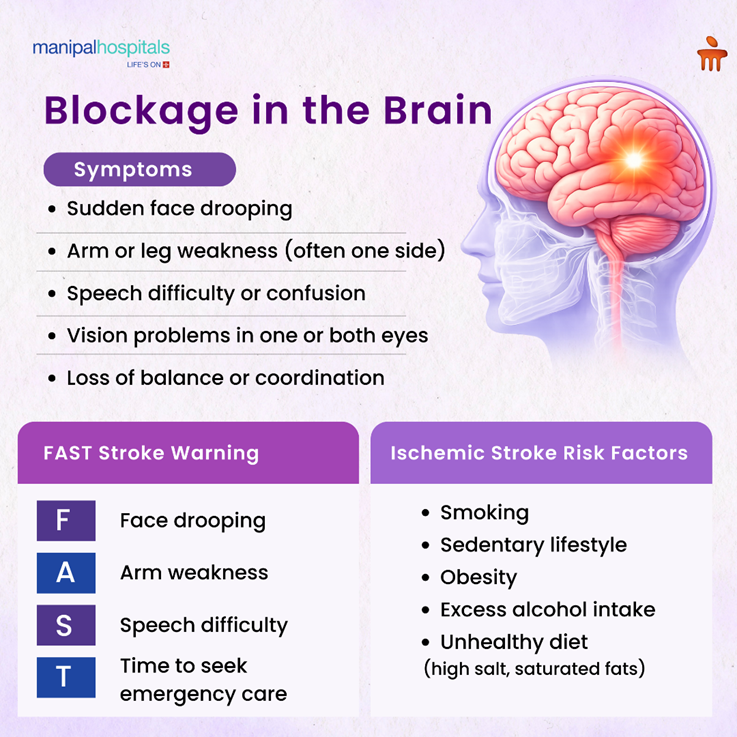
Healthcare professionals often use the FAST method to recognise stroke symptoms:
-
F – Face drooping
-
A – Arm weakness
-
S – Speech difficulty
-
T – Time to seek medical help
Any appearance of these Stroke Symptoms requires immediate medical attention and urgent Stroke emergency treatment in Mysore or the nearest hospital with stroke care facility.
Ischemic Stroke Causes
Understanding ischemic stroke causes helps identify individuals at higher risk and allows early preventive care. Several medical conditions contribute to the formation of clots that lead to a brain blockage.
-
Atherosclerosis: Fatty deposits can build up in the arteries over time. These plaques narrow the blood vessels and increase the chance of blood clot formation.
-
Heart Conditions: Atrial fibrillation and certain heart problems can disrupt normal blood flow and lead to clot formation. These clots may travel to the brain and block an artery.
-
High Blood Pressure: Hypertension damages blood vessels over time and significantly increases the risk of stroke.
-
Diabetes: high blood sugar damages blood vessels and accelerates plaque build-up.
-
High Cholesterol: Excess cholesterol contributes to plaque build-up in the arteries, which is one of the major ischemic stroke causes.
Managing these health conditions plays very important role in reducing the risk of brain blockage.
Ischemic Stroke Reasons
While medical conditions play major role, lifestyle habits also contribute to the ischemic stroke reasons seen in many patients.
-
Smoking: Smoking impairs blood vessels and boosts the likelihood of blood clots.
-
Sedentary Lifestyle: Not getting enough exercise on a regular basis can lead to obesity, high blood pressure, and heart disease.
-
Obesity: Being overweight raises the chances of having high blood pressure, diabetes, and high cholesterol.
-
Unhealthy Diet: Diets high in salt, saturated fats, and processed foods are associated with several ischemic stroke causes.
-
Excessive Alcohol Consumption: Heavy alcohol intake raises blood pressure and increases the risk of stroke.
These lifestyle-related ischemic stroke reasons can often be modified through preventive measures and healthier habits.
Ischemic Stroke Treatment
Effective ischemic stroke treatment depends heavily on how quickly medical care is provided. Brain cells start to die within minutes after blood flow stops, so immediate intervention is critical.
-
Clot-Dissolving Medication: One of the main treatments is receiving drugs that break up blood clots. You have to receive these medicines within a specific time window after symptoms start for them to work.
-
Mechanical Thrombectomy: In certain cases, doctors may perform a procedure called mechanical thrombectomy, where specialised instruments are used to physically extract the clot from the blocked artery.
-
Supportive Medical Care: Patients often require monitoring in specialised stroke units. Blood pressure, oxygen levels, and heart function are carefully managed to prevent complications.
Rehabilitation
Recovery after a brain blockage often requires rehabilitation. Therapy may include:
-
Physiotherapy to regain strength and mobility
-
Speech therapy to improve communication
-
Occupational therapy to assist with daily activities
Early and appropriate ischaemic stroke treatment greatly improves the chances of recovery.
When Should You Seek Emergency Medical Help?
A brain blockage is a medical emergency and requires immediate treatment. Seek urgent medical care if you notice:
-
Sudden weakness or numbness in the face, arm, or leg
-
Difficulty speaking or understanding speech
-
Sudden vision problems in one or both eyes
-
Sudden severe headache with no known cause
-
Sudden onset difficulty in walking
If any of these symptoms appear, seek emergency medical help immediately or go to the nearest hospital. Quick access to stroke emergency treatment in Mysore can help reduce brain damage and improve recovery outcomes.
Conclusion
A brain blockage or ischaemic stroke is a life-threatening condition that requires immediate medical attention. Recognising Stroke Symptoms understanding ischemic stroke causes, and addressing the ischemic stroke reasons linked to lifestyle and medical conditions are essential steps in prevention. Timely ischemic stroke treatment can restore blood flow to the brain and significantly improve recovery outcomes. Access to specialised care, including Stroke emergency treatment in Mysore, plays a critical role in ensuring rapid diagnosis and intervention.
If you notice any signs of stroke in yourself or someone else, seek emergency medical care immediately. For expert neurological evaluation, advanced diagnostic services, and comprehensive stroke management, consult our best neurology specialists at Manipal Hospital Mysore.
Frequently Asked Questions
When a blood clot blocks an artery supplying the brain, it interrupts blood flow and can cause an ischaemic stroke.
Some early symptoms of blockage in brain are sudden weakness on one side of the body, trouble speaking, vision problems, severe dizziness, and loss of balance.
Ischemic stroke treatment may involve clot-dissolving medicines or procedures like thrombectomy to remove the blockage and restore blood circulation to the brain.
Stroke is a time-sensitive condition. Getting immediate stroke emergency treatment in Mysore or at any nearby medical facility can help prevent permanent brain damage and improve survival chances.
Many cases can be prevented by managing risk factors like hypertension, diabetes, and high cholesterol. Adopting a healthy lifestyle is equally important.
Share this Article


Recent Blogs

Understanding Metallic Taste in the Mouth: A Kidney's Silent Signal?
19 Jun 20268 Min Read
Have you ever experienced a strange, persistent metallic taste in your mouth? While often benign, this peculiar sensation, medically known as dysgeusia, can sometimes be a subtle yet significant indicator of underlying health issues. There are several causes of metallic taste in the mouth, and one of them is kidney dysfunction. In this blog an experienced nephrologist in Mysuru discusses in detail what a metallic taste in the mouth is, the causes, and more importantly, when it might be a sign that your kidneys are trying to tell you something important.
Read NowInsulin Resistance in Women: Early Symptoms You Should Know
17 Jun 20267 Min Read
In the intricate landscape of women's health, certain conditions often go unnoticed until they manifest into more significant concerns. One such silent yet powerful player is insulin resistance. It's a condition where your body's cells don't respond effectively to insulin, leading to elevated blood sugar levels. For many women, understanding the early insulin resistance symptoms in females can be a game-changer, enabling timely intervention and preventing a cascade of health issues. In this blog, an experienced gynaecologist in Mysuru explains in detail the nuances of insulin resistance in women, highlighting the crucial early signs you should be aware of. Recognising these signs of insulin resistance in females is the first step towards taking control of your health journey.
Read NowDecoding Low Blood Pressure: Symptoms, Causes, and When to Seek Expert Help
17 Jun 20269 Min Read
Blood pressure is a vital sign, a fundamental indicator of our cardiovascular health. While high blood pressure often makes the news, low blood pressure, medically known as hypotension, can also be a concern. It's a condition where the force of blood against your artery walls is unusually low. For some, low blood pressure is a normal state, causing no issues. However, for others, it can lead to troubling symptoms and, in severe cases, indicate an underlying health problem requiring immediate medical attention. In this blog, a top interventional cardiologist in Mysore discusses in detail what low BP is, the causes of low BP, identifying the signs of low BP, and when it should be considered a medical concern.
Read NowKidney Pain vs Back Pain: How to Tell the Difference
12 Jun 20266 Min Read
You bend down to pick something up, and a dull ache settles in your lower back. Is it just muscle strain, or could it be something more serious? Many people struggle to tell the difference between back muscle pain and kidney pain, especially at the start. That is because the two can feel surprisingly similar. Back pain is often linked to posture, overuse, or strained muscles, while kidney pain may point to an infection, kidney stones, or another internal issue that needs medical attention. In this blog, a top nephrologist in Mysuru explains the key differences between kidney pain vs back pain, what usually causes each one, and when it is time to see a doctor.
Read NowUnderstanding the Early Warning Signs of Cancer
12 Jun 20265 Min Read
What if noticing a small change today could protect you from something far more serious tomorrow? Many cancers don’t announce themselves loudly at the start. They begin quietly, with subtle symptoms like feeling constantly tired, noticing a painless lump, or a generalised feeling that something just doesn't feel right inside the body. Although they are easy to brush aside, blame on stress, or postpone addressing, they matter. The survival rate for patients with early-stage malignancies (Stage I or II) is two to three times higher than that of patients with later-stage diagnoses. In addition to improving results, early detection frequently makes treatment easier, recovery quicker, and quality of life higher. Through this blog, an experienced cancer surgeon in Mysuru discusses early cancer warning signs of some common cancers seen in India, whose symptoms warrant medical care, and how prompt screening can make all the difference.
Read NowHow to Make Period Headaches Go Away: Tips and Remedies
05 Jun 20267 Min Read
You’re halfway through your day, and suddenly your head starts throbbing, right around your period. Sound familiar? These headaches may feel different from regular ones. At times, they might even feel like migraines. Hormonal fluctuations, particularly changes in oestrogen levels, are commonly responsible for headaches experienced during menstruation. These headaches are common but can be annoying and challenging to manage. You might notice it starts right before your period or on day one; that pattern matters. The good news is that you can lessen the frequency and severity of headaches during periods by learning more about why they happen and using some simple home remedies. In this blog, we bring you clinical insights from a top gynaecology hospital in Mysuru that explain the causes, symptoms, and useful ways to deal with them.
Read NowCOPD vs Asthma: Understanding the Key Differences
05 Jun 20267 Min Read
The ease of breathing is something we rarely notice until something is not right. When breathing becomes a struggle, even the simplest moments can feel overwhelming. Asthma and COPD are common breathing problems affecting millions of people worldwide. Still, many people ask, “Are COPD and asthma the same?” Although both conditions involve airflow limitation and breathing difficulties, they are not identical. It becomes crucial to know about the difference between COPD and asthma in order to diagnose them in a timely manner and treat them properly. In this blog, a leading pulmonologist in Mysuru explains in detail about COPD and asthma including the causes, symptoms, and how to differentiate between the two.
Read NowIs IVF Painful? What to Expect During Fertility Treatment
22 May 20267 Min Read
It can be challenging to start fertility treatment, especially when you keep asking yourself, "Is IVF painful?" This worry is a big source of stress for many couples, even before the process starts. The truth is, IVF (in vitro fertilisation) is usually not very painful. However, it does involve a number of medical steps that could cause mild discomfort at different points. Knowing what really happens during the process can help you get ready in both your body and mind. In this blog, a top reproductive medicine and IVF specialist in Mysuru explains each step of IVF, answers the question "Is IVF a painful process?" and tells you what kind of pain (if any) to expect. Most patients describe IVF as manageable, though some steps can feel moderately uncomfortable depending on individual sensitivity.
Read NowUnderstanding Fatty Liver Disease: A Gastroenterologist’s Guide to Diagnosis and Care
06 May 20267 Min Read
The problem of fatty liver disease is on the rise, more prevalent in city-dwelling individuals living a sedentary lifestyle. Although initially, it might seem innocuous, leaving the condition unchecked could be dangerous in the long run. Fatty liver causes, symptoms, and treatments are all necessary factors that must be considered to maintain the health of your liver. Through this blog a top gastroenterologist in Mysuru discusses fatty liver, where the focus will be on the diagnosis, risks, and treatment of fatty liver disease. It also addresses practical concerns such as how to reduce fatty liver quickly and prevent long-term damage.
Read NowHeart Attacks in Young People: Early Warnings, Risk Factors and How to Stay Safe
06 May 20267 Min Read
In recent years, cardiologists have been seeing a steady rise in heart attacks in young people, especially those under 40 years. This trend is concerning because many of these events happen without warning and lead to tremendous suffering and loss of young people. Understanding the cause of a heart attack at a young age is important for prevention. Factors like a sedentary lifestyle, stress, and co-existing health conditions can increase the risk. This blog an experienced cardiologist in Mysuru, explains the causes of myocardial infarction among youth, early warning signs, and ways to reduce the risk.
Read Now