

Back pain that has outlasted every home remedy. A tingling sensation that runs down the arm into the fingers, making it difficult to grip a pen or hold a cup steady. Legs that feel heavy and uncooperative after walking only a short distance. These are more than everyday aches. They can be signs that the spine is placing pressure on nerves or becoming unstable in ways the body can no longer compensate for. At Manipal Hospital Millers Road, the Spine Care Department cares for patients who have often tried physiotherapy, medications, rest, or other conservative treatments before seeking specialist evaluation. As a trusted spine hospital in Millers Road, Bangalore, we provide a structured assessment that identifies the precise cause of pain before recommending treatment. Our focus is always on finding the most appropriate solution, whether that involves non-surgical care or advanced spine surgery.
Our Spine Care Specialities

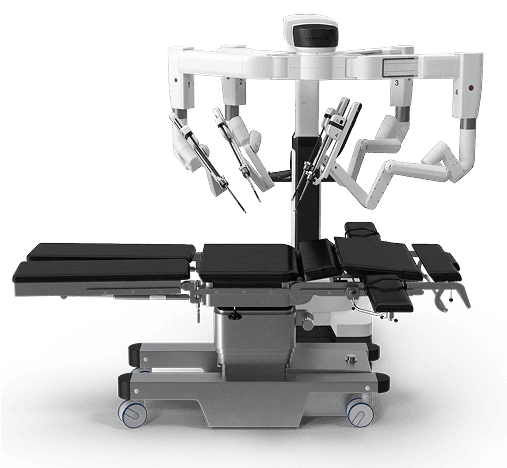
Robotic Spine Surgery
Manipal Hospitals Millers Road, Bangalore, has India's oldest dedicated quaternary spine care centre, named Manipal Comprehensive Spine Care Centre (MCSCC), which offers personalised evaluation, diagnosis, and advanced treatments with the latest state-of-the-art technology for the entire spectrum of spinal disorders. Now, with the opening of the Manipal Institute of Robotic Spine Surgery (MIRSS) in 2023, we have established India’s first comprehensive robotic spine surgery suite. As a top robotic spine surgery hospital in Millers Road, Bangalore, we have the cutting-edge MazorX Robot, O-arm imaging, and Allen's advanced table and instruments, bringing unparalleled precision to spinal procedures. By April 2025, MIRSS had successfully performed over 1,000+ robotic spine surgeries, setting a new benchmark in safety, outcomes, and patient satisfaction.
As Millers Road, Bangalore’s most advanced hospital for robotic spine surgery, we provide individualised treatment for a full range of spinal disorders. Whether it be scoliosis, spinal trauma, degenerative spine problems, complex deformities, or other spine pathology, our robotic procedures enable a safer surgery with less recovery time, smaller incisions, and fewer complications.

Spine Surgery ( Scoliosis consideration )
At Manipal Hospitals, Millers Road, Bangalore, we recognise the key role that spinal health plays in overall health. Spinal deformities and conditions such as scoliosis, kyphosis, degenerative disorders, or traumatic injuries can affect posture, mobility, and quality of life. As the best hospital for spine surgery in Millers Road, Bangalore, we provide a broad spectrum of spine care ranging from non-surgical interventions to advanced surgical procedures.
Our multidisciplinary team comprises spine care consultants, robotic spine surgeons, spine anesthesiologists, and rehabilitation specialists who collaborate to create personalised treatment plans. We specialise in scoliosis correction for children, adolescents, and adults, using minimally invasive and robotic-assisted techniques that reduce pain, minimise scarring, and shorten recovery periods.


Need more Info?Talk to one of our Experts Now!
Consult our Experts
Discover stories of
Method to Miracle!
This is a descriptive text about Method to Miracle, know how Manipal hospital helps patient turn their lives around and perform life altering surguries and treatments, enabling the patients to live the life at the fullest, Yolo!
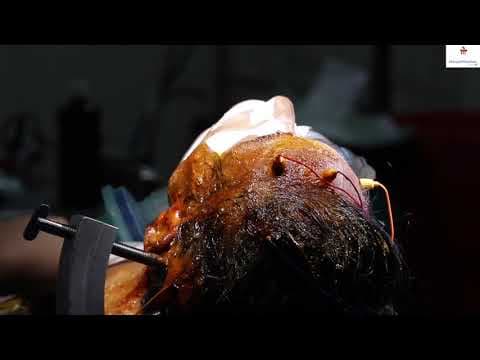
Robot Assisted Radical Prostatectomy
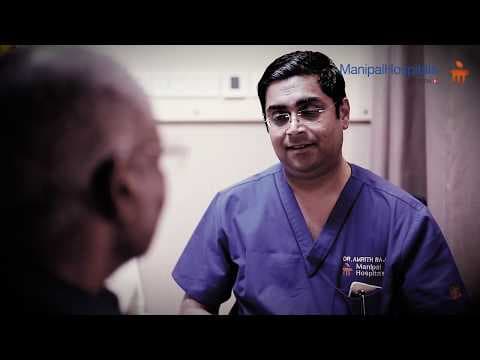
Robot Assisted Radical Prostatectomy
A miraculous Procedure, Robot Assisted Radical Prostatectomy done by Dr. Amrith Raj Rao, Consultant - Urology And Robotic Surgery...
Why Manipal Hospitals?
Our spine specialists begin with a careful history and a focused neurological examination, testing strength, sensation, and reflexes to localise the likely level of involvement. Imaging is then ordered to confirm what the examination suggests, not as a fishing expedition. When surgery is genuinely needed, the approach is chosen to minimise disruption to surrounding muscles and ligaments. Our standing as a trusted spine center in Millers Road, Bangalore, comes from a team that treats surgery as a last resort, not a first response. The trust patients place in us rests on:
- Spine surgeons with fellowship training in both conventional open procedures and minimally invasive techniques, allowing them to choose the approach that fits the pathology rather than defaulting to a single method.
- A diagnostic process where the MRI or CT scan is always correlated with the clinical findings, because a scan that shows a disc bulge does not automatically mean that disc is the cause of the pain.
- Image-guided injection therapies, including epidural steroids and nerve root blocks, that serve both as diagnostic tools and as treatments that can avoid surgery altogether.
- Microscopic and endoscopic surgical techniques that use smaller incisions, cause less muscle damage, and allow patients to go home sooner than traditional open approaches.
- A physiotherapy team integrated into the spine service, providing preoperative conditioning and postoperative rehabilitation that is specific to the surgery performed.
- Honest preoperative counselling where the surgeon explains what surgery can realistically achieve, what it cannot, and what the recovery will actually feel like week by week.
Spine Care Department
The Spine Care Department at Manipal Hospital Millers Road provides comprehensive care for conditions affecting the cervical, thoracic, and lumbar spine. We evaluate and treat individuals with disc herniations, spinal stenosis, spondylolisthesis, degenerative disc disease, vertebral compression fractures, spinal deformities including scoliosis, spinal tumours, and infections of the spine. Our team also manages spinal trauma and provides second opinions for patients who have been advised surgery elsewhere. People looking for a spine hospital in Millers Road, Bangalore, find a department that respects how much the back influences every movement of daily life.
Services Offered
The Spine Care Department offers a complete range of non-surgical and surgical services, with treatment decisions made collaboratively after conservative options have been given a fair trial:
- Detailed clinical assessment with neurological examination to localise the level of spinal pathology
- MRI and CT imaging with standardised reporting protocols that describe the exact nature and extent of nerve compression
- Fluoroscopy-guided epidural steroid injections for radicular pain from disc herniations and foraminal stenosis
- Selective nerve root blocks that confirm the symptomatic level and provide therapeutic relief
- Microdiscectomy for lumbar and cervical disc herniations with nerve root compression
- Endoscopic discectomy for selected patients with contained disc herniations
- Laminectomy and foraminotomy for central and lateral recess stenosis
- Spinal fusion with instrumentation for instability, spondylolisthesis, and deformity correction
Facilities and Services
At Manipal Hospital, Millers Road, the spine care setup supports accurate localisation, safe intervention, and structured recovery:
- High-resolution 1.5 Tesla MRI with dedicated spine coils for detailed imaging of discs, neural foramina, and the spinal cord
- CT scanner with multiplanar reconstruction for bony anatomy assessment and surgical planning
- Fluoroscopy suite for image-guided spinal injections with real-time needle visualisation
- Operating theatre equipped with surgical microscope and endoscopic spine surgery systems
- Intraoperative neuromonitoring capability for complex instrumented procedures
- Physiotherapy unit with spinal rehabilitation protocols for post-surgical and non-surgical patients
- Private consultation rooms where imaging can be reviewed with patients on a large screen
- Integrated records that track pain scores, functional status, and neurological findings over time
Not sure what you’re looking for?
Get in touch with our
representatives for help!
Frequently Asked Questions
Pain that persists beyond four to six weeks despite conservative care, pain that radiates into an arm or leg, any numbness or weakness in a limb, and any change in bowel or bladder function all warrant specialist evaluation. Red flags like fever, unexplained weight loss, or a history of cancer also require urgent assessment.
Most disc bulges improve with time, physiotherapy, and activity modification. Surgery is considered when there is significant nerve compression causing progressive weakness, unbearable pain that has not responded to conservative treatment, or cauda equina syndrome with bowel or bladder involvement.
Most patients go home the same day or the next morning. Walking is encouraged immediately. Desk work can often resume in two to three weeks. Heavy lifting and strenuous activity are restricted for six to eight weeks to allow the annulus to heal. Physiotherapy begins early and continues for several weeks postoperatively.
Mild to moderate stenosis often responds to physiotherapy, activity modification, and epidural steroid injections. Surgery becomes a consideration when walking distance is severely limited, when leg pain is constant, or when neurological deficits like foot drop or weakness appear.
The goal of fusion is to create a solid bony bridge between two or more vertebrae, eliminating motion at that segment. Once fusion occurs, it is permanent. The hardware is there to hold things steady while the bone heals. Adjacent segment disease, where the level above or below a fusion develops problems later, is a known long-term possibility that your surgeon will discuss with you.