

A chest that tightens without warning. Breath that runs out halfway up a flight of stairs that never used to feel steep. A family history that lingers in the back of your mind, making you wonder whether every flutter or ache is something you should have checked sooner. These are the concerns people bring to a cardiology consultation, sometimes after days, and sometimes after years of uncertainty. At Manipal Hospital, Millers Road, the Heart Care Department understands that a heart concern is never just physical. It is closely tied to everything that matters, from the people who depend on you to the years you hope to spend living well. As a trusted heart hospital in Millers Road, Bangalore, we provide comprehensive cardiac evaluation that either offers reassurance or gives you a clear treatment plan. Every recommendation is based on careful assessment, clear communication, and care that patients can understand and trust.
Our Heart Care Specialities

Interventional Cardiology
Top Interventional Cardiology Hospital in MIllers Road
Chest pain that wakes you from sleep, shortness of breath that keeps getting worse, or a previous stent that may no longer be working well. These situations can feel frightening and urgent. As a leading interventional cardiology hospital in Millers Road, Bangalore, we at Manipal Hospital Millers Road know that time matters when it comes to heart attacks and blocked arteries. That is why we offer emergency angioplasty, complex stenting, and advanced catheter-based treatments for patients who need immediate or planned cardiac intervention.

Cardiology
Best Cardiology Hospital in Millers Road, Bangalore
A sudden racing heartbeat, difficulty catching your breath after light activity, or someone in the family who had a heart attack at age 48 - these things can naturally make one more concerned about their own heart health. At Manipal Hospital Millers Road, the cardiology department knows that a heart problem affects more than your body. It can also affect your mental well-being. We help when you need expert advice, the right diagnosis, and a treatment plan. As the best cardiology hospital in Millers Road, Bangalore, we take on complex cases that need advanced testing, procedures, and long-term follow-up.
Cardiovascular & Thoracic Surgery
Best Cardiothoracic Surgery Hospital in Millers Road
Complex cardiothoracic conditions often call for specialised surgical expertise. Some heart artery blockages cannot be fixed with stents, while some heart valves stop working properly. These problems often need surgical intervention. At Manipal Hospital Millers Road, the cardiothoracic surgery department offers surgical care when medicines or catheter procedures do not work anymore. As a leading cardiothoracic surgery hospital in Millers Road, Bangalore, the team performs bypass surgery, valve repair and replacement, aortic surgery, and lung operations for complex heart and chest conditions.


Need more Info?Talk to one of our Experts Now!
Consult our Experts
Discover stories of
Method to Miracle!
This is a descriptive text about Method to Miracle, know how Manipal hospital helps patient turn their lives around and perform life altering surguries and treatments, enabling the patients to live the life at the fullest, Yolo!
Robot Assisted Radical Prostatectomy
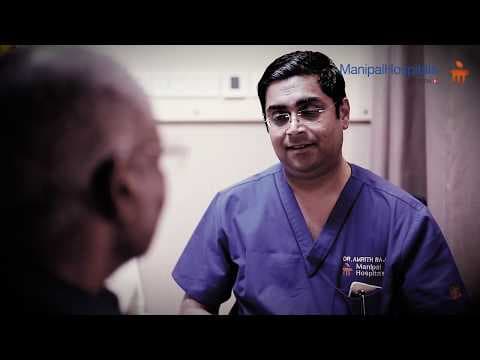
Robot Assisted Radical Prostatectomy
A miraculous Procedure, Robot Assisted Radical Prostatectomy done by Dr. Amrith Raj Rao, Consultant - Urology And Robotic Surgery...
Why Manipal Hospitals?
At Manipal Hospital Millers Road, our approach to heart care combines experienced specialists, advanced technology, and evidence-based treatment with compassionate support at every stage. From preventive cardiology to complex cardiac interventions, we focus on delivering accurate diagnosis, timely treatment, and long-term care tailored to each individual. Our reputation as the best heart hospital in Millers Road, Bangalore, comes from something quieter than rankings. The trust patients place in us rests on:
- Cardiologists with experience from high-volume cardiac centres, bringing extensive expertise in non-invasive imaging, interventional cardiology, and heart failure management.
- A diagnostic approach that begins with careful listening to both your symptoms and your medical history, recognising that every detail contributes to an accurate diagnosis.
- Advanced echocardiography, including strain imaging and 3D reconstruction, enabling early detection of subtle changes in heart muscle function.
- A modern catheterisation laboratory where diagnostic angiograms are performed using low-contrast protocols to help protect kidney function, particularly in patients with diabetes or existing kidney disease.
- Clear, unhurried discussions about findings and treatment options, ensuring patients understand their diagnosis and the next steps before leaving the consultation.
- Close collaboration with the cardiothoracic surgery team, allowing seamless transition to surgical care whenever bypass surgery or other cardiac procedures are required.
Heart Care Department
The Heart Care Department at Manipal Hospital Millers Road provides comprehensive cardiac services spanning prevention, diagnosis, intervention, and long-term management. We evaluate and treat individuals with coronary artery disease, heart valve disorders, cardiac arrhythmias, cardiomyopathies, heart failure, and pericardial conditions. Our team sees patients with risk factors like hypertension, diabetes, high cholesterol, and family history of early heart disease, as well as those presenting with symptoms such as chest pain, breathlessness, palpitations, dizziness, and unexplained fatigue. We also manage cardiac emergencies including acute heart attacks, unstable angina, and acute heart failure. And that is what makes us the best heart hospital in Millers Road, Bangalore, in the eyes of those who have walked through our doors.
Services Offered
When families search for a heart hospital in Millers Road, Bangalore, they can rely on it; they find a team that treats every heartbeat as something worth protecting. The Heart Care Department offers a complete range of cardiac services, each plan drawn up after a detailed understanding of the individual's condition and circumstances:
- Resting electrocardiogram and treadmill stress testing to evaluate cardiac rhythm and exercise-induced changes.
- Comprehensive transthoracic echocardiography with 2D, 3D, Doppler, and strain imaging for detailed assessment of heart muscle and valve function.
- Transoesophageal echocardiography provides clearer visualisation of posterior cardiac structures, prosthetic valves, and potential sources of embolism.
- CT coronary angiography and calcium scoring for non-invasive assessment of coronary plaque burden in appropriately selected patients.
- Diagnostic coronary angiography for precise mapping of coronary artery narrowings using low-contrast protocols.
- Coronary angioplasty and stent implantation, including primary angioplasty for acute myocardial infarction with a focus on minimising door-to-balloon time.
- Holter monitoring and extended ambulatory rhythm assessment for patients with intermittent palpitations, unexplained fainting, or suspected arrhythmias.
- Preventive cardiology consultations include detailed risk stratification, lifestyle counselling, and medical optimisation for those at high risk of future cardiac events.
Facilities and Services
At Manipal Hospital, Millers Road, our cardiac care infrastructure is designed to support accurate diagnosis, safe intervention, and continuous monitoring:
- Digital flat-panel cardiac catheterisation laboratory with low-radiation imaging and real-time haemodynamic monitoring.
- Advanced echocardiography suite with transoesophageal probe capability and strain imaging software.
- CT scanner with cardiac gating for high-quality coronary angiography and calcium scoring.
- Dedicated Cardiac Intensive Care Unit with continuous multi-parameter monitoring and 1:1 nursing for acute patients.
- 24-hour primary angioplasty activation pathway with a team that can mobilise within minutes of an acute heart attack diagnosis.
- Temporary pacemaker insertion capability with external pacing backup in the coronary care unit.
- Cardiac rehabilitation counselling space where patients recovering from heart attacks or procedures receive individualised guidance on exercise, diet, and medication adherence.
- Integrated electronic medical records that allow the cardiologist to pull up previous echoes, angiograms, and lab results instantly, spotting trends that might be missed in a paper file.

Not sure what you’re looking for?
Get in touch with our
representatives for help!
Frequently Asked Questions
An ECG records the electrical activity of the heart. It shows rhythm, rate, and signs of past or ongoing heart attacks. It takes about five minutes and involves sticky electrodes on the chest. An echocardiogram is an ultrasound of the heart. It shows the structure, chamber sizes, valve function, and pumping strength. Together they provide complementary information, and often both are needed to get a complete picture.
Not at all. Chest pain can come from the ribs, the muscles between them, the oesophagus, or even anxiety. Cardiac pain typically feels like a pressure or heaviness brought on by exertion and relieved by rest. But the distinction isn't always clear even to doctors, which is why an ECG, an echo, and sometimes a stress test or CT angiogram are used to rule out significant coronary disease before looking for other causes.
You will usually be asked to fast for six to eight hours before the procedure. Your doctor will advise you about which medications to take and which to pause, especially blood thinners and diabetes medications.
Primary angioplasty is the emergency opening of a blocked coronary artery during a heart attack using a balloon and a stent. Time matters because heart muscle dies quickly without blood flow.
Established plaque doesn't disappear, but it can be stabilised so that it is less likely to rupture and cause a heart attack. Aggressive lifestyle changes like quitting smoking, adopting a Mediterranean-style diet, regular exercise, and stress reduction, combined with appropriate medications, can slow, stop, or partially reverse the progression of coronary disease.