

A shoulder that no longer lets you serve a tennis ball or even comb your hair without a wince. A knee that has started giving way on uneven ground. A hip so stiff that putting on your shoes in the morning has become a negotiation with your own body. These are more than everyday aches. They are often signs of bones, joints, muscles, or ligaments that need specialist attention. At Manipal Hospital Millers Road, the Bone, Joint and Muscle Care Department approaches every condition with the goal of restoring movement, relieving pain, and helping patients return to the activities that matter most to them. As a trusted best bone hospital in Millers Road, Bangalore, we provide comprehensive orthopaedic care, recommending surgery only when it offers the most effective long-term outcome.
Our Bone, Joint And Muscle Care Specialities

Hand and Microvascular Surgery
Best Hand and Microvascular Surgery Hospital in Millers Road, Bangalore
Injuries, nerve damage, birth abnormalities of the hand, or degenerative disorders can greatly influence hand function and quality of life. This makes expert care vital for recovery and rehabilitation. The Department of Hand and Microvascular Surgery at Manipal Hospital Jayanagar, Bangalore, provides specialised treatment for all problems of the hand, wrist, and upper limb. We are specialists in delicate procedures of blood vessels, nerves, tendons, and soft tissues, employing modern microsurgical techniques. As a reputed hand & microvascular surgery hospital in Jayanagar, Bangalore, we treat anything from tiny lacerations to amputations requiring replantations.

Rheumatology
Best Rheumatology Hospital in Millers Road
Persistent joint pain, swelling, prolonged morning stiffness, unexplained rashes, or ongoing fatigue may be signs of an underlying autoimmune or inflammatory condition. Early diagnosis is important to prevent joint damage and protect long-term health. As a rheumatology hospital on Millers Road, Bangalore, we combine advanced diagnostics, personalised treatment plans, and long-term disease monitoring to help patients manage symptoms, preserve joint function, and maintain an active lifestyle.
Robotic-Assisted Knee Replacement
Top Robotic Knee Replacement Hospital in Millers Road, Bangalore
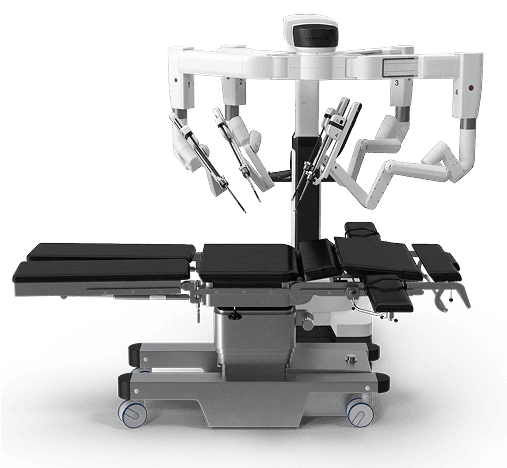
Persistent pain, night discomfort, and joint stiffness in the knees often prompt the need for a definitive intervention when non‑surgical measures no longer provide relief. At Manipal Hospital Millers Road, our robotic‑assisted knee replacement programme addresses these challenges through meticulously planned, precision‑driven surgery. Recognised as a robotic knee replacement hospital in Millers Road, Bangalore, we integrate CT‑based planning, robotic‑arm guidance, and a structured recovery pathway. The aim is to restore function and comfort, enabling you to resume normal activities with a stable, well‑aligned joint.
Robotic-Assisted Hip Replacement
Expert Robotic Hip Replacement Hospital in Millers Road
Hip arthritis can cause groin pain that makes it an ordeal to get up from a chair, stiffness that prevents you from putting on socks and shoes, or a limp that has gotten steadily worse over months. These symptoms usually indicate that nonsurgical measures are inadequate. The Department of Robotic-Assisted Hip Replacement at Manipal Hospital Millers Road offers a highly advanced technology-driven approach to total hip arthroplasty. We are a specialised robotic hip replacement hospital in Millers Road, Bangalore. When the patient has end-stage hip arthritis, the need for accurate implant positioning and soft tissue balancing is essential. We use robotic arm guidance and pre-operative 3D planning to deliver the surgical plan with sub-millimetre accuracy.
Orthopedic Oncology Care
Best Orthopaedic Cancer Hospital in Millers Road
A persistent bone pain that worsens at night, a growing lump near a joint, or a fracture after minimal trauma can understandably cause deep anxiety for patients and their families. At Manipal Hospital Millers Road, our orthopaedic oncology team is dedicated to addressing these concerns with rigorous diagnosis and a carefully sequenced treatment plan. Recognised as the orthopaedic cancer hospital in Millers Road, Bangalore, we emphasise precise tumour staging, limb‑sparing surgical techniques, and personalised reconstruction that aims to preserve both life and limb.
Podiatric Surgery
Top Podiatric Surgery Hospital in Millers Road
Persistent heel pain in the morning, a non-healing ulcer on the foot of a diabetic patient, and a progressive toe deformity causing difficulty with footwear. These problems can make walking a challenge. At Manipal Hospital Millers Road, the Podiatric Surgery Department understands that foot disorders affect mobility and independence. We step in when accurate diagnosis and appropriate surgical treatment are needed. Treatment plans are designed around each patient's functional goals and may include both surgical and non-surgical approaches. Our expertise as a podiatric surgery hospital in Millers Road, Bangalore, enables us to provide specialised care focused on restoring mobility, reducing pain, and improving overall foot health.
Joint Replacement Surgery
Best Joint Replacement Hospital in Millers Road, Bangalore
Advanced osteoarthritis of the knee causing severe pain and functional limitation. Avascular necrosis of the femoral head leading to hip joint collapse. Rheumatoid arthritis resulting in progressive joint destruction despite medical therapy. These conditions are indications for joint arthroplasty. At Manipal Hospital Millers Road, the Joint Replacement Department performs hip, knee, shoulder, and elbow replacement for patients with end-stage arthritis and osteonecrosis. As a leading joint replacement hospital in Millers Road, Bangalore, the department offers primary and revision arthroplasty using conventional, computer-navigated, and robotic-assisted surgical techniques.
Orthopaedics
Top Orthopaedic Hospital in Millers Road, Bangalore
Degenerative joint disease causing morning stiffness and activity-related pain. Acute trauma from a fall resulting in a fragility fracture. Ligamentous injury in a young athlete leading to knee instability. These clinical scenarios require specialised orthopaedic intervention. At Manipal Hospital Millers Road, the Orthopaedics Department provides comprehensive musculoskeletal care, including joint replacement, trauma fixation, sports medicine, and paediatric orthopaedics. As a leading orthopaedic hospital in Millers Road, Bangalore, the department manages both elective and emergency orthopaedic conditions in adult and paediatric patients.
Physiotherapy and Rehabilitation
Best Rehabilitation Centre in Millers Road, Bangalore
A stiff knee that will not bend after surgery. A stroke that makes walking difficult. A pattern of alcohol use that disrupts work and family life. At Manipal Hospital Millers Road, the Physiotherapy & Rehabilitation Department understands that recovery affects more than just the body; it touches every part of daily living. We step in when expert guidance is needed to restore movement, rebuild independence, or manage alcohol dependence safely. As a leading rehabilitation centre in Millers Road, Bangalore, we treat complex physical and addiction cases under one roof.
Sports & Exercise Medicine ( Placement of ligament tears)
Expert Sports Medicine Hospital in Millers Road, Bangalore
Physically active individuals frequently encounter injuries to soft tissues and supporting structures that require precise diagnosis, targeted surgical repair, and structured recovery planning. At Manipal Hospital Millers Road, the Sports and Exercise Medicine programme specialises in arthroscopic ligament reconstructions, tendon repairs, meniscal procedures, and comprehensive injury rehabilitation tailored to each patient's functional goals. The multidisciplinary care available at our sports medicine hospital in Millers Road, Bangalore, integrates orthopaedic expertise with physiotherapy, biomechanical analysis, and sport-specific conditioning programmes. The emphasis remains on restoring stability, rebuilding strength, and guiding each individual through a progressive return to their chosen physical activities.


Need more Info?Talk to one of our Experts Now!
Consult our Experts
Discover stories of
Method to Miracle!
This is a descriptive text about Method to Miracle, know how Manipal hospital helps patient turn their lives around and perform life altering surguries and treatments, enabling the patients to live the life at the fullest, Yolo!
Robot Assisted Radical Prostatectomy
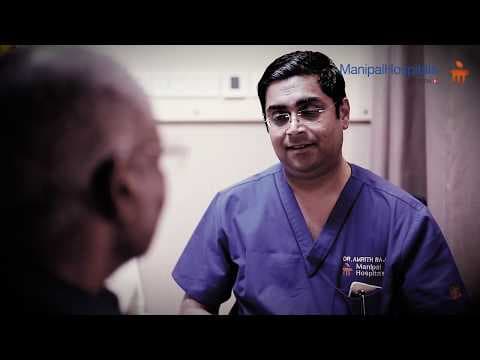
Robot Assisted Radical Prostatectomy
A miraculous Procedure, Robot Assisted Radical Prostatectomy done by Dr. Amrith Raj Rao, Consultant - Urology And Robotic Surgery...
Why Manipal Hospitals?
Our orthopaedic surgeons start every assessment by watching you move. They look at how you stand up from a chair, how you walk across the room, and how you hold your arm when you think no one is watching. These observations tell them things that an MRI cannot. Our standing as a reliable bone and joint hospital in Millers Road, Bangalore, is built on what they see and hear during that first examination, correlated with imaging, and measured against what you actually want to be able to do again. The care patients return for is supported by:
- Surgeons who have performed enough joint replacements and arthroscopic procedures to recognise when a scan finding is clinically relevant and when it is an incidental change that should be left alone.
- A rehabilitation philosophy that begins building strength before any planned surgery, because a patient who goes into the operating theatre with conditioned muscles comes out with a faster, smoother recovery.
- Arthroscopic equipment that allows the surgeon to see, probe, and repair structures inside a joint through punctures that can be covered with a small bandage.
- Implant selection that is never one-size-fits-all, with the surgeon choosing components based on your bone dimensions, age, activity expectations, and long-term wear characteristics.
- A pain management protocol after surgery that uses multiple modes of relief, reducing reliance on strong narcotics and helping patients wake up comfortable and clear-headed.
- Physiotherapists who are on the ward the morning after surgery, getting patients up and moving because early mobility prevents complications and sets the tone for the rest of recovery.
Bone, Joint, and Muscle Care Department
The Bone, Joint and Muscle Care Department at Manipal Hospital Millers Road provides orthopaedic services spanning trauma, degenerative conditions, sports injuries, and congenital deformities. We evaluate and treat individuals with fractures, dislocations, ligament tears, tendinopathies, carpal tunnel syndrome, rotator cuff injuries, meniscal tears, and advanced arthritis of the hip, knee, and shoulder. Our surgeons perform primary joint replacements, revision arthroplasty, arthroscopic reconstructions, and complex fracture fixations. Patients looking for a bone and joint hospital in Millers Road, Bangalore, find a team that asks what you need to get back to doing before deciding what needs to be done.
Services Offered
The Bone, Joint and Muscle Care Department offers treatment pathways that progress logically from the least invasive option to surgery only when necessary:
- Weight-bearing X-rays and stress views that show how a joint behaves under load, not just how it looks at rest
- Diagnostic ultrasound for dynamic assessment of tendons, ligaments, and muscle tears in real time
- Viscosupplementation injections that replenish the lubricating fluid in an arthritic knee, buying time before replacement becomes unavoidable
- Arthroscopic meniscectomy and meniscal repair for tears that cause mechanical locking or persistent swelling
- Rotator cuff repair using double-row suture techniques that recreate the natural footprint of the tendon on the bone
- Total knee replacement with gap-balancing techniques that aim for equal tension in flexion and extension
- Hip replacement through both posterior and anterior approaches, chosen based on the patient's anatomy and recovery priorities
- Locking plate osteosynthesis for periarticular fractures that need stable fixation to allow early movement
Facilities and Services
At Manipal Hospital, Millers Road, the orthopaedic infrastructure is built around surgical precision, infection prevention, and structured rehabilitation:
- Laminar airflow theatres with body exhaust suits for joint replacement surgery, keeping airborne particle counts at near-zero levels
- Image intensifier with pulsed fluoroscopy for real-time fracture reduction and implant positioning checks
- Dedicated arthroscopy stack with shaver consoles, radiofrequency wands, and fluid management pumps
- Instrument trays organised by procedure type so the right equipment is sterile and ready without intraoperative delays
- Recovery ward with continuous passive motion machines for knee patients and abduction pillows for hip patients
- In-house brace and splint fitting service so immobilisation devices are sized correctly before discharge
- Physiotherapy bay with stair-training steps and uneven surface mats for balance re-education

Not sure what you’re looking for?
Get in touch with our
representatives for help!
Frequently Asked Questions
Morning stiffness that eases within thirty minutes of moving around is typical of osteoarthritis. The joint has been still all night, and the synovial fluid that lubricates it needs movement to circulate. If stiffness lasts longer than an hour and is accompanied by swelling and warmth, an inflammatory arthritis may be at play and needs further investigation.
The key factors are whether the fracture is displaced, whether it involves a joint surface, and whether it is stable enough to stay aligned in a cast. A crack that is clean, undisplaced, and away from a joint can often heal in a plaster. A break that is angulated, shortened, or involves the weight-bearing surface of a joint usually needs plates or screws to restore alignment.
Injections work by reducing inflammation or supplementing joint fluid. They can delay surgery for months or years. But when the cartilage loss is bone-on-bone, when pain is constant rather than activity-related, and when the joint has started to deform into a bow-leg or knock-knee alignment, replacement becomes the more durable solution. Your surgeon will show you the X-ray and explain where you stand on that spectrum.
There is no absolute age cut-off. Fitness for surgery depends on your overall health, not your date of birth. Patients in their eighties and nineties undergo successful joint replacements when their heart, lung, and kidney function can handle the procedure. The pre-operative assessment screens for risks and optimises medical conditions before surgery is scheduled.
Revision joint replacement is more complex than the first surgery because there is less native bone to work with and the old implant must be removed carefully. Specialised revision implants with stems, augments, and constrained liners are used to rebuild the joint. These surgeries are planned with detailed imaging and sometimes 3D-printed models of the patient's anatomy. Your surgeon will discuss the specific challenges if revision becomes necessary.