


Chronic Kidney Disease (CKD): Stages, Symptoms, Causes and Treatment
Reviewed by: Manipal Hospitals
Posted on
8 Min Read

Not sure what you’re looking for?
Get in touch with our representatives for help!
Contact UsChronic kidney disease (CKD) occurs when the kidneys are damaged and lose the ability to remove waste and excess fluid from the blood over time. Because this process may take many years, the condition often goes undetected until kidney function has already declined significantly.
The kidneys help to remove waste products, regulate fluid levels, and maintain the balance of minerals in the body. When these functions are disrupted, waste accumulates and can cause a variety of health complications. In the early stages of the disease, people often don’t experience any significant symptoms.
Early detection allows timely intervention, which may help slow disease progression and reduce complications. CKD can be managed and its complications reduced if diagnosed early and treated appropriately.
Chronic Kidney Disease and Causes
Chronic kidney disease develops when damage to the kidneys affects their ability to filter blood effectively. In many instances, this damage occurs gradually over time and is linked to an underlying health condition or other factors that continue to stress the kidneys. CKD causes include:
-
Diabetes: characterised by persistently high levels of sugar in the blood, which can damage the blood vessels that filter waste from the blood
-
High blood pressure: may damage kidney tissue over time and reduce the filtering capacity of the kidneys
-
Glomerulonephritis: a group of diseases that cause inflammation of the kidneys and interfere with the kidney's normal filtering function
-
Polycystic kidney disease: an inherited disease in which numerous cysts develop and slowly interfere with kidney function
-
Repeated kidney infections: can lead to scarring and permanent damage to the kidneys
-
Obstruction: when the urinary tract is blocked by conditions that prevent the normal passage of urine and create higher pressure on the kidneys
-
Vesicoureteral reflux: a condition where urine flows backwards toward the kidneys instead of passing out of the body normally.
-
Autoimmune diseases: like lupus, that can cause inflammation and damage to kidney tissues
Repeated episodes of acute kidney injury can contribute to permanent loss of kidney function over time.
CKD Stages
Chronic kidney disease is classified by stages based on how well the kidneys are working. Doctors check for a number of things, including the estimated glomerular filtration rate (eGFR). This is a measure of how well the kidneys are filtering waste from the blood. The lower the eGFR, in general, the greater the loss of renal function. The stages of CKD are outlined below:
|
CKD Stage |
What It Indicates |
What It Means for You |
| Stage 1 |
Early kidney damage with preserved kidney function |
Your kidneys are still working normally, but there are early signs of damage that need monitoring and lifestyle changes to prevent progression. |
| Stage 2 | Mild loss of kidney function |
Kidney function has started to decline slightly. Most people have few or no symptoms, but regular check-ups are important. |
| Stage 3 |
Moderate loss of kidney function |
The kidneys are not filtering blood as effectively as they should. Fatigue, swelling, or changes in urination may begin to appear. |
| Stage 4 |
Severe loss of kidney function |
Kidney function is significantly reduced. Close medical supervision and planning for future treatment options become essential. |
| Stage 5 | Kidney failure (end-stage kidney disease) |
The kidneys can no longer adequately support the body's needs. Dialysis or a kidney transplant may be required to maintain health. |
Understanding the CKD stages is important because it guides treatment decisions and helps identify steps that may slow further kidney damage. While kidney function may decline gradually over many years in some individuals, others may experience a more rapid progression. Regular monitoring, timely medical intervention, and healthy lifestyle habits can play a crucial role in preserving kidney function and improving long-term outcomes.
Symptoms of Chronic Kidney Disease
In the early stages of CKD, many people do not have noticeable symptoms. As kidney function declines and waste products accumulate in the body, a wider range of health problems can develop.
The signs of CKD may vary depending on the extent of kidney damage and the stage of the disease. Some symptoms may develop slowly and become more noticeable as kidney function declines. Most people with early kidney disease have no symptoms or only very mild symptoms. This delay causes the disease to go unnoticed until it is more advanced.
Common chronic kidney disease symptoms include:
-
Nausea and vomiting
-
Loss of appetite or reduced interest in eating
-
Fatigue, low energy levels and general weakness
-
Sleep disturbances or difficulty sleeping
-
Changes in urination patterns, including frequency and volume
-
Muscle cramps, particularly in the legs
-
Swelling in the feet and ankles caused by fluid retention
-
Dry and itchy skin
-
High blood pressure that becomes difficult to control
-
Shortness of breath
-
Chest discomfort may occur in advanced disease, particularly when fluid accumulation affects the tissues surrounding the heart
Chronic Kidney Disease Diagnosis
Chronic kidney disease is diagnosed using a combination of tests that assess kidney function, identify signs of kidney damage, and help determine the severity of the condition. These may include:
-
Blood tests to evaluate kidney function and measure the estimated glomerular filtration rate (eGFR)
-
Urine tests to check for protein, blood and other abnormalities that may indicate kidney damage
-
Imaging tests, such as ultrasound or other scans, to examine the size, structure and condition of the kidneys
-
Kidney biopsy in selected cases, where a small sample of kidney tissue is examined to identify the cause and extent of damage
Treatment for Chronic Kidney Disease
The goals of CKD treatment are to manage the underlying cause of kidney damage, reduce the risk of complications, and slow the progression of the disease.
Depending on the individual's condition, treatment may include:
-
Controlling blood pressure to reduce further damage to the kidneys
-
Managing blood sugar levels in people with diabetes
-
Medications to treat complications associated with chronic kidney disease
-
Dietary modifications to support kidney health and reduce the workload on the kidneys
-
Managing fluid balance when the kidneys are unable to regulate fluids effectively
-
Monitoring and addressing cardiovascular risk factors, as kidney disease is closely linked to heart and blood vessel complications
-
As kidney function declines, treatment plans may need to be adjusted based on the severity of the disease and the presence of related health conditions.
For advanced chronic kidney disease, additional treatment options may include:
-
Dialysis, which performs some of the filtering functions normally carried out by the kidneys when kidney function becomes severely impaired
-
Kidney transplantation for eligible patients with kidney failure
Preventing Progression and Protecting Kidney Function
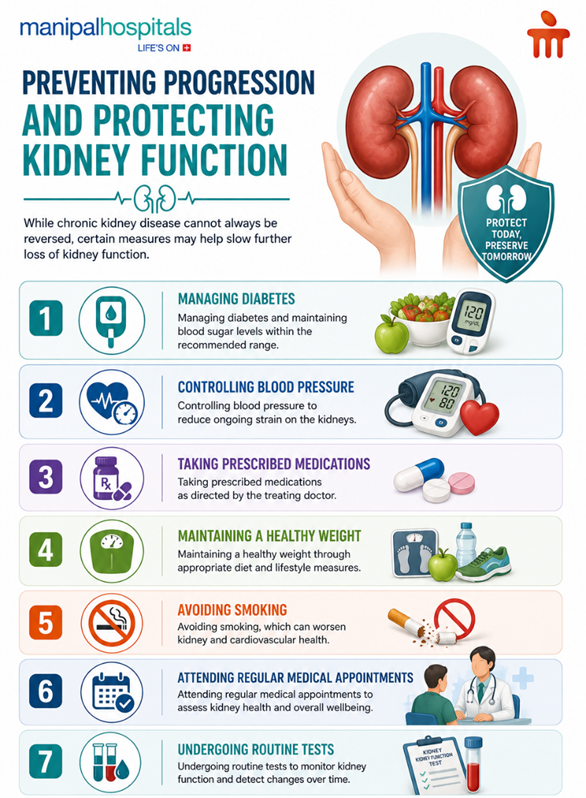
While chronic kidney disease cannot always be reversed, certain measures may help slow further loss of kidney function:
-
Managing diabetes and maintaining blood sugar levels within the recommended range
-
Controlling blood pressure to reduce ongoing strain on the kidneys
-
Taking prescribed medications as directed by the treating doctor
-
Maintaining a healthy weight through appropriate diet and lifestyle measures
-
Avoiding smoking, which can worsen kidney and cardiovascular health
-
Attending regular medical appointments to assess kidney health and overall wellbeing
-
Undergoing routine tests to monitor kidney function and detect changes over time
Conclusion
Kidney disease frequently progresses slowly and may not cause symptoms until kidney function is seriously impaired. Understanding the causes, stages, and symptoms of CKD can help in earlier diagnosis and treatment. Regular monitoring is important to judge how well the kidneys are working, to watch how the disease is progressing, and to help guide treatment decisions over time.
Those with risk factors, such as diabetes, high blood pressure, or a family history of kidney disease, should receive the appropriate medical evaluation. Manipal Hospitals, Millers Road, offers patients complete assessment, regular monitoring, and individualised treatment for CKD depending on the clinical requirements. For specialised CKD treatment in Millers Road, Bangalore, consult our nephrology team for expert diagnosis and long-term kidney care.
Frequently Asked Questions
In most cases, the kidney damage caused by chronic kidney disease cannot be reversed. However, appropriate treatment and management of underlying conditions may help slow the progression of the disease and reduce the risk of further kidney damage.
Many people with early chronic kidney disease do not experience noticeable symptoms. In some cases, abnormal blood test or urine test results may be the first indication that kidney function has been affected.
The frequency of kidney function testing varies from person to person. Factors such as diabetes, high blood pressure, family history of kidney disease, and existing kidney problems may influence how often monitoring is recommended.
Dialysis may be considered when the kidneys can no longer adequately filter waste products and excess fluid from the blood. The need for dialysis depends on the degree of kidney function loss, symptoms, and the presence of complications associated with kidney failure.
People with diabetes, high blood pressure, heart disease, or obesity are at a higher risk of developing chronic kidney disease. The risk may also be increased in older adults, individuals with a family history of kidney disease, and those with certain inherited or autoimmune conditions that affect the kidneys.
Share this Article


Recent Blogs

Understanding Intimate Inflammation: Causes, Accompanying Signs, and Treatment Options
30 Jun 20267 Min Read
Noticing unexpected physical changes in your intimate area can be an unsettling experience. Because reproductive anatomy is highly sensitive and supplied with an extensive network of blood vessels, even minor tissue irritation can quickly lead to noticeable puffiness or fluid retention. Many women feel hesitant or anxious about discussing symptoms affecting the vulva or vagina, but it is a common clinical issue that gynecologists evaluate daily. An increase in tissue volume in this area is broadly referred to as vaginal swelling. In many instances, the puffiness actually occurs on the external structures, such as the labia, rather than purely inside the birth canal. Identifying why this expansion occurs, tracking your specific vaginal swelling symptoms, and understanding when to seek an evaluation can help you manage your health safely and comfortably.
Read NowHow to Recognise and Treat a Brain Blockage (Ischemic Stroke)
30 Jun 20267 Min Read
A blockage in the brain can sometimes happen suddenly. One minute someone might be talking, walking, or doing their normal business, and the next they might find it hard to move an arm, speak properly, or keep their balance. In many cases, this happens because of a blood clot that blocks an artery that carries oxygen-rich blood to the brain, known as an ischaemic stroke. If the blood flow stops, the brain cells will no longer be supplied with the oxygen and nutrients they need to function. The brain can't store oxygen for future use, so even a short pause can cause injury. This is why an ischaemic stroke is a medical emergency. The faster we restore blood flow, the better our chances of saving brain tissue and reducing long-term effects. If you recognise the ischaemic stroke symptoms and get treatment quickly, you increase the chances of treatment being effective. This blog will help you understand the causes, symptoms, diagnosis, and treatment of ischaemic stroke, and explain the steps that can improve outcomes when treatment is received without delay.
Read NowChronic Kidney Disease (CKD): Stages, Symptoms, Causes and Treatment
30 Jun 20268 Min Read
Chronic kidney disease (CKD) occurs when the kidneys are damaged and lose the ability to remove waste and excess fluid from the blood over time. Because this process may take many years, the condition often goes undetected until kidney function has already declined significantly. The kidneys help to remove waste products, regulate fluid levels, and maintain the balance of minerals in the body. When these functions are disrupted, waste accumulates and can cause a variety of health complications. In the early stages of the disease, people often don’t experience any significant symptoms. Early detection allows timely intervention, which may help slow disease progression and reduce complications. CKD can be managed and its complications reduced if diagnosed early and treated appropriately.
Read NowEarly Warning Signs and Penile Cancer Causes Every Man Should Know
29 Jun 20267 Min Read
A little ulcer that won't heal, a new patch of skin that looks different, or even a bump under the foreskin could all be signs of trouble. At first, these changes may seem minor, but sometimes they can be early warning signs of penile cancer. This rare cancer usually begins in the skin covering the penis, most often on the glans (head of the penis) or foreskin. It is important to look at persistent symptoms, as the earliest changes are often visible. But skin changes are not always cancerous. Infections, irritation, and inflammatory conditions can cause similar symptoms, so medical evaluation is needed when abnormalities don’t improve. Being aware of the causes and warning signs of penile cancer can help with earlier diagnosis and prompt treatment when necessary. In this blog, we look at penile cancer causes, the symptoms to look out for, and treatment.
Read NowHeat Stroke: Symptoms, Causes and Emergency First Aid
03 Jun 20269 Min Read
Hot afternoons, crowded streets, long traffic delays, and outdoor work during peak summer can quietly push the body far beyond its natural limits. While many people assume they can simply "sweat it out", extreme heat can trigger a dangerous medical crisis. In emergency departments, doctors routinely treat patients who ignored early warning signs until they collapsed from severe overheating. The body normally cools itself down by sweating. Extended exposure to high temperatures triggers dehydration and causes your core temperature to spike, which ultimately forces your built-in cooling system to shut down. Once the body loses its ability to regulate heat, vital organs can suffer permanent damage within a matter of minutes. Spotting early warning signs and identifying mild symptoms is crucial to avoiding severe complications. While some people experience gradual fatigue, dizziness, or muscle spasms, others can lose consciousness or become disoriented without any warning at all. This blog covers everything you need to know about the causes, symptoms, diagnostic tests, and daily habits that protect your long-term kidney function.
Read NowH. pylori Treatment: Recovery, Diet, and Healing Time
03 Jun 20267 Min Read
Many people experience stomach discomfort for months without realising that a bacterial infection could be the hidden cause. Frequent bloating, a burning sensation, or a sudden loss of appetite are often brushed off as standard acidity or just a consequence of poor eating habits. In reality, these issues might actually be early indicators of a bacterial infection that requires proper medical evaluation. This bacterium wears down the stomach's natural defence system, which can cause painful sores and long-term irritation. Seeing a gastroenterologist gets rid of the guesswork to figure out exactly what is going on. Getting a clear explanation of the test results is always the best way to start recovery. From there, switching to simpler, lighter meals gives the stomach tissue a much-needed break to heal. This guide covers how long recovery usually takes, what to eat, daily tips for feeling better, and when you should see a specialist.
Read NowIgA Nephropathy: Symptoms, Causes, and Treatment Options Explained
03 Jun 202610 Min Read
It is entirely possible to feel perfectly healthy while a kidney issue develops quietly in the background. This is exactly how IgA nephropathy usually starts. Some people first spot reddish or tea-coloured urine right after a routine throat infection, while others only find out during a standard medical check-up. In kidney care, this condition is well-known as one of the more frequent disorders affecting the organs' microscopic filters. The issue begins when immunoglobulin A, which is a type of antibody, accumulates inside the kidneys and sparks localised inflammation. Over time, this buildup makes it harder for the kidneys to clean waste products from the blood. The way the disease progresses varies drastically from person to person. While some people remain completely unaffected for decades, others need active medical support to keep their kidneys working well. Recognising the early warning signs, understanding your treatment choices, and making simple dietary adjustments put you in the best position to manage your health. This blog covers everything you need to know about the causes, symptoms, diagnostic tests, and daily habits that protect your long-term kidney function.
Read NowUnderstanding Male Infertility: Causes, Diagnosis, and Solutions
03 Jun 20268 Min Read
A couple may spend months trying for a pregnancy without realising that male reproductive health could be linked to their difficulty. In many households, fertility conversations still focus mainly on women, even though male-related factors contribute to a large number of infertility cases worldwide. Because the topic remains sensitive, many men delay testing or avoid discussing symptoms until frustration builds over time. Doctors working in urology clinics often notice that men arrive only after repeated failed conception attempts. Some are completely healthy otherwise. Some note that symptoms, which doctors have overlooked for decades, include a decreased sex drive, swelling around the testicles, or hormonal issues. Some forms of infertility may be temporary and treatable, whereas others are chronic conditions. Identifying early signs of male infertility, identifying causes of male infertility, and consulting with physicians can dramatically help improve reproductive potential. With modern science and medicine providing many methods, starting from changing one’s lifestyle to advanced reproduction techniques, it is important to understand the reasons, diagnostics, treatment modalities, and possible solutions to male infertility. This blog explains everything you need to know about the causes of male fertility issues, how doctors diagnose them, and the most effective treatments available today.
Read NowEpilepsy Symptoms: Early Warning Signs and Common Types of Seizures
13 Apr 20267 Min Read
Have you ever seen someone suddenly lose consciousness, stare blankly, or shake uncontrollably and wondered what was going on? A seizure happens when there is a sudden burst of abnormal electrical activity in the brain, which can lead to sudden changes in behaviour, awareness, or movement. While a seizure is the most recognised sign, epilepsy is more than that. Epilepsy is a neurological disorder characterised by recurrent, unprovoked seizures caused by abnormal electrical activity in the brain. Recognising the signs of epilepsy, understanding the types of seizures, and knowing how to give first aid during a seizure can save lives. In this article, we will cover the types of seizures, early warning signs, available treatments, and how to help someone safely during a seizure.
Read NowEarly Gallstones Symptoms You Should Not Ignore
13 Apr 20266 Min Read
Have you ever eaten a fatty meal and felt sudden, rapidly intensifying pain in the upper right side of your stomach? For many people, this discomfort can indicate the presence of gallstones, a common digestive disorder. Gallstones often remain undetected because many people do not develop symptoms. These are small, hardened deposits that form in the gallbladder, a small organ just below the liver. Understanding what causes them, spotting early signs, and knowing when to seek treatment can help prevent complications. This blog talks about gallstones, their definition, what causes gallstones, symptoms, available treatments, and indications for seeking medical care.
Read Now