

A chest X-ray can catch a shadow before it develops into a cough, an MRI can map a disc prolapse so the surgeon knows exactly where to operate, and a CT angiogram can reveal a narrowing in a coronary artery before a heart attack occurs. Imaging is often the step that turns a clinical suspicion into a confirmed diagnosis. At Manipal Hospital Malleshwaram, the radiology service provides a full range of diagnostic and interventional imaging across X-ray, ultrasound, CT, and MRI, supporting every clinical specialty in the hospital. As a leading radiology hospital in Malleshwaram, Bangalore, our department is equipped to handle routine outpatient scans, emergency trauma imaging, and sub-speciality investigations.
Our Radiology Services Specialities

Radiology
Unresolved mass, which calls for characterisation prior to a biopsy. Chronic abdominal pain, which requires visualisation of the inner organs. An injury to the head that necessitates urgent detection of a brain bleed. These all require diagnostic imaging that can provide actionable insights for clinical decision-making. At our medical imaging hospital in Malleshwaram, Bangalore, the radiology department offers imaging services using advanced medical imaging techniques.


Need more Info?Talk to one of our Experts Now!
Consult our Experts
Discover stories of
Method to Miracle!
This is a descriptive text about Method to Miracle, know how Manipal hospital helps patient turn their lives around and perform life altering surguries and treatments, enabling the patients to live the life at the fullest, Yolo!
Robot Assisted Radical Prostatectomy
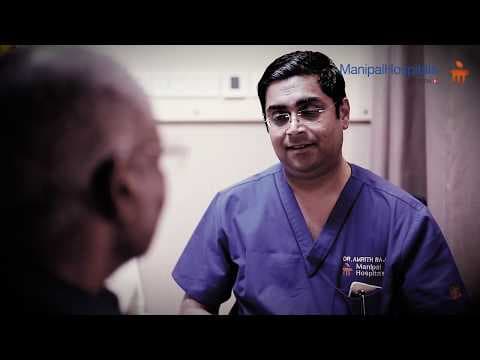
Robot Assisted Radical Prostatectomy
A miraculous Procedure, Robot Assisted Radical Prostatectomy done by Dr. Amrith Raj Rao, Consultant - Urology And Robotic Surgery...
Why Manipal Hospitals?
A scan is only as useful as the report that accompanies it. An image that is acquired with poor technique or interpreted without the full clinical context can affect treatment decisions. At Manipal Hospital Malleshwaram, the radiology team combines standardised acquisition protocols with sub-specialist reporting to ensure that every study answers the clinical question it was ordered to address. Clinicians refer patients to us as the best radiology hospital in Malleshwaram, Bangalore, because we provide:
- Multidetector computer systems configured to minimise radiation while maintaining thin-slice resolution.
- High-accuracy percutaneous core needle samplings and fluid drainages are guided by real-time scans.
- Uninterrupted on-site reporting infrastructure is needed to confirm trauma and stroke indicators immediately.
- Instant digital archiving, allowing your treating physicians to review high-detail scans remotely.
Radiology Services Department
Radiology Services at Manipal Hospital Malleshwaram covers the full spectrum of diagnostic imaging and image-guided interventions. The department provides digital radiography, ultrasonography with colour Doppler, multi-detector CT scanning, high-field MRI, and interventional radiology procedures. Imaging is performed using protocols optimised for each body region and clinical indication. Radiologists with expertise in neuroradiology, musculoskeletal imaging, body imaging, and interventional radiology interpret the studies. The department supports emergency services, inpatient care, and outpatient clinics. Interventional procedures, including ultrasound and CT-guided biopsies, aspirations, and drain insertions, are performed when tissue sampling or fluid drainage is required. Radiation safety protocols are maintained for patients and staff, with dose optimisation for paediatric and pregnant patients.
Services Offered
As we are one of the best radiology hospitals in Malleshwaram our radiology programme covers the full range of diagnostic and interventional imaging services across all modalities:
- Digital X-ray for chest, abdomen, spine, extremities, and skeletal survey
- Ultrasound abdomen and pelvis for organ evaluation, gallstones, kidney stones, and gynaecological assessment
- Obstetric ultrasound with first-trimester dating, NT scan, anomaly scan, and growth monitoring
- Doppler studies for carotid, renal, peripheral arterial, and venous evaluation
- High-resolution ultrasound for thyroid, breast, scrotal, and musculoskeletal indications
- CT imaging of the chest, brain, abdomen, and pelvis
- CT angiography for coronary arteries, aorta, pulmonary arteries, and peripheral vessels
- Image-guided fine needle aspiration and core biopsy from accessible lesions
Facilities and Services
Diagnostic accuracy depends on well-maintained equipment, optimised imaging protocols, and radiologists who interpret findings in clinical context. Our department houses:
- Digital radiography suite with flat-panel detectors and low-dose optimisation
- High-resolution ultrasound machines with curvilinear, linear, phased-array, and endocavitary probes
- Multi-slice CT scanner with sub-millimetre slice thickness and rapid scan times
- PACS (Picture Archiving and Communication System) for digital storage and retrieval of images
Not sure what you’re looking for?
Get in touch with our
representatives for help!
Frequently Asked Questions
CT uses X-rays to produce cross-sectional images and is faster, making it the preferred choice for identifying trauma, stroke, and acute internal bleeding.
X-rays and CT scans involve ionising radiation, and the exposure is kept as low as reasonably achievable. A single X-ray carries minimal risk. CT scans involve higher doses, and the decision to perform one weighs the diagnostic benefit against the radiation exposure. Special precautions are taken for children and pregnant women.
An abdominal ultrasound usually requires fasting for six to eight hours so that the gallbladder is well distended and bowel gas does not obscure the organs. A full bladder may be needed for pelvic ultrasound. The radiology team provides instructions when the appointment is scheduled.
Emergency imaging is reported immediately. Routine X-ray and ultrasound reports are typically available within an hour. CT and MRI reports may take a few hours depending on the complexity of the study and the need for multiplanar reconstruction. Urgent findings are communicated directly to the referring doctor.
Look for a centre with modern digital imaging equipment across X-ray, ultrasound, CT, and MRI; radiologists who report studies within their area of expertise; 24-hour emergency imaging capability; and a system for rapid communication of critical findings. The presence of interventional radiology services adds value for patients who need image-guided procedures.