


Migraine vs Severe Headache vs Brain Tumour: How to Know When Your Head Pain Needs Urgent Attention
Reviewed by: Manipal Hospitals
Posted on
7 Min Read

Not sure what you’re looking for?
Get in touch with our representatives for help!
Contact UsHeadaches are a common experience, affecting nearly everyone. While 99% of them are benign and resolve with rest, some can signal underlying conditions that require immediate medical attention. Distinguishing between a common headache, a migraine attack, or something more serious like a brain tumour can be challenging. This blog will help you understand different headaches and recognise when urgent attention is needed.
Understanding different types of headaches
Not all headaches are the same; they vary widely in intensity, location, and associated symptoms.
1. Migraine menace
Migraine is more than just a bad headache. It is a complex neurological condition that often presents with pulsating or throbbing pain, usually on one side of the head, and can be debilitating. For those with frequent or severe migraines, effective migraine treatment can significantly improve quality of life. Studies show personalised treatment plans reduce frequency and severity for over 80% of individuals. Therefore, understanding migraine symptoms and identifying migraine triggers/causes is crucial for effective management.
Typical migraine symptoms
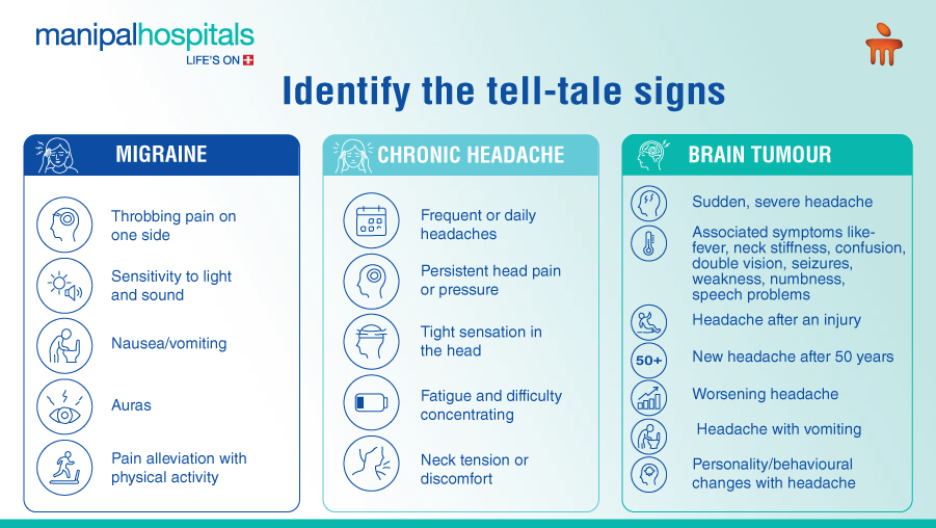
Migraine symptoms are quite well-marked, including:
-
Severe, throbbing pain, often on one side
-
Sensitivity to light (photophobia) and sound (phonophobia)
-
Nausea and vomiting
-
Auras (visual disturbances like flashing lights) before or during the headache
-
Increased pain with physical activity
Common triggers/causes
Migraine triggers/causes may vary from person to person, but the list commonly includes:
-
Stress, changes in sleep patterns
-
Certain foods/beverages (aged cheese, red wine, caffeine withdrawal).
-
Hormonal fluctuations (especially in women).
-
Weather changes, strong smells, or bright lights.
Treating migraine
Migraine treatment focuses on relieving symptoms, reducing the frequency of attacks, and improving overall quality of life.
-
Pain-relieving medications to ease headache symptoms
-
Preventive medicines for frequent migraines
-
Lifestyle changes like regular sleep and hydration
-
Stress management and relaxation techniques
-
Avoiding known migraine triggers
-
Dietary modifications when required
-
Advanced therapies for severe or chronic migraines
-
Regular medical follow-up for long-term management
2. Severe daily headaches
This category includes headaches that are intense but not typically life-threatening, such as severe tension or cluster headaches. They often lack the distinct neurological features of migraine pain. Chronic daily headaches, potentially caused by medication overuse, also fall in this category.
Causes behind chronic headaches
Identifying the underlying chronic daily headache causes is vital for management and may include several underlying factors, such as:
-
Stress and anxiety
-
Poor sleep or sleep disorders
-
Excessive use of pain medications
-
Hormonal changes
-
Dehydration or skipping meals
-
Poor posture and muscle tension
-
Excess caffeine intake or withdrawal
-
Eye strain or prolonged screen time
-
Underlying neurological or medical conditions
Managing daily headaches
Managing daily headaches involves identifying triggers, making healthy lifestyle changes, and seeking timely medical care when symptoms persist.
-
Maintain a regular sleep schedule
-
Stay hydrated throughout the day
-
Avoid skipping meals
-
Manage stress with relaxation techniques
-
Limit excessive screen time
-
Exercise regularly
-
Reduce caffeine and alcohol intake
-
Avoid overuse of pain medications
-
Track headache triggers and patterns
-
Consult a doctor for persistent headaches
3. Brain tumour
Less than 1% of headaches are caused by a brain tumour. Most headaches are benign, but vigilance is key to safety. Headaches from brain tumours are typically persistent, progressive, and often accompanied by other neurological issues, differentiating them from migraines or common headaches.
Recognising the warning signs
Be aware of the red flag symptoms suggesting a more serious condition requiring urgent medical evaluation. Do not delay if you experience any of the following:
-
Early morning headaches with nausea and vomiting and blurring of vision
-
A sudden, severe headache (that feels like the worst headache of your life)
-
Headache with fever, stiff neck, confusion, seizures, double vision, weakness, numbness, or difficulty speaking
-
Headache after a head injury that worsens
-
A new type of headache after age 50
-
Headache that changes pattern or progressively worsens
-
Headache with unexplained vomiting (especially in the morning)
-
Changes in personality or behaviour alongside the headache
Brain tumour treatment
Brain tumour treatment depends on the type, size, and location of the tumour, as well as the overall health and symptoms of the patient. This typically involves:
-
Surgery to remove the tumour
-
Radiation therapy to destroy tumour cells
-
Chemotherapy for targeted cancer treatment
-
Targeted therapy or immunotherapy in selected cases
-
Medications to reduce swelling and control symptoms
-
Rehabilitation therapies for recovery support
-
Regular imaging and follow-up monitoring
-
Personalised treatment planning by specialists
Other causes of headaches also include intracranial hemorrhage, subarachnoid hemorrhage, intracranial infections eg. Abscess, meningitis, encephalitis, hydrocephalus, etc.
Care guidelines
Navigating head pain requires a balanced approach.
-
Keep a headache diary- Track the frequency, severity, associated migraine symptoms, and potential migraine triggers/causes. This aids diagnosis and effective migraine treatment.
-
Manage stress- Practice relaxation techniques.
-
Maintain a regular schedule- Consistent timing of sleep and meals can help prevent headaches.
-
Seek professional advice- For recurrent or severe headaches, consult a doctor without delay.
-
Avoid self-diagnosis- Only a medical professional can provide an accurate diagnosis.
-
Do not ignore warning signs- Do not dismiss any ‘red flag’ symptoms.
-
Abstain from the overuse of pain medication- This can lead to medication overuse headaches, one of the chronic daily headache causes.
Conclusion
Frequent, severe, or unusual headaches should never be ignored, especially when they begin to affect daily life and overall well-being. At Manipal Hospitals Kolkata, our experienced neurologists provide accurate diagnoses and personalised treatment plans to help manage headaches effectively and improve quality of life. If you are experiencing severe, recurrent, or unusual headaches or any of the warning signs discussed, it is crucial to seek timely medical advice from a dedicated headache specialist in Kolkata, who can help you take the right steps towards better neurological health. At Manipal Hospitals, your well-being is our priority!
Frequently Asked Questions
Migraines typically involve throbbing pain, often on one side, with sensitivity to light/sound and nausea. Tension headaches are usually a dull, aching pain on both sides, often described as a tight band around the head, without associated neurological symptoms.
There is no scientific evidence to suggest that stress directly causes brain tumours. However, stress can be a significant trigger for migraines and tension headaches.
No, not everyone with migraines experiences an aura. In fact, only around 20–30% of migraine sufferers develop aura symptoms such as visual disturbances or tingling sensations. Most migraines occur without any aura, though symptoms and severity can vary from person to person.
You should consider seeing a headache specialist if your headaches are severe, frequent, not responding to standard treatments, or if you experience any concerning new symptoms.
Yes, some brain tumours, especially slow-growing ones, may not cause headaches initially. Other symptoms like seizures, weakness, or personality changes might be the first indicators.
Share this Article


Recent Blogs

হৃদয়ের জন্য জন্য উপকারী খাদ্যাভ্যাস: যেসব খাবার প্রাকৃতিকভাবে কোলেস্টেরল কমায়
29 Jun 20264 Min Read
উচ্চ কোলেস্টেরল বর্তমান জীবনযাত্রার একটি সাধারণ সমস্যা, যা বিশ্বজুড়ে লক্ষ লক্ষ মানুষকে প্রভাবিত করে। এটি হৃদরোগের ঝুঁকি বাড়ায় এবং সুস্থ জীবনযাত্রার পথে বাধা সৃষ্টি করে। তবে আশার কথা হলো, সঠিক খাদ্যাভ্যাস এবং জীবনযাত্রার পরিবর্তনের মাধ্যমে এই সমস্যার মোকাবিলা করা সম্ভব। কোলেস্টেরল কমানোর খাবার খেয়ে যেমন আপনি আপনার হৃদয়কে সুস্থ রাখতে পারেন, তেমনই প্রাকৃতিকভাবে রক্তে কোলেস্টেরল-এর মাত্রাও কমাতে পারেন। এমনই কিছু তথ্য দিয়ে আপনার হৃদয়ের সুস্বাস্থ্যকে সুনিশ্চিত করবে এই ব্লগ।
Read NowProteinuria explained: what protein in urine means and what to do
26 Jun 20267 Min Read
Proteinuria, commonly known as ‘protein in urine’, is an important indicator of kidney health. While a small amount of protein in urine may be normal, persistently high levels can signal underlying kidney problems or other health conditions. Understanding the damage that is caused by protein in urine, early symptoms, contributing factors and management strategies can help support early detection and protect overall kidney function.
Read NowExercises to strengthen knees and prevent joint pain
26 Jun 20267 Min Read
Our knees are vital for everyday movement, often overlooked until pain or discomfort strikes. Many knee issues and joint pain can be managed and improved through targeted knee strengthening exercises. Incorporating these routines enhances knee stability, reduces strain, and promotes free movement. Since healthy knees can have a profound impact on your quality of life, investing in knee health today can mean a more active, pain-free tomorrow. This blog explores key knee strengthening exercises that not only offer relief from knee pain but also build resilience against future issues.
Read NowHeart Failure vs Heart Attack: Two Very Different Conditions That Constantly Confuse
10 Jun 20269 Min Read
Heart conditions are often misunderstood because many symptoms overlap. Two of the most commonly confused conditions are heart failure and heart attack. Although both affect the heart and can become life-threatening, they are not the same. Understanding the difference between heart attack and heart failure can help people recognise symptoms early and seek timely medical care. A heart attack happens suddenly when blood flow to the heart muscle gets blocked. Heart failure, on the other hand, is usually a long-term condition where the heart cannot pump blood effectively. Both conditions need medical attention, but the causes, symptoms, treatment, and outcomes are different. Knowing these differences can help reduce delays in diagnosis and treatment.
Read NowMigraine vs Severe Headache vs Brain Tumour: How to Know When Your Head Pain Needs Urgent Attention
01 Jun 20267 Min Read
Headaches are a common experience, affecting nearly everyone. While 99% of them are benign and resolve with rest, some can signal underlying conditions that require immediate medical attention. Distinguishing between a common headache, a migraine attack, or something more serious like a brain tumour can be challenging. This blog will help you understand different headaches and recognise when urgent attention is needed.
Read NowRoad Accident Emergencies and Role of Ambulance Services in Kolkata
11 May 20265 Min Read
Road accidents are a serious concern in Kolkata. Heavy traffic, crowded junctions, and unpredictable road conditions increase the risk every day. In such emergencies, quick medical intervention is critical. A dependable ambulance service in Kolkata plays a key role in saving lives during these situations. Ambulance services today go beyond transport. They provide immediate medical care, stabilise patients, and ensure safe transfer to the hospital. Their role is most important during the golden hour, when timely treatment can significantly improve survival.
Read NowBlood in Urine (Hematuria): Causes and Treatment
04 May 20267 Min Read
Discovering blood in urine (medically known as ‘hematuria’) can be an alarming and distressing experience, often prompting immediate concern about your health. While it may indicate an underlying medical condition that requires timely evaluation and care, it is important to understand that many of these causes are manageable and treatable with the right approach. In fact, with early detection, accurate diagnosis, and appropriate intervention, more than 90% of cases can be effectively treated, leading to positive outcomes and peace of mind.
Read NowConstipation: Causes, Home Remedies and Medical Treatment
29 Apr 20266 Min Read
It starts with a missed bowel movement. Then comes discomfort, heaviness, and bloating. Constipation is more common than most people realise, yet many delay addressing it. Over time, it can affect your appetite, energy levels, and overall well-being. However, most cases can be managed with simple lifestyle changes and effective home remedies for constipation. With the right approach, you can achieve fast constipation relief and improve your digestive health. In this blog, we explain what causes constipation, the best constipation remedies, and when medical treatment may be needed.
Read Nowপিসিওডির সম্পূর্ণ নির্দেশিকা: উন্নত স্বাস্থ্য ও সুস্থতার জন্য লক্ষণ, পার্শ্ব প্রতিক্রিয়া এবং চিকিৎসা
29 Apr 20265 Min Read
পলি সিস্টিক ওভারিয়ান সিন্ড্রোম (PCOS) এবং পলি সিস্টিক ওভারিয়ান ডিজিজ (PCOD) হল দুই প্রকারের হরমোনজনিত সমস্যা যা থেকে বহু মহিলা বর্তমানে ভুগছেন। যখন ডিম্বাশয় থেকে অপরিণত ডিম্বাণু বের হয় না, তখন সেটি সিস্ট অথবা ছোট ছোট থলি আকারে ডিম্বাশয়ে জমা হতে শুরু করে। এর ফলে শরীরে হরমোনের ভারসাম্যহীনতা দেখা দেয়, যা বিভিন্ন শারীরিক ও মানসিক সমস্যা সৃষ্টি করে। এই নির্দেশিকাতে আমরা পিসিওডির লক্ষণ, কারণ, এবং কার্যকর পিসিওডি সমস্যার চিকিৎসা নিয়ে বিস্তারিত আলোচনা করব, যাতে আপনি একটি সুস্থ ও স্বাভাবিক জীবনযাপন করতে পারেন।
Read NowBlurred Vision: Symptoms, Causes, Treatment and Natural Remedies Guide
29 Apr 20267 Min Read
Blurred vision often begins subtly. You may find it difficult to focus, or notice that words on a screen appear unclear. In some cases, distant objects may look hazy. These early signs are often ignored and mistaken for simple tiredness. However, blurred vision can sometimes be an early warning of an underlying condition that needs attention. While occasional blurring may not be serious, frequent or sudden changes should not be overlooked. Recognising blurred vision symptoms, understanding possible causes, and exploring the right treatment options can help you take timely action and protect your eye health.
Read Now