

Back pain that persists beyond a few weeks, numbness that travels down an arm or leg, or difficulty with balance that makes walking feel uncertain can gradually shrink a person's world. At Manipal Hospital Hebbal, the Spine Care Department understands that spinal problems affect not just movement but the ability to work, sleep, and engage with family life. As a dedicated spine hospital in Hebbal, Bangalore, we offer a full range of options from structured physiotherapy to precise surgical intervention, always starting with the least invasive approach that can deliver meaningful relief.
Our Spine Care Specialities

Spine Surgery
Best Spine Surgery Hospital in Hebbal
Spinal deformities such as scoliosis can affect posture, mobility, and overall quality of life if left untreated. Signs may include uneven shoulders, rib prominence, back pain, or visible spinal curvature. At Manipal Hospital Hebbal, patients receive comprehensive evaluation and personalised treatment for scoliosis, kyphosis, and other complex spinal conditions. Recognised as a leading spine surgery hospital in Hebbal, Bangalore, our team provides advanced surgical and non-surgical care to help patients achieve improved spinal alignment, function, and long-term well-being.

Spine Surgery ( Scoliosis consideration )
Best Spine Surgery Hospital in Hebbal
At Manipal Hospitals Hebbal, Bangalore, we recognise the key role that spinal health plays in overall health. Spinal deformities and conditions such as scoliosis, kyphosis, degenerative disorders, or traumatic injuries can affect posture, mobility, and quality of life. As the best hospital for spine surgery in Hebbal Bangalore, we provide a broad spectrum of spine care ranging from non-surgical interventions to advanced surgical procedures.
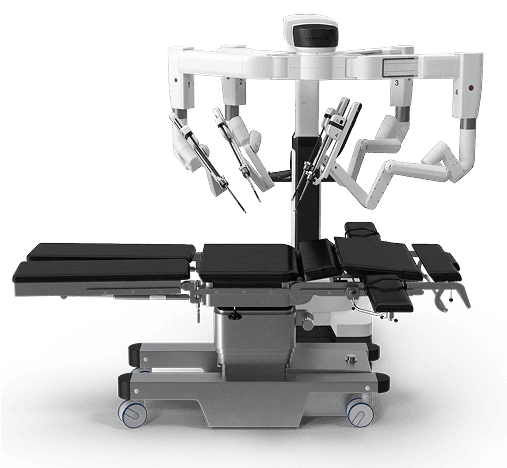
Our multidisciplinary team comprises spine care consultants, robotic spine surgeons, spine anesthesiologists, and rehabilitation specialists who collaborate to create personalised treatment plans. We specialise in scoliosis correction for children, adolescents, and adults, using minimally invasive and robotic-assisted techniques that reduce pain, minimise scarring, and shorten recovery periods.


Need more Info?Talk to one of our Experts Now!
Consult our Experts
Discover stories of
Method to Miracle!
This is a descriptive text about Method to Miracle, know how Manipal hospital helps patient turn their lives around and perform life altering surguries and treatments, enabling the patients to live the life at the fullest, Yolo!
Robot Assisted Radical Prostatectomy
Robot Assisted Radical Prostatectomy
A miraculous Procedure, Robot Assisted Radical Prostatectomy done by Dr. Amrith Raj Rao, Consultant - Urology And Robotic Surgery...
Why Manipal Hospitals?
The treatment of spinal disorders involves standing at the crossroads of two different streams of medicine – orthopaedics and neurosurgery – and it becomes imperative to take the correct route with a multidisciplinary team that evaluates the case in its totality. Depending upon the prolapsed disc and its size, there is an option to manage the condition with an epidural injection, micro-discectomy, or even complete decompression and fusion surgery. The spine department at Manipal Hospital Hebbal comprises orthopaedic spine surgeons and neurosurgeons who evaluate each difficult case as a team. Individuals and families seeking a spine centre in Hebbal, Bangalore, will find our programme built on:
- High-resolution MRI and CT imaging with multiplanar reconstructions that visualise nerve root impingement and spinal canal dimensions in detail
- Intraoperative neuromonitoring that provides real-time feedback on spinal cord and nerve root function during surgery, acting as an early warning system
- A structured non-operative pathway that exhausts physiotherapy, guided injections, and activity modification before surgical options are discussed
- Minimally invasive surgical techniques using tubular retractors that reduce muscle disruption and shorten postoperative recovery
- Individualised return-to-work plans that consider the physical demands of each patient's occupation and set realistic timelines
Speciality – Spine Care
The Spine Care Unit at Manipal Hospital Hebbal is one of the centres that deals with the diagnosis and treatment of various diseases of the cervical, thoracic, and lumbar spine. The hospital offers medical care to patients suffering from disorders like disc herniation, spinal stenosis, spondylolisthesis, vertebral fractures, and spinal tumours. Our team provides conservative management, image-guided pain interventions, and surgical decompression with or without instrumentation. All treatment pathways are supported by advanced spinal imaging, intraoperative navigation, and a dedicated spine rehabilitation programme.
Our Services
The spine care programme in the spine hospital in Hebbal, Bangalore, provides a comprehensive range of diagnostic, non-operative, and surgical services. Our services include:
- Detailed clinical assessment with neurological examination to localise the level of spinal pathology
- MRI and CT imaging of the spine with nerve root and spinal cord evaluation
- Electrodiagnostic studies including nerve conduction and electromyography for radiculopathy assessment
- Image-guided epidural steroid injections for disc prolapse and foraminal stenosis
- Facet joint and medial branch blocks for facetogenic pain
- Microdiscectomy and endoscopic discectomy for lumbar and cervical disc herniations
- Laminectomy and foraminotomy for spinal canal and foraminal decompression
- Spinal fusion with pedicle screw instrumentation for instability and spondylolisthesis
Facilities & Services
At Manipal Hospital Hebbal, dedicated infrastructure supports the delivery of precise spinal diagnosis and intervention:
- High-field MRI with dedicated spine coils for high-resolution nerve root and cord imaging
- CT scanner with multiplanar reconstruction capability for bony anatomy assessment
- An intraoperative neuromonitoring system with somatosensory and motor evoked potential capability
- Operating microscope with high-definition optics for microsurgical decompression
- Image intensifier and navigation system for accurate pedicle screw placement
- Dedicated spine physiotherapy unit with traction, core strengthening, and gait training equipment
- Pain procedure suite with fluoroscopic guidance for spinal injections
- Private consultation rooms allowing unhurried discussion of imaging findings and treatment options

Not sure what you’re looking for?
Get in touch with our
representatives for help!
Frequently Asked Questions
No. Most disc prolapse cases improve over time with physical therapy and pain management. When there is progressive weakness, debilitating pain not controlled conservatively and symptoms involving the bladder or bowel, then surgical management is recommended.
Microdiscectomy involves the removal of a fragment of the ruptured disc through a small incision under an operating microscope. An open discectomy involves a larger exposure. At At our spine centre in Hebbal, Bangalore, we favour the microsurgical approach whenever it is anatomically suitable.
It involves staying at the hospital for two to four days. It takes between six and twelve months for the fusion to heal completely. Most patients return to work in an office setting within four to six weeks and begin light duties within three months, depending on the success of the fusion, as monitored by periodic X-rays.
Yes. Non-surgical treatment can help many patients with spinal stenosis. Surgery is needed when walking distance becomes severely limited or when bladder or bowel function is affected.
If you experience sudden numbness in your legs, sudden incontinence of either the bladder or bowels, or gradually increasing weakness in the arms or legs, you would need an urgent consultation. Such a scenario can be a case of cauda equina syndrome or spinal cord compression.