


Laparoscopic Radical Prostatectomy (LRP): What Every Prostate Cancer Patient Should Know
Reviewed by: Manipal Hospitals
Posted on
7 Min Read

Not sure what you’re looking for?
Get in touch with our representatives for help!
Contact UsReceiving a diagnosis of prostate cancer can be a challenging moment, filled with questions and concerns about treatment options. At Manipal Hospitals, we understand these anxieties and are committed to providing comprehensive, compassionate care. One of the advanced and highly effective treatments for localised prostate cancer is Laparoscopic Radical Prostatectomy (LRP), a minimally invasive surgical procedure that offers significant advantages for patients.
For patients considering prostate cancer surgery, especially in the Delhi NCR region, our urologists in Gurugram are at the forefront of providing state-of-the-art care, leveraging their extensive expertise in advanced surgical techniques like LRP. We believe in empowering our patients with clear, accurate information to make informed decisions about their health journey. If you're seeking expert care, consider consulting with our urologists in Gurugram who specialise in these advanced procedures.
Understanding Laparoscopic Radical Prostatectomy (LRP)
Laparoscopic Radical Prostatectomy (LRP) is a sophisticated surgical technique used to remove the entire prostate gland, along with the seminal vesicles and sometimes nearby lymph nodes, to treat prostate cancer. Unlike traditional open surgery, which involves a large incision, LRP is a minimally invasive procedure performed through several small incisions (usually 4-5) in the abdomen.
During the procedure, a laparoscope (a thin, lighted tube with a camera) is inserted through one incision, projecting detailed images of the surgical area onto a monitor. Specialised surgical instruments are then inserted through the other small incisions to perform the prostate cancer surgery. This approach allows for greater precision and less trauma to surrounding tissues.
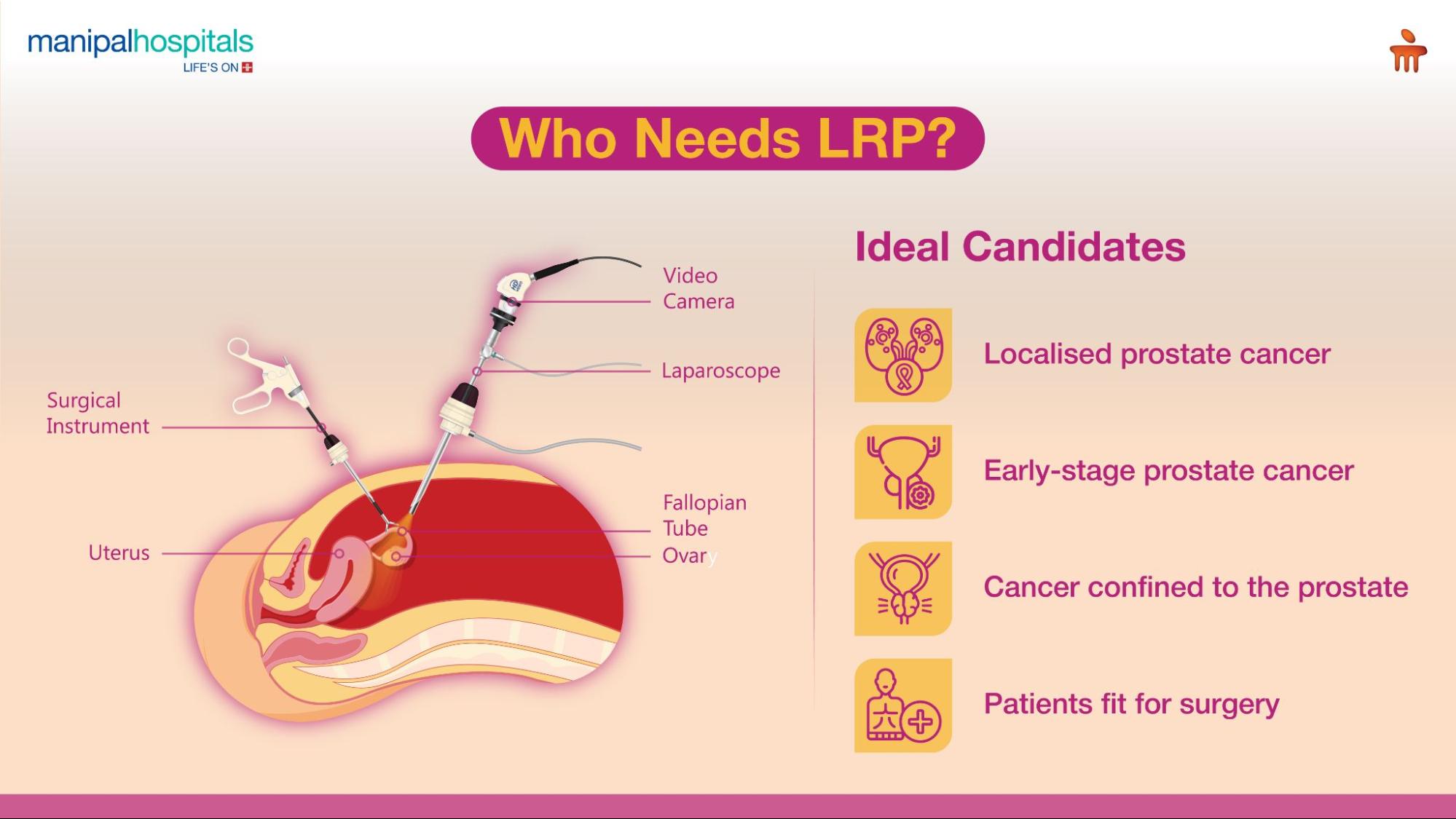
Advantages of Laparoscopic Prostatectomy
Laparoscopic prostatectomy, often referred to as laparoscopic radical prostatectomy, has revolutionised prostate cancer treatment due to its numerous benefits compared to traditional open surgery. These advantages contribute significantly to a better patient experience and recovery:
- Minimally Invasive: Smaller incisions lead to less scarring and improved cosmetic outcomes.
-
Reduced Blood Loss: Studies show that patients undergoing LRP typically experience significantly less blood loss, often reducing the need for blood transfusions.
-
Less Post-operative Pain: Smaller incisions mean less muscle cutting, resulting in reduced pain after surgery and less reliance on pain medication.
-
Shorter Hospital Stay: Patients often experience a shorter hospital stay, typically 1-3 days, compared to 3-7 days for open surgery.
-
Faster Recovery: A quicker return to normal activities and work is a common benefit, facilitating a smoother radical prostatectomy recovery.
-
Enhanced Precision: The magnified, high-definition view provided by the laparoscope allows surgeons to operate with exceptional precision, potentially improving outcomes related to nerve preservation (important for erectile function) and urinary continence.
The LRP Procedure: What to Expect
Understanding the steps involved in your prostate cancer surgery can help alleviate anxiety. Here's a general overview of what you can expect during an LRP:
-
Anaesthesia: The procedure is performed under general anaesthesia, meaning you will be asleep and feel no pain.
-
Incisions: Your surgeon will make 4-5 small incisions, each about 0.5 to 1 cm long, in your abdomen.
-
Gas Insufflation: Carbon dioxide gas is gently introduced into the abdomen to create space and provide a clear view for the surgeon.
-
Laparoscope Insertion: The laparoscope is inserted, and the images are projected onto a high-definition monitor.
-
Prostate Removal: Using specialised instruments, the surgeon carefully dissects and removes the entire prostate gland, seminal vesicles, and sometimes regional lymph nodes, depending on the cancer's stage. Our urologists in Gurugram employ advanced techniques to preserve critical nerves responsible for erectile function and urinary control whenever possible.
-
Reconstruction: After the prostate is removed, the bladder is reconnected to the urethra.
-
Catheter Placement: A temporary urinary catheter is placed to drain urine while the surgical area heals. This usually remains for 1-2 weeks.
-
Closure: The instruments are removed, the gas is released, and the small incisions are closed with sutures or surgical tape.
The entire procedure typically takes 2-4 hours, depending on individual patient factors and the complexity of the case. Manipal Hospitals boasts a success rate of over 95% in achieving complete tumour removal for localised prostate cancer with LRP, reflecting our commitment to excellent surgical outcomes.
Potential Risks and Complications
Like any major surgical procedure, LRP carries some potential risks, although the incidence of serious complications is low, especially in experienced hands. Our surgical teams are highly skilled and trained to minimise these risks. Potential complications include:
-
Urinary Incontinence: Some degree of temporary or, less commonly, persistent urinary leakage can occur. Most patients experience significant improvement within weeks to months. Around 90% of patients achieve satisfactory continence within one year post-surgery.
-
Erectile Dysfunction: Damage to nerves surrounding the prostate can affect erectile function. Nerve-sparing techniques are employed to mitigate this, with many men experiencing partial or full recovery of function over time.
-
Bleeding: While LRP significantly reduces blood loss compared to open surgery, minor bleeding can occur.
-
Infection: Any surgery carries a risk of infection, which is managed with sterile techniques and antibiotics.
-
Injury to Nearby Organs: Though rare, injury to the rectum or other pelvic organs is a potential risk.
-
Anaesthesia Risks: Standard risks associated with general anaesthesia.
It's important to discuss these potential risks thoroughly with your surgeon to understand how they might apply to your specific situation. Manipal Hospitals maintains a low complication rate for LRP, significantly below national averages, ensuring patient safety is paramount.
Recovery and Rehabilitation: The Road Ahead
The radical prostatectomy recovery period is crucial for optimal outcomes. While LRP offers a faster recovery than open surgery, it's still important to follow your medical team's instructions diligently.
Immediate Post-Operative Period:
-
Hospital Stay: Typically 1-3 days. You'll be monitored closely for pain management, fluid intake, and catheter function.
-
Catheter Care: The urinary catheter will remain in place for approximately 1-2 weeks to allow the bladder and urethra to heal. You will receive detailed instructions on how to care for it at home.
-
Pain Management: Mild pain or discomfort is common and can be managed with prescribed medications.
-
Early Mobilisation: You'll be encouraged to walk short distances soon after surgery to prevent complications like blood clots.
Weeks 1-6 Post-Surgery:
-
Catheter Removal: Once the surgical site has healed sufficiently, the catheter will be removed. You may experience temporary urinary leakage initially, which typically improves with time.
-
Pelvic Floor Exercises (Kegels): Starting pelvic floor exercises, often under the guidance of a physiotherapist, is crucial for regaining urinary control. Over 80% of patients show significant improvement in continence within 3 months of regular Kegel exercises.
-
Activity Restrictions: Avoid heavy lifting, strenuous activities, and prolonged sitting during this period to aid healing.
-
Diet: Maintain a healthy, balanced diet to support healing and prevent constipation.
Long-Term Recovery:
-
Follow-up Appointments: Regular follow-up appointments with your urologist are essential to monitor your recovery and cancer status.
-
Addressing Side Effects: If urinary incontinence or erectile dysfunction persists, various treatments and interventions are available, including medications, devices, or further therapies.
Our dedicated rehabilitation team at Manipal Hospitals is here to support you through every stage of your radical prostatectomy recovery, providing personalised guidance and care to help you return to your normal life as quickly and safely as possible.
If you are navigating a prostate cancer diagnosis and considering your treatment options, it's crucial to seek expert medical advice. Book an appointment with our expert urologists at Manipal Hospitals today to discuss if Laparoscopic Radical Prostatectomy is the right choice for you.
Frequently Asked Questions
LRP is an excellent option for many patients with localised prostate cancer. However, the "best" treatment depends on various factors, including cancer stage, grade, your overall health, and personal preferences. Your urologist will discuss all suitable options with you.
While many patients return to light activities within 2-4 weeks, full recovery, especially regarding urinary continence and erectile function, can take several months to a year. Consistent adherence to rehabilitation protocols is key.
Yes, a urinary catheter is typically required for 1-2 weeks after LRP to allow the new connection between the bladder and urethra to heal properly.
For localised prostate cancer, LRP offers excellent long-term control. The chance of recurrence depends on the initial stage and grade of the cancer, but many patients remain cancer-free. Regular follow-up with PSA tests is crucial for monitoring.
Erectile dysfunction is a potential side effect, as the nerves responsible for erections are very close to the prostate. Nerve-sparing techniques aim to minimise this risk, and many men regain some or full function, though it can take time. Medications or other therapies can also help.
Share this Article


Recent Blogs

Liver Resection for Cancer: Types, Eligibility, Risks & Recovery
29 Jun 20266 Min Read
A diagnosis of liver cancer can feel overwhelming, but advances in liver cancer treatment have significantly improved outcomes for many patients. Among the most effective treatment options for selected cases is liver resection surgery, a procedure that removes the cancerous portion of the liver while preserving healthy tissue. At the forefront of modern liver cancer treatment, our oncologists in Gurugram work closely with multidisciplinary teams to develop personalised treatment plans. Whether you have been diagnosed with primary liver cancer or a liver tumour that has spread from another organ, understanding your surgical options is essential for making informed decisions. This comprehensive guide explains the different types of liver resection, who may be eligible, the potential risks, expected recovery, and how surgery fits into a broader liver cancer treatment strategy.
Read NowCAR-T Cell Therapy for Blood Cancers: A New Hope in Treatment
29 Jun 20267 Min Read
Blood cancer treatment has witnessed remarkable advancements over the last decade, but one innovation is transforming outcomes like never before—CAR T cell therapy. For patients with difficult-to-treat or relapsed blood cancers, this revolutionary treatment offers a personalised approach that harnesses the body's own immune system to fight cancer cells. Our oncologists in Gurugram are helping patients access advanced therapies that were once considered experimental. As a breakthrough form of immunotherapy blood cancer treatment, CAR T cell therapy is creating new possibilities for patients who may have exhausted conventional options such as chemotherapy, radiation therapy, or stem cell transplantation. In this comprehensive guide, we explain how CAR T cell therapy works, who may benefit from it, its success rates, potential risks, recovery expectations, and important information about CAR-T cell therapy cost.
Read NowLaparoscopic Radical Prostatectomy (LRP): What Every Prostate Cancer Patient Should Know
22 Jun 20267 Min Read
Receiving a diagnosis of prostate cancer can be a challenging moment, filled with questions and concerns about treatment options. At Manipal Hospitals, we understand these anxieties and are committed to providing comprehensive, compassionate care. One of the advanced and highly effective treatments for localised prostate cancer is Laparoscopic Radical Prostatectomy (LRP), a minimally invasive surgical procedure that offers significant advantages for patients. For patients considering prostate cancer surgery, especially in the Delhi NCR region, our urologists in Gurugram are at the forefront of providing state-of-the-art care, leveraging their extensive expertise in advanced surgical techniques like LRP. We believe in empowering our patients with clear, accurate information to make informed decisions about their health journey. If you're seeking expert care, consider consulting with our urologists in Gurugram who specialise in these advanced procedures.
Read Nowभारत में किडनी ट्रांसप्लांट की सफलता दर: केस को प्रभावित करने वाले कारक
17 Jun 20265 Min Read
जब किसी व्यक्ति को एंड-स्टेज किडनी डिज़ीज़ (ESKD) या गंभीर क्रोनिक किडनी रोग का इलाज चाहिए होता है, तब किडनी ट्रांसप्लांट अक्सर सबसे प्रभावी और दीर्घकालिक समाधान माना जाता है। आज भारत में किडनी ट्रांसप्लांट चिकित्सा विज्ञान की सबसे सफल प्रक्रियाओं में से एक है, और सही परिस्थितियों में इसके परिणाम अत्यंत उत्साहजनक होते हैं। गुरुग्राम में हमारे नेफ्रोलॉजिस्ट्स नियमित रूप से ऐसे मरीजों का मूल्यांकन करते हैं जो ट्रांसप्लांट के लिए उपयुक्त उम्मीदवार हो सकते हैं। लेकिन एक महत्वपूर्ण प्रश्न जो लगभग हर मरीज और उसके परिवार के मन में होता है—किडनी ट्रांसप्लांट की सफलता दर वास्तव में कितनी है, और किन कारकों पर यह निर्भर करती है? इस विस्तृत मार्गदर्शिका में हम किडनी ट्रांसप्लांट की सफलता दर, ट्रांसप्लांट के परिणामों को प्रभावित करने वाले प्रमुख कारकों, संभावित जोखिमों और मरीजों के लिए आवश्यक देखभाल के बारे में विस्तार से चर्चा करेंगे।
Read NowHigh Tibial Osteotomy: Preserving Your Natural Knee Before You Need a Replacement
17 Jun 20267 Min Read
Knee pain can gradually take away the freedom to walk, climb stairs, exercise, and enjoy daily activities. While many people assume that a knee replacement is the only solution for severe knee arthritis, that is not always the case. A high tibial osteotomy is an effective knee-preserving procedure that can delay or even prevent the need for joint replacement in carefully selected patients. Our orthopaedics in Gurugram frequently evaluate patients with early to moderate knee arthritis who wish to remain active and preserve their natural knee joint for as long as possible. In such cases, a high tibial osteotomy may offer an excellent long-term solution.
Read NowProstate Cancer Warning Signs Men Over 40 Should Never Ignore
16 Jun 20267 Min Read
Prostate cancer is one of the most common cancers affecting men worldwide, yet many cases remain undetected until symptoms become more noticeable. Understanding prostate cancer symptoms and recognising the earliest warning signs can make a significant difference in diagnosis, treatment outcomes, and long-term quality of life. Many men assume urinary problems are simply a normal part of ageing. However, certain prostate cancer symptoms should never be ignored, especially after the age of 40. If you notice any unusual changes, consulting our urologists in Gurugram can help ensure timely evaluation and appropriate care.
Read Now7 Warning Signs of Gallstones You Should Never Ignore
16 Jun 20266 Min Read
Gallstones are one of the most common digestive disorders affecting adults today. While some people may have gallstones without experiencing any discomfort, others can develop severe complications if the condition is left untreated. Recognising the symptoms of gallstones early can help prevent painful emergencies and protect your long-term health. If you have been experiencing unexplained abdominal discomfort, digestive issues, or recurring pain after meals, it is important to understand the warning signs. Our general surgeons in Gurugram frequently treat patients who initially dismissed the early symptoms of gallstones, only to later require urgent medical intervention. In this guide, we'll explore the most important warning signs, when to seek medical attention, how gallstone diagnosis is performed, and what treatment options are available.
Read NowUreteroscopy for Kidney Stones: Procedure, Success Rate & Recovery Explained
15 Jun 20266 Min Read
Kidney stones can cause severe pain, urinary discomfort, and recurrent health complications if left untreated. Fortunately, modern kidney stone treatment options have become highly advanced, minimally invasive, and remarkably effective. Among these, ureteroscopy is one of the most widely recommended procedures for treating stones located in the ureter and kidney. If you have been advised to undergo a kidney stone operation, understanding the procedure, benefits, success rate, and recovery process can help you make an informed decision. At our centre, our urologists in Gurugram frequently perform ureteroscopy to provide safe and effective relief from kidney stones while preserving normal urinary function.
Read NowErectile Dysfunction at 30s and 40s: Causes, Treatment and When to Seek Help
15 Jun 20266 Min Read
Many men assume erectile dysfunction (ED) is a problem that only comes with ageing. However, an increasing number of men in their 30s and 40s are experiencing erection difficulties that affect their confidence, relationships and overall quality of life. The good news is that effective erectile dysfunction treatment is available, and early intervention often leads to better outcomes. If you have noticed recurring difficulties in achieving or maintaining an erection, consulting our urologists in Gurugram can help identify the root cause and guide you towards the most suitable treatment. Many cases of ED are highly treatable, especially when diagnosed early by our urologists in Gurugram.
Read NowHeart Valve Replacement Surgery in India: Types, Costs & Recovery Guide
12 Jun 202610 Min Read
Heart diseases remain one of the leading causes of health complications worldwide, and damaged heart valves are becoming increasingly common among adults and senior citizens. Fortunately, modern aortic valve replacement procedures have transformed outcomes for patients struggling with severe valve disorders, helping them regain a healthier and more active life. Whether caused by ageing, congenital conditions, infections, or calcification, valve disease can significantly affect blood circulation and heart efficiency. Today, advanced heart valve replacement surgery options in India offer world-class treatment with excellent success rates, experienced cardiac teams, and comparatively affordable costs. This comprehensive guide explains everything you need to know about aortic valve replacement, including types of surgeries, symptoms, risks, recovery timelines, expected costs, and expert recommendations from our cardiologists in Gurugram.
Read Now