

A cramping pain in the calf that consistently appears after walking a fixed distance and resolves with rest, a wound on the foot that refuses to heal despite weeks of care, or a pulsating sensation in the abdomen noticed while lying down can each signal an underlying problem within the body's network of blood vessels.
At Manipal Hospital Doddaballapur, the Vascular Care Department addresses conditions affecting arteries, veins, and lymphatics outside the heart and brain. As a recognised best hospital for vascular surgery in Doddaballapur, Bangalore, we combine diagnostic vascular imaging with interventional capabilities aimed at preserving limb function and preventing life-threatening complications.
Our Vascular Care Specialities

Vascular and Endovascular Surgery
Best Hospital for Vascular Surgery in Doddaballapur, Bangalore
A disease that pertains to the vascular system, be it constant leg pain, a wound that does not heal, or an abdominal aneurysm discovered during a scanning process, is associated with some degree of worry. To proceed, there must always be a need for proper assessment and a treatment plan. The Department of Vascular and Endovascular Surgery at Manipal Hospital Doddaballapur is founded for such purposes. The doctors are tasked with treating diseases of the arteries, veins, and lymphatic system, using modern methods and a patient-oriented approach, making it the best hospital for vascular surgery in Doddaballapur, Bangalore.


Need more Info?Talk to one of our Experts Now!
Consult our Experts
Discover stories of
Method to Miracle!
This is a descriptive text about Method to Miracle, know how Manipal hospital helps patient turn their lives around and perform life altering surguries and treatments, enabling the patients to live the life at the fullest, Yolo!
Robot Assisted Radical Prostatectomy
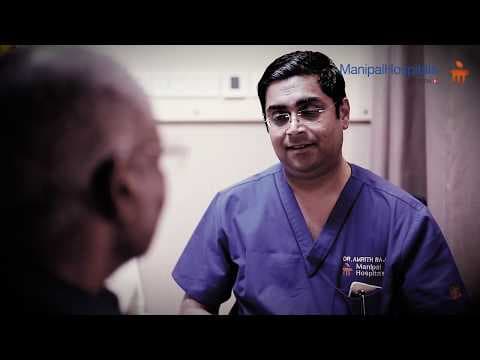
Robot Assisted Radical Prostatectomy
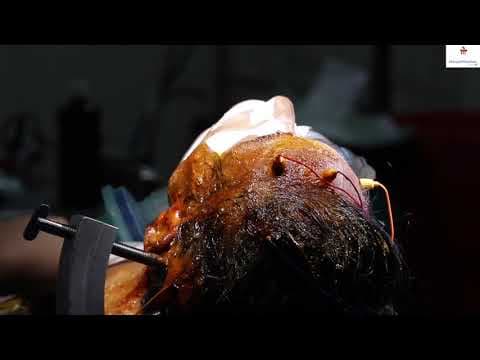
A miraculous Procedure, Robot Assisted Radical Prostatectomy done by Dr. Amrith Raj Rao, Consultant - Urology And Robotic Surgery...
Why Manipal Hospitals?
Vascular disease progresses silently over years before declaring itself. An iliac artery may narrow gradually, with collateral circulation masking the reduction in flow until a critical stenosis develops. A popliteal aneurysm may harbour thrombus without symptoms until embolisation threatens the distal circulation. At Manipal Hospital Doddaballapur, the approach at our best vascular surgery hospitals in Doddaballapur, Bangalore, is grounded in thorough clinical examination supplemented by non-invasive vascular laboratory studies and cross-sectional imaging.
- CT angiography with multiplanar reconstruction provides detailed vascular mapping from the aortic bifurcation to the pedal arch, essential for planning both endovascular and open procedures.
- Peripheral angiography and angioplasty with stent placement for iliac, femoropopliteal, and infrapopliteal arterial occlusive disease causing disabling claudication or threatening limb viability.
- Diabetic foot management integrating vascular assessment, wound debridement, infection control, offloading, and revascularisation into a coordinated limb salvage strategy.
- Venous interventions including endovenous laser ablation and sclerotherapy for varicose veins causing pain, swelling, skin changes, or venous ulceration.
Vascular Care Department
The Vascular Care Department at Manipal Hospital Doddaballapur addresses surgical and endovascular management of arterial, venous, and lymphatic disorders. The service caters to patients suffering from peripheral artery disease resulting in claudication/rest pain, diabetic foot, abdominal aortic/peripheral aneurysm, deep vein thrombosis, carotid artery stenosis, chronic venous insufficiency, and varicose veins.
Our Services
Our Vascular Care Department provides a full spectrum of diagnostic, endovascular, and open surgical services for arterial and venous conditions:
- Comprehensive vascular consultation with pulse examination and ankle-brachial index measurement
- Duplex ultrasound arterial and venous mapping for peripheral vascular disease and venous insufficiency
- Peripheral angiography with digital subtraction imaging for definitive anatomical diagnosis
- Balloon angioplasty and stent placement for iliac, femoral, and popliteal arterial stenoses
- Open surgical bypass using autologous vein grafts for long-segment arterial occlusions
- Thromboembolectomy for acute limb ischaemia using Fogarty catheter techniques
- Endovenous laser ablation and radiofrequency ablation for great and small saphenous vein reflux
- Foam sclerotherapy for tributary varicosities and perforator incompetence
- Ambulatory phlebectomy for large superficial varicose veins
- Arteriovenous fistula creation for haemodialysis access in chronic kidney disease
- Carotid endarterectomy and carotid artery stenting for stroke risk reduction
- Diabetic foot evaluation with vascular assessment and revascularisation planning
- Wound debridement and minor amputation in the context of limb salvage
- Postoperative surveillance with duplex ultrasound and clinical follow-up at scheduled intervals
Facilities and Services
At Manipal Hospital Doddaballapur, we maintain dedicated vascular infrastructure to support accurate diagnosis and safe endovascular and surgical intervention:
- Vascular consultation room equipped with handheld Doppler, sphygmomanometer, and monofilament for diabetic foot sensory testing.
- Duplex ultrasound system with high-frequency linear array probe and spectral Doppler for arterial and venous haemodynamic assessment.
- Digital subtraction angiography suite with road-mapping capability for peripheral and visceral angiography and intervention.
- CT scanner with angiographic protocol capability for aortic and runoff imaging with three-dimensional reconstruction.
- Modular operating theatre with radiolucent table and C-arm compatibility for hybrid open and endovascular procedures.
- Endovascular inventory including angioplasty balloons, stents, guidewires, sheaths, and thrombectomy catheters in a range of sizes.
- Vein harvesting instruments and tunnelling devices for autologous and prosthetic bypass grafting.
- Endovenous laser generator and fibre kit for thermal ablation of incompetent saphenous veins.
- Wound care supplies including advanced dressings, offloading devices, and negative pressure wound therapy for diabetic foot ulcers.
- Digital vascular imaging archive enabling comparison of pre-procedural, intra-procedural, and surveillance angiographic and duplex studies over time.

Not sure what you’re looking for?
Get in touch with our
representatives for help!
Frequently Asked Questions
Claudication pain always occurs at a predictable distance while walking and affects a specific muscle group, with complete relief on rest within minutes. Neurogenic pain may improve with sitting or bending forward. Vascular assessment with ankle-brachial index testing clarifies the diagnosis.
Some neuropathic ulcers heal with offloading, infection control, and wound care alone. However, when an ulcer is ischaemic due to poor arterial inflow, revascularisation through angioplasty or bypass is often necessary to provide the blood supply needed for wound healing and limb preservation.
The indications include pain or heaviness not relieved by stockings, swelling that progresses, skin changes like darkening or eczema, superficial thrombophlebitis, bleeding from the varicose veins, or venous ulcers. Duplex ultrasound determines the pattern of reflux guiding treatment selection.
Generally, an arteriovenous fistula takes from six to twelve weeks to mature for cannulation. The routine duplex study will evaluate the flow volume and diameter of the vessel within this period. The early detection of stenosis can be treated by angioplasty, thus facilitating the maturation process.
The post-procedure follow up is done through clinical examination of the pulses and symptoms, measuring the ankle-brachial index, and performing ultrasound. The patient takes antiplatelet drugs as recommended by the physician. The patient’s return of symptoms and low ankle-brachial index requires further review for in-stent restenosis or other complications.